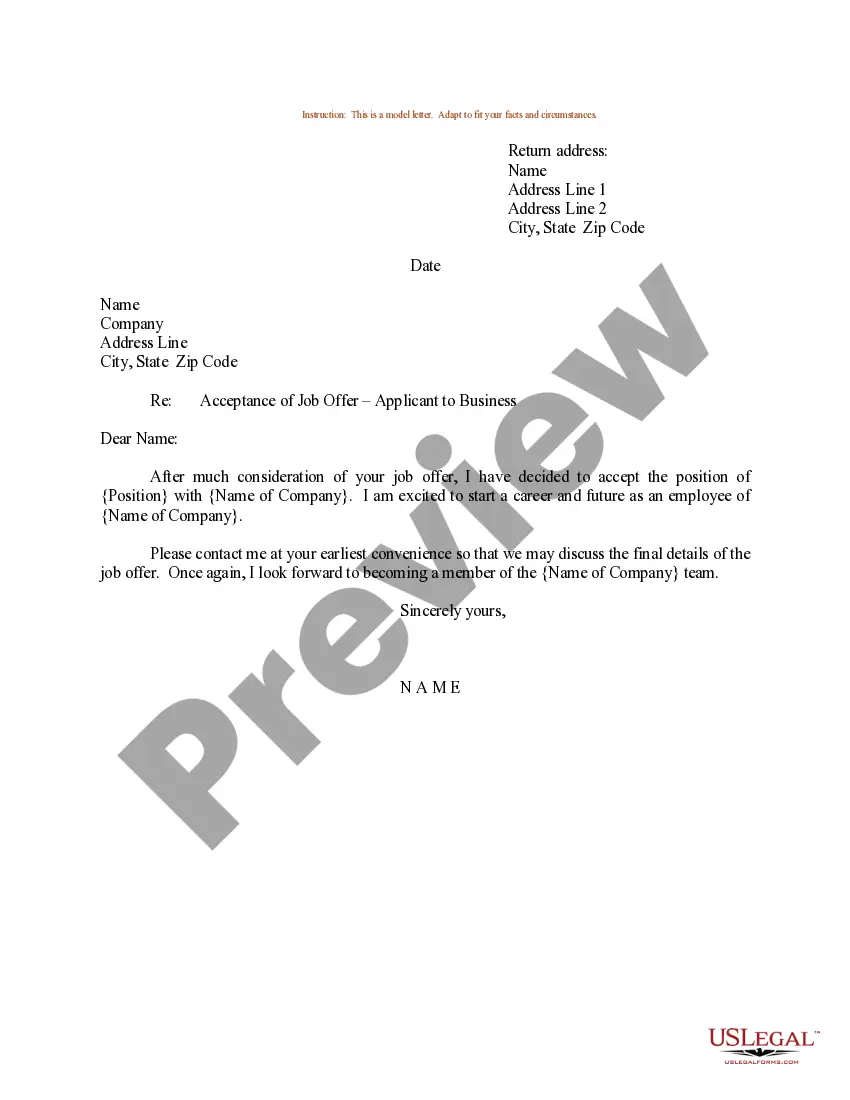
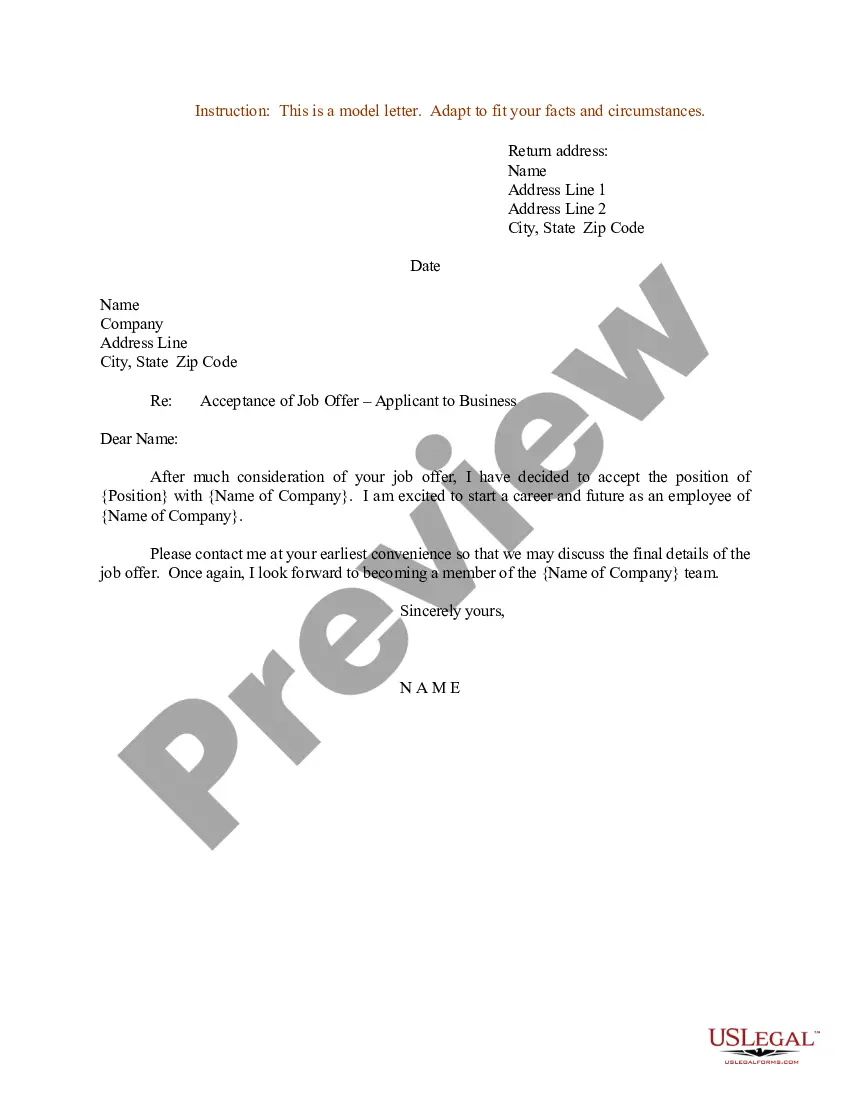
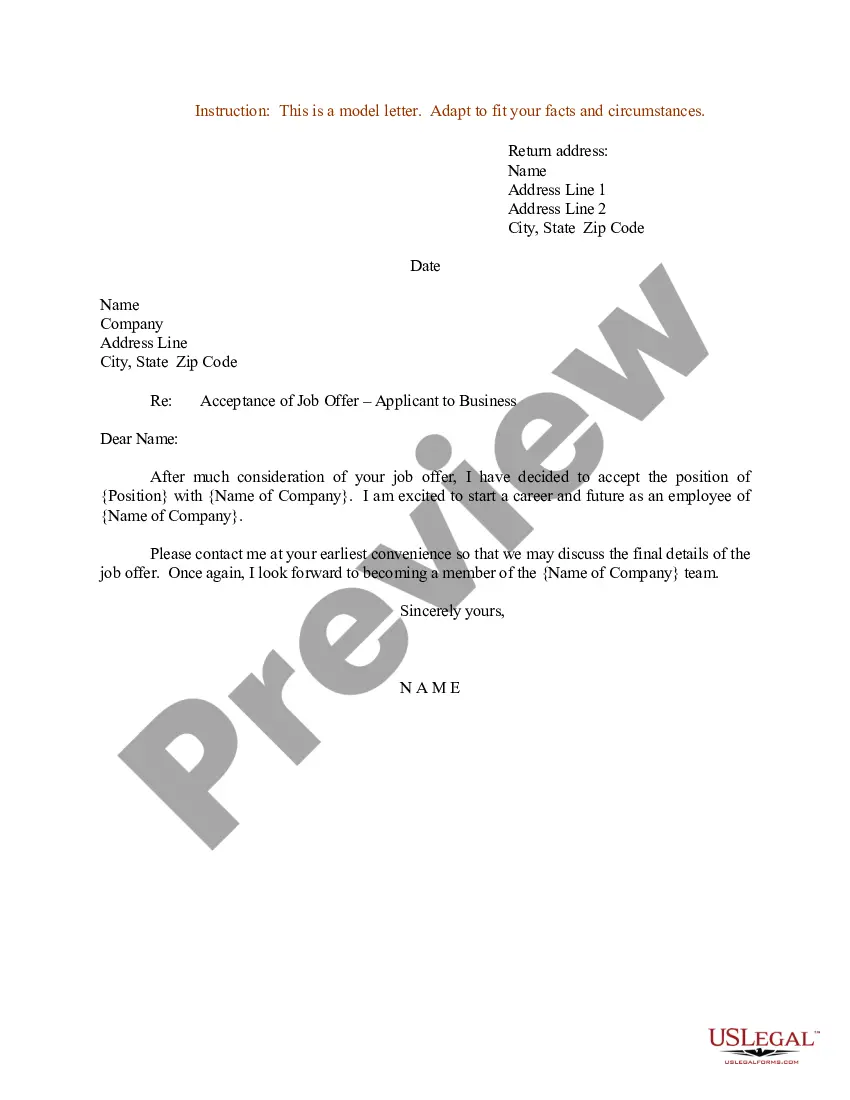
Military Acceptance Letter With Email In Illinois
Description
Get your form ready online
Our built-in tools help you complete, sign, share, and store your documents in one place.
Make edits, fill in missing information, and update formatting in US Legal Forms—just like you would in MS Word.
Download a copy, print it, send it by email, or mail it via USPS—whatever works best for your next step.
Sign and collect signatures with our SignNow integration. Send to multiple recipients, set reminders, and more. Go Premium to unlock E-Sign.
If this form requires notarization, complete it online through a secure video call—no need to meet a notary in person or wait for an appointment.
We protect your documents and personal data by following strict security and privacy standards.

Make edits, fill in missing information, and update formatting in US Legal Forms—just like you would in MS Word.

Download a copy, print it, send it by email, or mail it via USPS—whatever works best for your next step.

Sign and collect signatures with our SignNow integration. Send to multiple recipients, set reminders, and more. Go Premium to unlock E-Sign.

If this form requires notarization, complete it online through a secure video call—no need to meet a notary in person or wait for an appointment.

We protect your documents and personal data by following strict security and privacy standards.
Looking for another form?




Form popularity
FAQ
Colleges that accept you will usually notify you of your acceptance between mid-March and mid-April, either through an email or as an update on your college application portal.
There are three ways you'll receive your letter of acceptance: by mail, email, or on your online portal.
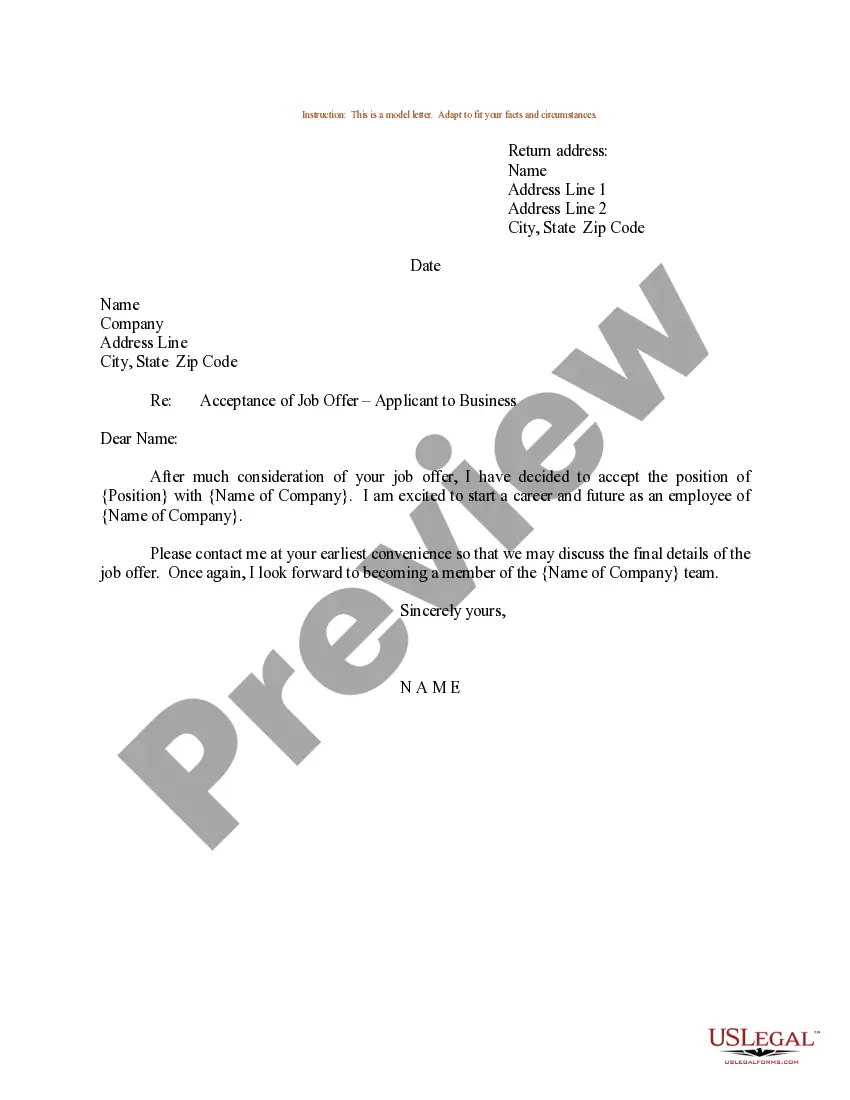
It's in the name – an acceptance letter is a type of professional letter used to formally respond to offers or requests. Most commonly, they're used to accept job offers, but they could also be used to accept an award, event invitation, or even a school placement. They're more than a formal way to say “yes”, though.
Likely letters can be both mailed and emailed.
Instructions Read the guidelines on the Operation Gratitude website. Write a positive message on a card or piece of paper. Include your address if you'd like a response. Decorate as you wish. Drop-off your creations at a designated location or mail to: Operation Gratitude. ATTN: Letter Writing Program.
Example of a Military (APO/FPO) Address The Department of Defense (DoD) has requested that those who send mail use the service member's full name (with or without grade, rank, etc.), or a specific title (e.g., Commanding Officer, Supply Officer, etc.).
This special address must include: The full name of the addressee. Mail sent without a full name will not be delivered. The unit or Post Office box number. A three letter code associated with the type of location. APO is used for Army and Air Force installations. The “state” of the addressee.
Provide accurate shipping information: Include your service member's unit, last and first name, title, DPO/FPO/APO and full ZIP code. Take advantage of reduced postage for military mail: You only have to provide standard domestic postage on mail going to an APO or FPO address.
How to Send a Letter to Military APO,FPO, or DPO. The easiest way to send letters from the USA to Military APO,FPO, or DPO is with Global Forever Stamps for $1.65 each. You can also use regular, domestic forever stamps as long as they add up to $1.65. Extra postage is required over 1 ounce.
A military email address has a standard format. It includes the service member's first and last name, their branch of service, and ends with “. mil”. For example, a common email for the army might look like `firstname.lastname@army.mil` or `firstname.lastname@navy.mil`.