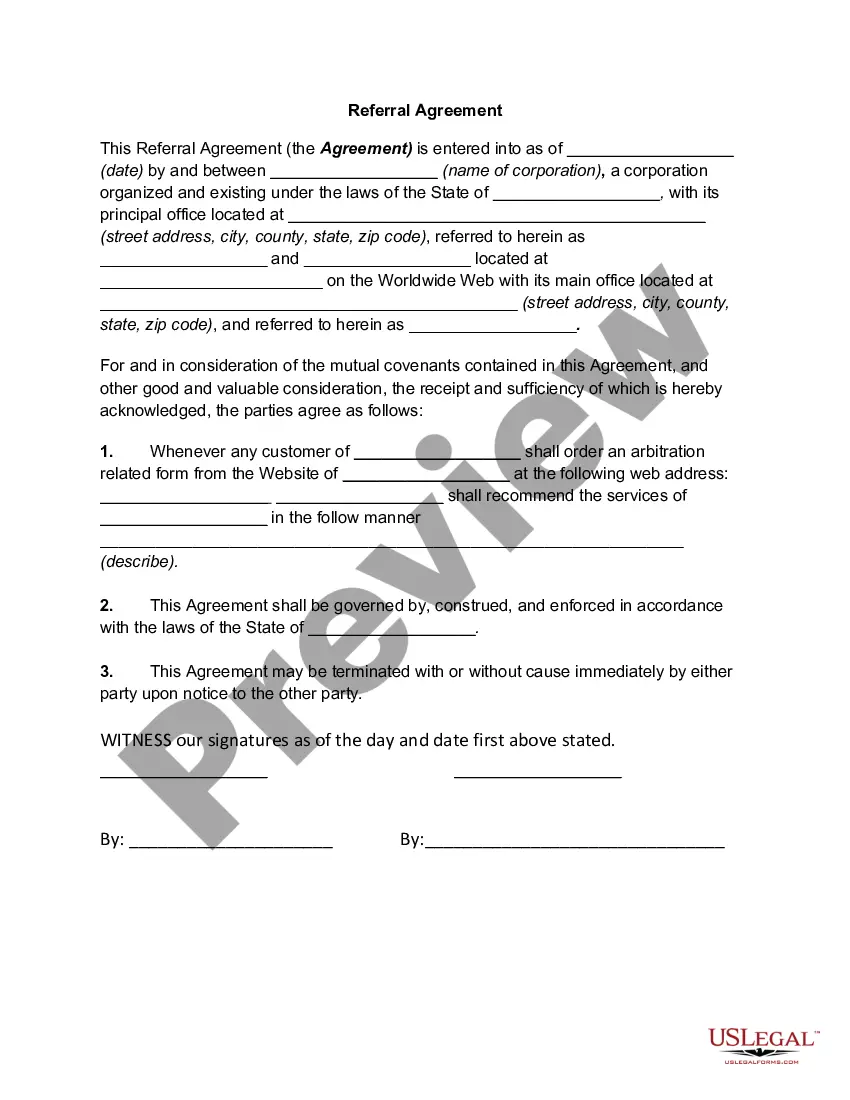
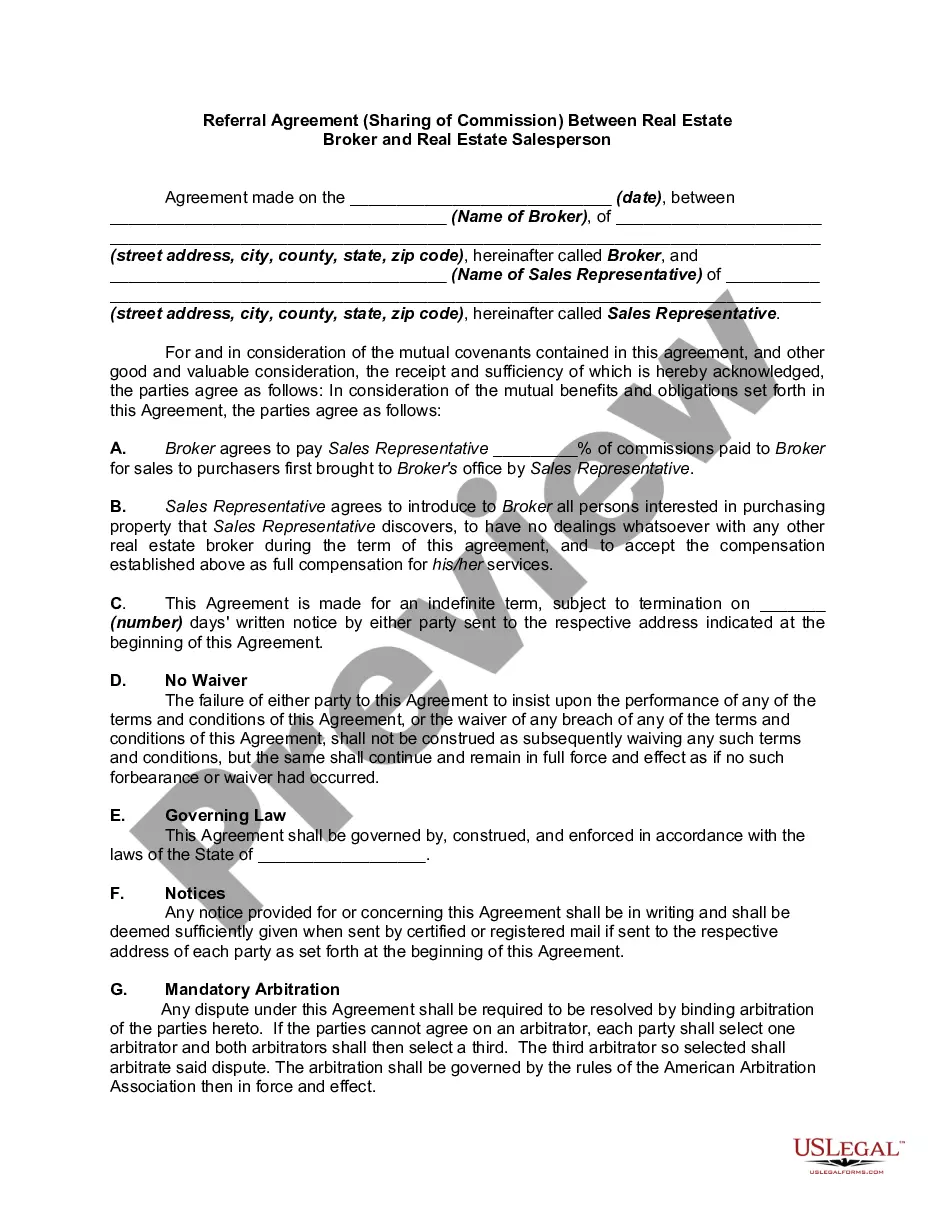
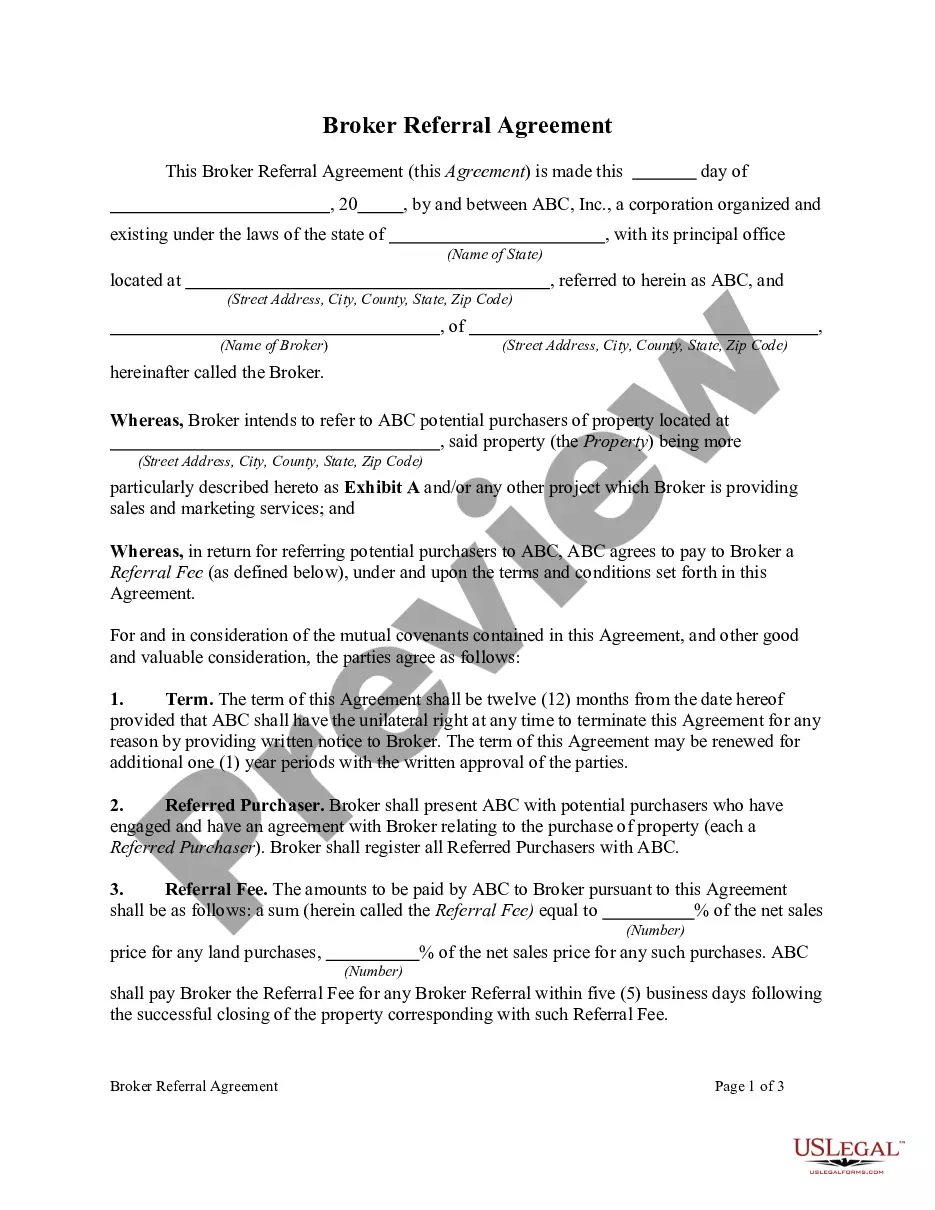
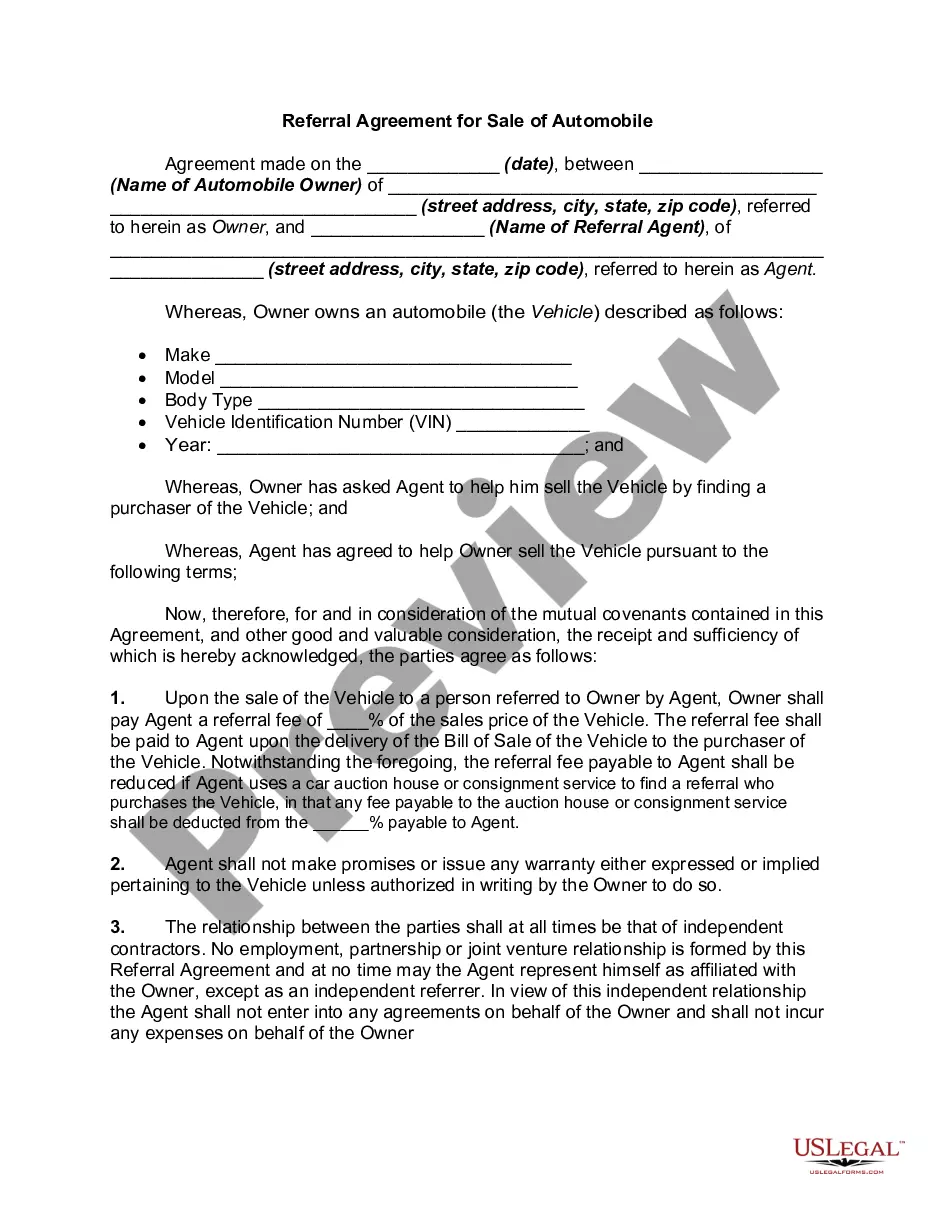
Client Referral Agreement For Physical Therapy In Utah
Description
Get your form ready online
Our built-in tools help you complete, sign, share, and store your documents in one place.
Make edits, fill in missing information, and update formatting in US Legal Forms—just like you would in MS Word.
Download a copy, print it, send it by email, or mail it via USPS—whatever works best for your next step.
Sign and collect signatures with our SignNow integration. Send to multiple recipients, set reminders, and more. Go Premium to unlock E-Sign.
If this form requires notarization, complete it online through a secure video call—no need to meet a notary in person or wait for an appointment.
We protect your documents and personal data by following strict security and privacy standards.

Make edits, fill in missing information, and update formatting in US Legal Forms—just like you would in MS Word.

Download a copy, print it, send it by email, or mail it via USPS—whatever works best for your next step.

Sign and collect signatures with our SignNow integration. Send to multiple recipients, set reminders, and more. Go Premium to unlock E-Sign.

If this form requires notarization, complete it online through a secure video call—no need to meet a notary in person or wait for an appointment.

We protect your documents and personal data by following strict security and privacy standards.
Looking for another form?









Form popularity
FAQ
You don't need a referral for physical therapy, but your insurance plan may not cover it without a referral. Your physician may make a referral online or call 1-866-850-8863.
Physical therapy in Utah is recognized as a “direct access” health service. What this means is that a physicians' prescription or referral is not required by Utah state law.
Though it is legal to self-refer, or see a PT through direct access in 46 states, Medicare and certain private health insurance plans require physician referrals, serving as a hurdle for those who wish to avoid a physician visit.
Physical therapists contribute to patient diagnosis of pathological processes by initiating a timely referral to physicians. The reviewed patient cases illustrate the importance of a multifactorial examination strategy and carefully monitoring patient response to treatment to identify such patients.
Making an Appointment for Physical Therapy While if you're seeing your primary care doctor, you may need a referral for a PT or orthopedist, other times, you do not need to schedule the appointment through them. This means a referral is not always needed, and you schedule the consultation yourself.
Namely, orthopedic surgeons, followed by general practitioners and internal medicine specialists, are still the main referral sources for physical therapy. Likewise, this study showed similar results with orthopedists (59%) and family and internal medicine practitioners (32%) accounting for 91% of the total referrals.
Current textbooks about diagnosis for physical therapists describe referral as an essential part of physical therapist practice, but do not provide explicit guidance for initiating a high-value referral or improving care continuity.
If additional treatment is needed, the PT shall obtain a referral from the individual's provider (physician, podiatrist, psychologist, chiropractor, dentist, nurse practitioner, or physician assistant).
Literally just stop by, talk to them. Bring testimonials from current patients. Tell them what sets your clinic apart from others. Have the therapists reach out after seeing the patient. You're playing a long game here so don't get frustrated if you don't see results quickly. Good luck!