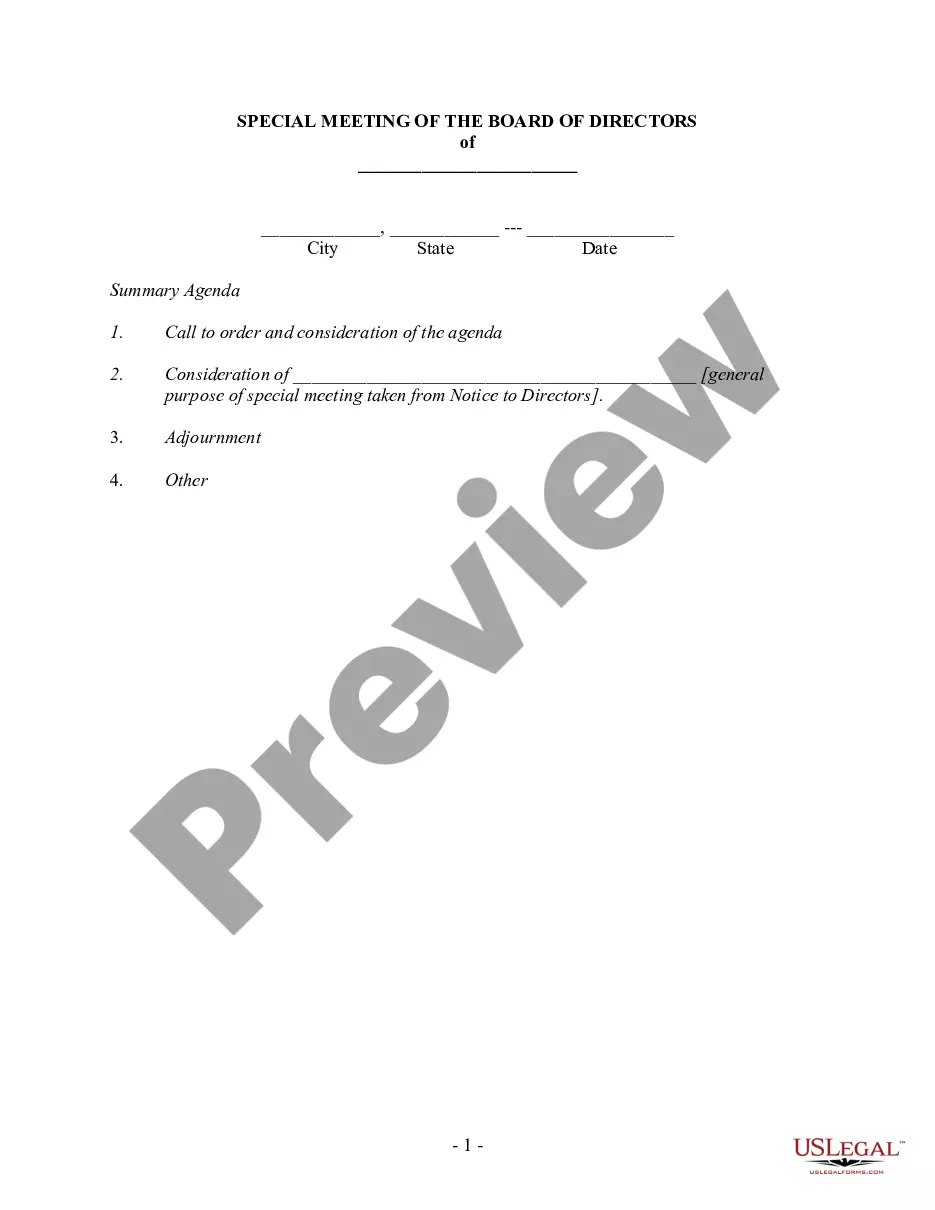
Board Meeting For In Santa Clara
Description



Get your form ready online
Our built-in tools help you complete, sign, share, and store your documents in one place.
Make edits, fill in missing information, and update formatting in US Legal Forms—just like you would in MS Word.
Download a copy, print it, send it by email, or mail it via USPS—whatever works best for your next step.
Sign and collect signatures with our SignNow integration. Send to multiple recipients, set reminders, and more. Go Premium to unlock E-Sign.
If this form requires notarization, complete it online through a secure video call—no need to meet a notary in person or wait for an appointment.
We protect your documents and personal data by following strict security and privacy standards.

Make edits, fill in missing information, and update formatting in US Legal Forms—just like you would in MS Word.

Download a copy, print it, send it by email, or mail it via USPS—whatever works best for your next step.

Sign and collect signatures with our SignNow integration. Send to multiple recipients, set reminders, and more. Go Premium to unlock E-Sign.

If this form requires notarization, complete it online through a secure video call—no need to meet a notary in person or wait for an appointment.

We protect your documents and personal data by following strict security and privacy standards.
Looking for another form?







Form popularity
FAQ
In short, yes. Non Board members can attend meetings. There are a number of reasons you might want to have this policy. Perhaps you need to invite senior staff members of your organisation.
Anyone who is an Officer of the company should also attend Board meetings. Invariably, these are senior executives and perhaps founders who have a depth of knowledge which the Board would wish to have present at the meetings.
Normally, non-director officers may be invited to attend all or particular meeting of the board, especially the secretary of the corporation for the purpose of keeping minutes of the proceeding. Also, outside counsel of the corporation are frequently invited to attend.
Yes, non-board members can often sit in on board meetings, depending on the organization's policies and state regulations. Many nonprofits encourage community members, donors, and volunteers to attend these meetings to foster transparency and collaboration.
Anyone who is an Officer of the company should also attend Board meetings. Invariably, these are senior executives and perhaps founders who have a depth of knowledge which the Board would wish to have present at the meetings. Other C-level Executives.
Board meetings are meetings at the highest level, i.e. a meeting where board members or their representatives are present. A company is not an actual entity but a legal one so it cannot take actions and make decisions.
The Directors shall attend Board Meetings in person. If unable to attend, a Director may appoint another Director to attend on his behalf by proxy which specifies the scope of authorization; any appointee shall not act as proxy for more than one Director.
Occasionally, special meetings need to be called because of an urgent or special matter. ing to Robert's Rules of Order, special meetings always require previous notice. Here are a few valid reasons for calling a special meeting: An urgent matter needs to be dealt with before the next regular meeting.
The officers of the organization prepare the agenda with assistance from the organization advisor. An agenda starts with a list of general business items. Specific topics that are to be discussed at the meeting are placed under the proper agenda item in an outline format.
Start Your Meeting on Time. Rap your gavel and say: “I call this meeting to order.” Wait for quiet, and then begin the meeting. These motions are listed in order of precedence.

