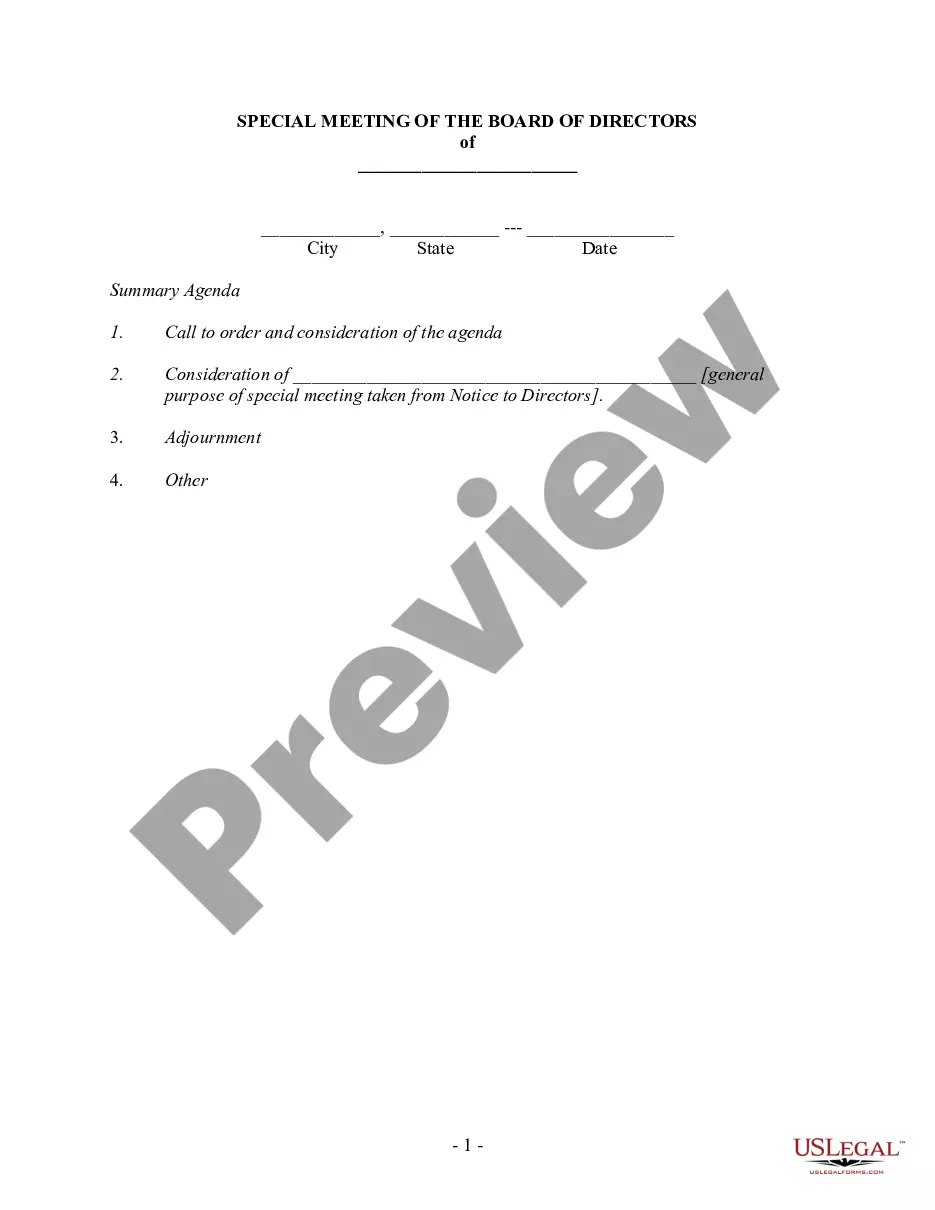
Business Meeting Format In San Diego
Description



Get your form ready online
Our built-in tools help you complete, sign, share, and store your documents in one place.
Make edits, fill in missing information, and update formatting in US Legal Forms—just like you would in MS Word.
Download a copy, print it, send it by email, or mail it via USPS—whatever works best for your next step.
Sign and collect signatures with our SignNow integration. Send to multiple recipients, set reminders, and more. Go Premium to unlock E-Sign.
If this form requires notarization, complete it online through a secure video call—no need to meet a notary in person or wait for an appointment.
We protect your documents and personal data by following strict security and privacy standards.

Make edits, fill in missing information, and update formatting in US Legal Forms—just like you would in MS Word.

Download a copy, print it, send it by email, or mail it via USPS—whatever works best for your next step.

Sign and collect signatures with our SignNow integration. Send to multiple recipients, set reminders, and more. Go Premium to unlock E-Sign.

If this form requires notarization, complete it online through a secure video call—no need to meet a notary in person or wait for an appointment.

We protect your documents and personal data by following strict security and privacy standards.
Looking for another form?





Form popularity
FAQ
How to Build an Effective Meeting Structure Define Clear Objectives: Develop an Agenda: Prioritize Agenda Items: Assign Roles and Responsibilities: Invite the Right Participants: Communicate the Purpose: Stick to the Schedule: Foster Active Participation:
Seven Different Types of Meetings Problem-Solving Meetings. Decision-Making Meetings. Planning Meetings. Status Meetings. Feedback or Follow-Up Meetings. Leaderless Meetings. Combination Meetings.
The 5Ps are Purpose, Participants, Process, Payoff, and Preparation (some suggest it should be 6Ps including Pizza). Purpose: Every meeting should have a clear purpose, which must be more specific than just a subject line calling for a 'daily meeting' (why should the team meet daily?).
Review this list of steps for organizing a successful meeting: Define your objectives. Decide who attends the meeting. Assign roles and responsibilities. Select the location and time. Consider different needs. Prepare the meeting agenda. Distribute materials in advance. Send a meeting recap.
7 Step Meeting Process Clarify Aim/Purpose. Assign Roles. Review Agenda. Work through Agenda. Review meeting record. Plan Next Steps and Next Agenda. Evaluate.
What Should Be Included in Meeting Minutes? Date and time of the meeting. Names of the meeting participants and those unable to attend (e.g., “regrets”) Acceptance or corrections/amendments to previous meeting minutes. Decisions made about each agenda item, for example: Actions taken or agreed to be taken. Next steps.
FAQs Start by noting the date, time, and attendees. Write down the main topics discussed (agenda items). Highlight key decisions made. List action items, responsibilities, deadlines, and any additional remarks. Use digital tools for drafting and sharing. Review and revise for clarity and accuracy.
Set a clear purpose and agenda: Clearly outline the purpose of the meeting—whether it's to brainstorm, make decisions, or provide updates. Share a structured agenda with all participants at least a day in advance so everyone knows the topics to be discussed and the time allocated for each.
The agenda should include the meeting's goal, a list of topics to be discussed with their purposes, time allocations, and assigned facilitators. This structure provides a clear roadmap for the meeting, ensuring that all important points are covered. Share the agenda with all participants well in advance of the meeting.

