Business Meeting Format In Salt Lake
Description



Get your form ready online
Our built-in tools help you complete, sign, share, and store your documents in one place.
Make edits, fill in missing information, and update formatting in US Legal Forms—just like you would in MS Word.
Download a copy, print it, send it by email, or mail it via USPS—whatever works best for your next step.
Sign and collect signatures with our SignNow integration. Send to multiple recipients, set reminders, and more. Go Premium to unlock E-Sign.
If this form requires notarization, complete it online through a secure video call—no need to meet a notary in person or wait for an appointment.
We protect your documents and personal data by following strict security and privacy standards.

Make edits, fill in missing information, and update formatting in US Legal Forms—just like you would in MS Word.

Download a copy, print it, send it by email, or mail it via USPS—whatever works best for your next step.

Sign and collect signatures with our SignNow integration. Send to multiple recipients, set reminders, and more. Go Premium to unlock E-Sign.

If this form requires notarization, complete it online through a secure video call—no need to meet a notary in person or wait for an appointment.

We protect your documents and personal data by following strict security and privacy standards.
Looking for another form?








Form popularity
FAQ
Contact the City Council Office at 801-535-7600 or councilments@slc to coordinate. All agenda-related comments received by phone and email are shared with the Council Members and added to the public meeting record.
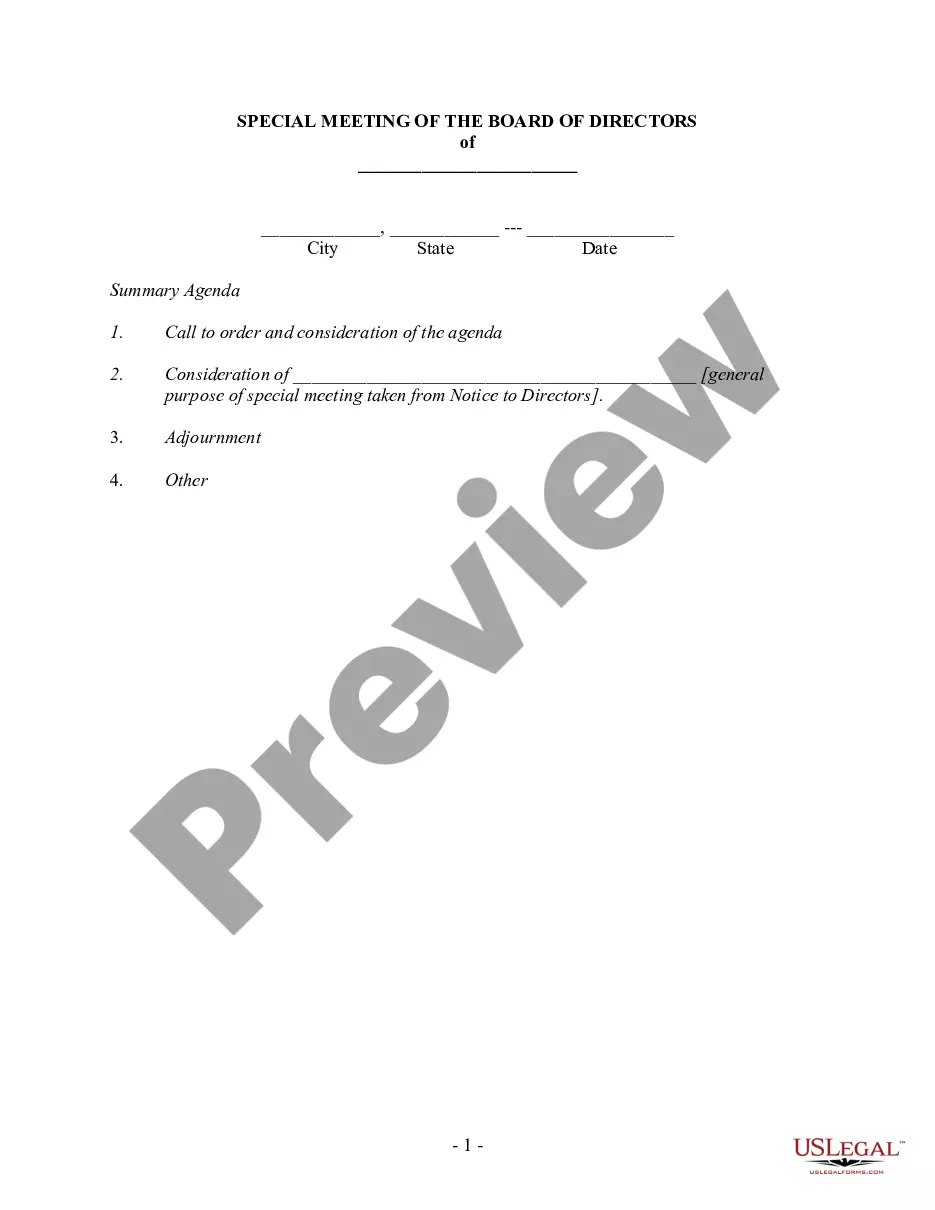
Starting the Meeting: ``Good (morning/afternoon), everyone. Thank you for joining us today. I'd like to welcome you to this meeting. Our agenda includes (briefly outline the agenda items). Let's begin with our first topic.''
Best Opening Remarks: Setting the Stage "Good morning, everyone! ... "Welcome, team! ... "Thank you all for joining. "Hello everyone, let's kick things off with a brief reflection on our last meeting's achievements and how they've set the stage for today's topics." "Good to see everyone.
How to Build an Effective Meeting Structure Define Clear Objectives: Determine the specific purpose of the meeting. Develop an Agenda. Prioritize Agenda Items. Assign Roles and Responsibilities. Invite the Right Participants. Communicate the Purpose. Stick to the Schedule. Foster Active Participation:
Key takeaways: Welcome everyone and make sure everyone can see/hear everyone else. Start the meeting on time. Review the agenda and objectives. Keep the purpose of the meeting at the forefront. Define roles, if needed. Plan an effective transition to get into your agenda items.
You can start the meeting with the classic 'Good morning/afternoon' and then thank all the attendees for joining. Here's an example: Good morning, everyone! Thank you for taking time out of your busy schedule and joining us for a discussion. Or, 'Good morning, everyone!
Here are five phrases you can use to do this: I've called this meeting to ___ (more formal) The purpose of this meeting is ___ Today, we need to outline our plans for ___ Today, we're going to talk about/discuss ___ (less formal) By the end of this meeting, we'll have decided on/determined ___ (most goal-oriented!)
Explanation. An agenda lists the items of business to be taken up during a meeting or session. It may also be called a "calendar". A meeting agenda may be headed with the date, time and location of the meeting, followed by a series of points outlining the order in which the business is to be conducted.
Salt Lake City was founded on July 24, 1847, by a group of Mormon pioneers. The members of The Church of Jesus Christ of Latter-day Saints, led by their president Brigham Young, were the first non-Indians to settle permanently in the Salt Lake Valley.
The agenda should include the meeting's goal, a list of topics to be discussed with their purposes, time allocations, and assigned facilitators. This structure provides a clear roadmap for the meeting, ensuring that all important points are covered. Share the agenda with all participants well in advance of the meeting.
