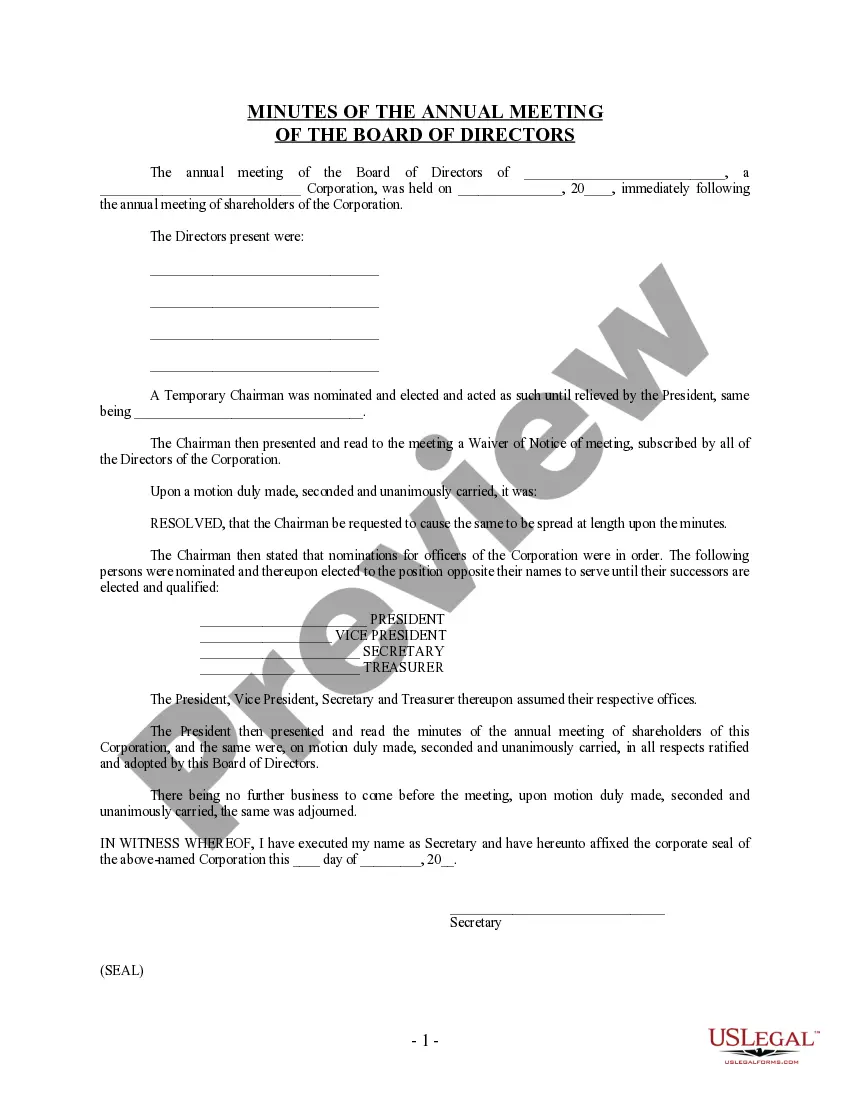
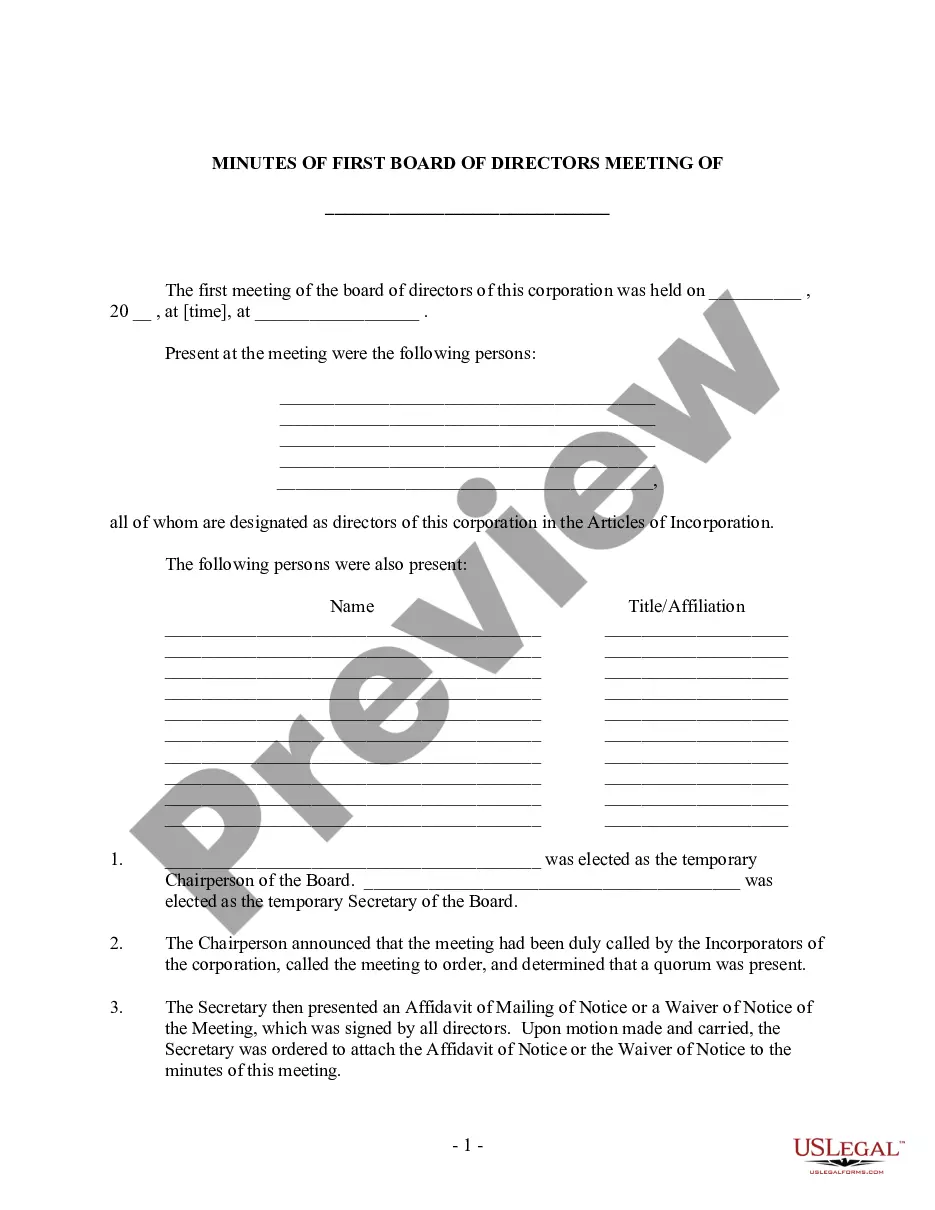
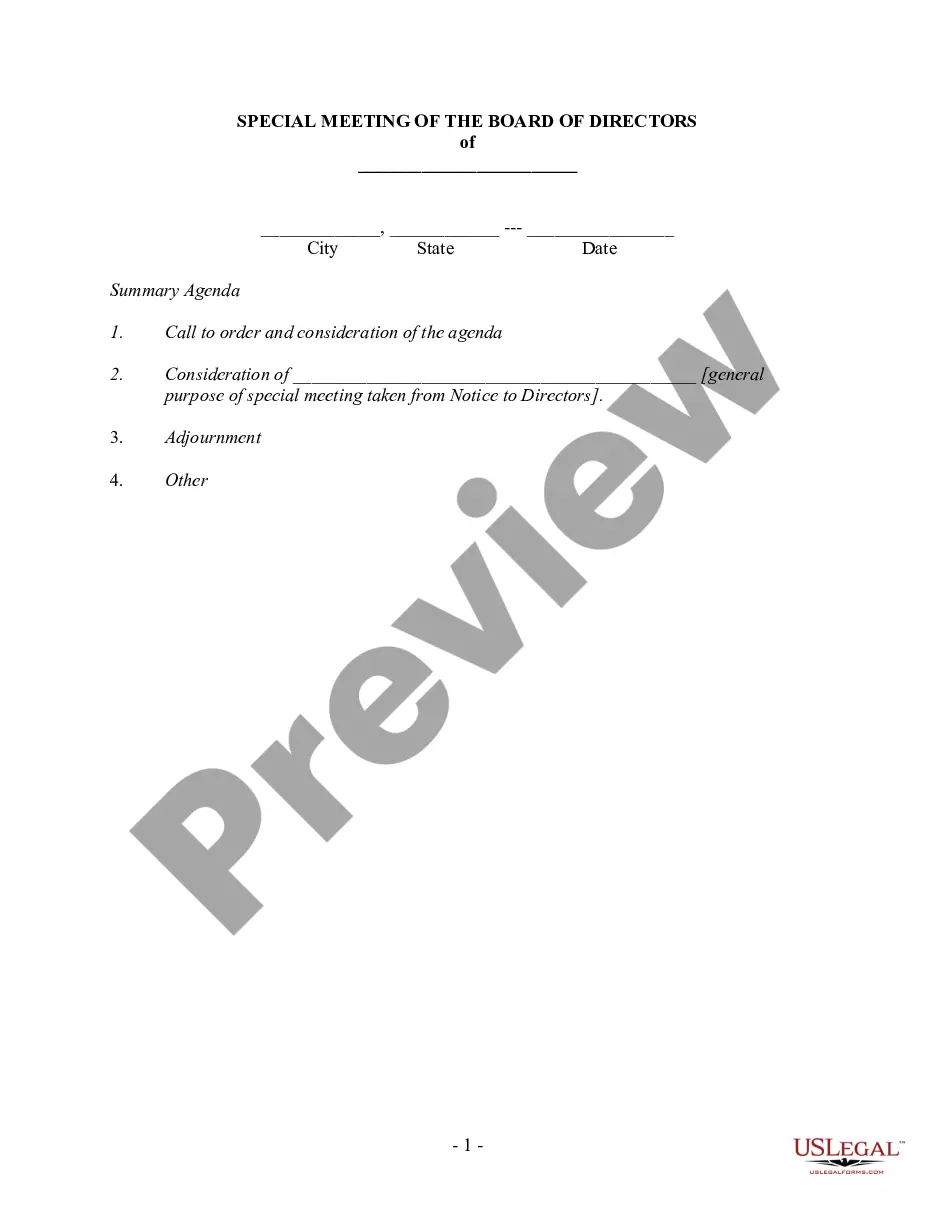
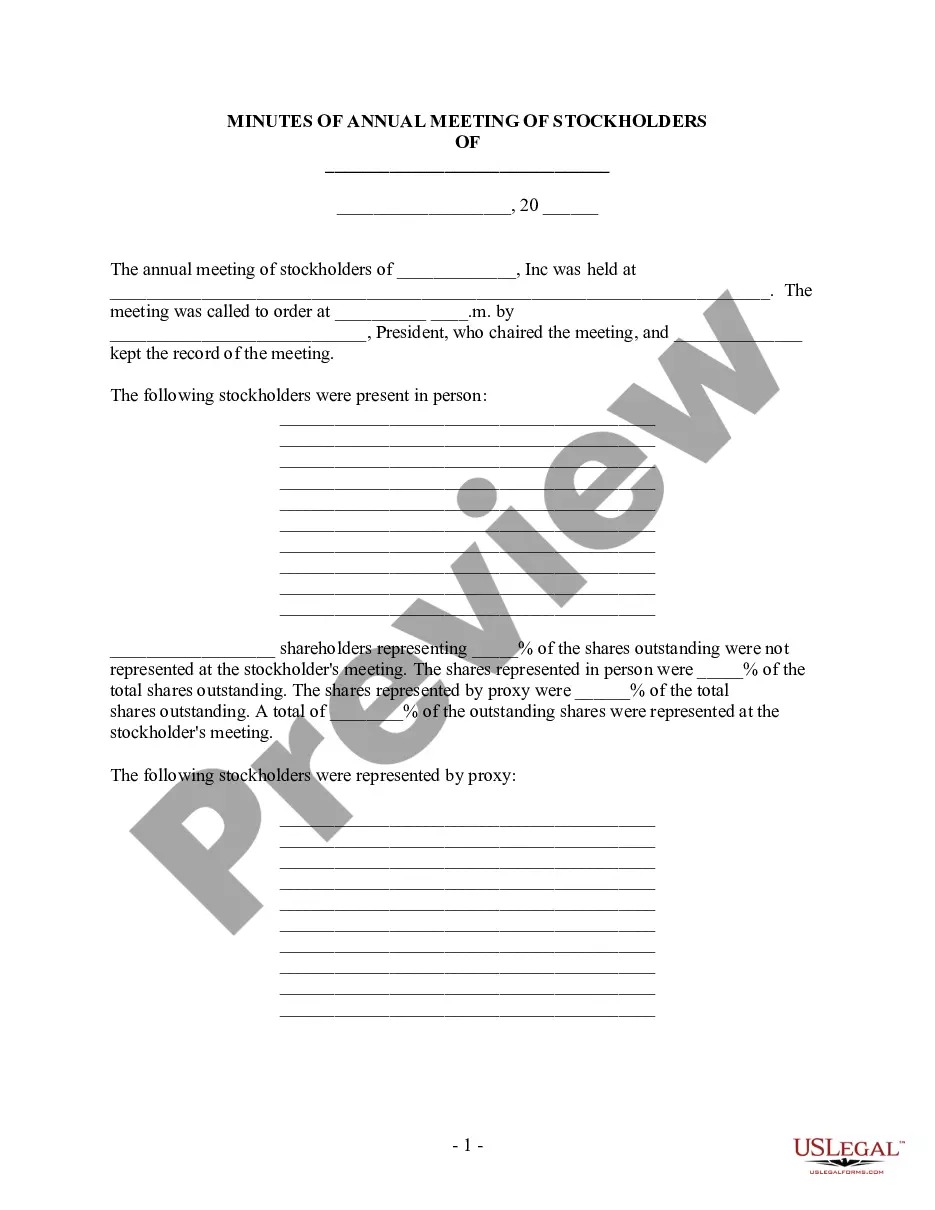
Business Meeting Format Agenda In Illinois
Description
Get your form ready online
Our built-in tools help you complete, sign, share, and store your documents in one place.
Make edits, fill in missing information, and update formatting in US Legal Forms—just like you would in MS Word.
Download a copy, print it, send it by email, or mail it via USPS—whatever works best for your next step.
Sign and collect signatures with our SignNow integration. Send to multiple recipients, set reminders, and more. Go Premium to unlock E-Sign.
If this form requires notarization, complete it online through a secure video call—no need to meet a notary in person or wait for an appointment.
We protect your documents and personal data by following strict security and privacy standards.

Make edits, fill in missing information, and update formatting in US Legal Forms—just like you would in MS Word.

Download a copy, print it, send it by email, or mail it via USPS—whatever works best for your next step.

Sign and collect signatures with our SignNow integration. Send to multiple recipients, set reminders, and more. Go Premium to unlock E-Sign.

If this form requires notarization, complete it online through a secure video call—no need to meet a notary in person or wait for an appointment.

We protect your documents and personal data by following strict security and privacy standards.
Looking for another form?

Form popularity
FAQ
For example, a member of the board may call for a vote of no-confidence if they believe a board member has made decisions that were harmful to the organization. Second: Robert's Rules only permit one topic for discussion at any time. To qualify for discussion, the primary motion must receive a second.
The agenda should include the meeting's goal, a list of topics to be discussed with their purposes, time allocations, and assigned facilitators. This structure provides a clear roadmap for the meeting, ensuring that all important points are covered. Share the agenda with all participants well in advance of the meeting.
7 Key Types of Agendas: Making Meetings More Productive Standard Meeting Agenda: The Backbone of Team Meets. Kickoff Meet Agenda: Starting Off on the Right Foot. Brainstorming Agenda: Unleashing Creative Potential. Board Meet Agenda: Formal and Focused. Action Review Meeting Agenda: Tracking Progress.
Boards put specific items into their consent agendas. Such items may include topics that are either routine or recurring, procedural decisions, non-controversial issues where there is no disagreement, and items that the board previously discussed and has already come to a consensus on but still needs to vote on them.
Ing to Robert's Rule, all meetings should follow a strict agenda that adds structure to the meeting. The agenda should be prepared before the meeting and should be followed from top to bottom. Each point should be addressed and discussed before moving on to the next.
Standard meeting agendas can be used for a variety of meetings, including team check-ins and project updates. These agendas usually include sections such as a welcome, approval of previous minutes, discussion points and action items. They are often flexible and follow a loose structure, allowing for spontaneous input.
The 4 Ps of a meeting agenda stands for Purpose, Product, People, and Process. These elements help guide the structure of a meeting, ensuring that it stays focused, efficient, and productive.
The agenda should include the meeting's goal, a list of topics to be discussed with their purposes, time allocations, and assigned facilitators. This structure provides a clear roadmap for the meeting, ensuring that all important points are covered. Share the agenda with all participants well in advance of the meeting.
Understanding the 4 Ps of a Meeting Agenda. The 4 Ps—Purpose, Product, People, and Process—are crucial elements of a well-planned meeting. They provide a roadmap for structuring meetings to ensure that they are both efficient and effective.
What is the best format for a meeting agenda? Meeting details, like date, time, location and attendees. Meeting objectives that state the purpose of the meeting. Agenda items with specific topics for discussion. Schedule of events with times allocated to each agenda item. Action items from previous meetings.