Annual Board Directors Sample With Replacement In Dallas
Description

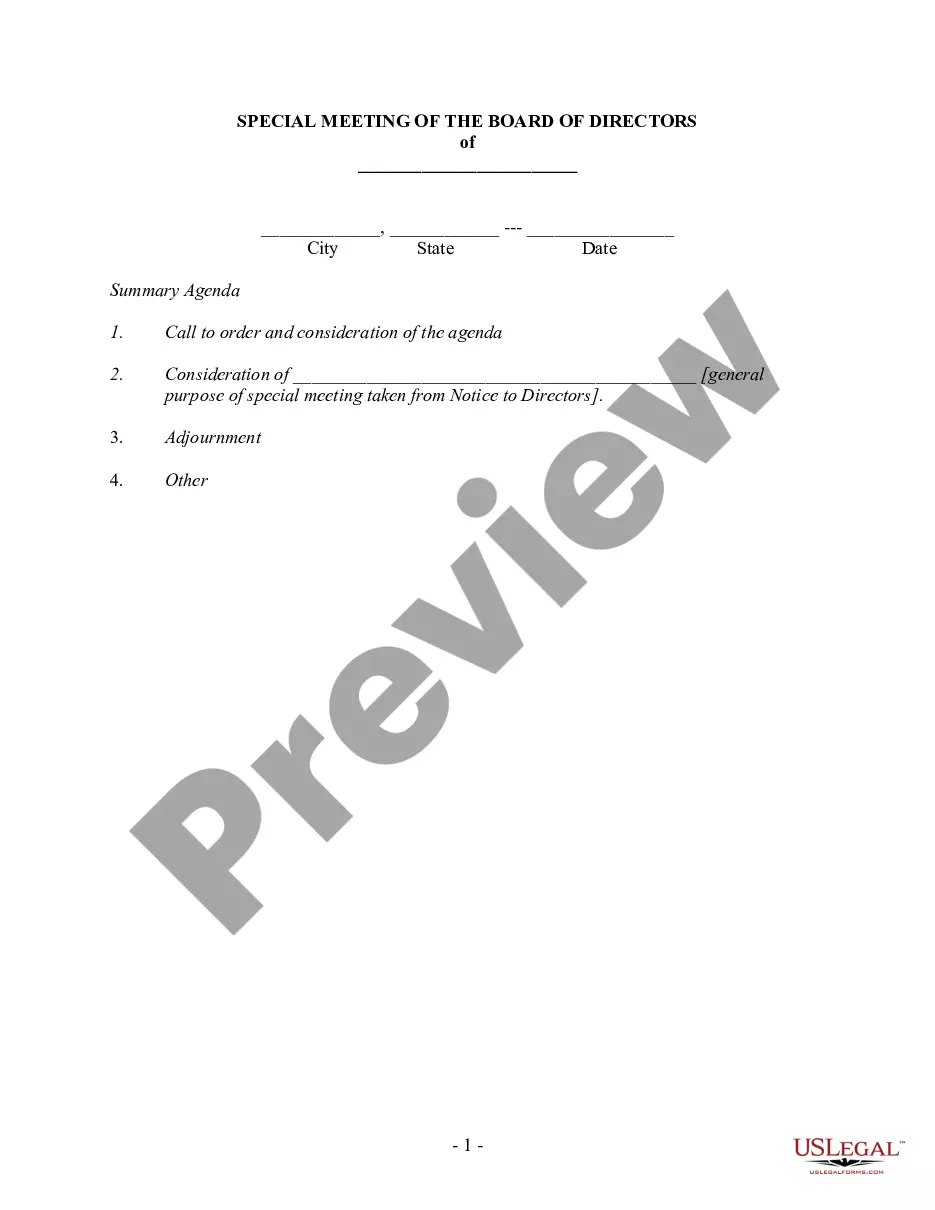


Get your form ready online
Our built-in tools help you complete, sign, share, and store your documents in one place.
Make edits, fill in missing information, and update formatting in US Legal Forms—just like you would in MS Word.
Download a copy, print it, send it by email, or mail it via USPS—whatever works best for your next step.
Sign and collect signatures with our SignNow integration. Send to multiple recipients, set reminders, and more. Go Premium to unlock E-Sign.
If this form requires notarization, complete it online through a secure video call—no need to meet a notary in person or wait for an appointment.
We protect your documents and personal data by following strict security and privacy standards.

Make edits, fill in missing information, and update formatting in US Legal Forms—just like you would in MS Word.

Download a copy, print it, send it by email, or mail it via USPS—whatever works best for your next step.

Sign and collect signatures with our SignNow integration. Send to multiple recipients, set reminders, and more. Go Premium to unlock E-Sign.

If this form requires notarization, complete it online through a secure video call—no need to meet a notary in person or wait for an appointment.

We protect your documents and personal data by following strict security and privacy standards.
Looking for another form?
Form popularity
FAQ
The most common policy for member organizations is to call a meeting of members and notify the board member in writing that they will be voted upon during said meeting. From there, bylaws can require the majority of (or sometimes more) members to vote to remove the board member.
Key steps in the board succession planning process Step 1: Create a board development committee. Step 2: Build engagement. Step 3: Identify priorities. Step 4: Complete regular board self-assessments. Step 5: Conduct a skills gap analysis. Step 6: Be mindful of the need for diversity.
The replaceable rules allow the board to appoint a director by passing an ordinary resolution (50% majority vote). A director of a company can also resign by providing the company with written notice. The rules companies are required to follow depend on whether they are a private or public company.
Follow Due Process – Ensure that the removal process follows the procedures outlined in your organization's bylaws and applicable state laws. This may include providing written notice to the board member, allowing them an opportunity to respond, and calling a special meeting to discuss and vote on the removal.

