Director In Meeting In Broward
Description

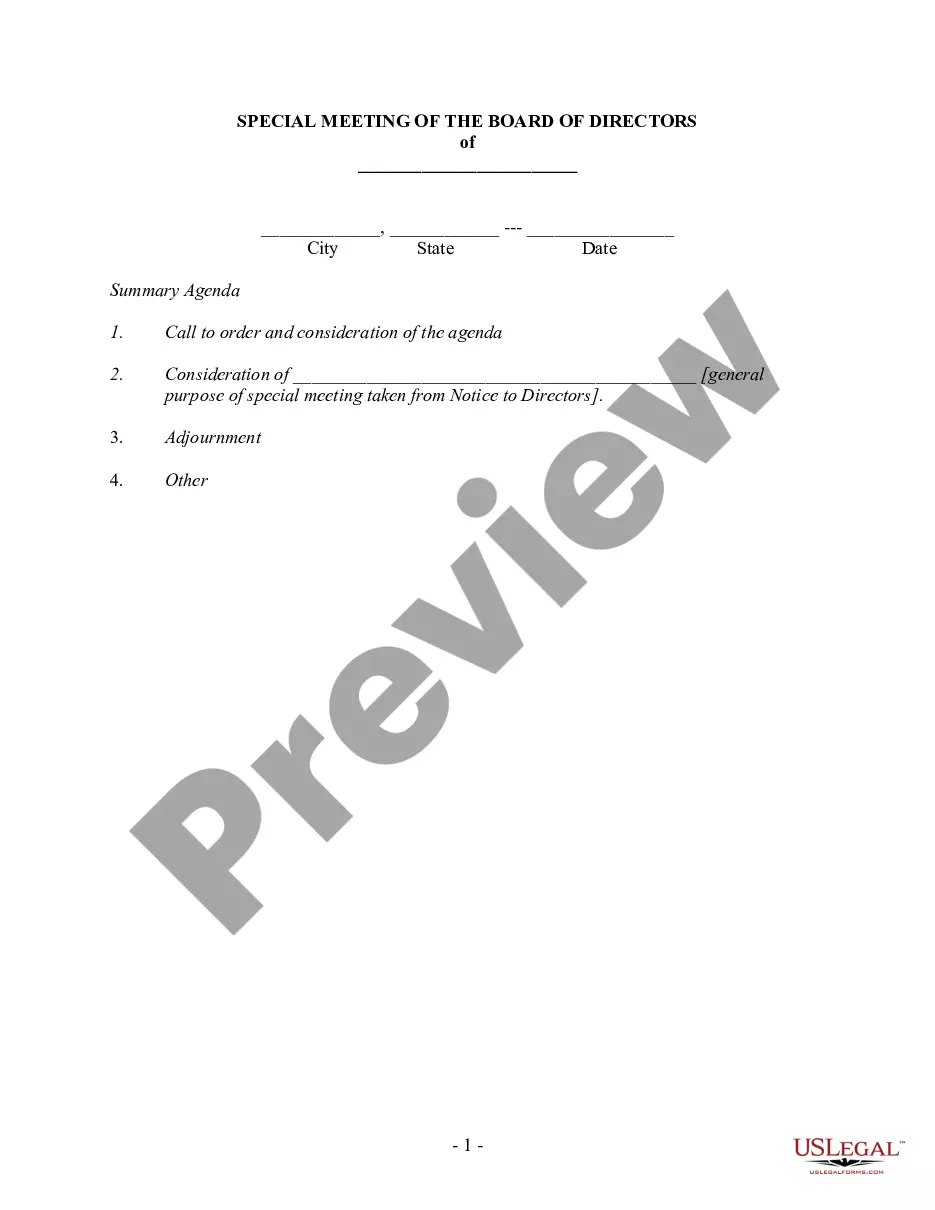


Get your form ready online
Our built-in tools help you complete, sign, share, and store your documents in one place.
Make edits, fill in missing information, and update formatting in US Legal Forms—just like you would in MS Word.
Download a copy, print it, send it by email, or mail it via USPS—whatever works best for your next step.
Sign and collect signatures with our SignNow integration. Send to multiple recipients, set reminders, and more. Go Premium to unlock E-Sign.
If this form requires notarization, complete it online through a secure video call—no need to meet a notary in person or wait for an appointment.
We protect your documents and personal data by following strict security and privacy standards.

Make edits, fill in missing information, and update formatting in US Legal Forms—just like you would in MS Word.

Download a copy, print it, send it by email, or mail it via USPS—whatever works best for your next step.

Sign and collect signatures with our SignNow integration. Send to multiple recipients, set reminders, and more. Go Premium to unlock E-Sign.

If this form requires notarization, complete it online through a secure video call—no need to meet a notary in person or wait for an appointment.

We protect your documents and personal data by following strict security and privacy standards.
Looking for another form?


Form popularity
FAQ
A Board of Directors meeting is a formal gathering of the board members of a company or organization. These meetings are essential for the governance and strategic direction of the entity. Typically, board meetings are held regularly, with the frequency determined by the organization's bylaws or legal requirements.
A Board Meeting is a formal meeting of the board of directors of an organization and any invited guests, held at definite intervals and as needed to review performance, consider policy issues, address major problems and perform the legal business of the board.
Essentially, it is the role of the board of directors to hire the CEO or general manager of the business and assess the overall direction and strategy of the business. The CEO or general manager is responsible for hiring all of the other employees and overseeing the day-to-day operation of the business.
Directors' meetings refer to board meetings or board committee meetings where different viewpoints are considered before deciding on a course of action. Directors must be able to establish that their decisions are made with care and diligence, in good faith and for a proper purpose.
Board of Directors Responsibilities Hiring and setting compensation for executive leadership. Adopting policies to address conflicts of interest. Shaping the organization's culture and vision. Improving the organization's strategic focus and effectiveness.
Board meetings are formal gatherings held by the board of directors that aim to discuss major problems, areas of concern, vote on decisions, review performance, consider policy issues, and, in some cases, perform the legal duties of the board.
A board meeting is a formal gathering of a company's board of directors, which is when crucial agenda items will be discussed and actioned. Because of its importance, board meeting minutes are an absolute necessity, not just from a practical standpoint, but also from a legal one.
A board of directors has three formal responsibilities. They are to oversee the management of the company, to approve corporate strategy, and to make sure the financial statements are accurate. In order to do these things, they need to be able to understand financial statements and have knowledge of business law.
If you want to file a motion, the process is generally something like this: You write your motion. You file your motion with the court clerk. The court clerk inserts the date and time your motion will be heard by the judge. You “serve” (mail) your motion to the other side.
The Florida Courts E-Filing Portal is a single statewide website where users can file court documents in Florida's trial and appellate courts. E-filing is the electronic filing of documents to the clerk's office.
