Sample Appreciation Letter To An Organization In Harris
Description
Get your form ready online
Our built-in tools help you complete, sign, share, and store your documents in one place.
Make edits, fill in missing information, and update formatting in US Legal Forms—just like you would in MS Word.
Download a copy, print it, send it by email, or mail it via USPS—whatever works best for your next step.
Sign and collect signatures with our SignNow integration. Send to multiple recipients, set reminders, and more. Go Premium to unlock E-Sign.
If this form requires notarization, complete it online through a secure video call—no need to meet a notary in person or wait for an appointment.
We protect your documents and personal data by following strict security and privacy standards.

Make edits, fill in missing information, and update formatting in US Legal Forms—just like you would in MS Word.

Download a copy, print it, send it by email, or mail it via USPS—whatever works best for your next step.

Sign and collect signatures with our SignNow integration. Send to multiple recipients, set reminders, and more. Go Premium to unlock E-Sign.

If this form requires notarization, complete it online through a secure video call—no need to meet a notary in person or wait for an appointment.

We protect your documents and personal data by following strict security and privacy standards.
Looking for another form?









Form popularity
FAQ
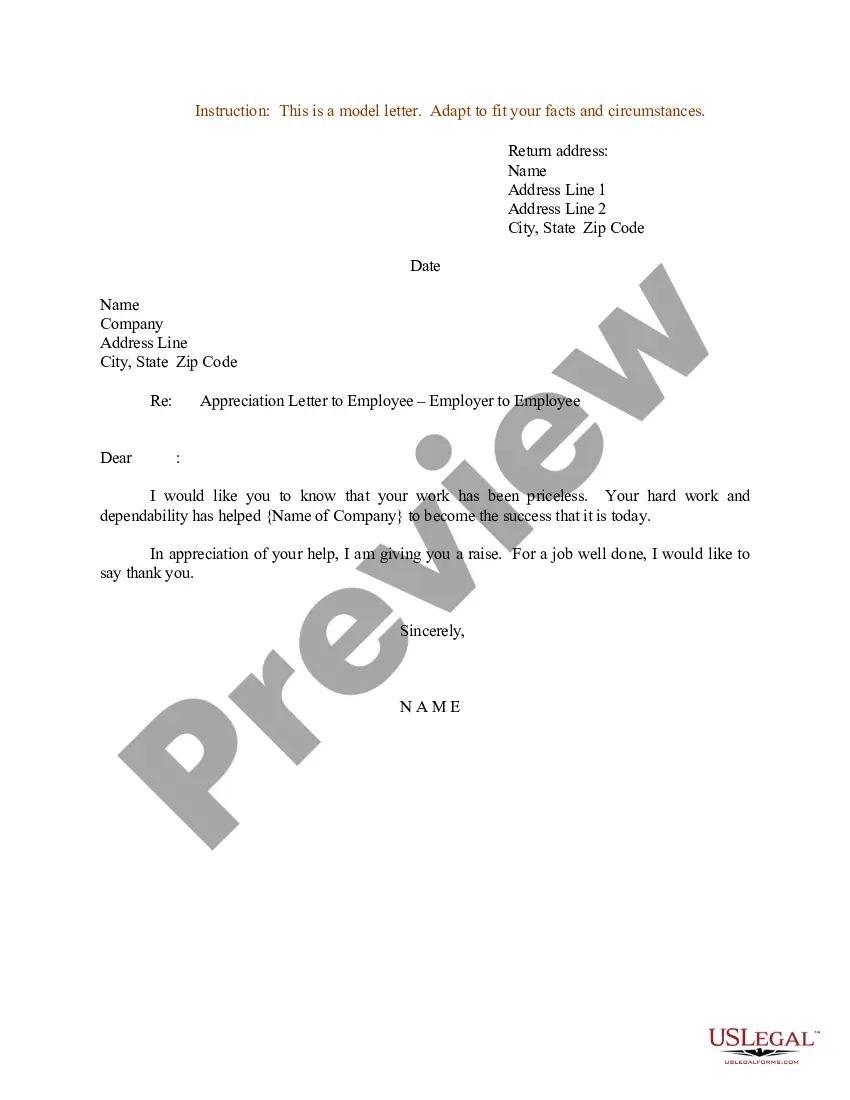
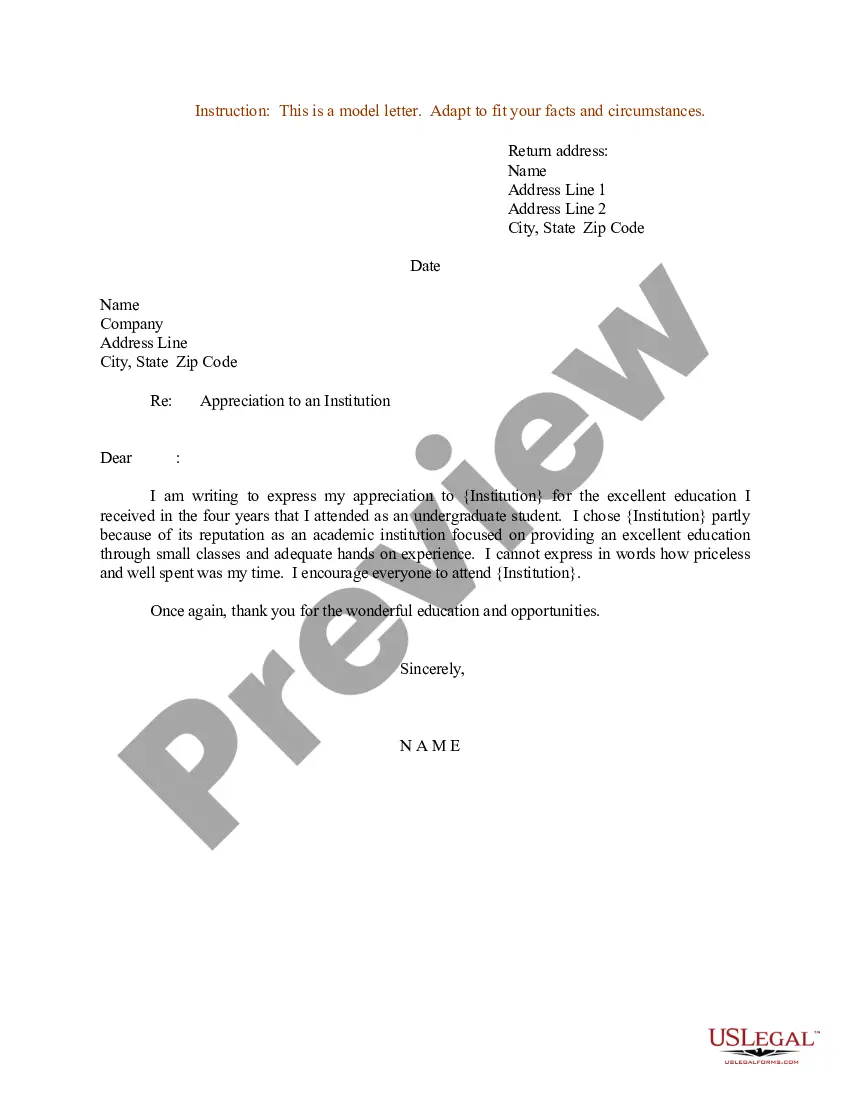
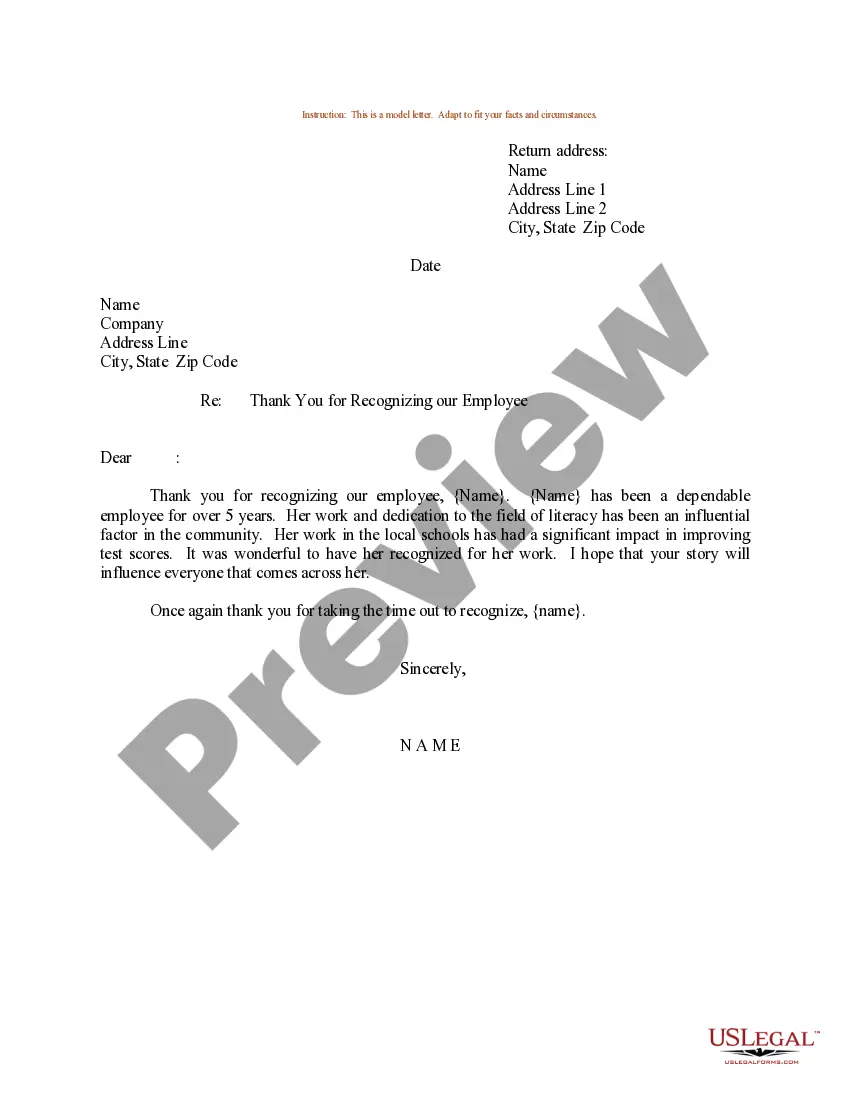
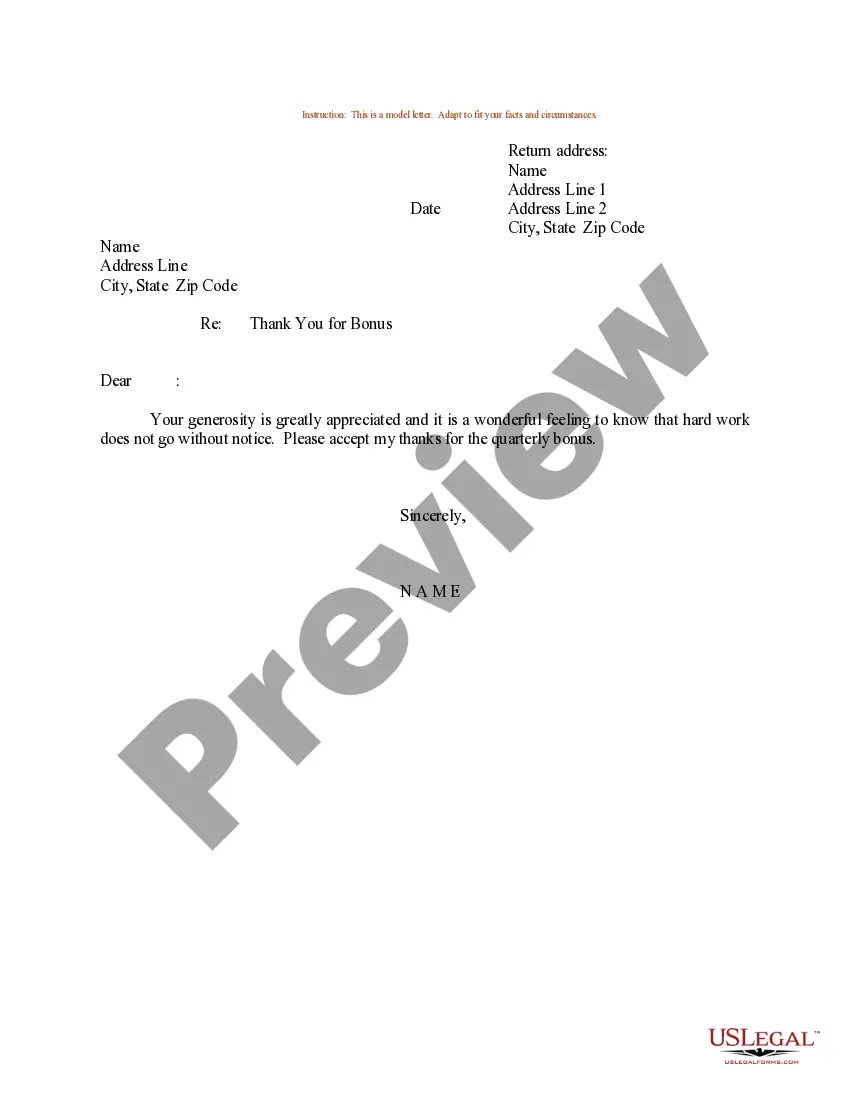
How to write a letter of appreciation Be prompt. Choose the appropriate format. Write a greeting. Express the letter's purpose. Be specific. Conclude and sign. Proofread.
I am writing to you to sincerely express my gratitude for your exceptional effort during insert information about the project or action. You are a valued member of the team. I truly appreciate all that you have accomplished. Your insert the employee's admirable qualities, skills or behaviours are remarkable.
Guidelines for writing appreciation letters: State what you appreciate and briefly explain why. Do not add other news or information not related to the appreciative gesture. The message of appreciation should stand alone. Be brief, warm, and sincere.
How do you write sincere appreciation? Be specific about what you're appreciating and why. Use genuine and heartfelt language. Express gratitude for the recipient's actions or qualities sincerely. Avoid generic statements and instead provide details or examples.
How to express gratitude effectively at work Be specific. Don't just say “Good job” or “Thanks for everything.” Tell them what you appreciate and why. Be timely. Don't wait too long to express your gratitude. Be personal. Be genuine. Be public.
Appreciation Letter Sample I am writing to express my sincere appreciation for your hard work and dedication to Company Name. Thanks for specific thing they did well. Your positive quality or skill on project/task was awe-inspiring. Because of what they did, positive outcome of their work.
Heartfelt Thank You Message Examples Your kindness has touched my heart. I'm so thankful for your tremendous support during this time. Your generous gift was a blessing. Your thoughtfulness and generosity deeply move me. I am overwhelmed with gratitude for your kindness.
Some helpful thank-you phrases for different situations include: “Thank you for your valuable advice”, “I really appreciate your help”, “I applaud you for your excellent work”, “I am forever grateful for this opportunity”, “I greatly appreciate your time”.
The relationships are interpersonal rather than romantic, and the interactions are between co-workers or between managers and employees. The five languages of appreciation are acts of service, quality time, words of affirmation, tangible gifts, and appropriate physical touch.

