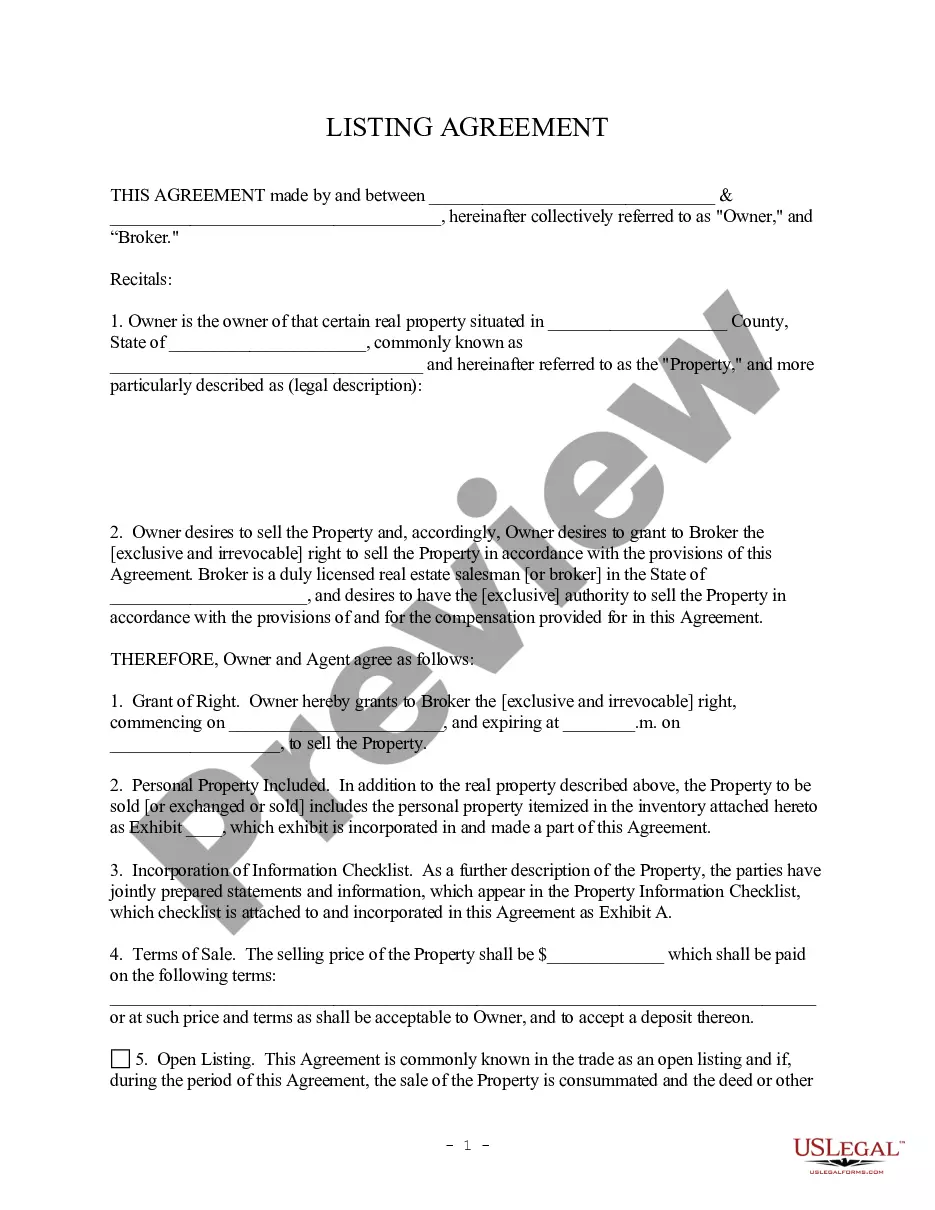
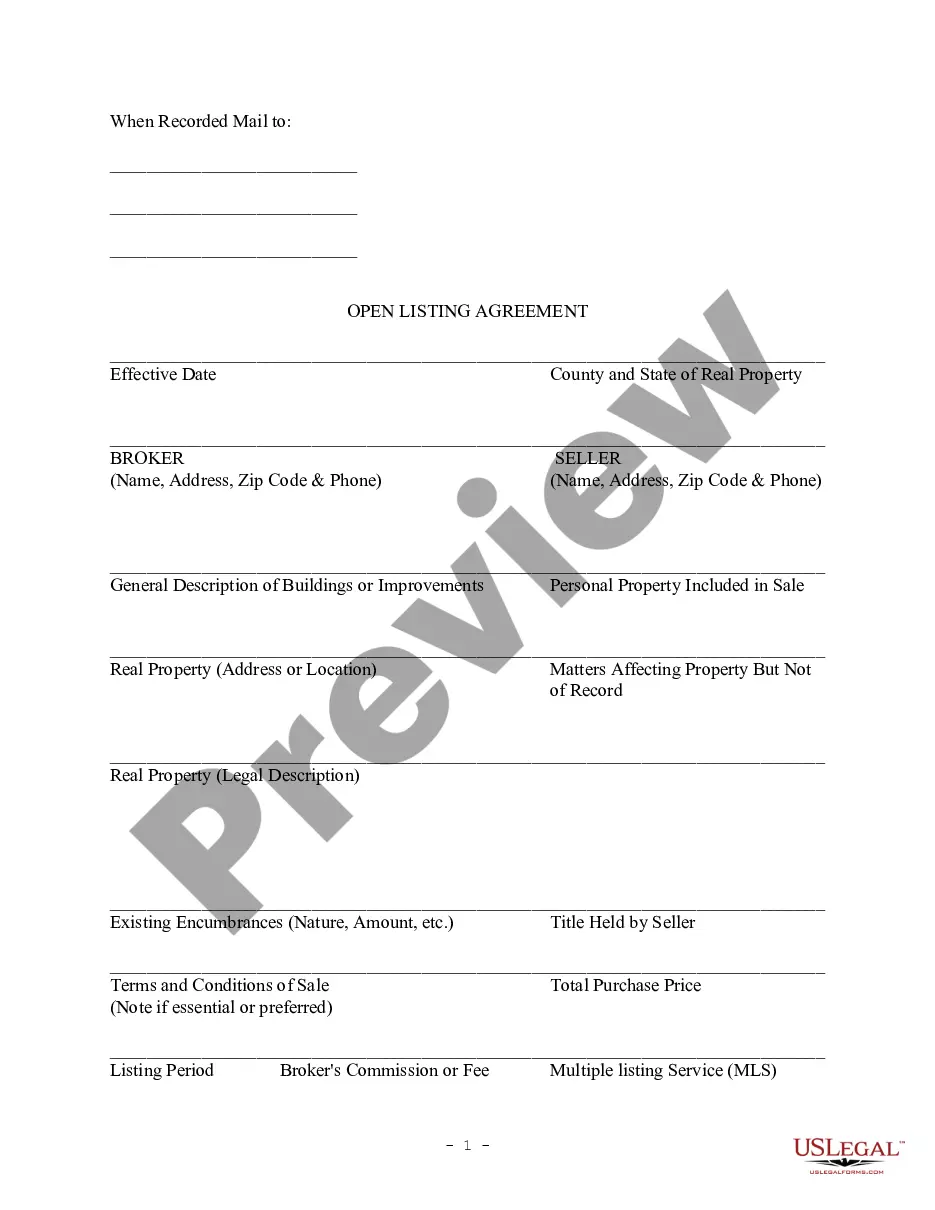
Listing Agreement Form For Unimproved Property In Virginia
Description
Get your form ready online
Our built-in tools help you complete, sign, share, and store your documents in one place.
Make edits, fill in missing information, and update formatting in US Legal Forms—just like you would in MS Word.
Download a copy, print it, send it by email, or mail it via USPS—whatever works best for your next step.
Sign and collect signatures with our SignNow integration. Send to multiple recipients, set reminders, and more. Go Premium to unlock E-Sign.
If this form requires notarization, complete it online through a secure video call—no need to meet a notary in person or wait for an appointment.
We protect your documents and personal data by following strict security and privacy standards.

Make edits, fill in missing information, and update formatting in US Legal Forms—just like you would in MS Word.

Download a copy, print it, send it by email, or mail it via USPS—whatever works best for your next step.

Sign and collect signatures with our SignNow integration. Send to multiple recipients, set reminders, and more. Go Premium to unlock E-Sign.

If this form requires notarization, complete it online through a secure video call—no need to meet a notary in person or wait for an appointment.

We protect your documents and personal data by following strict security and privacy standards.
Looking for another form?
Form popularity
FAQ
Write the contract in six steps Start with a contract template. Open with the basic information. Describe in detail what you have agreed to. Include a description of how the contract will be ended. Write into the contract which laws apply and how disputes will be resolved. Include space for signatures.
A listing agreement is a contract between a property owner and a real estate broker that authorizes the broker to represent the seller and find a buyer for the property. The three types of real estate listing agreements are open listing, exclusive agency listing, and exclusive right-to-sell listing.
Though notarization is not required, it may still be a good idea to have a notary present in order to verify the identities of all signers.
State of Virginia. As of August 17, 2024, Virginia requires buyers and their agents to sign a written brokerage agreement before touring homes together. The new agreement includes buyer-broker agreements and listing agreements. I also know one does NOT have to have a realtor to buy a house in the state of Virginia.
Unimproved property means property upon which no residential, commercial, or other building has been built.
Characteristics of Unimproved Land Unimproved land is characterized by its lack of developed infrastructure. This means no utilities, such as water, electricity, or sewage systems, and no built structures, like roads or buildings.
The main difference between improved land and unimproved land lies in their level of development. Improved land typically has structures like buildings or homes, access to utilities, and may have been graded or otherwise modified for construction.
Can You Build on Unimproved Land? Yes, you can. As mentioned earlier in this article, investors often eye unimproved land for building purposes. Depending on the area of the land you're considering, the addition of residential and/or commercial property may be a good choice.
Unimproved land (sometimes known as vacant lots or more commonly raw land) is land that does not have any active services or public utilities running through it like water lines, electricity or even street access from the public roadways.
