Listing Agreement Form For Debt Securities In Travis
Description
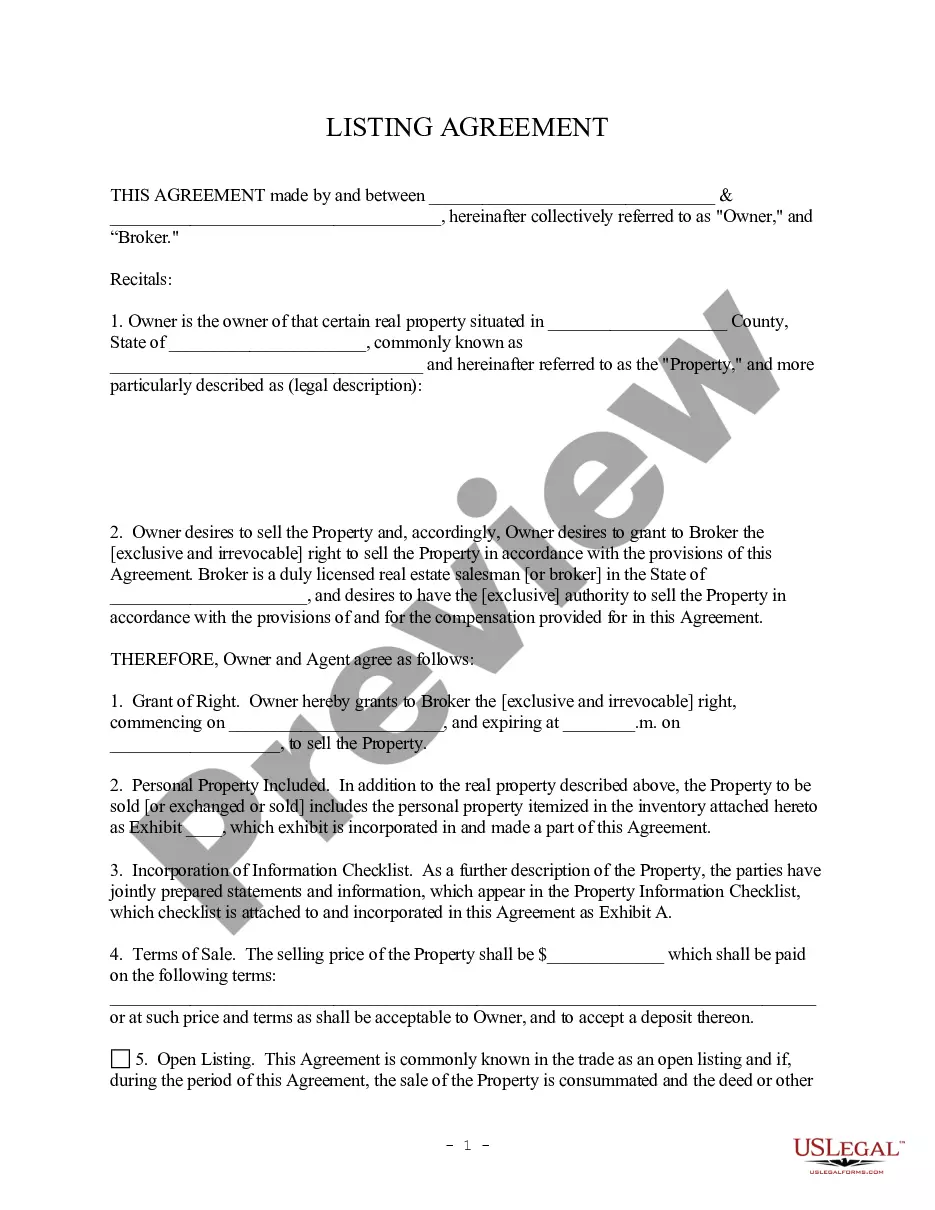
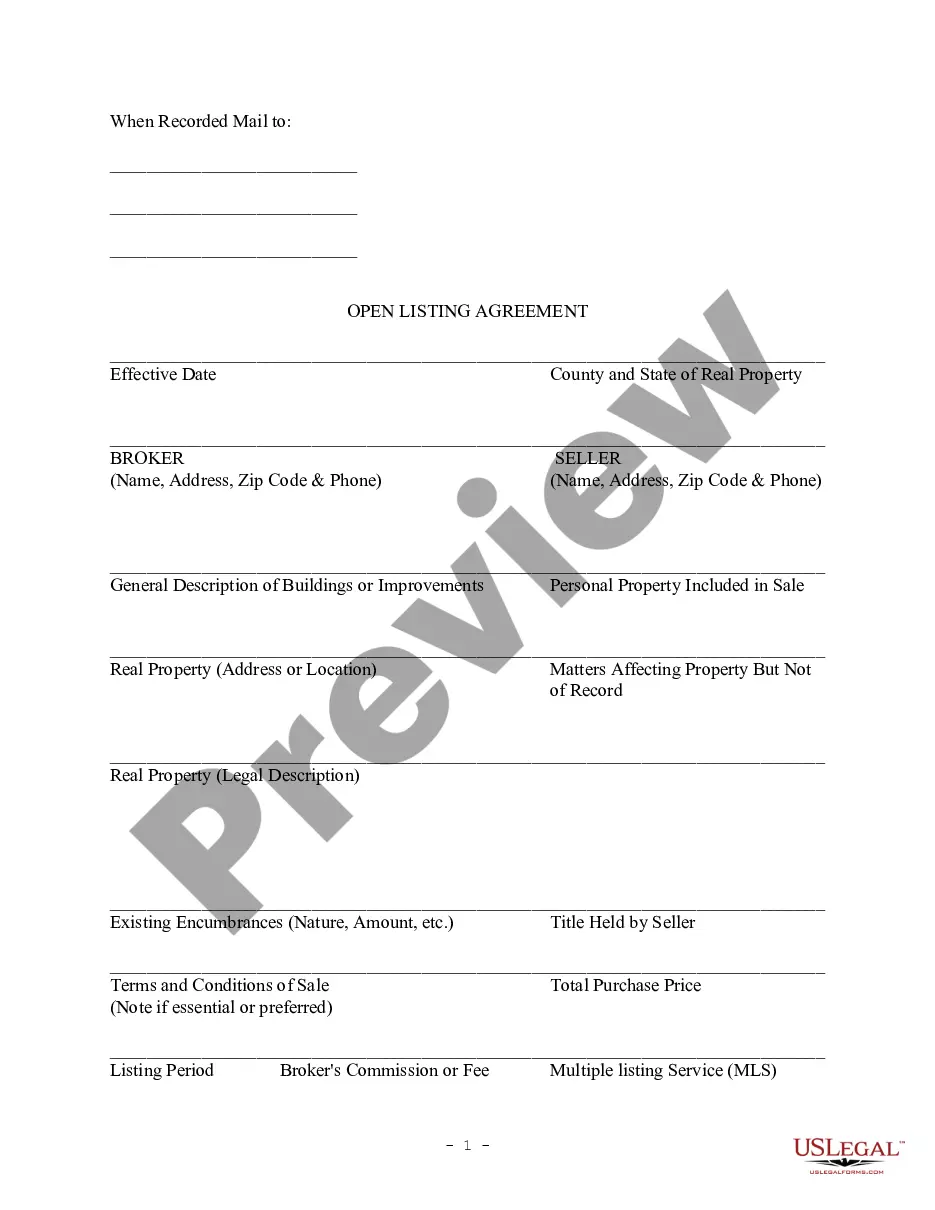

Get your form ready online
Our built-in tools help you complete, sign, share, and store your documents in one place.
Make edits, fill in missing information, and update formatting in US Legal Forms—just like you would in MS Word.
Download a copy, print it, send it by email, or mail it via USPS—whatever works best for your next step.
Sign and collect signatures with our SignNow integration. Send to multiple recipients, set reminders, and more. Go Premium to unlock E-Sign.
If this form requires notarization, complete it online through a secure video call—no need to meet a notary in person or wait for an appointment.
We protect your documents and personal data by following strict security and privacy standards.

Make edits, fill in missing information, and update formatting in US Legal Forms—just like you would in MS Word.

Download a copy, print it, send it by email, or mail it via USPS—whatever works best for your next step.

Sign and collect signatures with our SignNow integration. Send to multiple recipients, set reminders, and more. Go Premium to unlock E-Sign.

If this form requires notarization, complete it online through a secure video call—no need to meet a notary in person or wait for an appointment.

We protect your documents and personal data by following strict security and privacy standards.
Looking for another form?









Form popularity
FAQ
Bond purchasers are the corporations, governments, and individuals buying the debt that is being issued.
Debt securities are negotiable financial instruments, meaning they can be bought or sold between parties in the market. They come with a defined issue date, maturity date, coupon rate, and face value. Debt securities provide regular payments of interest and guaranteed repayment of principal.
Listing means the admission of securities of a company to trading on a stock exchange. Listing is not compulsory under the Companies Act 2013/1956. It becomes necessary when a Public Limited Company wants to issue shares or debentures to the public.
Securities are grouped into debt and equity. Examples of debt securities are government bonds and corporate bonds. Government bonds portray a lesser interest rate than corporate bonds because they have little or no default risk because they are backed by the credit and full faith of the federal government.

