One Time Showing Agreement Form For Car In Orange
Description

Get your form ready online
Our built-in tools help you complete, sign, share, and store your documents in one place.
Make edits, fill in missing information, and update formatting in US Legal Forms—just like you would in MS Word.
Download a copy, print it, send it by email, or mail it via USPS—whatever works best for your next step.
Sign and collect signatures with our SignNow integration. Send to multiple recipients, set reminders, and more. Go Premium to unlock E-Sign.
If this form requires notarization, complete it online through a secure video call—no need to meet a notary in person or wait for an appointment.
We protect your documents and personal data by following strict security and privacy standards.

Make edits, fill in missing information, and update formatting in US Legal Forms—just like you would in MS Word.

Download a copy, print it, send it by email, or mail it via USPS—whatever works best for your next step.

Sign and collect signatures with our SignNow integration. Send to multiple recipients, set reminders, and more. Go Premium to unlock E-Sign.

If this form requires notarization, complete it online through a secure video call—no need to meet a notary in person or wait for an appointment.

We protect your documents and personal data by following strict security and privacy standards.
Looking for another form?





Form popularity
FAQ
A “one-time show” is similar to an open listing in many respects, as it is most often used by real estate agents who are showing a FSBO (for sale by owner) to one of their clients.
Off contract lasts “until completion of the obligations of the parties”. A deadline (i.e. a given date, not a month) will be clearly stipulated for the delivery of each deliverable.
The three types of real estate listing agreements are open listing, exclusive agency listing, and exclusive right-to-sell listing.
2. Exclusive right to sell listing agreement. An exclusive right to sell listing is the most widely-used listing agreement. Under this agreement, the broker has the exclusive right to market the property for a specified period of time.
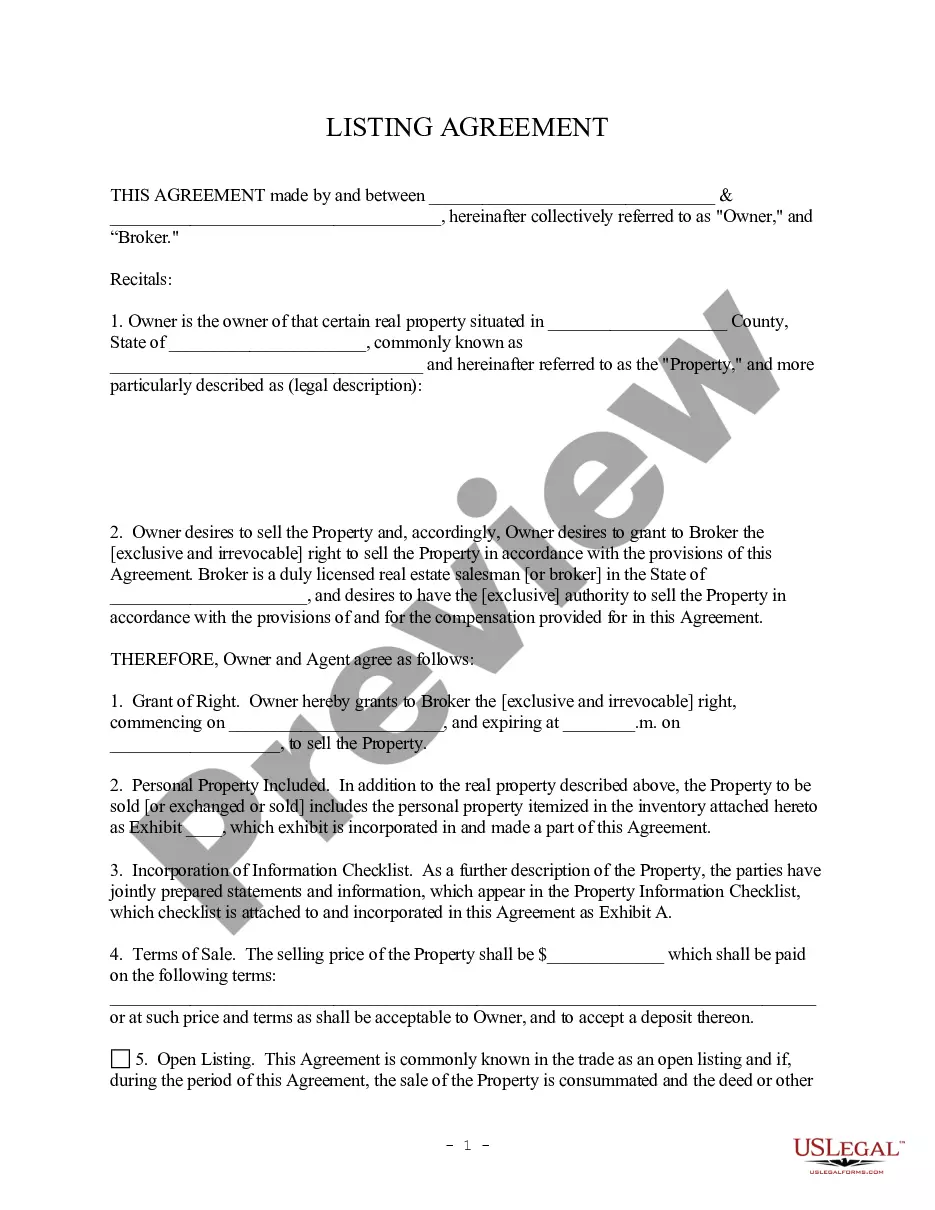
time showing agreement is a contract between a real estate seller and an agent who does not represent the seller but has a potential buyer interested in viewing the property. This document grants the agent the right to show the property to the interested buyer for a single occasion.
In ance with new National Association of REALTORS changes, any and all home buyers must sign a buyer representation agreement before seeing one home.
SANTA ANA, Calif. — Starting this week, most home shoppers will need to sign contracts with agents to view properties for sale, binding them to paying their own commissions if they can't get a seller to cover it.
At its most basic definition, a showing is a private viewing of your home and an open house is a more public one. In a showing, a buyer's agent reserves a time for their client(s) to privately tour your home. In an open house, the house is open for buyers to come by and walk through at their leisure.
One-time showing agreements contain several crucial elements to protect both the seller and the agent. These components include: Property Details: A clear description of the property being shown. Duration of Agreement: Specifies the time frame in which the showing can occur.
Unilateral contracts are just as binding as bilateral contracts, but only one party is making a promise. The only way to accept a unilateral contract is through the completion of a task. An offeree has no obligation to perform the act in the unilateral agreement.

