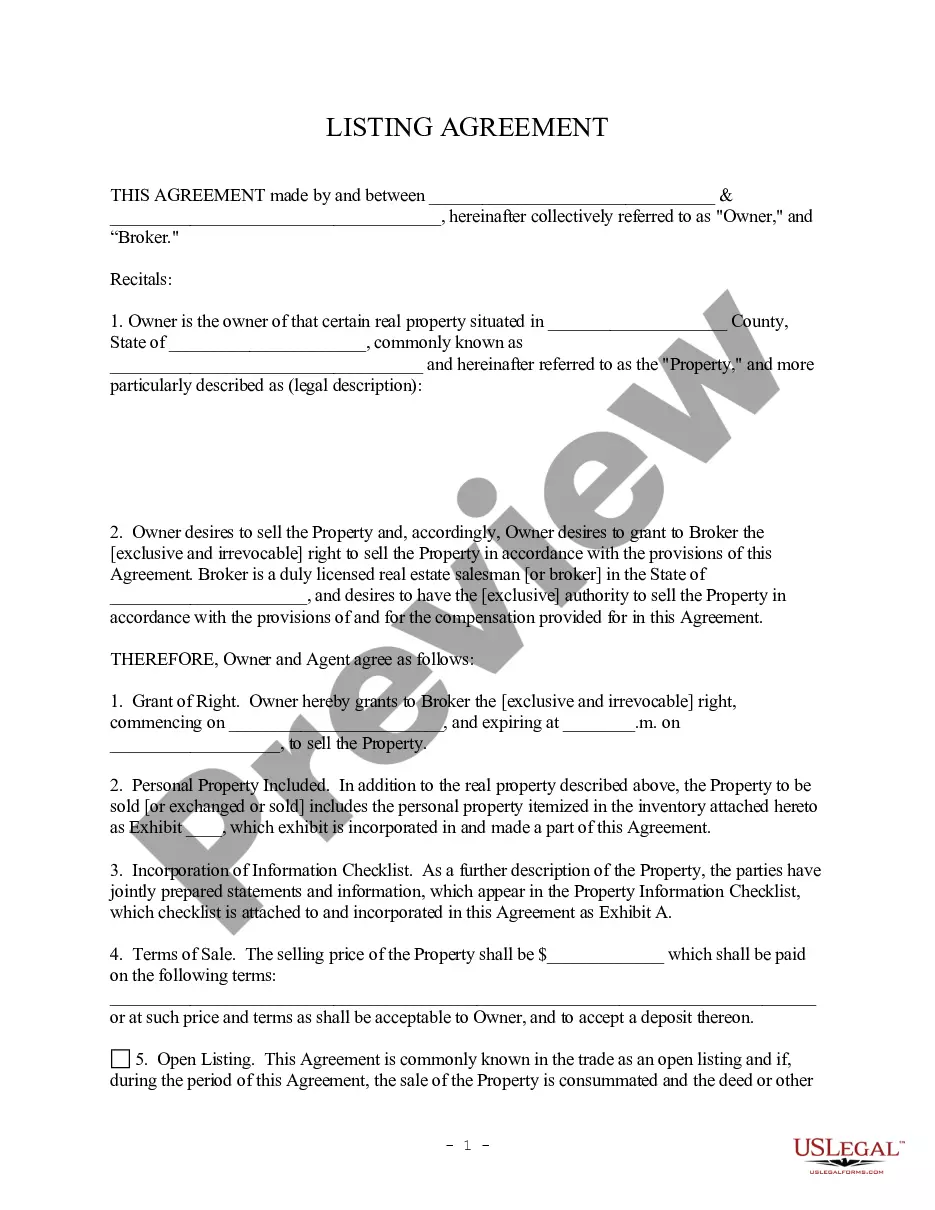
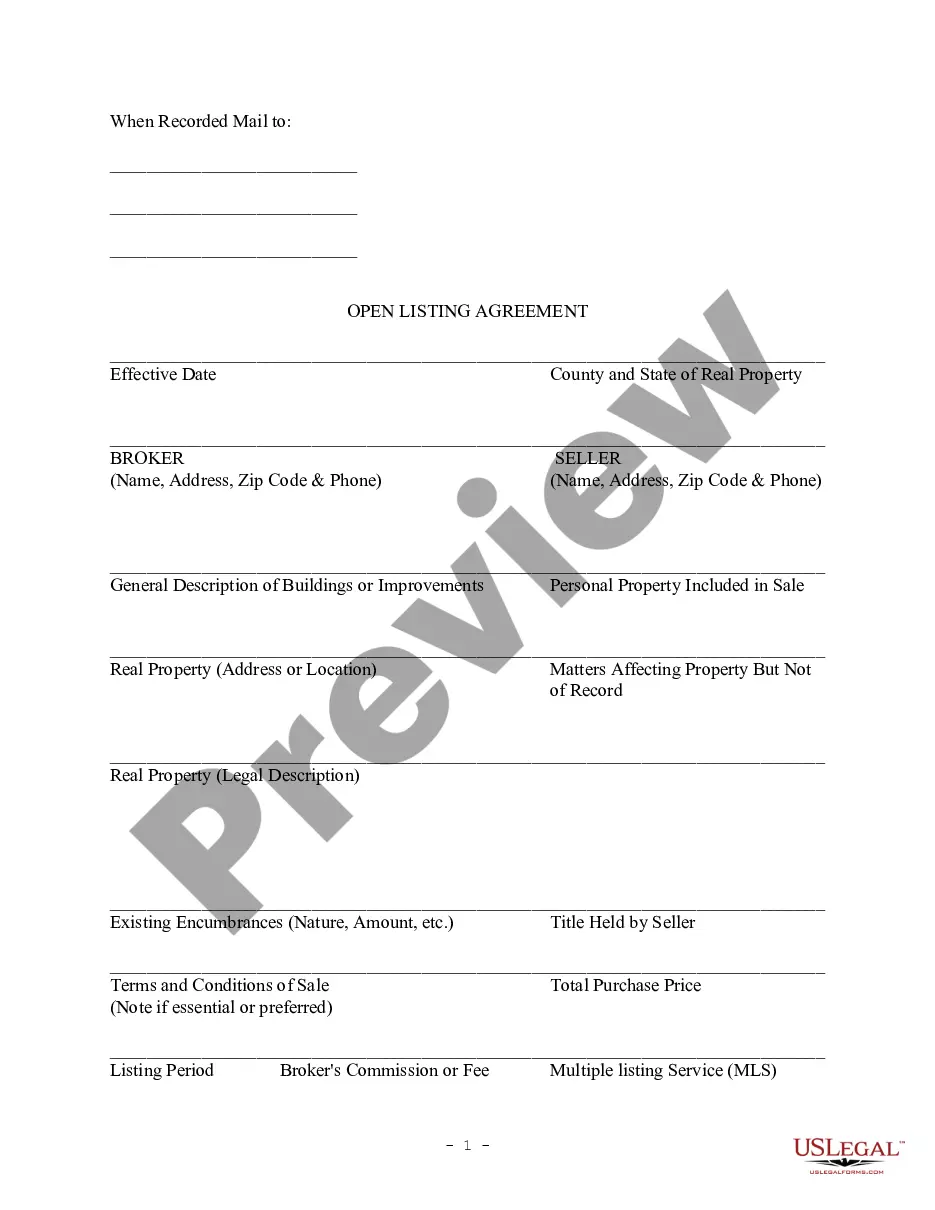
Listing Agreement Document For Land In Nevada
Description
Get your form ready online
Our built-in tools help you complete, sign, share, and store your documents in one place.
Make edits, fill in missing information, and update formatting in US Legal Forms—just like you would in MS Word.
Download a copy, print it, send it by email, or mail it via USPS—whatever works best for your next step.
Sign and collect signatures with our SignNow integration. Send to multiple recipients, set reminders, and more. Go Premium to unlock E-Sign.
If this form requires notarization, complete it online through a secure video call—no need to meet a notary in person or wait for an appointment.
We protect your documents and personal data by following strict security and privacy standards.

Make edits, fill in missing information, and update formatting in US Legal Forms—just like you would in MS Word.

Download a copy, print it, send it by email, or mail it via USPS—whatever works best for your next step.

Sign and collect signatures with our SignNow integration. Send to multiple recipients, set reminders, and more. Go Premium to unlock E-Sign.

If this form requires notarization, complete it online through a secure video call—no need to meet a notary in person or wait for an appointment.

We protect your documents and personal data by following strict security and privacy standards.
Looking for another form?




Form popularity
FAQ
A land contract is typically between two parties: the buyer – sometimes referred to as the vendee – and the seller, also known as the vendor. In a land contract, the seller agrees to finance the property for the buyer in exchange for the buyer meeting the terms agreed upon in the land contract.
A Land Contract includes information about the: Purchaser. State the property is located in. Legal property description (typically found in the title or deed to the property) Monthly payment amount, the date that the purchaser should start monthly payments, and the interest rate.
How to draft a contract in 13 simple steps Start with a contract template. Understand the purpose and requirements. Identify all parties involved. Outline key terms and conditions. Define deliverables and milestones. Establish payment terms. Add termination conditions. Incorporate dispute resolution.
The written buyer representation agreement is entered into by the buyer agent: as soon as practicable (ASAP) after determining the agent will represent the prospective buyer client; and. always before the buyer signs an offer the agent will submit to acquire an interest in a property.
In Nevada, the most common type is the exclusive right to sell agreement. An exclusive right to sell agreement gives the listing agent exclusive rights to market and sell the property. This means that regardless of who finds the buyer for the property, the listing agent will receive the commission.
Is the Nevada real estate exam hard? While the majority of students pass their real estate exam, a passing score isn't guaranteed. In some states, up to 25% of students have to retake the test in order to pass. The best way to alleviate your nerves and pass the test is to work hard and prepare as much as possible.
year real estate license in Nevada costs $125. When you apply, be sure to bring your real estate school certificate, fingerprinting, background check, and your passing results for each real estate licensing exam.
IMPORTANT UPDATE: The Nevada Real Estate Division requires that students complete a 90-hour real estate salesperson pre-license course before they are eligible to take their state licensing exam and apply for a license. Effective October 1, 2021, the education requirement will increase from 90 hours to 120 hours.
The Nevada Real Estate Commission holds hearings and issues sanctions to licensees who are suspected of having violated Nevada's real estate laws. This lesson will examine the commission's role in disciplining Nevada licensees.

