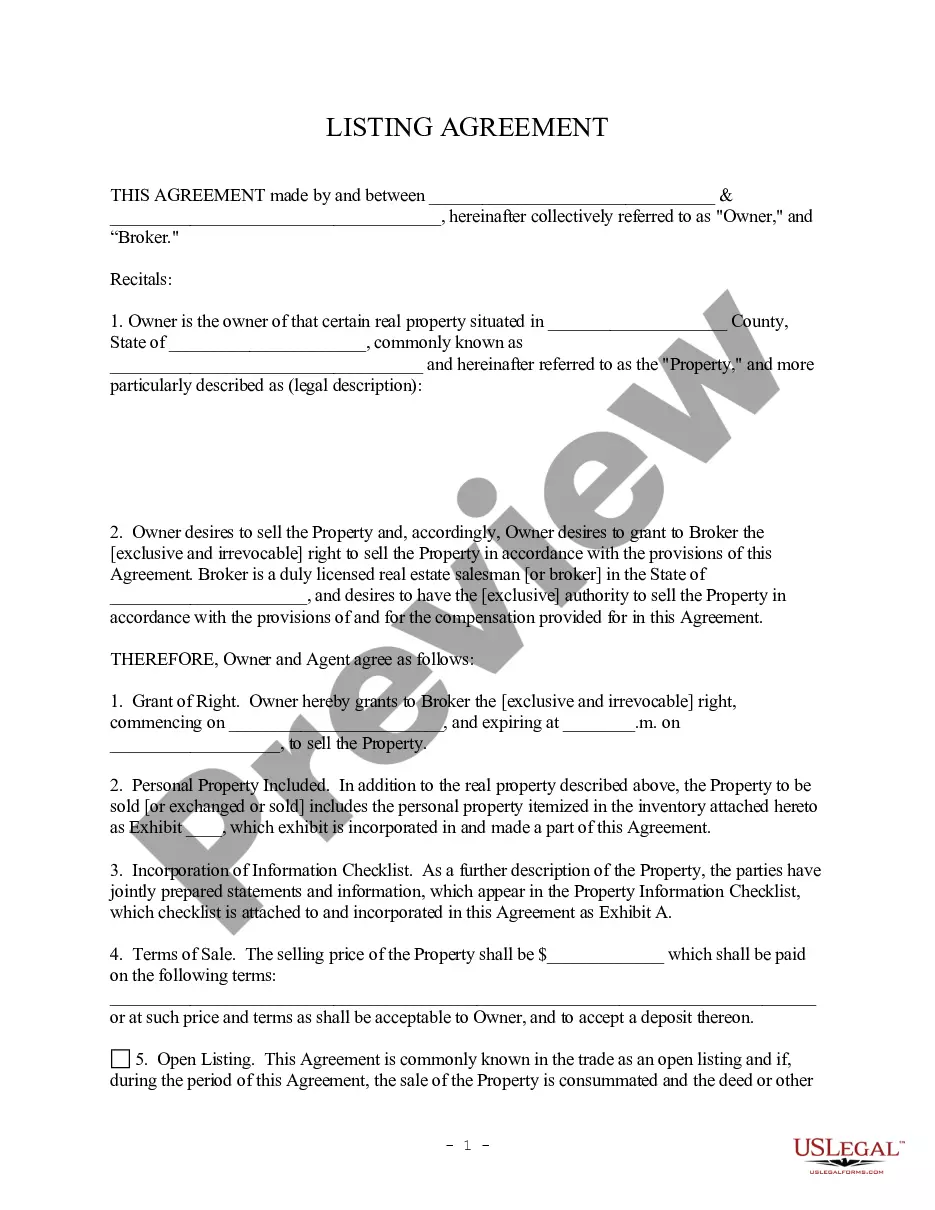
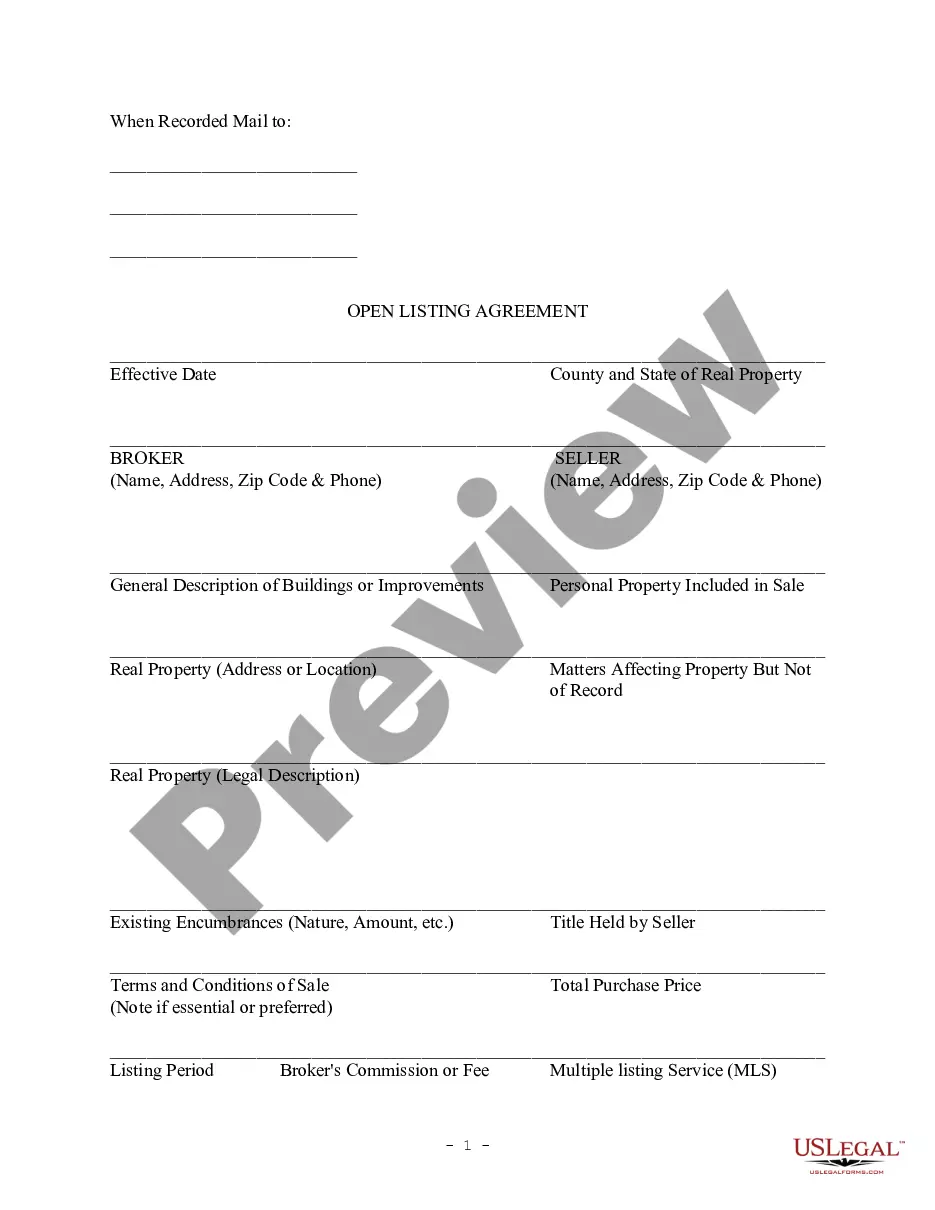
Listing Agreement Form With Broker In Minnesota
Description

Get your form ready online
Our built-in tools help you complete, sign, share, and store your documents in one place.
Make edits, fill in missing information, and update formatting in US Legal Forms—just like you would in MS Word.
Download a copy, print it, send it by email, or mail it via USPS—whatever works best for your next step.
Sign and collect signatures with our SignNow integration. Send to multiple recipients, set reminders, and more. Go Premium to unlock E-Sign.
If this form requires notarization, complete it online through a secure video call—no need to meet a notary in person or wait for an appointment.
We protect your documents and personal data by following strict security and privacy standards.

Make edits, fill in missing information, and update formatting in US Legal Forms—just like you would in MS Word.

Download a copy, print it, send it by email, or mail it via USPS—whatever works best for your next step.

Sign and collect signatures with our SignNow integration. Send to multiple recipients, set reminders, and more. Go Premium to unlock E-Sign.

If this form requires notarization, complete it online through a secure video call—no need to meet a notary in person or wait for an appointment.

We protect your documents and personal data by following strict security and privacy standards.
Looking for another form?





Form popularity
FAQ
The exclusive right to sell listing agreement also provides that a broker has a right to receive a commission following termination of the listing period, for a subsequent period of the same duration, if a transaction is entered into with someone to whom the broker introduced the sellers.
How to write a contract agreement in 7 steps. Determine the type of contract required. Confirm the necessary parties. Choose someone to draft the contract. Write the contract with the proper formatting. Review the written contract with a lawyer. Send the contract agreement for review or revisions.
Type 1: Exclusive right to sell listing agreement This is the most common type of listing agreement. It says that the listing agent has the exclusive right to earn the commission if they bring the buyer (either directly or via another agent).
Generally, once a ready, willing, and able buyer has been found, the agent has earned the commission, whether or not the sale is ever completed. The listing agreement creates an agency relationship between a broker and the property owner.
The listing agreement typically lays out the agreed upon methods your agent will use to sell your home. Your agreement might include information on how your property will be marketed.
Though notarization is not required, it may still be a good idea to have a notary present in order to verify the identities of all signers.
Every valid contract in California needs to have four essential elements. (1) The parties must be capable of contracting, (2) the parties must consent to the contract, (3) the contract must have a lawful object (they cannot be for illegal services), and (4) the contract must be supported by consideration. (Civ.
broker agreement is used when you contract with a broker for help in buying a home. Signing the agreement means that you can't use a broker to find a home and then work around them or sign with another broker. These agreements differ from state to state.
Additionally, the Minnesota regulations require brokers to keep records of all the firm's transactions for a minimum of six years. At a minimum, these records should include the following items: Listing agreements. Offers.
A Buyer Broker Agreement is a contract between you (the buyer) and the real estate agent representing you. It outlines the terms of the relationship, including how long the agent will represent you, what services they'll provide, and whether they're entitled to compensation if you buy a home.
