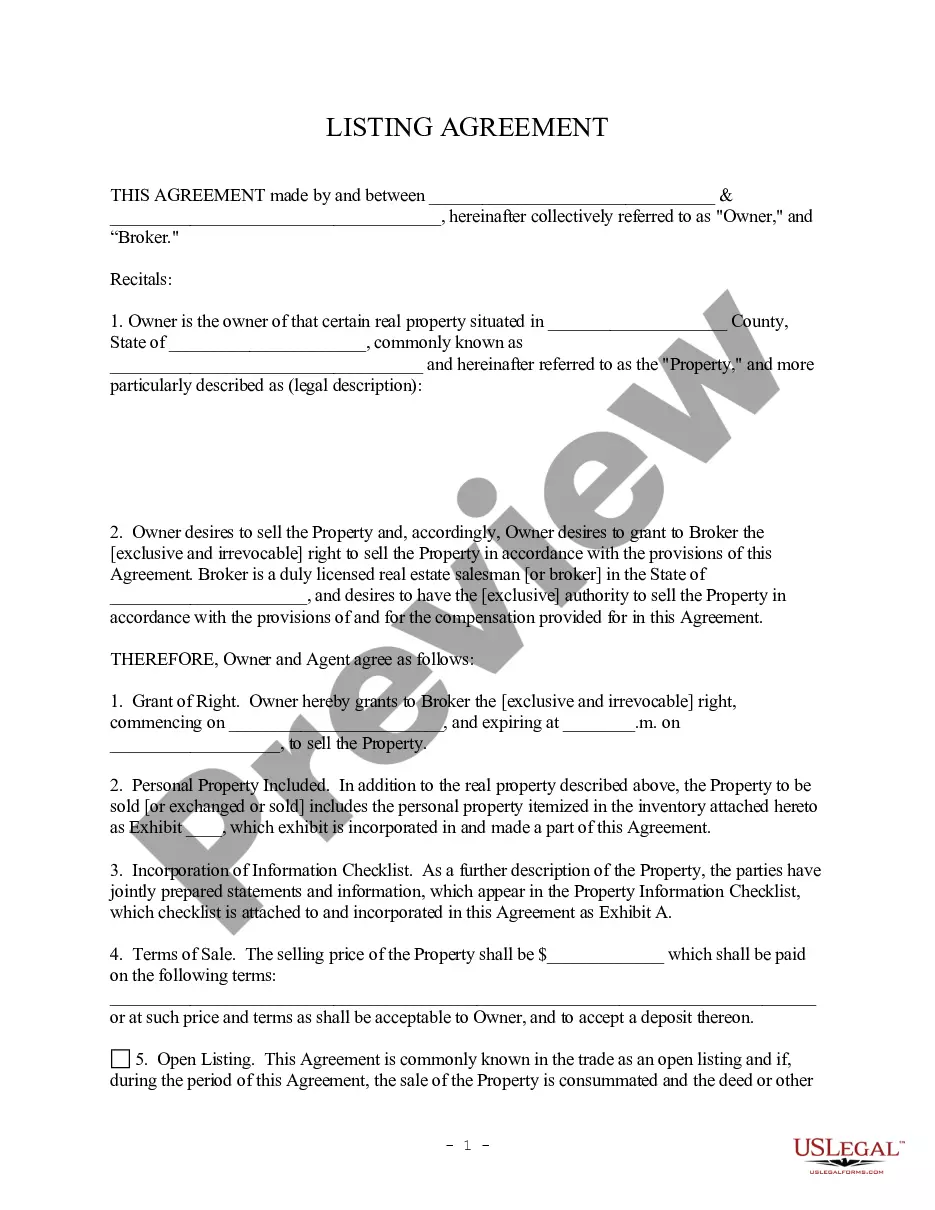
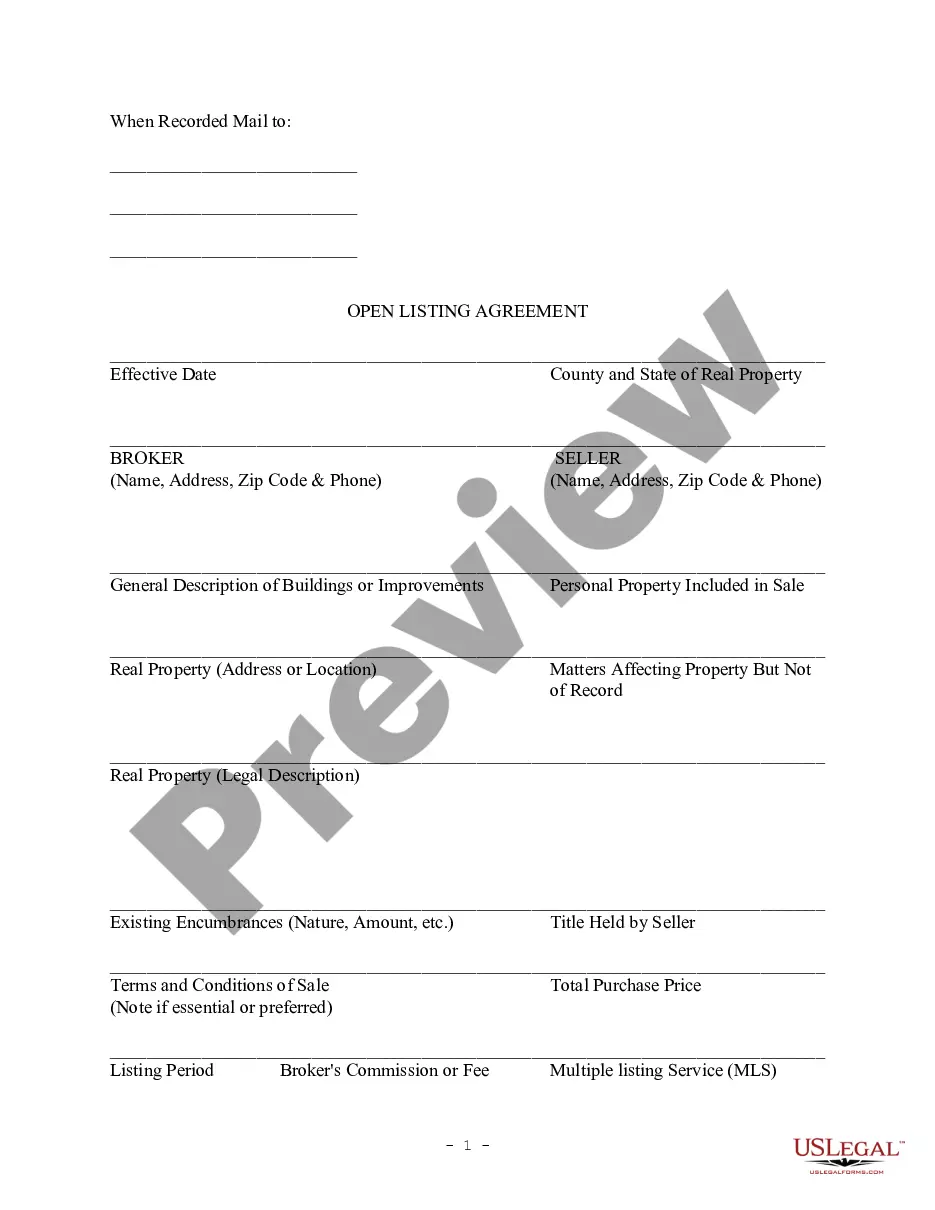
Listing Agreement Document For Unimproved Property In Maryland
Description

Get your form ready online
Our built-in tools help you complete, sign, share, and store your documents in one place.
Make edits, fill in missing information, and update formatting in US Legal Forms—just like you would in MS Word.
Download a copy, print it, send it by email, or mail it via USPS—whatever works best for your next step.
Sign and collect signatures with our SignNow integration. Send to multiple recipients, set reminders, and more. Go Premium to unlock E-Sign.
If this form requires notarization, complete it online through a secure video call—no need to meet a notary in person or wait for an appointment.
We protect your documents and personal data by following strict security and privacy standards.

Make edits, fill in missing information, and update formatting in US Legal Forms—just like you would in MS Word.

Download a copy, print it, send it by email, or mail it via USPS—whatever works best for your next step.

Sign and collect signatures with our SignNow integration. Send to multiple recipients, set reminders, and more. Go Premium to unlock E-Sign.

If this form requires notarization, complete it online through a secure video call—no need to meet a notary in person or wait for an appointment.

We protect your documents and personal data by following strict security and privacy standards.
Looking for another form?








Form popularity
FAQ
How to Amend a Listing Agreement (3 steps) Discuss the Amendment. The broker and owner should meet and discuss the changes to the listing agreement. Write the Amendment. Once a verbal agreement is made, the amendment should be written. Sign and Attach to Listing Agreement.
Writing your own contracts is perfectly possible, and legal. But it's also an incredibly bad idea. There's two reasons for this: Property law is complicated. Because it's such a fundamental part of legislation, it's often lots and lots of different laws layered on top of each other.
In real estate contracts, an amendment refers to a change made to the terms of an already signed contract, while an addendum is an additional document that adds new terms or details without altering the original agreement. Both amendments and addendums must be signed by all parties involved to become legally binding.
A contract amendment allows the parties to make a mutually agreed-upon change to an existing contract. An amendment can add to an existing contract, delete from it, or change parts of it. The original contract remains in place, only with some terms altered by way of the amendment.
Five ways to void a contract/make a contract ineffective Prove its invalidity. Contracts are only effective if they're legally valid. Use capacity to end it. Agree to mutually void it. Exercise the “cooling off” rule. Use the terms of a voidable contract.
The simplest way to terminate a listing agreement is through mutual consent. If both you and your agent agree to part ways, you can cancel the agreement without penalties. Make sure to document this agreement in writing, as it will serve as evidence in case of any disputes later on.
A listing agreement should include a termination clause to outline conditions under which the property owner or real estate agent can end the contract early.
Yes, Maryland law mandates that sellers of residential real estate complete a form known as the Residential Property Disclosure and Disclaimer Statement, as outlined in Md. Code § 10-702. This form requires sellers to disclose conditions and defects that could affect the property's value or desirability.

