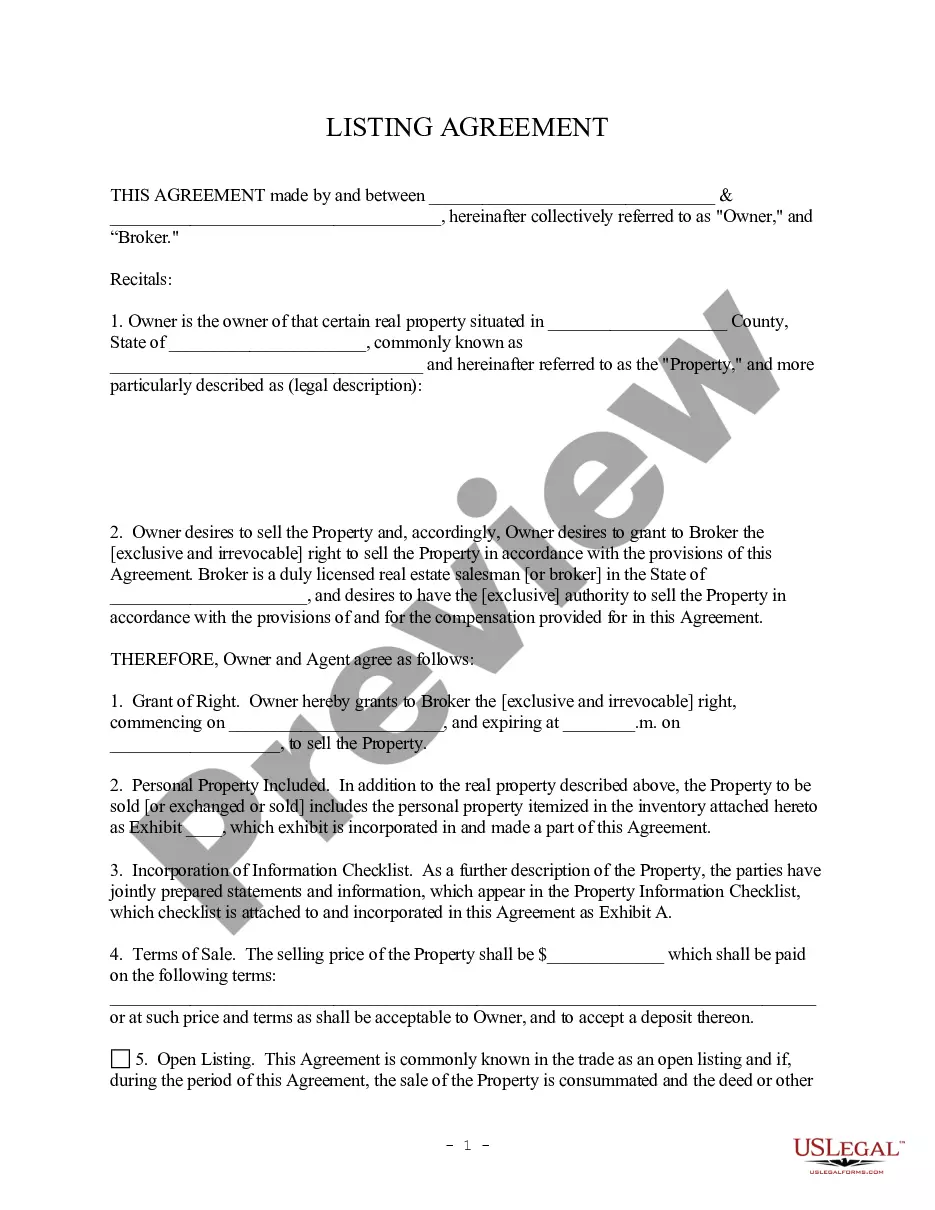
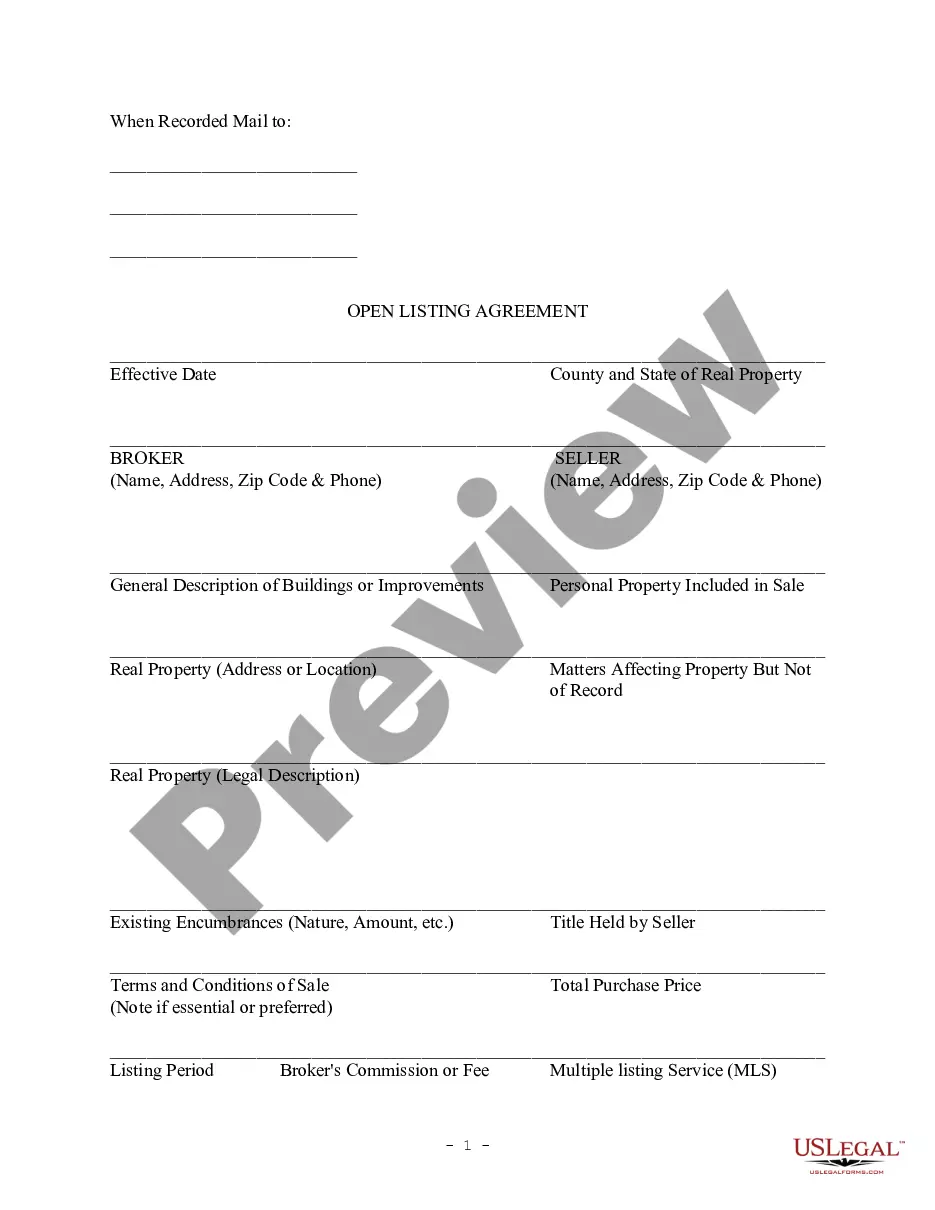
Listing Agreement Document For Lease In Los Angeles
Description
Get your form ready online
Our built-in tools help you complete, sign, share, and store your documents in one place.
Make edits, fill in missing information, and update formatting in US Legal Forms—just like you would in MS Word.
Download a copy, print it, send it by email, or mail it via USPS—whatever works best for your next step.
Sign and collect signatures with our SignNow integration. Send to multiple recipients, set reminders, and more. Go Premium to unlock E-Sign.
If this form requires notarization, complete it online through a secure video call—no need to meet a notary in person or wait for an appointment.
We protect your documents and personal data by following strict security and privacy standards.

Make edits, fill in missing information, and update formatting in US Legal Forms—just like you would in MS Word.

Download a copy, print it, send it by email, or mail it via USPS—whatever works best for your next step.

Sign and collect signatures with our SignNow integration. Send to multiple recipients, set reminders, and more. Go Premium to unlock E-Sign.

If this form requires notarization, complete it online through a secure video call—no need to meet a notary in person or wait for an appointment.

We protect your documents and personal data by following strict security and privacy standards.
Looking for another form?

Form popularity
FAQ
A listing agreement is an example of an agency relationship that is created by express agency. In this context, express agency arises when the principal explicitly states their intention to create an agency relationship with the agent through a written or verbal agreement.
Though notarization is not required, it may still be a good idea to have a notary present in order to verify the identities of all signers.
A listing agreement is between the parties that own a property and the agents or brokers who will find a buyer for it. Typically, a real estate listing agreement involves the property owner and a real estate agent. The property owner, or seller, grants the agent the right to market and sell the property.
What to include in an apartment lease agreement. Tenant information. Include each tenant's full name and contact information. Rental property description. List the apartment's location, all common areas, parking spaces, and included facilities. Security deposit. Monthly rent amount. Utilities. Lease term. Policies. Late fees.
Once each calendar year, at your request, your landlord or rental agency must provide you with a copy of your lease within 15 days of the request under California Civil Code 1962. Your first step would be to make a demand on the landlord for the lease. You should send it in a letter by certified mail.
New York City rent stabilized tenants are entitled to receive from their landlords a fully executed copy of their signed lease within 30 days of the landlord's receipt of the lease signed by the tenant.
Chances are good that many of your master lease agreements and schedules are housed in your contract management system. The contract management system should also contain information about any amendments or modifications that have been made to the lease over time.
Both the landlord and the tenant should retain original, signed copies. If there's ever a dispute you need to be able to erase any doubt about whether the lease is valid. Normally photocopies should be sufficient but originals are best. You should always specify the location you are asking about.
When viewing your lease, you can download and print a draft directly from your web browser. Once in your lease hub, you will see the option to View Lease. If you click on View Lease, you'll then have the option to download the lease as a PDF and print your PDF file as needed.
State laws on leases and rental agreements can vary, but a landlord or property management company should provide you with a copy of your signed lease upon request. You should make your request in writing, so you have proof if there is a dispute later.

