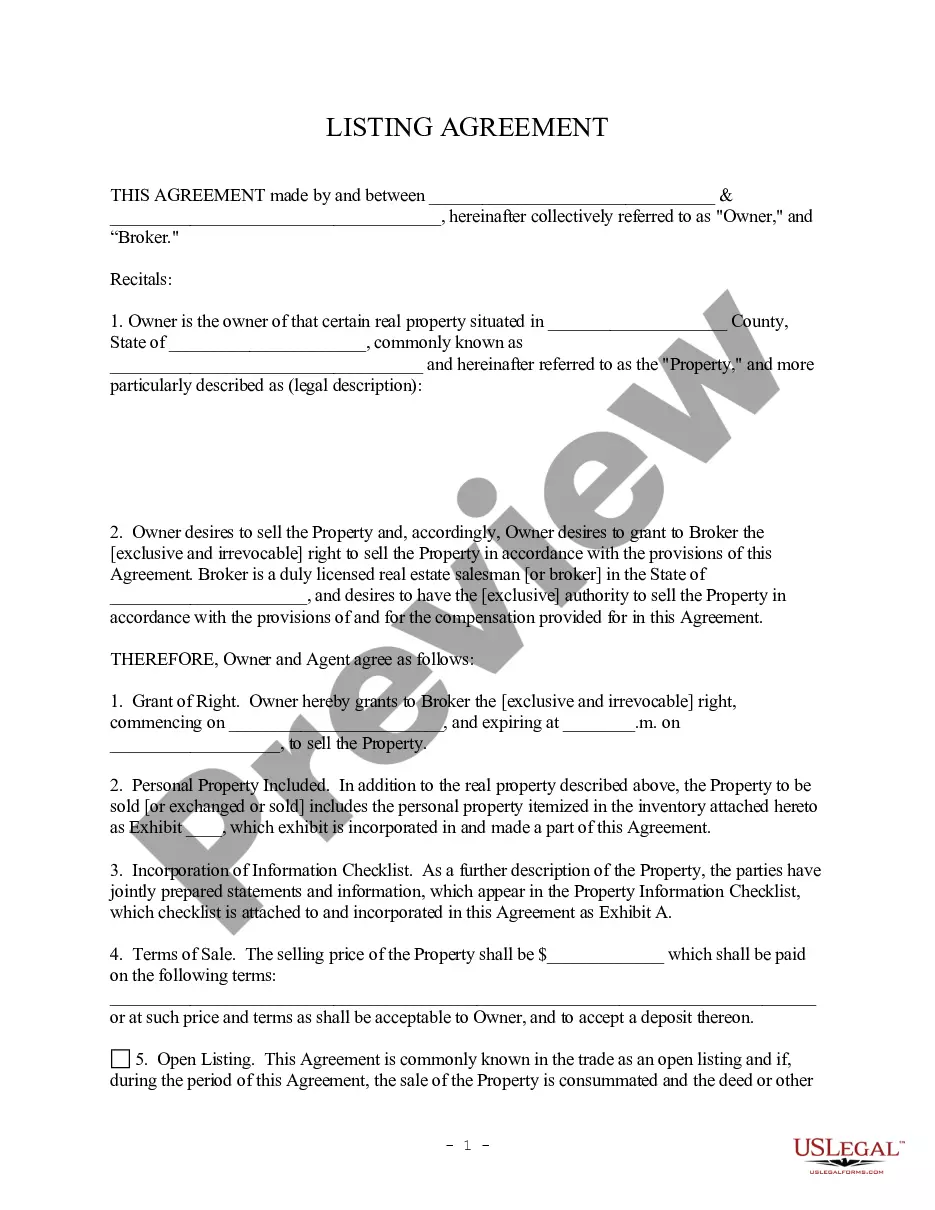
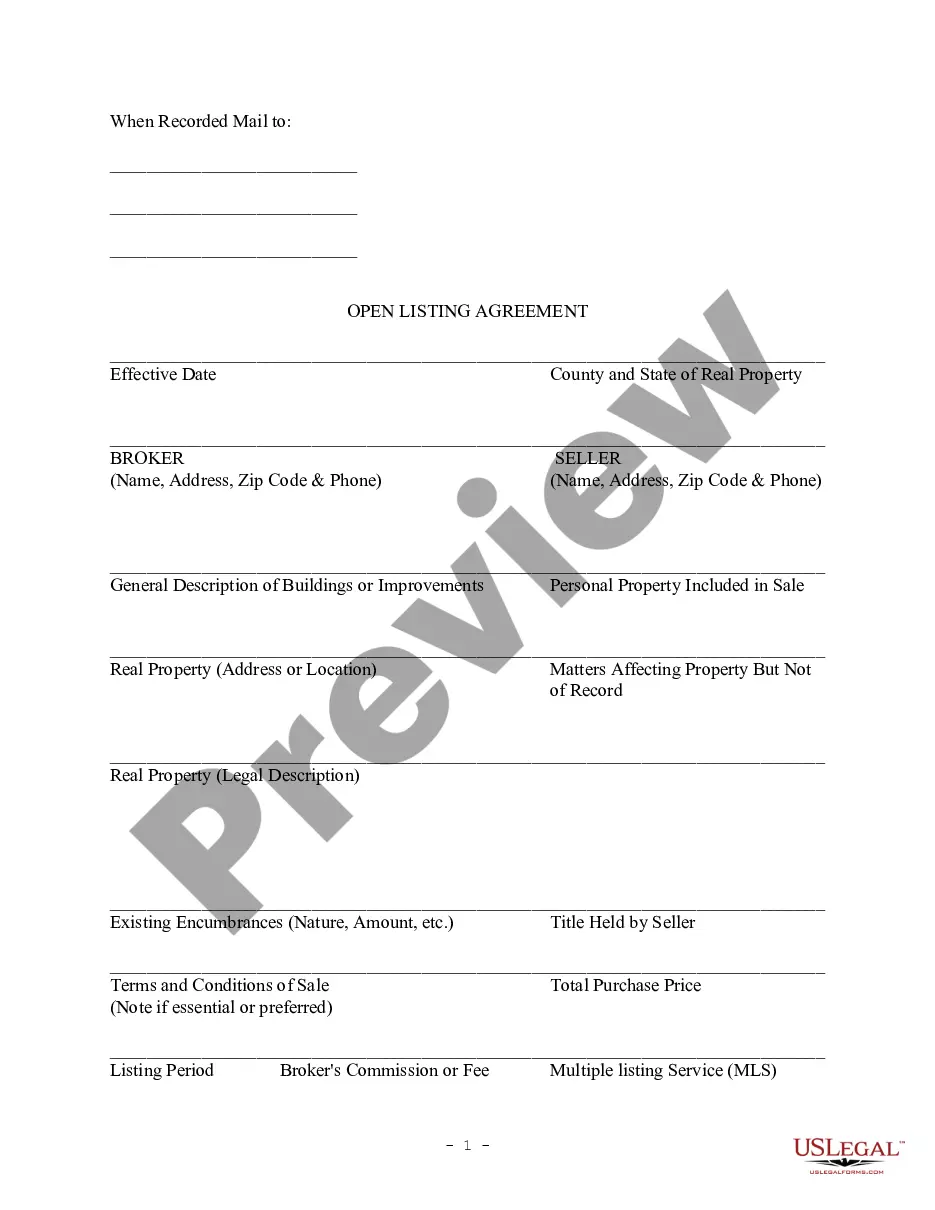
Listing Agreement Contract For Land In Bexar
Description
Get your form ready online
Our built-in tools help you complete, sign, share, and store your documents in one place.
Make edits, fill in missing information, and update formatting in US Legal Forms—just like you would in MS Word.
Download a copy, print it, send it by email, or mail it via USPS—whatever works best for your next step.
Sign and collect signatures with our SignNow integration. Send to multiple recipients, set reminders, and more. Go Premium to unlock E-Sign.
If this form requires notarization, complete it online through a secure video call—no need to meet a notary in person or wait for an appointment.
We protect your documents and personal data by following strict security and privacy standards.

Make edits, fill in missing information, and update formatting in US Legal Forms—just like you would in MS Word.

Download a copy, print it, send it by email, or mail it via USPS—whatever works best for your next step.

Sign and collect signatures with our SignNow integration. Send to multiple recipients, set reminders, and more. Go Premium to unlock E-Sign.

If this form requires notarization, complete it online through a secure video call—no need to meet a notary in person or wait for an appointment.

We protect your documents and personal data by following strict security and privacy standards.
Looking for another form?







Form popularity
FAQ
The three types of real estate listing agreements are open listing, exclusive agency listing, and exclusive right-to-sell listing. The listing agreement is an employment contract rather than a real estate contract: The broker is hired to represent the seller, but no property is transferred between the two.
An attorney's office or a title company can prepare closing documents for a land contract sale, but only the parties themselves or an attorney can prepare the actual land contract document and land contract memorandum.
Unimproved Property Contract (Form ID: 9-16): This contract form is for property that does not have physical buildings, additions or fixtures on the land. It is generally used for property that has been platted (has a recorded Lot/Block legal description). It is not for use for condominium transactions.
The three types of real estate listing agreements are open listing, exclusive agency listing, and exclusive right-to-sell listing.
An exclusive right to sell listing is the most widely-used listing agreement. Under this agreement, the broker has the exclusive right to market the property for a specified period of time.
If you're a realtor, you are required to use the Texas Real Estate Commission (TREC) contract forms. Other people buying or selling land in Texas have additional options. You could have an attorney draft a custom contract for you, but this may be expensive.
The principal parties to the contract are the listing broker and the client. The client may be buyer, seller, landlord or tenant in the proposed transaction. Legally, the broker is the client's agent. The principal party on the other side of the transaction is a customer or a potential customer, called a prospect.
The requirement that all listing agreements have a definite expiration date is typically the responsibility of state real estate licensing laws and regulations. Each state has its own laws and regulations governing real estate transactions, including listing agreements between sellers and real estate agents.
A listing agreement is between the parties that own a property and the agents or brokers who will find a buyer for it. Typically, a real estate listing agreement involves the property owner and a real estate agent. The property owner, or seller, grants the agent the right to market and sell the property.

