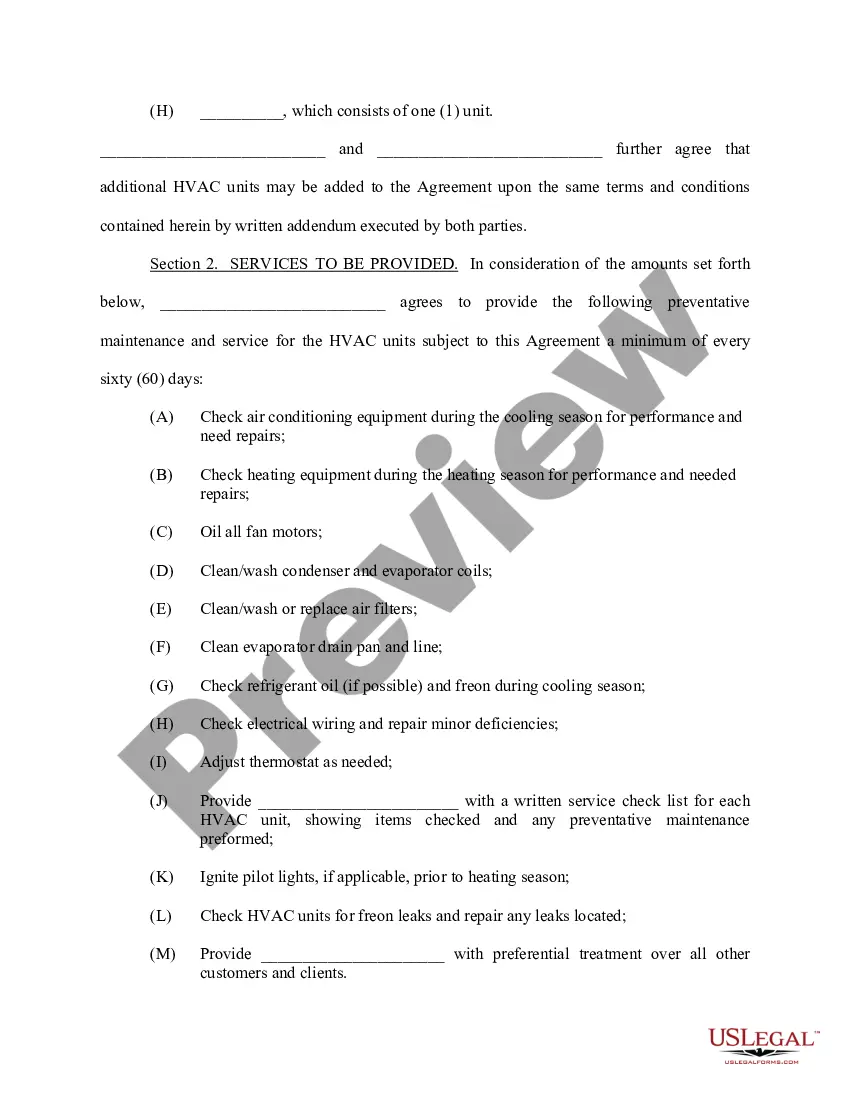
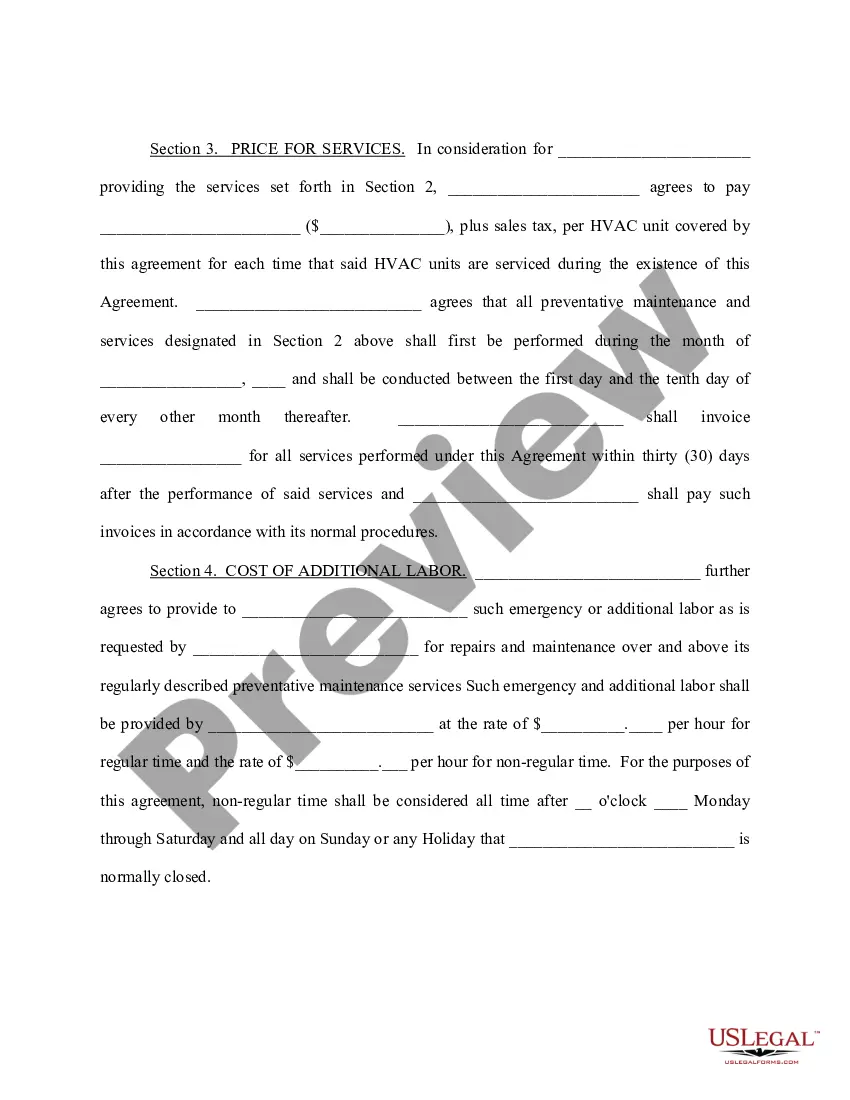
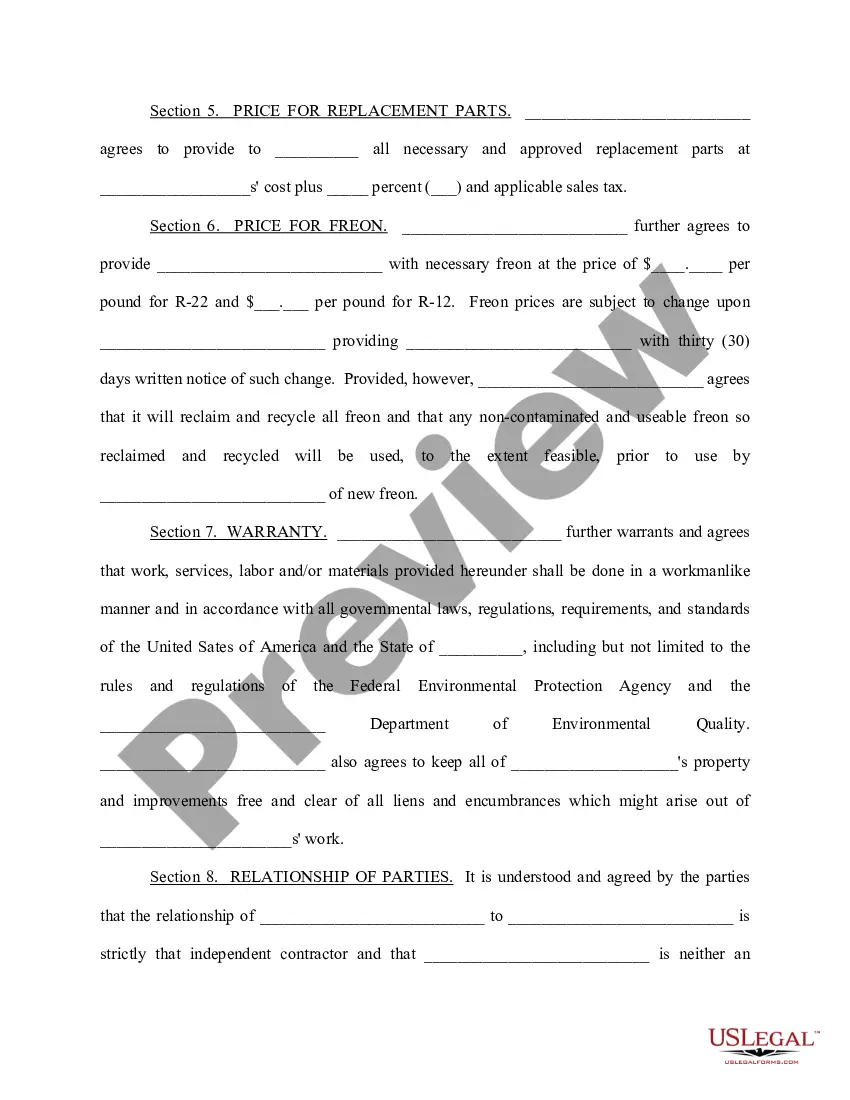
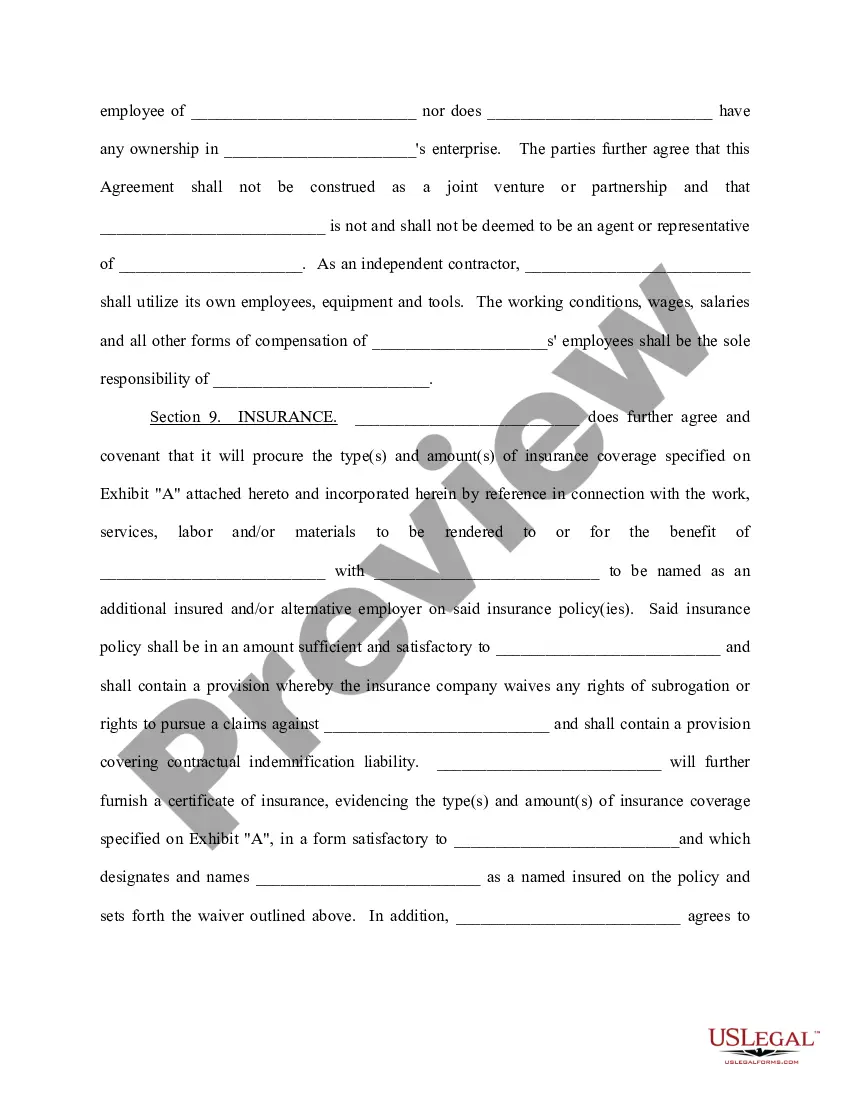
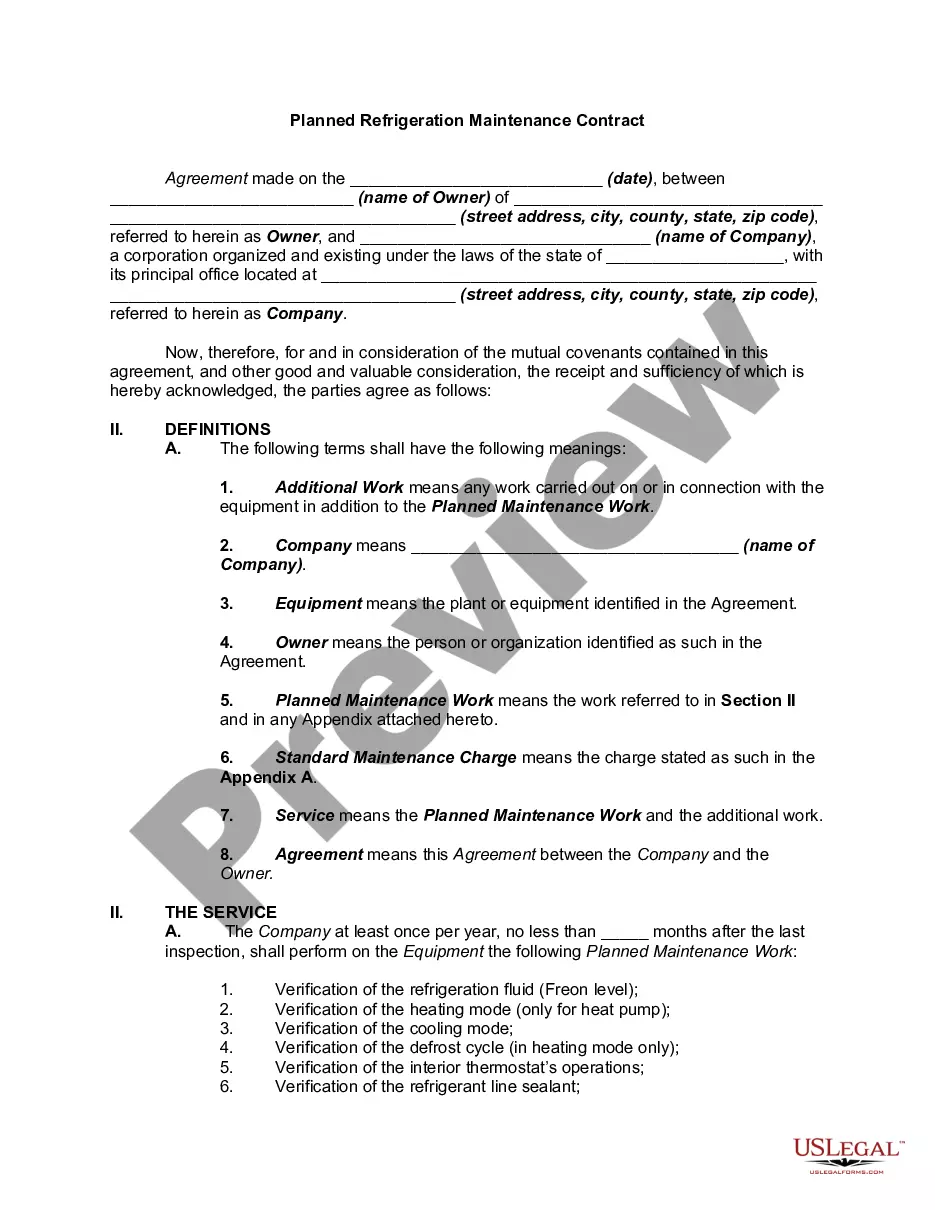
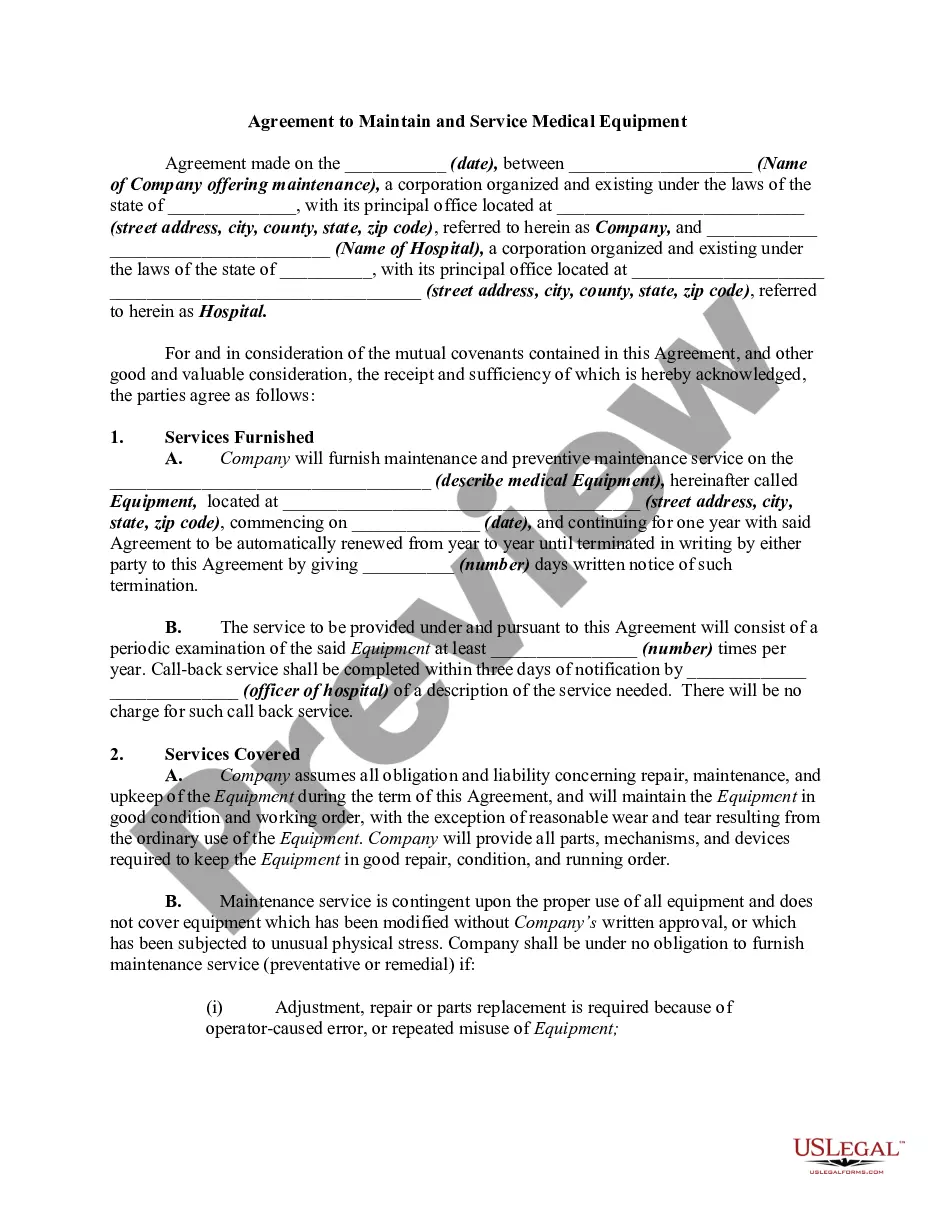
Hvac Service Agreement Template With Pricing In Harris
Description

Get your form ready online
Our built-in tools help you complete, sign, share, and store your documents in one place.
Make edits, fill in missing information, and update formatting in US Legal Forms—just like you would in MS Word.
Download a copy, print it, send it by email, or mail it via USPS—whatever works best for your next step.
Sign and collect signatures with our SignNow integration. Send to multiple recipients, set reminders, and more. Go Premium to unlock E-Sign.
If this form requires notarization, complete it online through a secure video call—no need to meet a notary in person or wait for an appointment.
We protect your documents and personal data by following strict security and privacy standards.

Make edits, fill in missing information, and update formatting in US Legal Forms—just like you would in MS Word.

Download a copy, print it, send it by email, or mail it via USPS—whatever works best for your next step.

Sign and collect signatures with our SignNow integration. Send to multiple recipients, set reminders, and more. Go Premium to unlock E-Sign.

If this form requires notarization, complete it online through a secure video call—no need to meet a notary in person or wait for an appointment.

We protect your documents and personal data by following strict security and privacy standards.
Looking for another form?









Form popularity
FAQ
8 Ways to Increase Service Agreement Sales for Your Commercial HVAC Business Get Your Team On Board. Sell What Your Prospect Needs. Reach the Decision Makers. Sell the Program. Offer Flexible Maintenance Plans. Make Your Business Visible and Reputable Online. Improve Retention by Providing Exceptional Customer Experience.
8 Ways to Increase Service Agreement Sales for Your Commercial HVAC Business Get Your Team On Board. Sell What Your Prospect Needs. Reach the Decision Makers. Sell the Program. Offer Flexible Maintenance Plans. Make Your Business Visible and Reputable Online. Improve Retention by Providing Exceptional Customer Experience.
How to Bid HVAC Jobs: 7 Steps Step 1: Review the Specifications. Step 2: Analyze the Drawings. Step 3: Perform a Quantity Takeoff. Step 4: Work Out Labor Costs. Step 5: Factor in Overhead and Profit Margin. Step 6: Create Your HVAC Estimate. Step 7: Review & Present Your Proposal.
5 Tips for Successfully Selling Service Contracts Build it into your sales process. Don't discount the numbers game. Start the service contract discussion early. Provide robust and flexible solutions when selling recurring service agreements. Be aware of budgets. Build relationships.
Many HVAC companies rely on the “400 square feet per ton” rule for sizing systems. Even when a load calculation is required to be performed, the contractor may often manipulate the inputs to get a result that is close to the “400 square foot” rule of thumb.
structured HVAC quote should have a detailed breakdown of the various components of the project. Look for itemized lists that specify costs for the new unit, labor, materials, permits and any additional charges.
The formula for determining an HVAC system's capacity is the building's square footage times 35. For instance, a 400- to 450-square-foot space will require an air conditioner with a cooling capacity of 14,000 to 15,750 BTUs (British Thermal Units). However, 1,500 to 2,000 square feet need 52,500 to 70,000 BTUs.
The HVAC Estimating Process Analyze Project Specifications. Conduct a Site Survey. Calculate Cooling and Heating Loads. Select Equipment. Estimate Material and Labor Costs. Include Overhead and Profit Margins. Prepare for Contingencies. Use Estimating Software:
He or she will inspect your system for signs of leaks, problems with electrical connections and wiring, and efficient thermostat operation. The winter months require different maintenance options, such as checking the heating elements, the pilot and thermocouple, limit controls, burners and safety controls.
