Resign On Board In Hillsborough
Description

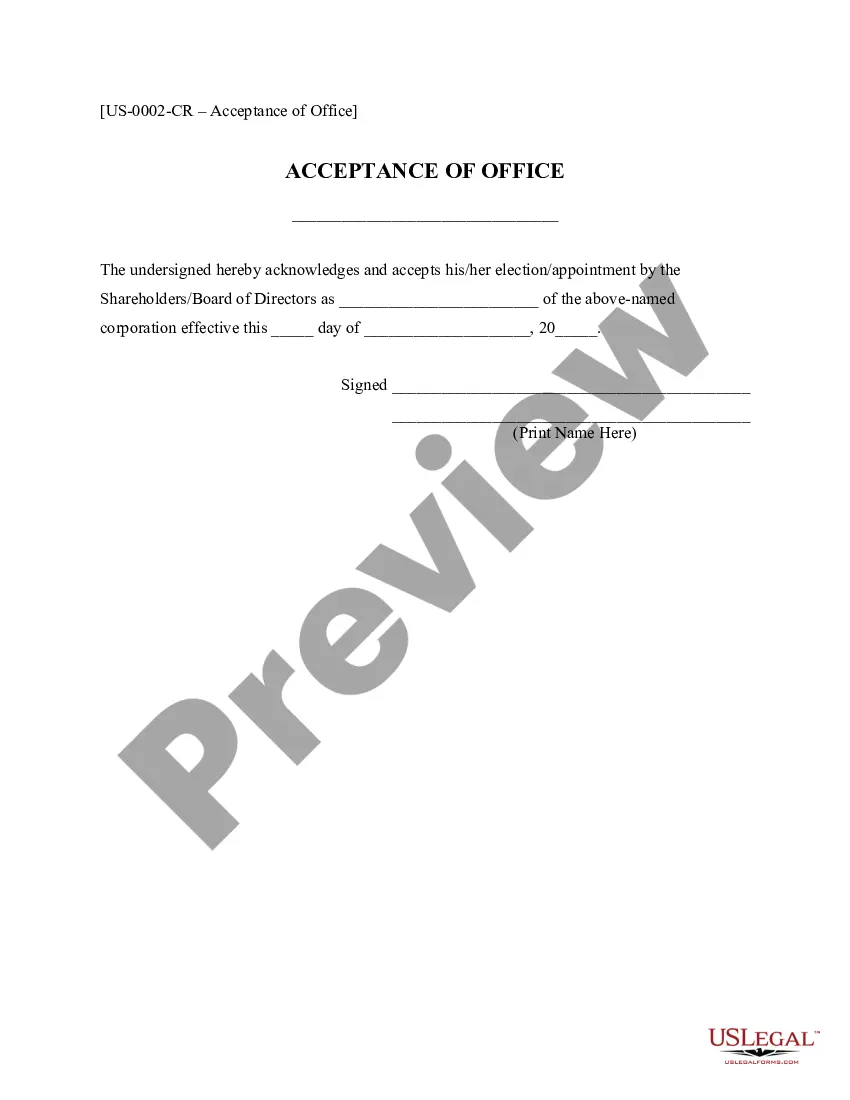
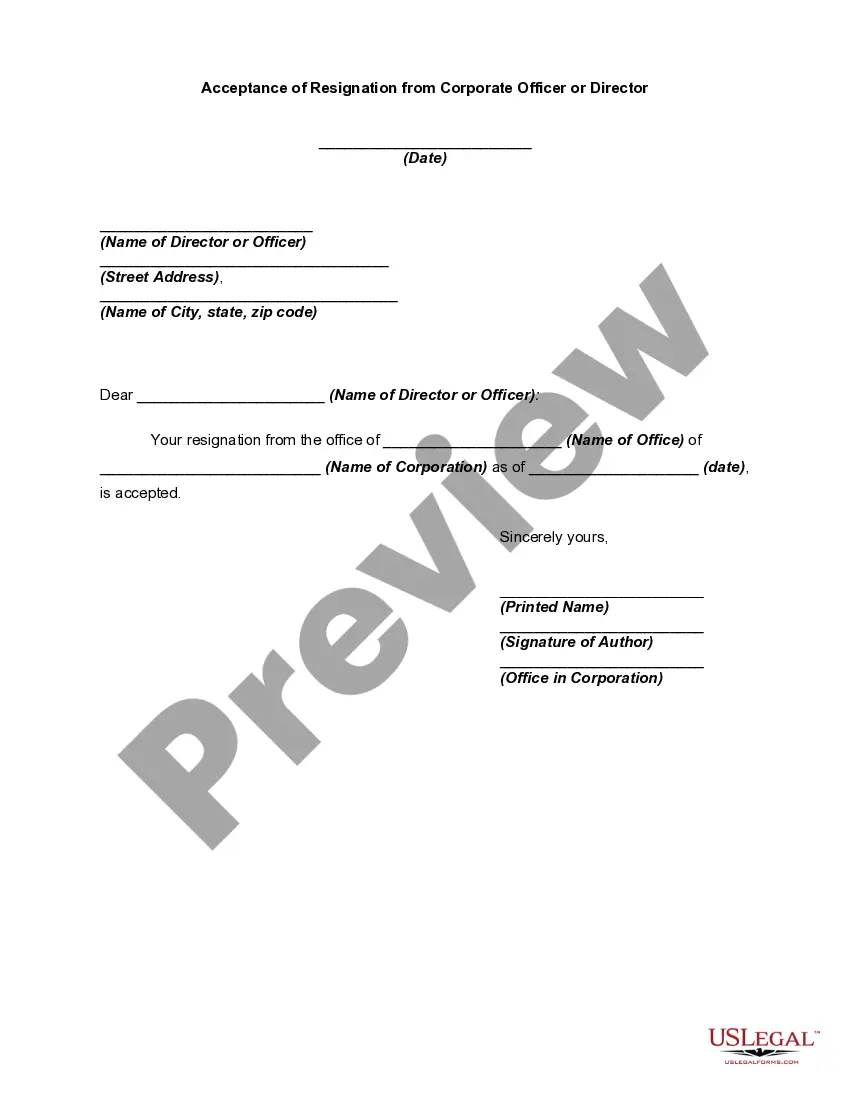
Get your form ready online
Our built-in tools help you complete, sign, share, and store your documents in one place.
Make edits, fill in missing information, and update formatting in US Legal Forms—just like you would in MS Word.
Download a copy, print it, send it by email, or mail it via USPS—whatever works best for your next step.
Sign and collect signatures with our SignNow integration. Send to multiple recipients, set reminders, and more. Go Premium to unlock E-Sign.
If this form requires notarization, complete it online through a secure video call—no need to meet a notary in person or wait for an appointment.
We protect your documents and personal data by following strict security and privacy standards.

Make edits, fill in missing information, and update formatting in US Legal Forms—just like you would in MS Word.

Download a copy, print it, send it by email, or mail it via USPS—whatever works best for your next step.

Sign and collect signatures with our SignNow integration. Send to multiple recipients, set reminders, and more. Go Premium to unlock E-Sign.

If this form requires notarization, complete it online through a secure video call—no need to meet a notary in person or wait for an appointment.

We protect your documents and personal data by following strict security and privacy standards.
Looking for another form?









Form popularity
FAQ
Yes, there is a method to avoid the chance of sticking on mold initialization. In a word…PVA. Polyvinyl alcohol (PVA) is a parting film which forms a physical barrier between the mold and the part. PVA has been around since the beginning of the fiberglass industry and certainly is not considered new technology.
Resins can be produced through the bark of a tree, the flowers of an herb, or the buds of a shrub.
Place a cloth over the resin drips. Next, apply boiling hot water. Allow the heat to permeate for five to ten minutes. Then try to peel off the resin. If that doesn't work, use a putty knife to scrape under it to loosen the resin.
Parchment, wax, and freezer paper have low surface energy, making it difficult for resin to bond with them.
Fiberglass typically does not adhere well to most types of plastic surfaces.
Hi Lee! Whenever you are using resin over wood you need to seal the wood first so that bubbles don't come up from the pores in the wood. One option is to use something like ultra seal. You can also use resin spray or actually coat the wood with a very thin layer of resin, let that cure, then pour on the rest.
Surfaces that have been treated with oil or wax are not receptive to resin and can cause it to peel. These treatments create a barrier that prevents the resin from adhering to the surface.
Your board resignation letter in any form should include the following: Your Statement of Resignation. Don't bury the lede! Make it clear that your letter is meant to communicate your exit from the board of directors. Your End Date. Your Reasons for Resigning From the Board. Your Future Participation. Your Gratitude.
How to Write a Resignation Letter A greeting: Start formal. A statement of resignation. Offer help with transitioning. Thank your employer for giving you a chance to be a part of their company, and for their time. Leave your contact information for your employer. Sign off with “Sincerely” or “Thank you”
Dear Members of the Board, I am writing to formally submit my resignation as Position on the Board of Directors of Company Name, effective Resignation Date. I am grateful for the opportunity to serve on the board and contribute to the company's vision and growth over the past length of time.

