Force Director To Resign In Chicago
Description

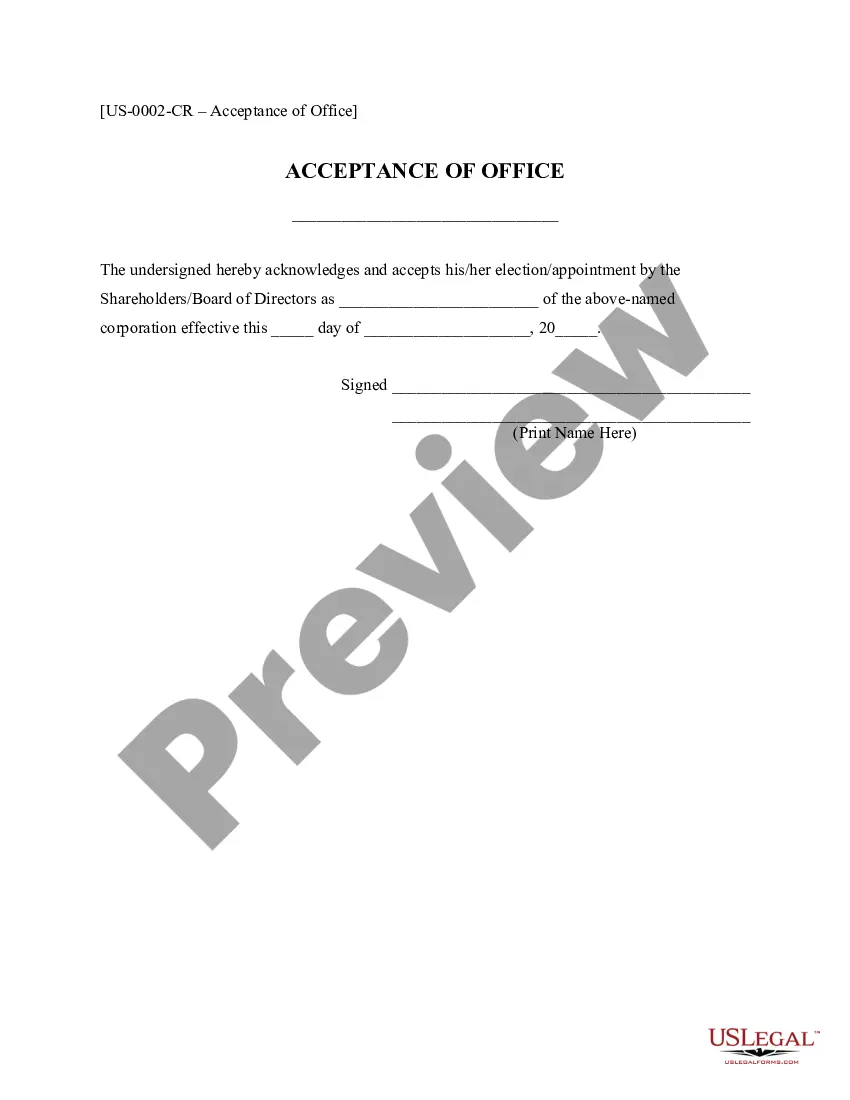
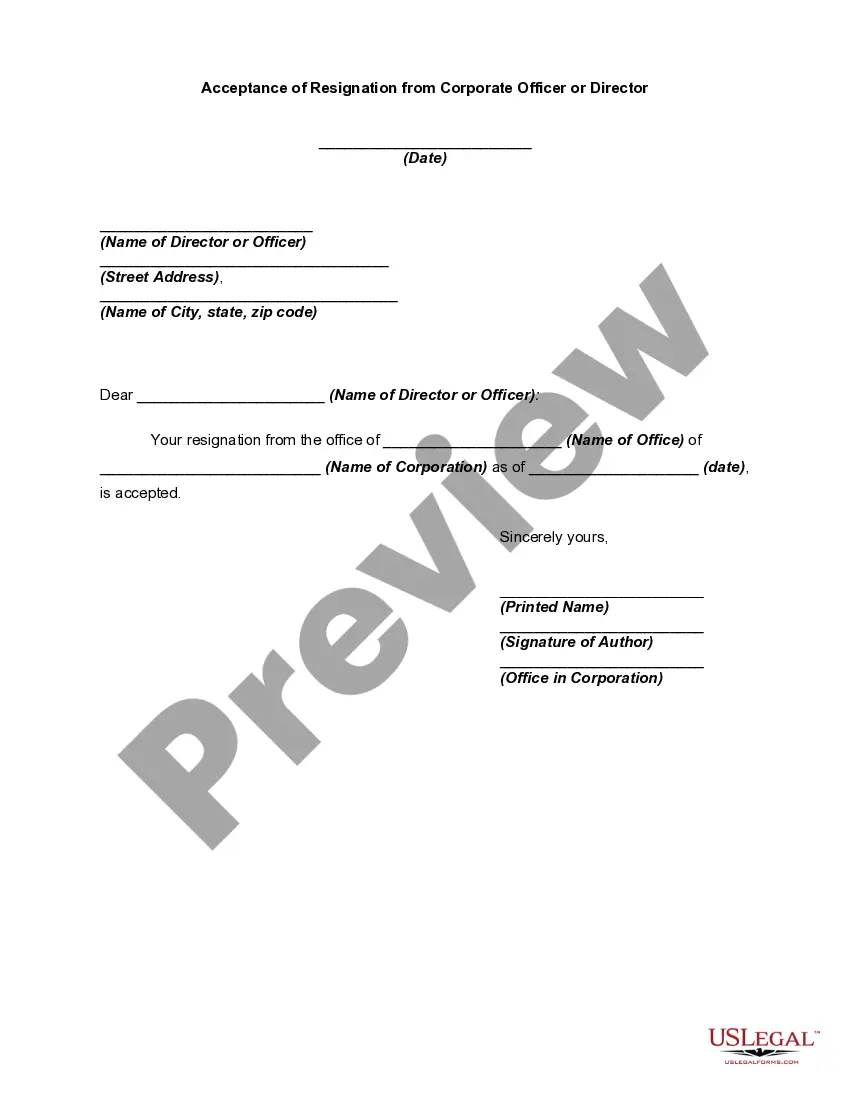
Get your form ready online
Our built-in tools help you complete, sign, share, and store your documents in one place.
Make edits, fill in missing information, and update formatting in US Legal Forms—just like you would in MS Word.
Download a copy, print it, send it by email, or mail it via USPS—whatever works best for your next step.
Sign and collect signatures with our SignNow integration. Send to multiple recipients, set reminders, and more. Go Premium to unlock E-Sign.
If this form requires notarization, complete it online through a secure video call—no need to meet a notary in person or wait for an appointment.
We protect your documents and personal data by following strict security and privacy standards.

Make edits, fill in missing information, and update formatting in US Legal Forms—just like you would in MS Word.

Download a copy, print it, send it by email, or mail it via USPS—whatever works best for your next step.

Sign and collect signatures with our SignNow integration. Send to multiple recipients, set reminders, and more. Go Premium to unlock E-Sign.

If this form requires notarization, complete it online through a secure video call—no need to meet a notary in person or wait for an appointment.

We protect your documents and personal data by following strict security and privacy standards.
Looking for another form?






Form popularity
FAQ
California employment law strictly prohibits employers from engaging in coercive tactics to force an employee to resign. This includes the following: Unlawful Termination Tactics: Employers cannot utilize coercive or unlawful tactics to induce an employee to resign.
If one cannot persuade a corporate director to resign, then one does not ``force'' a resignation. Instead: The shareholders vote to remove the director; or If permitted by the corporation's bylaws, the other directors vote to remove the director in question. Disclaimer:
How is a director removed in a public company? Members (shareholders) can remove a director by resolution (s 203D (1)). This is despite anything in the company's constitution, an agreement between the company and the director or an agreement between any or all members of the company and the director.
A director may resign from his office by giving a notice in writing to the company and the Board shall on receipt of such notice take note of the same and the company shall intimate the Registrar in such manner, within such time and in such form as may be prescribed and shall also place the fact of such resignation in ...
California employment law strictly prohibits employers from engaging in coercive tactics to force an employee to resign. This includes the following: Unlawful Termination Tactics: Employers cannot utilize coercive or unlawful tactics to induce an employee to resign.
Wrongful constructive termination in California -- "How do I prove it?" In California, constructive termination is when your employer intentionally creates or knowingly permits such intolerable working conditions that you reasonably feel no choice but to resign.
Seek Support: Talk to HR or a trusted colleague about your situation. They may provide guidance or intervene if necessary. Prepare for Resistance: Be ready for pushback. Your boss might try to negotiate your departure or convince you to stay. Stick to your decision and reiterate your reasons if needed.
Sometimes, encouraging an employee to resign is best for the employee and the employer. However, if an employee believes he or she was forced to resign under duress, as a form of discrimination or retaliation, or due to other unlawful reasons, the employee may take legal action against the employer.
California employment law strictly prohibits employers from engaging in coercive tactics to force an employee to resign.

