Trial Continuance Without A Finding In San Diego
Description

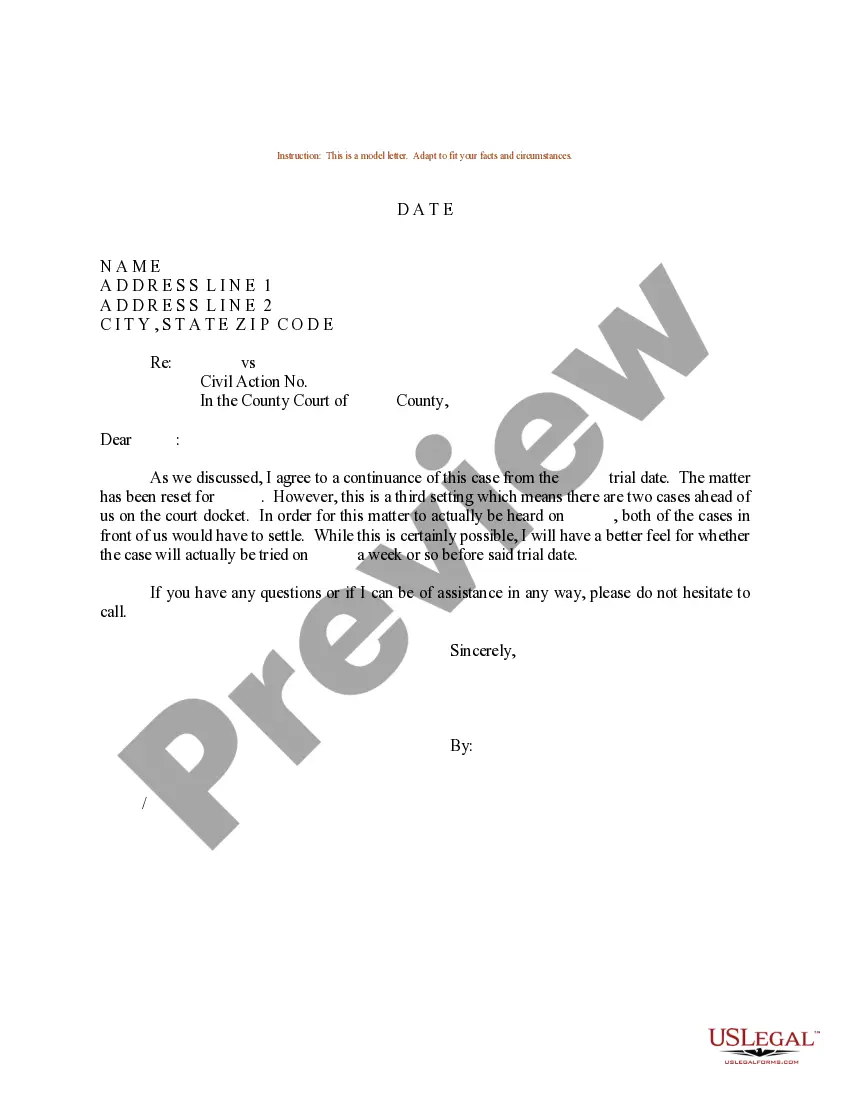
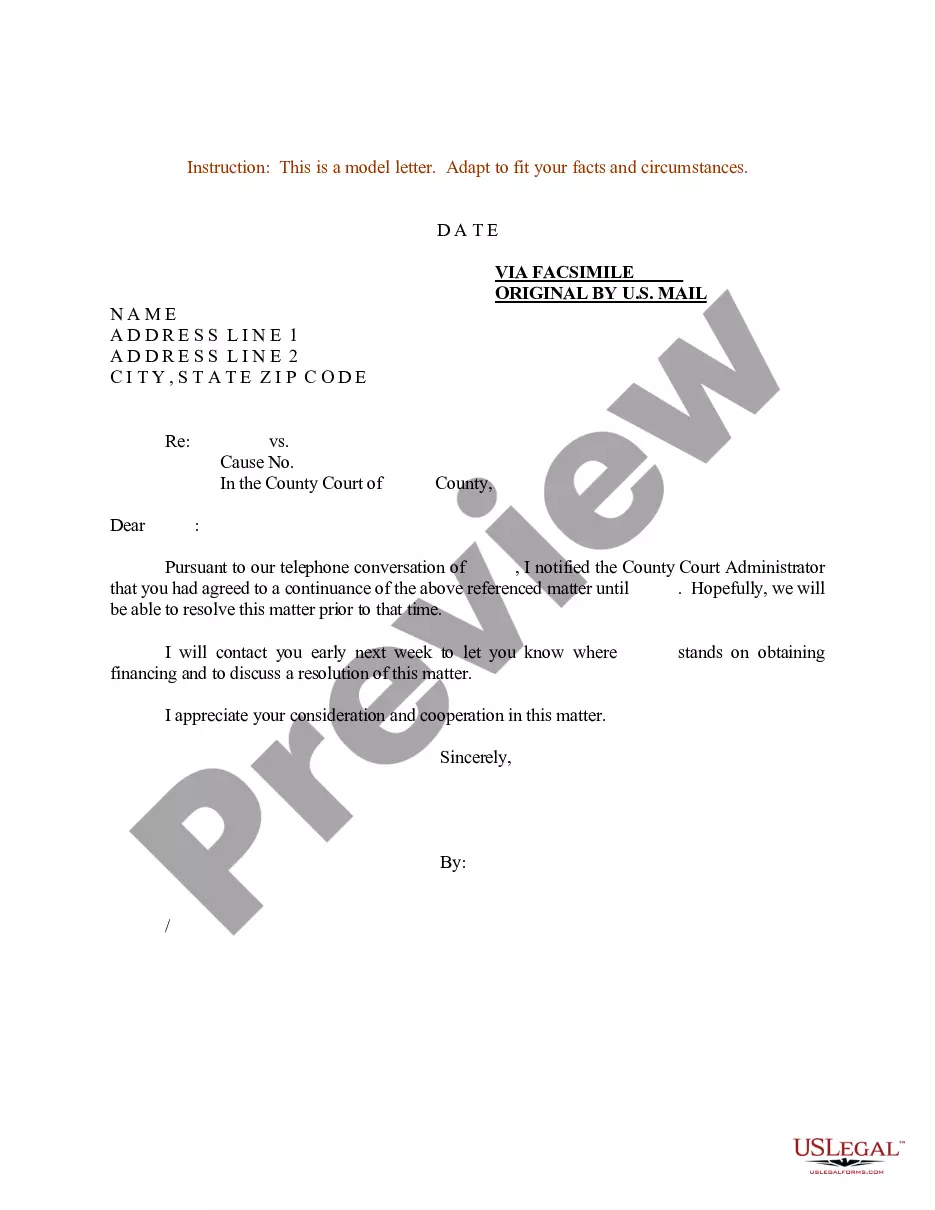
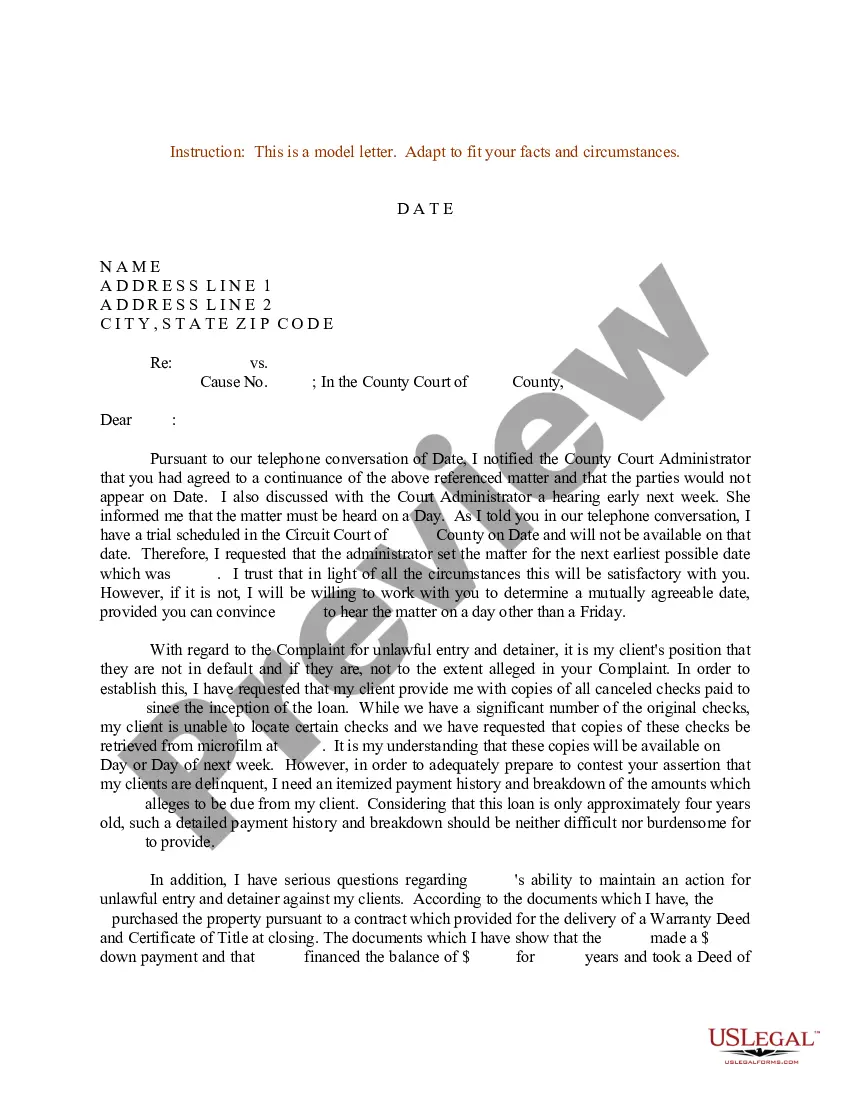
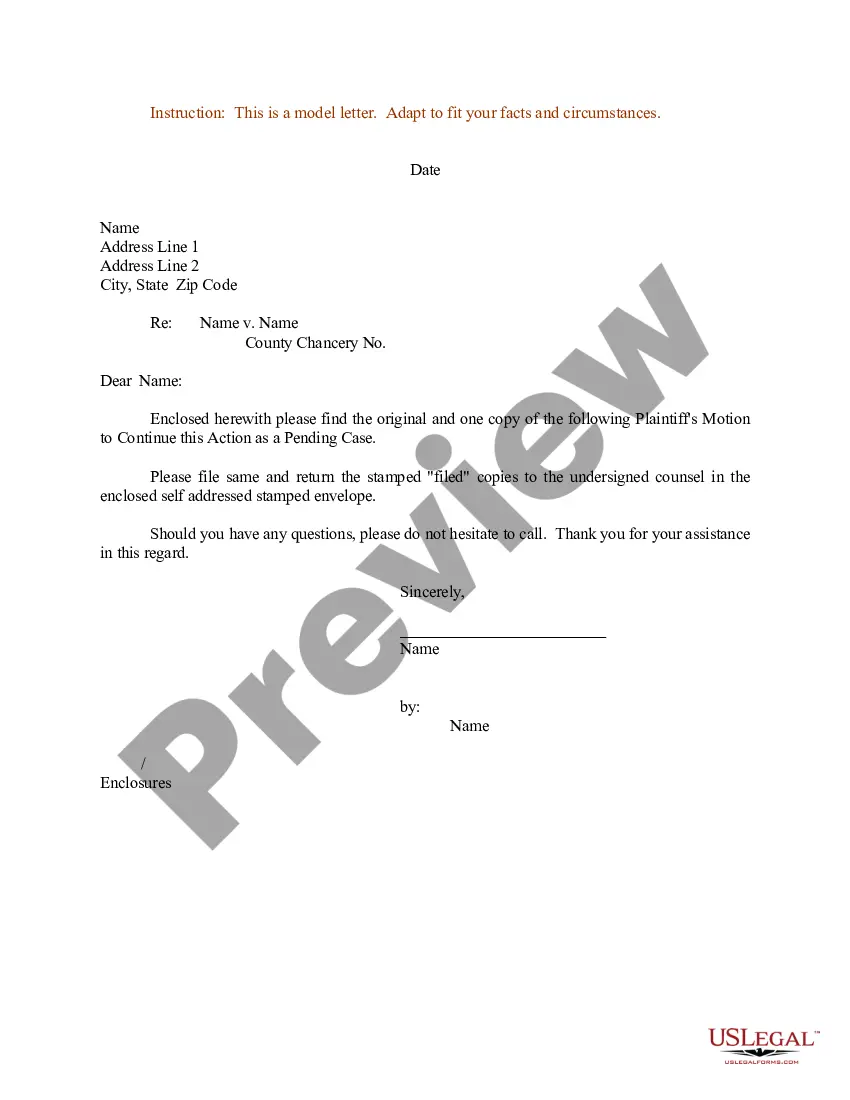
Get your form ready online
Our built-in tools help you complete, sign, share, and store your documents in one place.
Make edits, fill in missing information, and update formatting in US Legal Forms—just like you would in MS Word.
Download a copy, print it, send it by email, or mail it via USPS—whatever works best for your next step.
Sign and collect signatures with our SignNow integration. Send to multiple recipients, set reminders, and more. Go Premium to unlock E-Sign.
If this form requires notarization, complete it online through a secure video call—no need to meet a notary in person or wait for an appointment.
We protect your documents and personal data by following strict security and privacy standards.

Make edits, fill in missing information, and update formatting in US Legal Forms—just like you would in MS Word.

Download a copy, print it, send it by email, or mail it via USPS—whatever works best for your next step.

Sign and collect signatures with our SignNow integration. Send to multiple recipients, set reminders, and more. Go Premium to unlock E-Sign.

If this form requires notarization, complete it online through a secure video call—no need to meet a notary in person or wait for an appointment.

We protect your documents and personal data by following strict security and privacy standards.
Looking for another form?










Form popularity
FAQ
Judges have wide discretion to grant and deny continuances. Some judges routinely grant requests from all lawyers. Others may be reluctant if they believe there is not a good reason for delay. Some judges can be very tough with continuances, and may refuse most requests.
Continuance Without a Finding (CWOF) is common in cases where the evidence supports a guilty finding. This is when the defendant acknowledges guilt for pleading purposes, but the court does not enter a guilty finding.
A continuance is granted for good cause. More time to prepare could be good cause depending upon the circumstances. You (or your attorney) must argue how desperate you are for court orders, and/or that more preparation is not necessary based upon the circumstances.
1. Medical condition; 2. Significant changes in the circumstances; 3. Scheduling conflict. 4. Lack of preparation. You must request a continuance at least 5 business days prior to the hearing (if you are doing this in writing); if you are planning to just call, you can do so no later than 2 days prior to the hearing.
The continuence might be longer this allows both parties adequate time to prepare their casesMoreThe continuence might be longer this allows both parties adequate time to prepare their cases properly.
1. Medical condition; 2. Significant changes in the circumstances; 3. Scheduling conflict. 4. Lack of preparation. You must request a continuance at least 5 business days prior to the hearing (if you are doing this in writing); if you are planning to just call, you can do so no later than 2 days prior to the hearing.
Circumstances that may indicate good cause for a continuance include the unavailability of an essential witness (CRC 3.1332 (c)(1)); the unavailability of a party because of death, illness, or other excusable circumstances (CRC 3.1332 (c)(2)); or a significant, unanticipated change in the status of the case as a result ...
Valid reasons could include medical emergencies or unforeseen scheduling conflicts. Absence of party. If a party involved in the case is unable to appear in court due to involuntary or uncontrollable circumstances, such as sudden illness, their counsel may request a continuance.
Circumstances that may indicate good cause for a continuance include the unavailability of an essential witness (CRC 3.1332 (c)(1)); the unavailability of a party because of death, illness, or other excusable circumstances (CRC 3.1332 (c)(2)); or a significant, unanticipated change in the status of the case as a result ...
Circumstances that may indicate good cause for a continuance include the unavailability of an essential witness (CRC 3.1332 (c)(1)); the unavailability of a party because of death, illness, or other excusable circumstances (CRC 3.1332 (c)(2)); or a significant, unanticipated change in the status of the case as a result ...

