Trial Continuance Without A Lawyer In San Antonio
Description

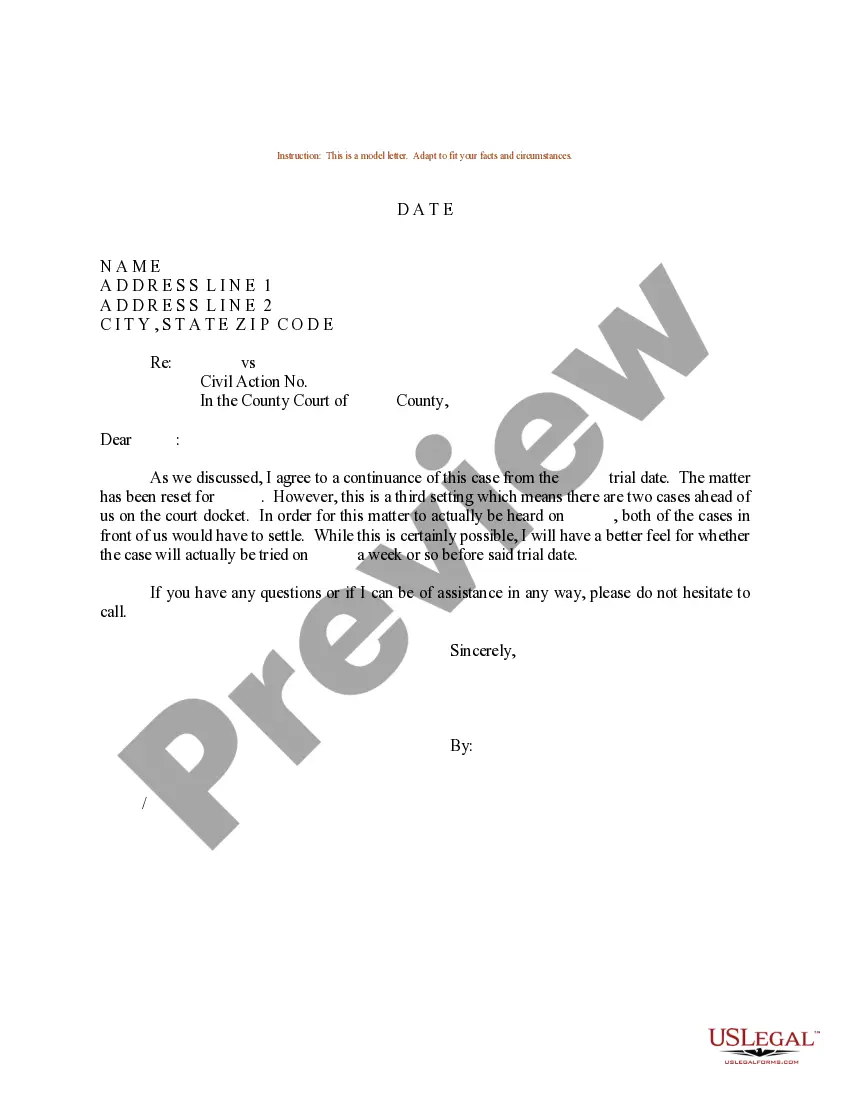
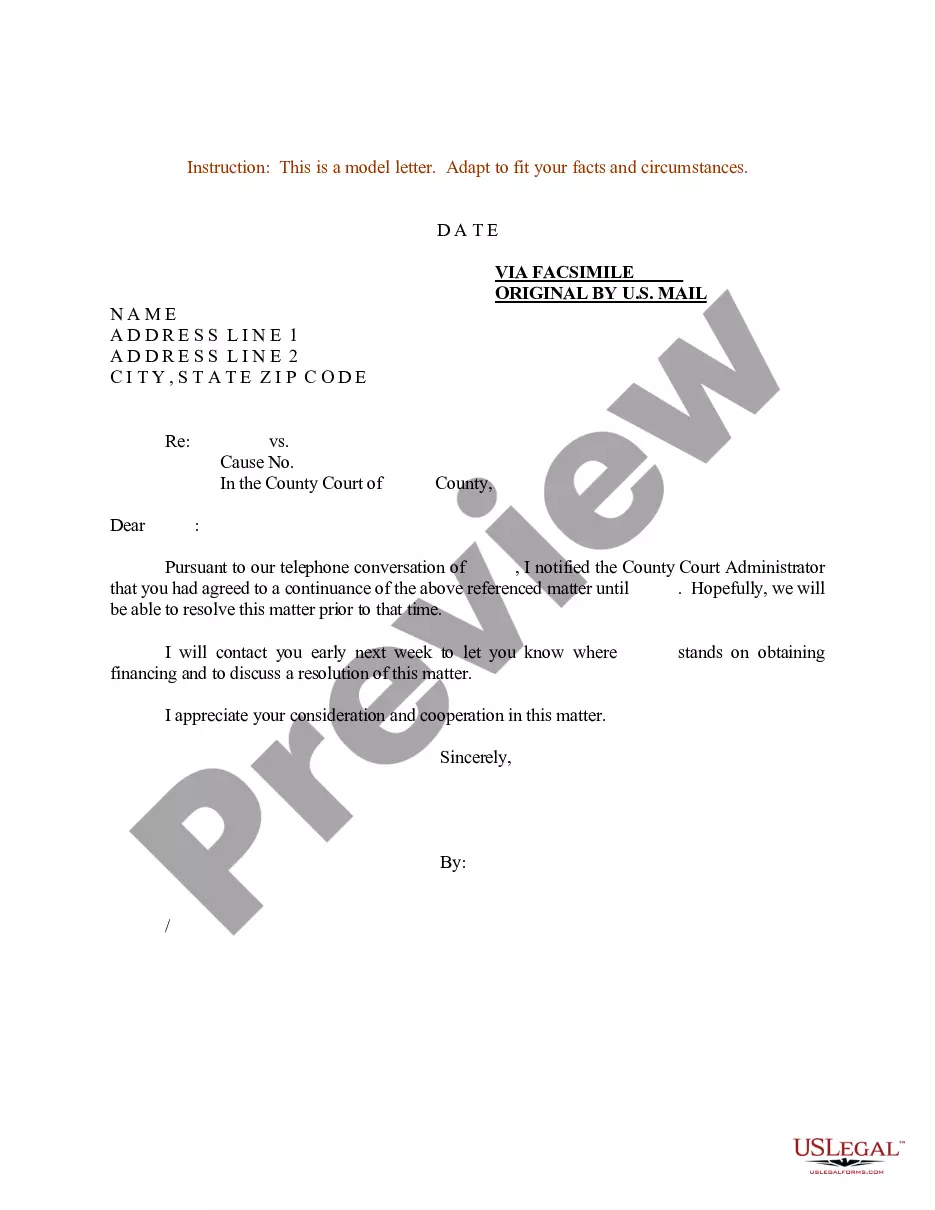
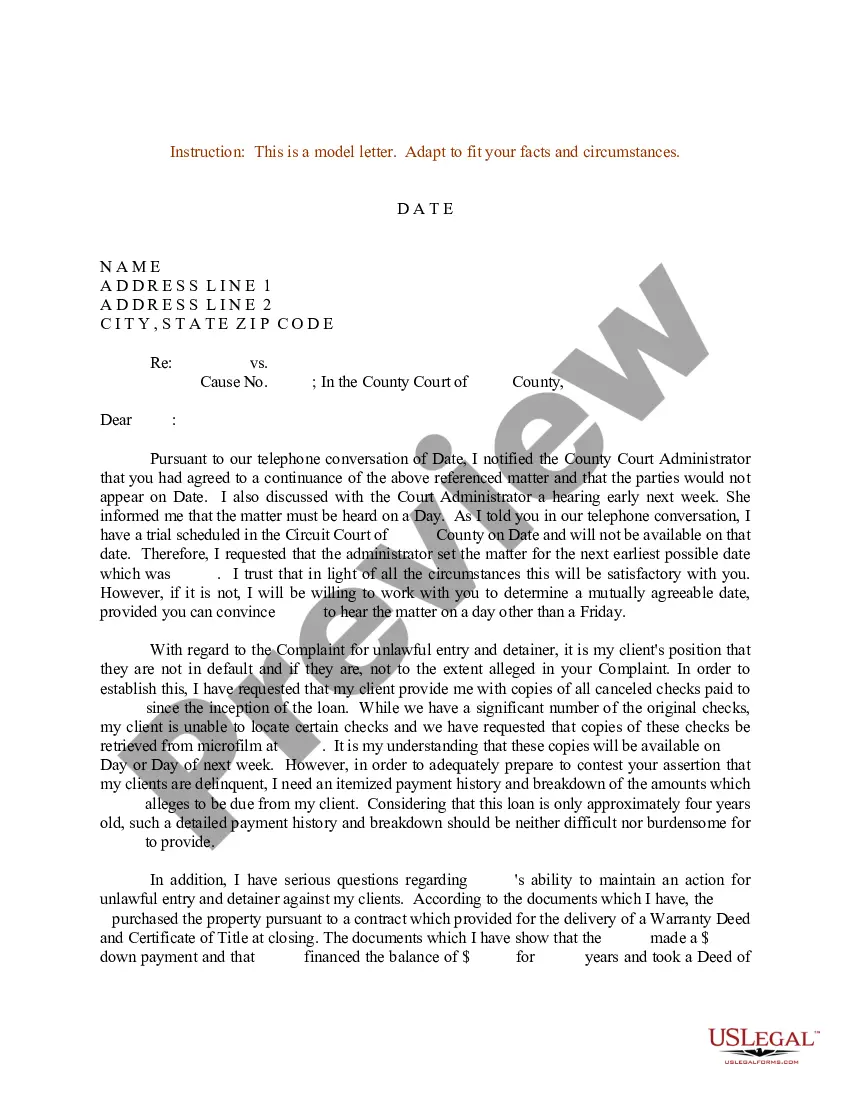
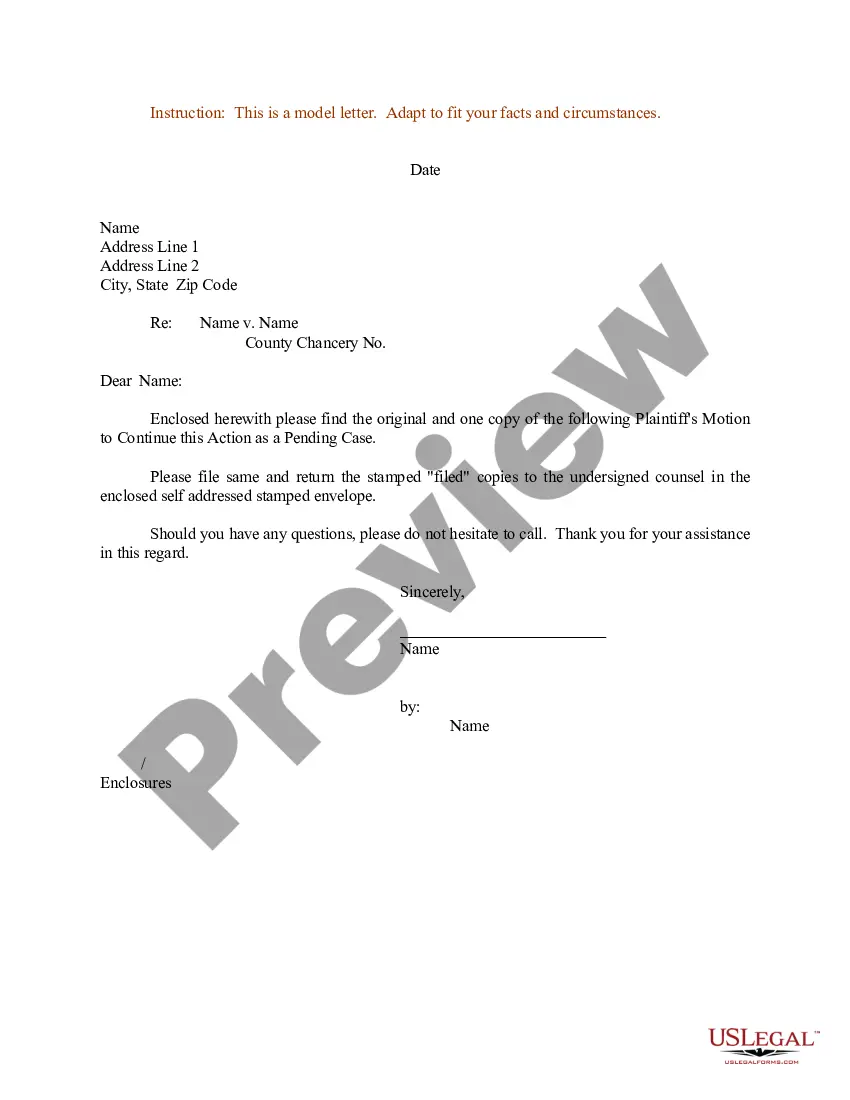
Get your form ready online
Our built-in tools help you complete, sign, share, and store your documents in one place.
Make edits, fill in missing information, and update formatting in US Legal Forms—just like you would in MS Word.
Download a copy, print it, send it by email, or mail it via USPS—whatever works best for your next step.
Sign and collect signatures with our SignNow integration. Send to multiple recipients, set reminders, and more. Go Premium to unlock E-Sign.
If this form requires notarization, complete it online through a secure video call—no need to meet a notary in person or wait for an appointment.
We protect your documents and personal data by following strict security and privacy standards.

Make edits, fill in missing information, and update formatting in US Legal Forms—just like you would in MS Word.

Download a copy, print it, send it by email, or mail it via USPS—whatever works best for your next step.

Sign and collect signatures with our SignNow integration. Send to multiple recipients, set reminders, and more. Go Premium to unlock E-Sign.

If this form requires notarization, complete it online through a secure video call—no need to meet a notary in person or wait for an appointment.

We protect your documents and personal data by following strict security and privacy standards.
Looking for another form?








Form popularity
FAQ
A request for a continuance in Texas involves submitting a written motion to the court, typically accompanied by a valid reason such as illness, scheduling conflicts, or the unavailability of a crucial witness, to delay a scheduled court hearing or trial.
Some of the reasons that might necessitate a continuance include: You need additional time to secure an attorney to represent you in court. You need more time to gather evidence because the other side has been stalling on discovery requests. You need more time to locate witnesses who are critical to your case.
A request for a continuance in Texas involves submitting a written motion to the court, typically accompanied by a valid reason such as illness, scheduling conflicts, or the unavailability of a crucial witness, to delay a scheduled court hearing or trial.
Seven Tips When Representing Yourself in Court Make a good impression. If you dress appropriately, it tells the judge that you respect the courtroom and care about your case. Be respectful. Know what to ask. Arrive early. Tell your story. Come prepared. Use a lawyer if you need help.
Litigants have won court cases when they represent themselves. But pro se litigants are more likely to lose than win their cases.
All continuence requests must be made at least 3 days before the court date. If you're a defendantMoreAll continuence requests must be made at least 3 days before the court date. If you're a defendant without an attorney. You can only request a continuance for your first court date.
Has Anyone Ever Won a Court Case Representing Themselves? Litigants have won court cases when they represent themselves. But pro se litigants are more likely to lose than win their cases.
In federal district courts from 1998 to 2017, around 12% of pro se defendants received final judgments in their favor while pro se plaintiffs won only 3% of final judgments. This statistic means when parties choose to represent themselves, they lose around 80-90% of the time.
A criminal action may be continued on the written motion of the State or of the defendant, upon sufficient cause shown; which cause shall be fully set forth in the motion. A continuance may be only for as long as is necessary.
Harsher Sentences: Without a lawyer to advocate on your behalf, the court may be less inclined to consider mitigating factors that could get your case thrown out or alternative sentencing options. This could result in harsher penalties or longer sentences than you might receive with professional legal representation.

