Trial Continuance Without Evidence In Michigan
Description
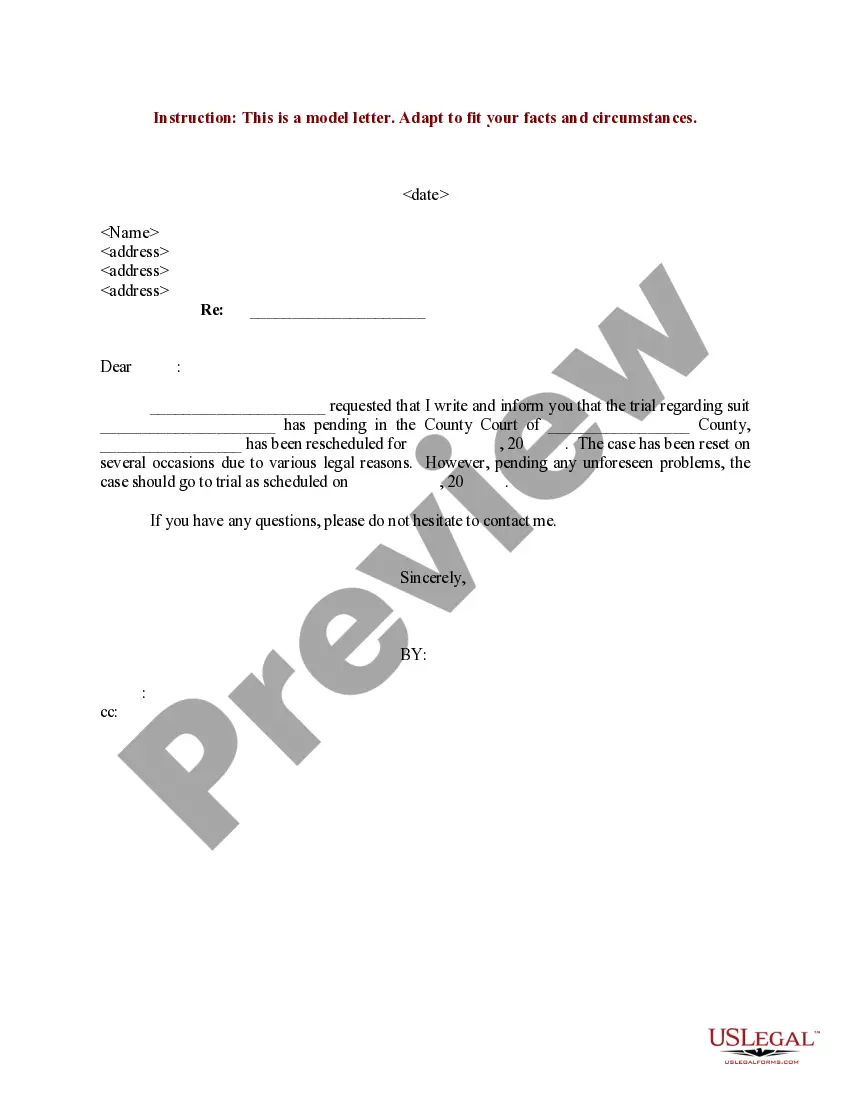
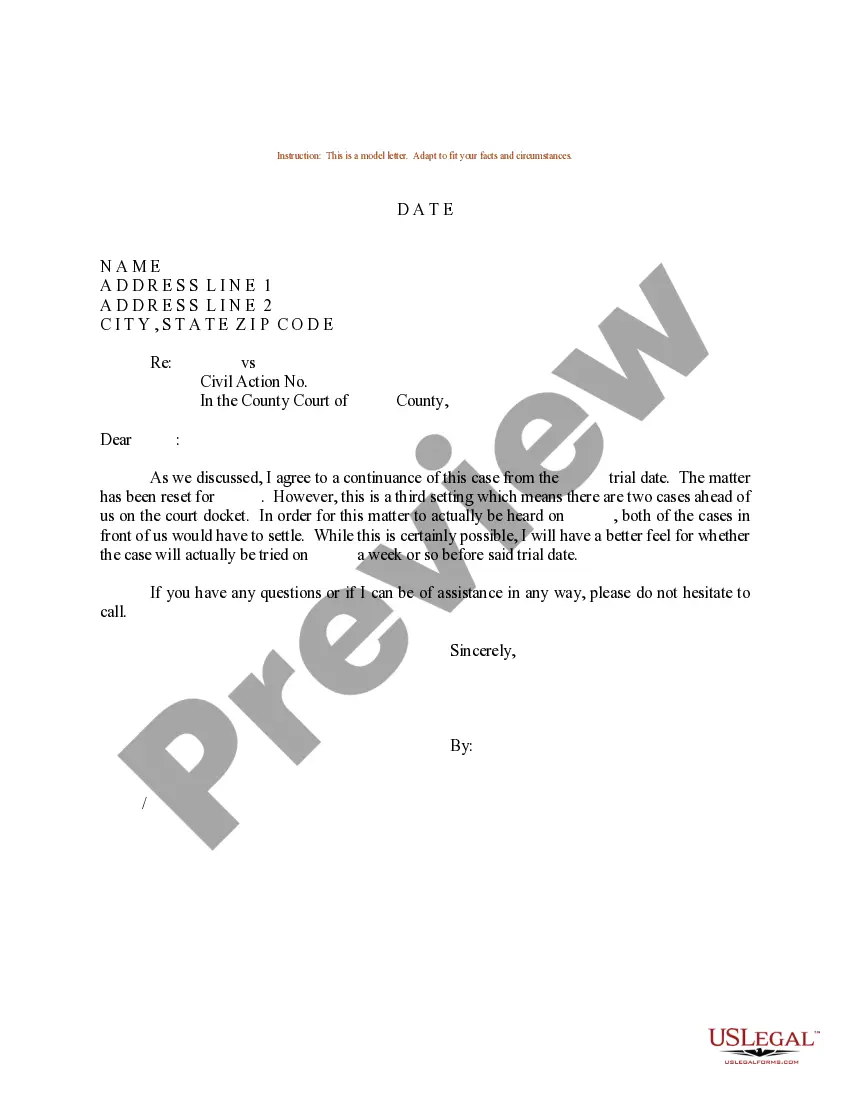
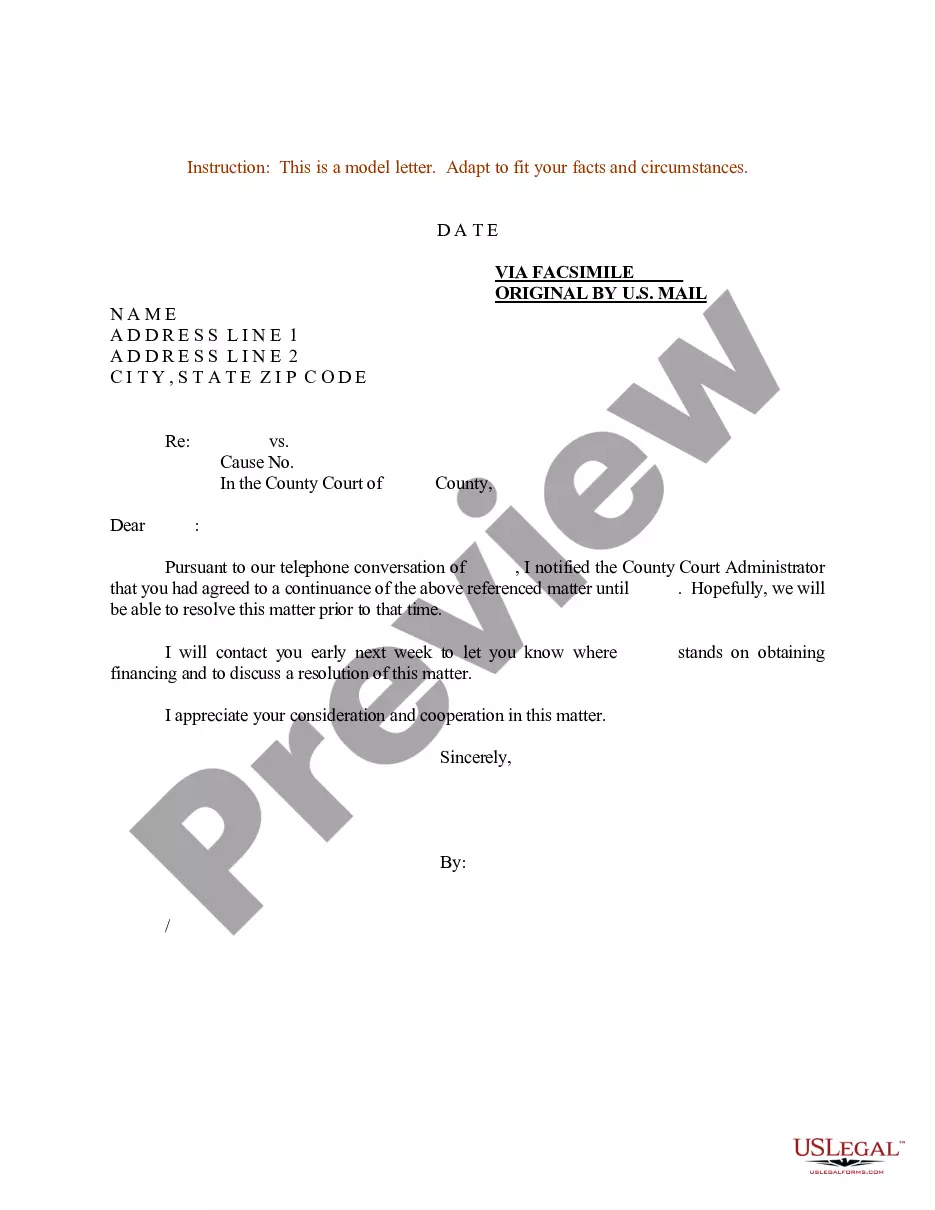
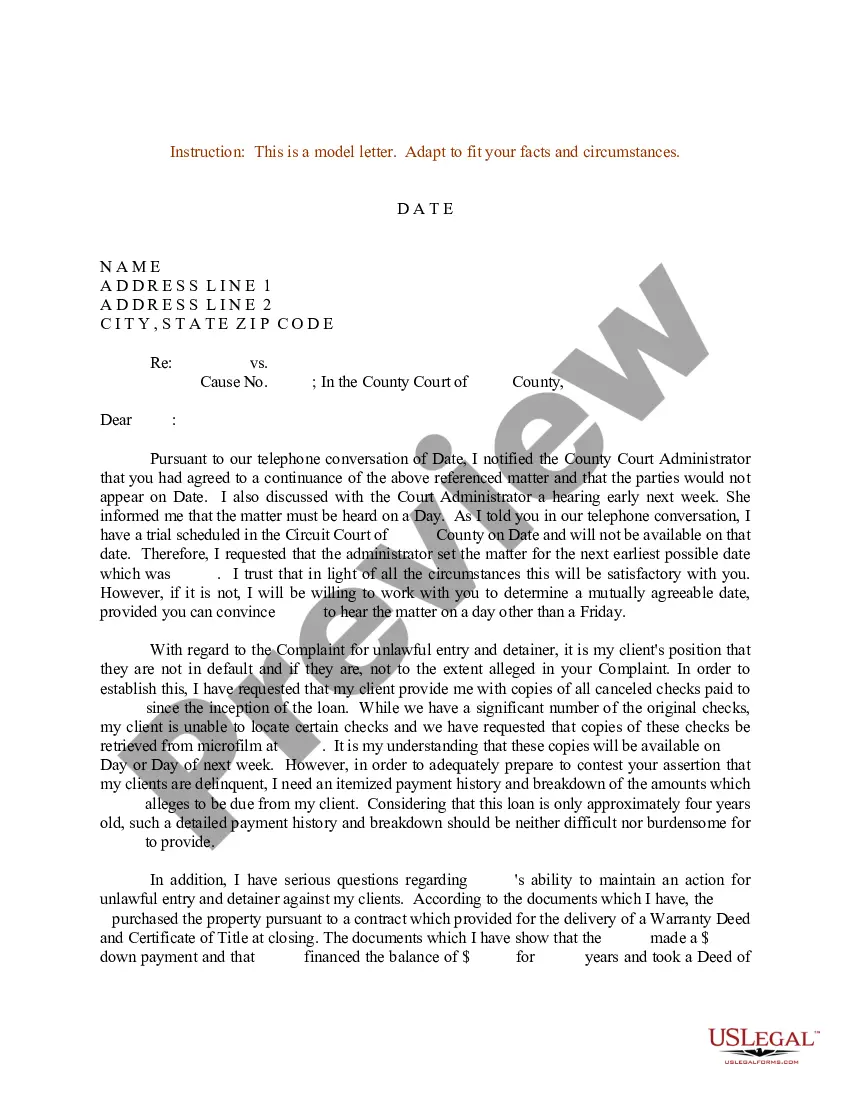
Get your form ready online
Our built-in tools help you complete, sign, share, and store your documents in one place.
Make edits, fill in missing information, and update formatting in US Legal Forms—just like you would in MS Word.
Download a copy, print it, send it by email, or mail it via USPS—whatever works best for your next step.
Sign and collect signatures with our SignNow integration. Send to multiple recipients, set reminders, and more. Go Premium to unlock E-Sign.
If this form requires notarization, complete it online through a secure video call—no need to meet a notary in person or wait for an appointment.
We protect your documents and personal data by following strict security and privacy standards.

Make edits, fill in missing information, and update formatting in US Legal Forms—just like you would in MS Word.

Download a copy, print it, send it by email, or mail it via USPS—whatever works best for your next step.

Sign and collect signatures with our SignNow integration. Send to multiple recipients, set reminders, and more. Go Premium to unlock E-Sign.

If this form requires notarization, complete it online through a secure video call—no need to meet a notary in person or wait for an appointment.

We protect your documents and personal data by following strict security and privacy standards.
Looking for another form?




Form popularity
FAQ
You'll need to file a request with the court. This is usually done in the form of a written motion, which is a formal request to the court to make a particular decision. Your motion should explain why you need more time and how long of a delay you are requesting.
Rule 602. Need forLack of Personal Knowledge. A witness may not testify to a matter only ifunless evidence is introduced sufficient to support a finding that the witness has personal knowledge of the matter. Evidence to prove personal knowledge may, but need not, consist of the witness's own testimony.
Evid. 407. When measures are taken that would have made an event less likely to occur, evidence of subsequent measures is not admissible to prove negligence or culpable conduct in connection with the event.
MRE 607 essentially restates the prior traditional rules on the point. First, the opposing party may impeach; that is orthodox. Second, the calling party generally may not impeach his own witness.
MRE 601 states that every person is competent to be a witness "except as otherwise provided in these rules"-and there is no Dead Man's Statute in the rules. That is the only significant change in Michigan practice embodied in MRE 601 and 603. There are two other incompetencies defined in these rules, both unsurprising.
An objection to a continuance should be clear and positive, though no particular form of words is required. Words such as “I object,” or “We want it tried,” are clear enough. Expressions such as “Well, we leave it up to the court,” or “I cannot consent,” are equivocal, and will not be taken as objections.
Evidence may be ruled as inadmissible if it is unfairly prejudicial, wastes court time, is misleading or confusing, is hearsay, is privileged information, is an expert testimony by a non-expert, or is character evidence.
Rule 607 asserts that a witness's credibility can be attacked by any party, including the party calling the witness. Thus, attorneys can introduce background evidence about their witnesses (i.e., as to bias, past convictions) to forestall damaging cross-examinations.
Within seven days after the granting of the judgment or order, or later if the court al- lows, a party may serve a copy of the pro- posed judgment or order on the other party with a notice that it will be submit- ted to the court for signing if no written objections are filed with the court within seven days after ...
What Is Considered a “Good Cause?” Either the defendant or prosecution needs more time to prepare for trial; The defendant became ill or experienced an unexpected life change; Witnesses cannot be tracked down or cannot attend the scheduled court date; The defendant needs more time to retain a lawyer;

