Master Supply Agreement With In Harris
Description


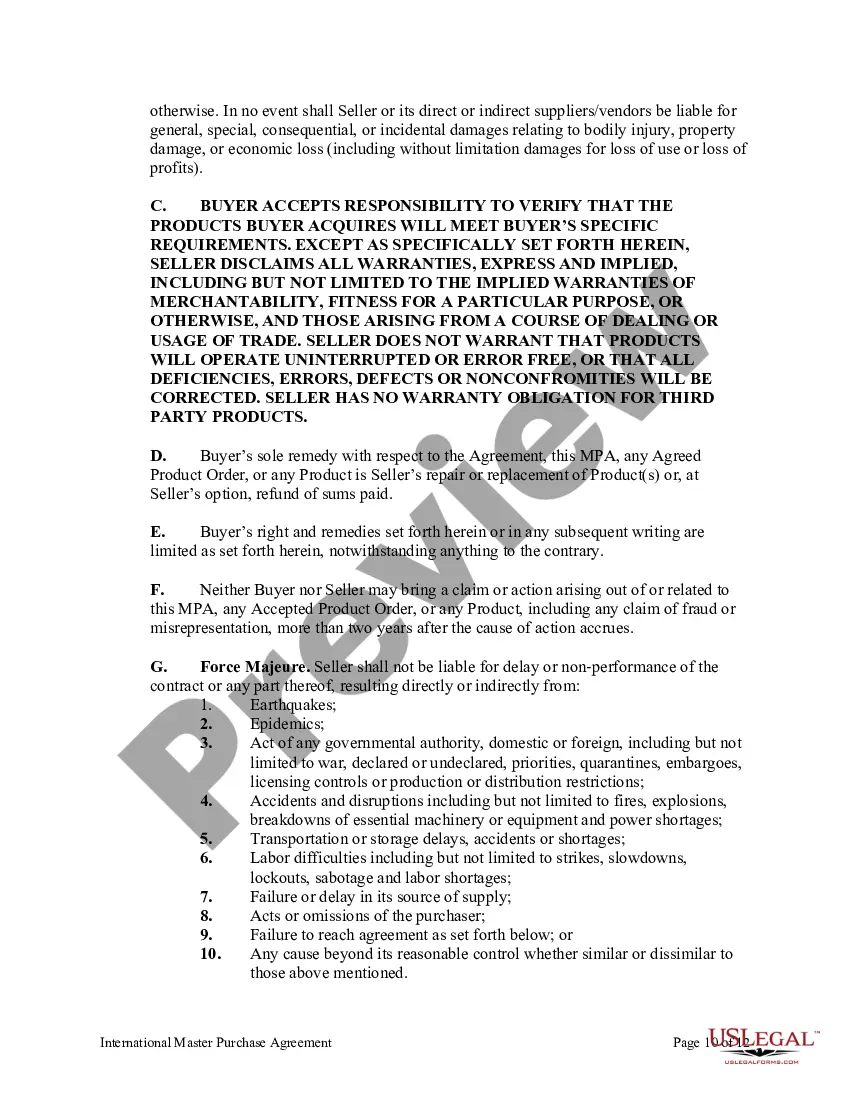



Get your form ready online
Our built-in tools help you complete, sign, share, and store your documents in one place.
Make edits, fill in missing information, and update formatting in US Legal Forms—just like you would in MS Word.
Download a copy, print it, send it by email, or mail it via USPS—whatever works best for your next step.
Sign and collect signatures with our SignNow integration. Send to multiple recipients, set reminders, and more. Go Premium to unlock E-Sign.
If this form requires notarization, complete it online through a secure video call—no need to meet a notary in person or wait for an appointment.
We protect your documents and personal data by following strict security and privacy standards.

Make edits, fill in missing information, and update formatting in US Legal Forms—just like you would in MS Word.

Download a copy, print it, send it by email, or mail it via USPS—whatever works best for your next step.

Sign and collect signatures with our SignNow integration. Send to multiple recipients, set reminders, and more. Go Premium to unlock E-Sign.

If this form requires notarization, complete it online through a secure video call—no need to meet a notary in person or wait for an appointment.

We protect your documents and personal data by following strict security and privacy standards.
Looking for another form?






Form popularity
FAQ
In the aggregate, master supply agreements, or MSAs, are generally contracts that come into existence when a company maintains several contracts with the same supplier, and therefore seeks to streamline the process by merging them into a single agreement.
An MSA, or Master Service Agreement, is a comprehensive contract between two parties that outlines the general terms and conditions governing their business relationship. It serves as a foundation for future transactions or agreements. Its primary purpose is to speed up and simplify future agreements between parties.
How to write a letter of agreement Title the document. Add the title at the top of the document. List your personal information. Include the date. Add the recipient's personal information. Address the recipient. Write an introduction paragraph. Write your body. Conclude the letter.
An MSA generally contains the following elements: Scope of work: ensures that both parties understand what work will be delivered. Confidentiality: protects intellectual property and other proprietary information from being disclosed. Geography: defines where the work will be performed.
Basic Template and Structure heading/title. description/purpose/the service (basically the product/service description) parties (supplier and client - including addresses) date. territory/geographical coverage. definitions - essential glossary 'root' of frequently occurring items in the document. term - period of agreement.
A master supply agreement, sometimes called a master service agreement, is a legal contract between two parties that consolidates two or more current contracts into one streamlined agreement.
In total, there are 6 types of supply chain contracts, with the three main contracts being; continuous, fast, and flexible.
Types of Agreements Allocation of Rights. Collaborative Research Agreement. Consortium Agreement. Data Use Agreement. Interagency Cooperation Contract. Material Transfer Agreement. Memorandum of Understanding. Non-Disclosure Agreement.
Types of agreements under Indian Contract Act, 1872 Valid agreement. Section 11 of the Indian Contract Act, 1872. Void agreement. Section 24 of the Indian Contract Act, 1872. Wagering Agreements. Contingent Agreement. Voidable agreement. Express and implied agreements. Illegal Agreements.
The Four Agreements are: Be Impeccable With Your Word. Don't Take Anything Personally. Don't Make Assumptions. Always Do Your Best.