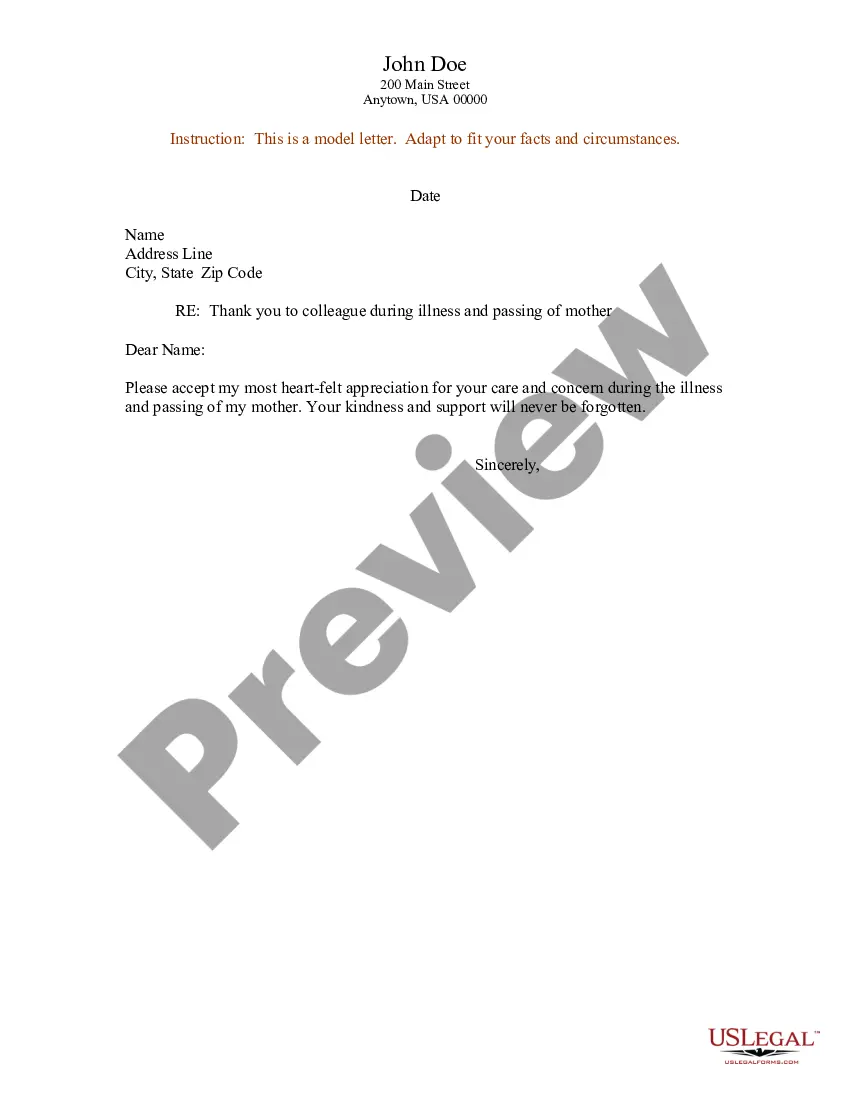
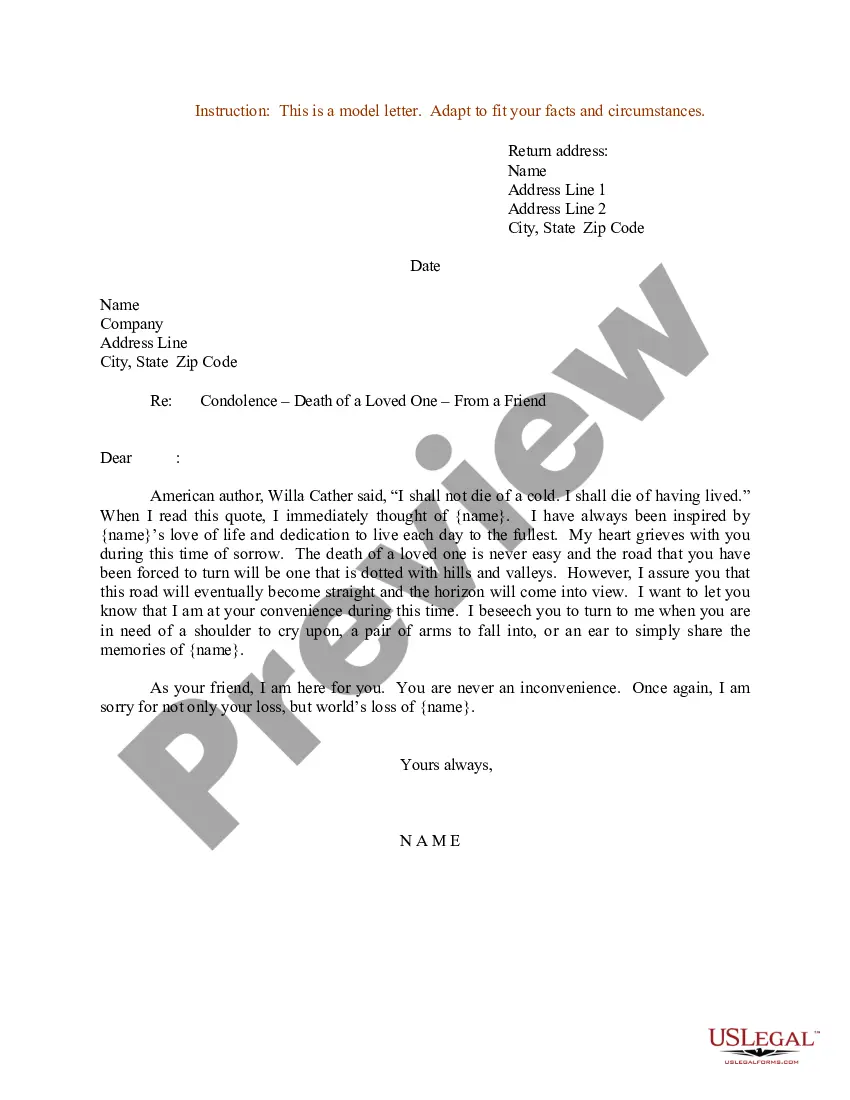
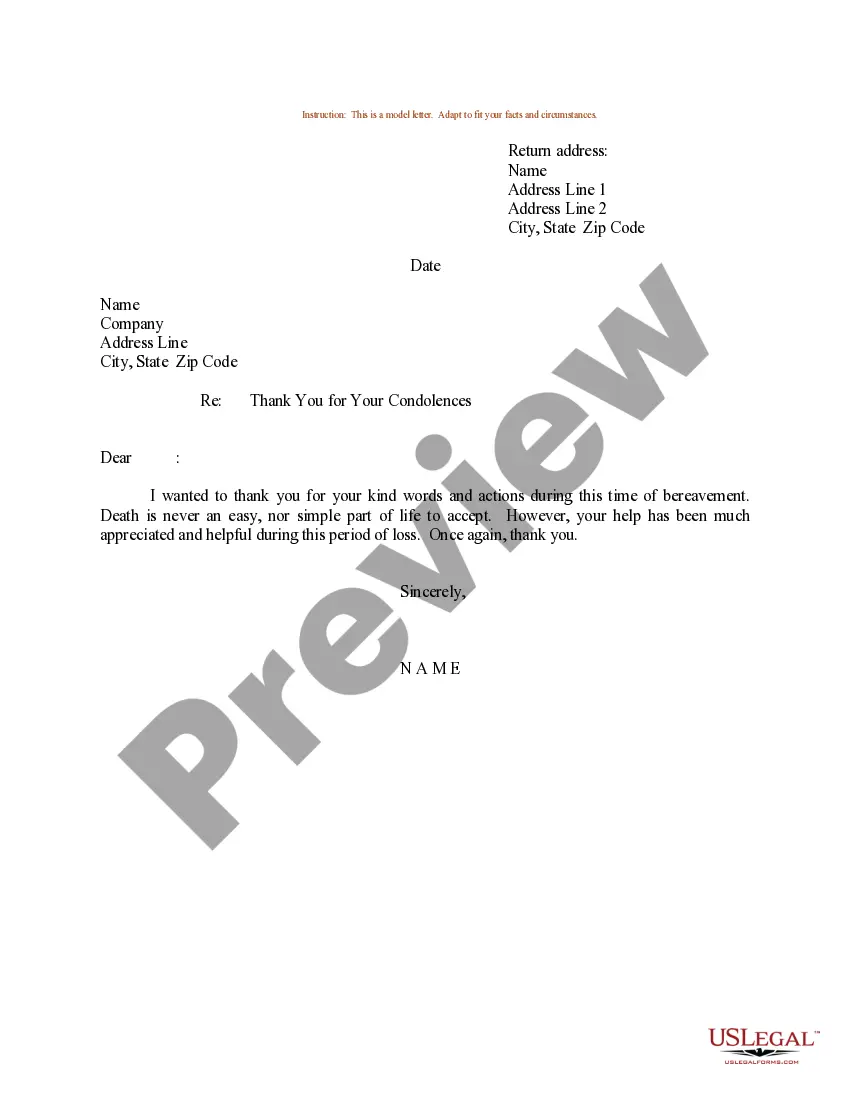
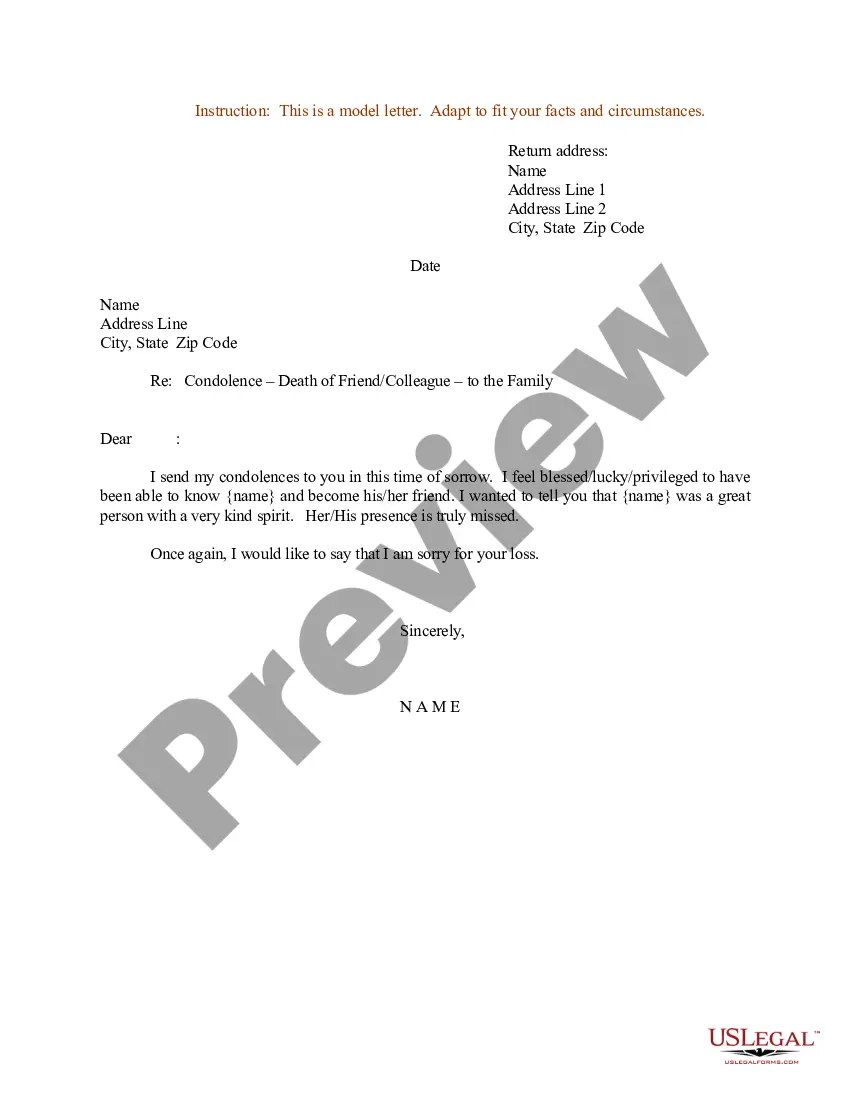
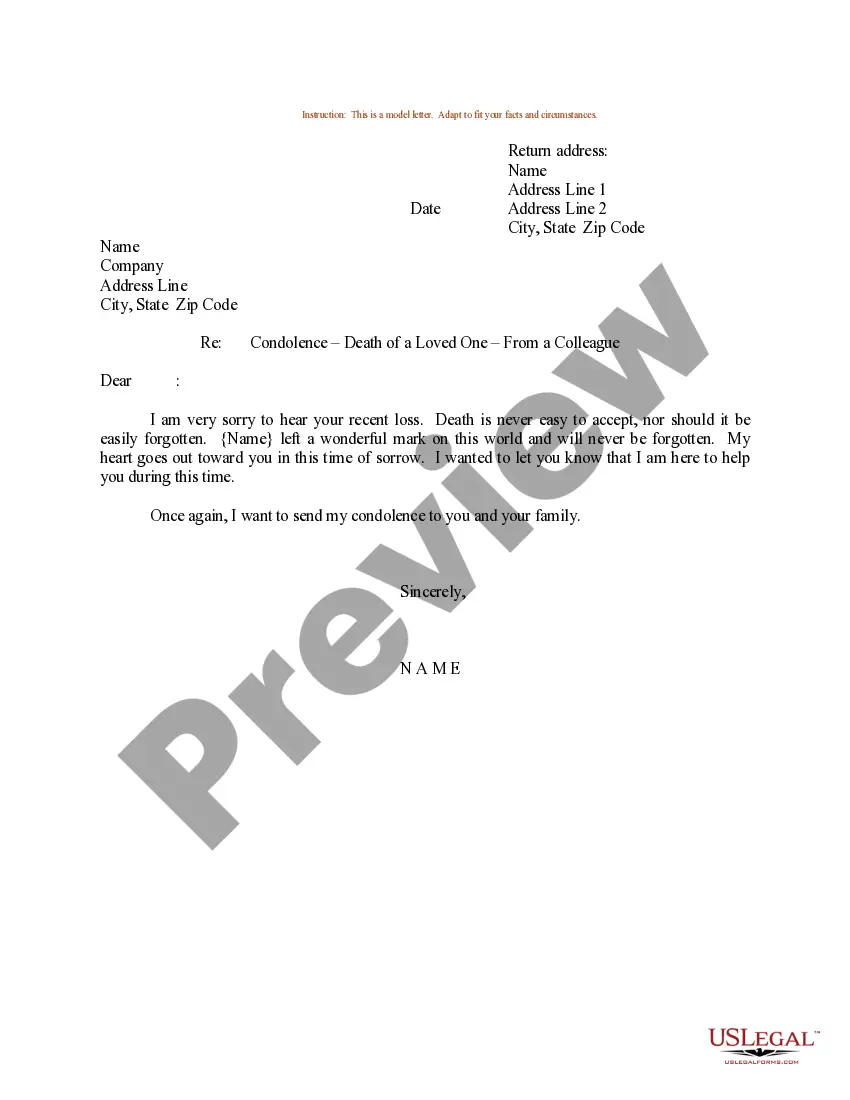
Condolences Letter Formal In Fairfax
Description
Get your form ready online
Our built-in tools help you complete, sign, share, and store your documents in one place.
Make edits, fill in missing information, and update formatting in US Legal Forms—just like you would in MS Word.
Download a copy, print it, send it by email, or mail it via USPS—whatever works best for your next step.
Sign and collect signatures with our SignNow integration. Send to multiple recipients, set reminders, and more. Go Premium to unlock E-Sign.
If this form requires notarization, complete it online through a secure video call—no need to meet a notary in person or wait for an appointment.
We protect your documents and personal data by following strict security and privacy standards.

Make edits, fill in missing information, and update formatting in US Legal Forms—just like you would in MS Word.

Download a copy, print it, send it by email, or mail it via USPS—whatever works best for your next step.

Sign and collect signatures with our SignNow integration. Send to multiple recipients, set reminders, and more. Go Premium to unlock E-Sign.

If this form requires notarization, complete it online through a secure video call—no need to meet a notary in person or wait for an appointment.

We protect your documents and personal data by following strict security and privacy standards.
Looking for another form?







Form popularity
FAQ
Guidelines for writing condolence letters: Make sure you include the name of the person who died or mention the specific incident that caused sorrow for the person. If you knew the deceased, mention something positive about the person, such as a memory, a short story, or anything else that pays tribute to their life.
“I am praying for you and your family. I wish you comfort and peace during these difficult times.” “Losing a mother/father is always painful and heartbreaking. I am so sorry, please accept my condolences.”
Such condolence letters are written strictly in a formal manner on behalf of the organization. A condolence letter is the most effective way to convey your sympathies to the concerned individual.
Condolence Letter Format Example - a Helpful Template to Use Express sympathy and heartfelt condolences. Explain your relationship to the deceased. Consider sharing some special or distinctive qualities of the deceased. Write down a special memory, story or anecdote.
Condolence applies chiefly to formal expression of grief to one who has suffered loss.
A condolence letter is a way to express your sympathy and offer support to loved ones after someone dies. However, think about your relationship with the person who has died and their loved ones. In some cases, it might be better to just write a shorter sympathy note. Don't feel pressured to get too fancy.
Here are several examples to help you write something thoughtful and empathetic: I'm sorry for your loss. Please accept my deepest condolences for you and your family's loss. My heartfelt condolences to you and your family. I am truly sorry to hear about the loss of your father.
You can email us at GDCMail@fairfaxcounty.
Visitors may use portable electronic devices for audio phone calls inside the Courthouse common areas. However, these devices may not be used in courtrooms for any purpose unless expressly authorized by the presiding judge.
To be called for jury duty, you must be 18 years old, have lived in Virginia for at least one year, and have lived in the city or county where you are being summoned to serve as juror for at least six months immediately preceding your summons.