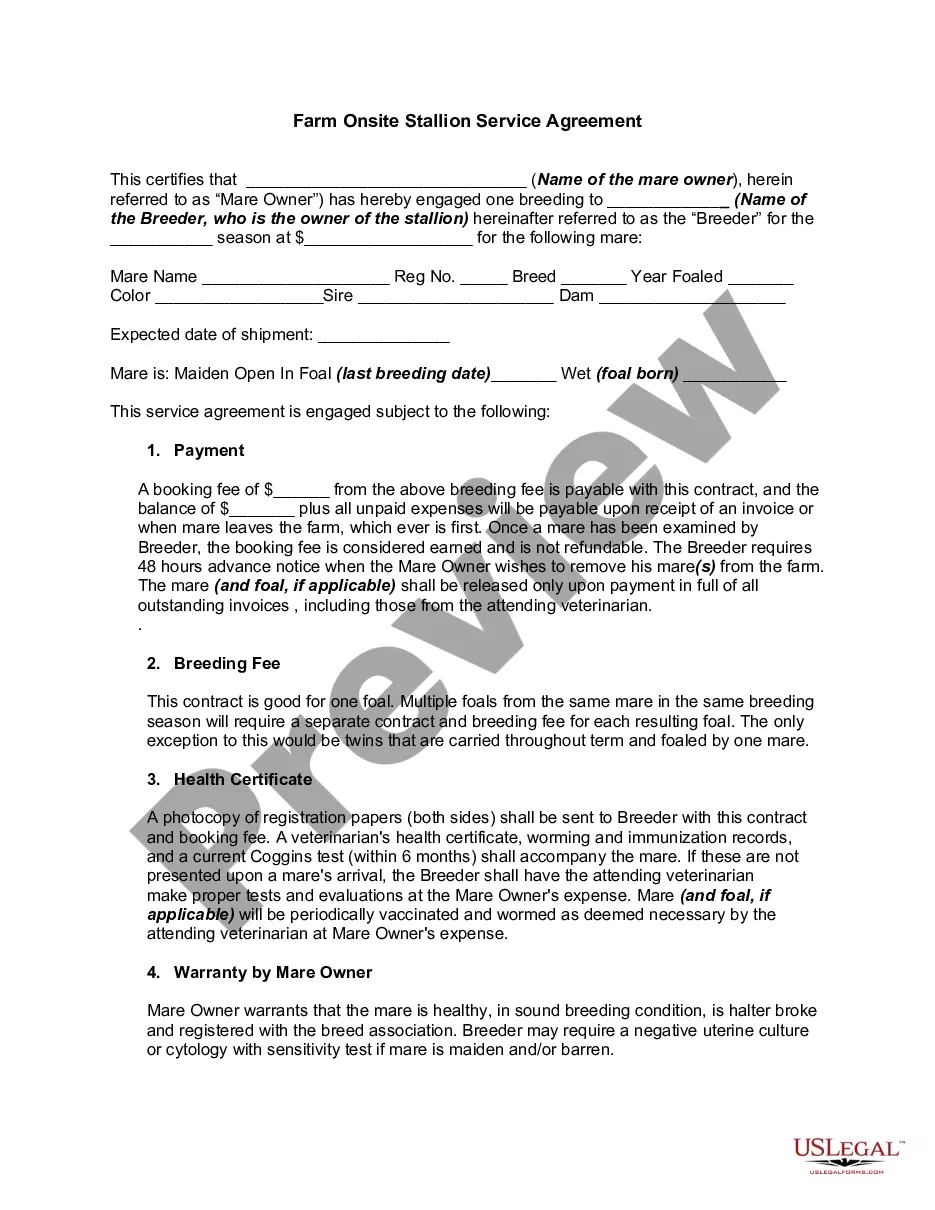
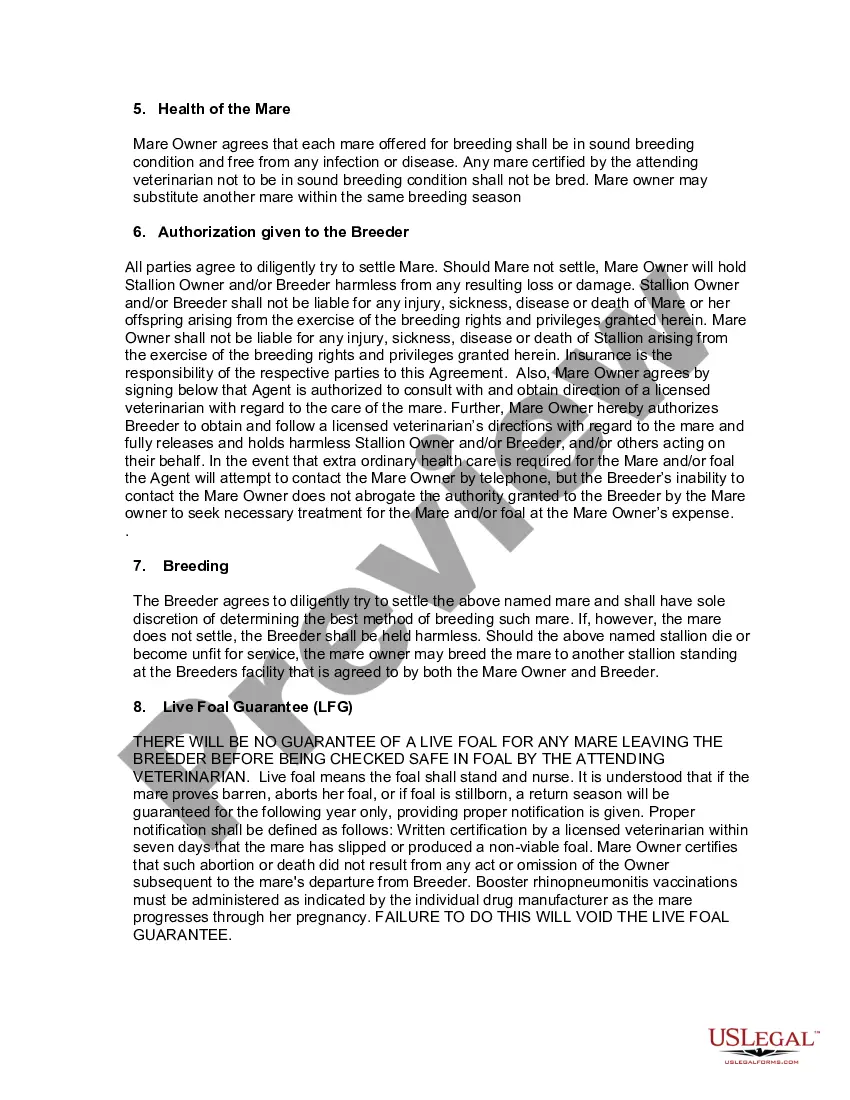
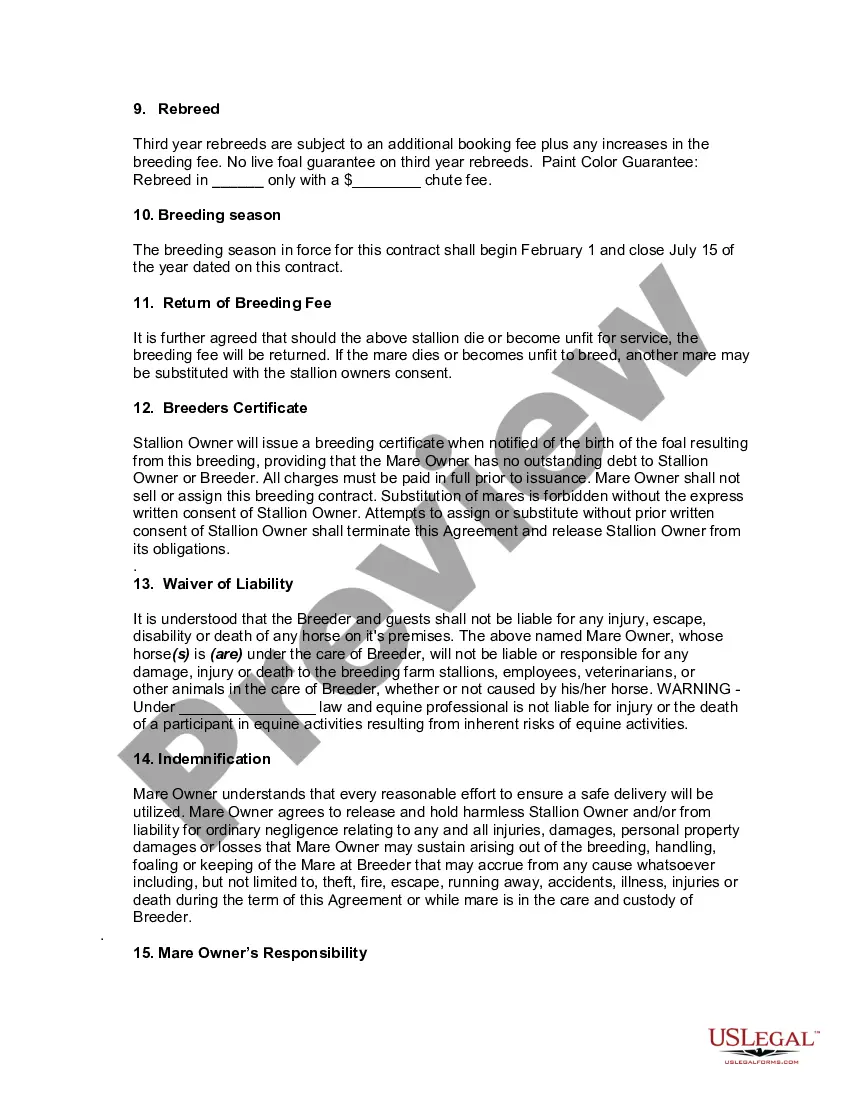
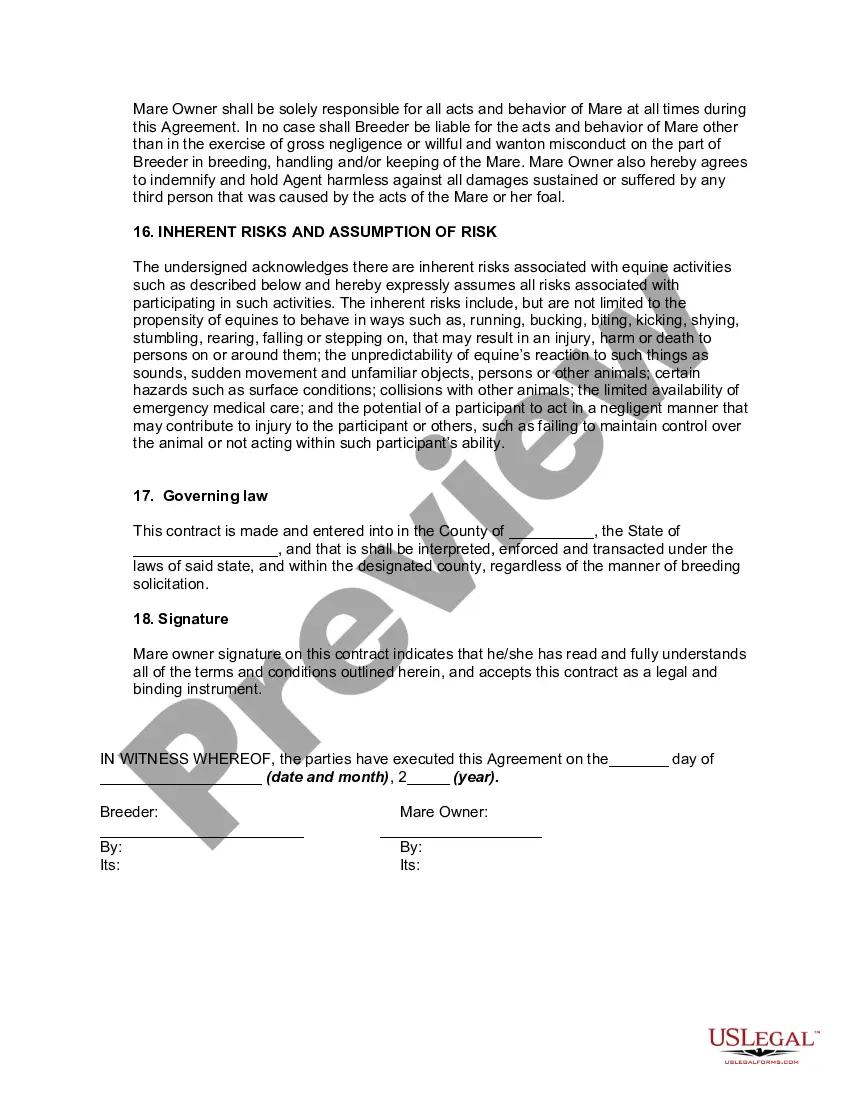
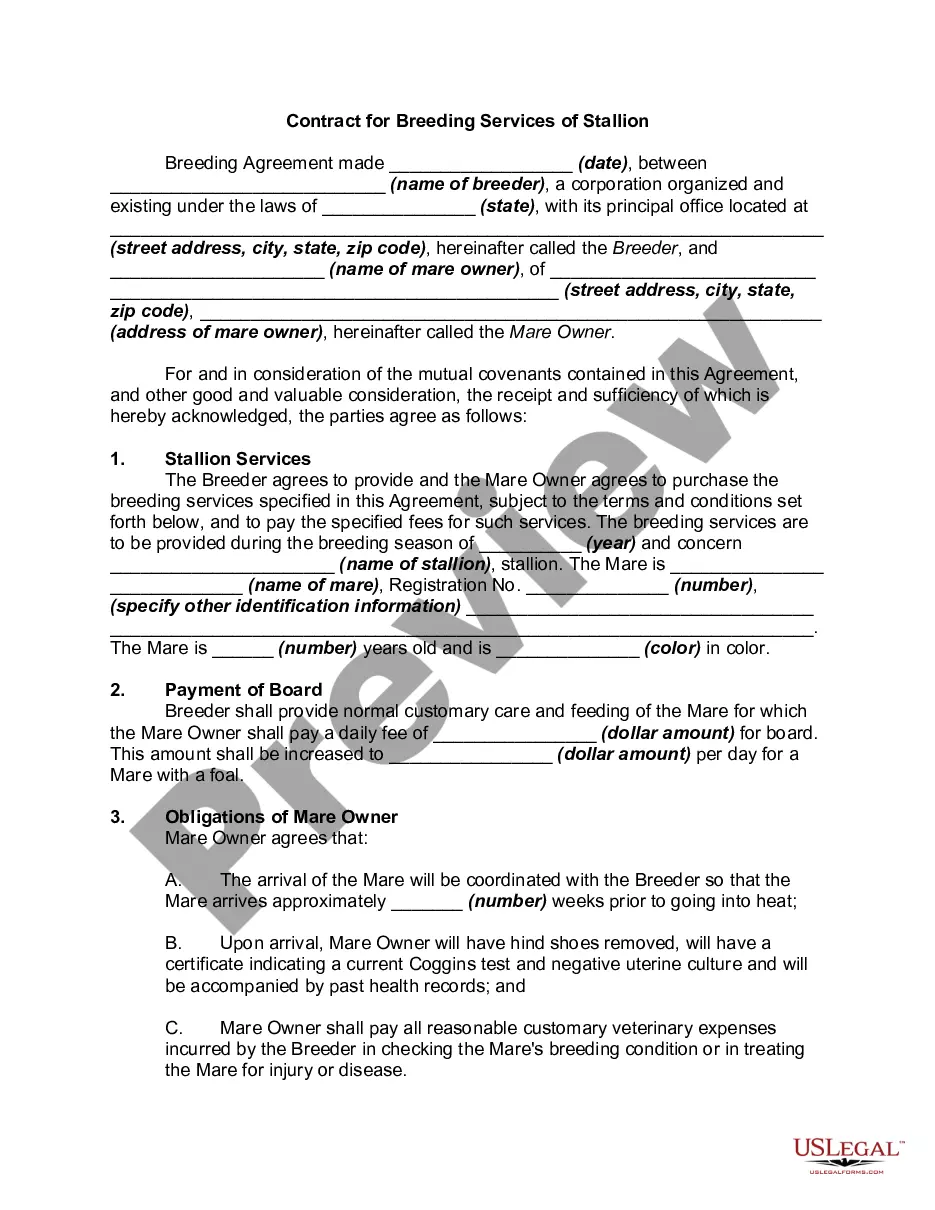
Breeding Contract For Dogs Template In Maricopa
Description
Get your form ready online
Our built-in tools help you complete, sign, share, and store your documents in one place.
Make edits, fill in missing information, and update formatting in US Legal Forms—just like you would in MS Word.
Download a copy, print it, send it by email, or mail it via USPS—whatever works best for your next step.
Sign and collect signatures with our SignNow integration. Send to multiple recipients, set reminders, and more. Go Premium to unlock E-Sign.
If this form requires notarization, complete it online through a secure video call—no need to meet a notary in person or wait for an appointment.
We protect your documents and personal data by following strict security and privacy standards.

Make edits, fill in missing information, and update formatting in US Legal Forms—just like you would in MS Word.

Download a copy, print it, send it by email, or mail it via USPS—whatever works best for your next step.

Sign and collect signatures with our SignNow integration. Send to multiple recipients, set reminders, and more. Go Premium to unlock E-Sign.

If this form requires notarization, complete it online through a secure video call—no need to meet a notary in person or wait for an appointment.

We protect your documents and personal data by following strict security and privacy standards.
Looking for another form?
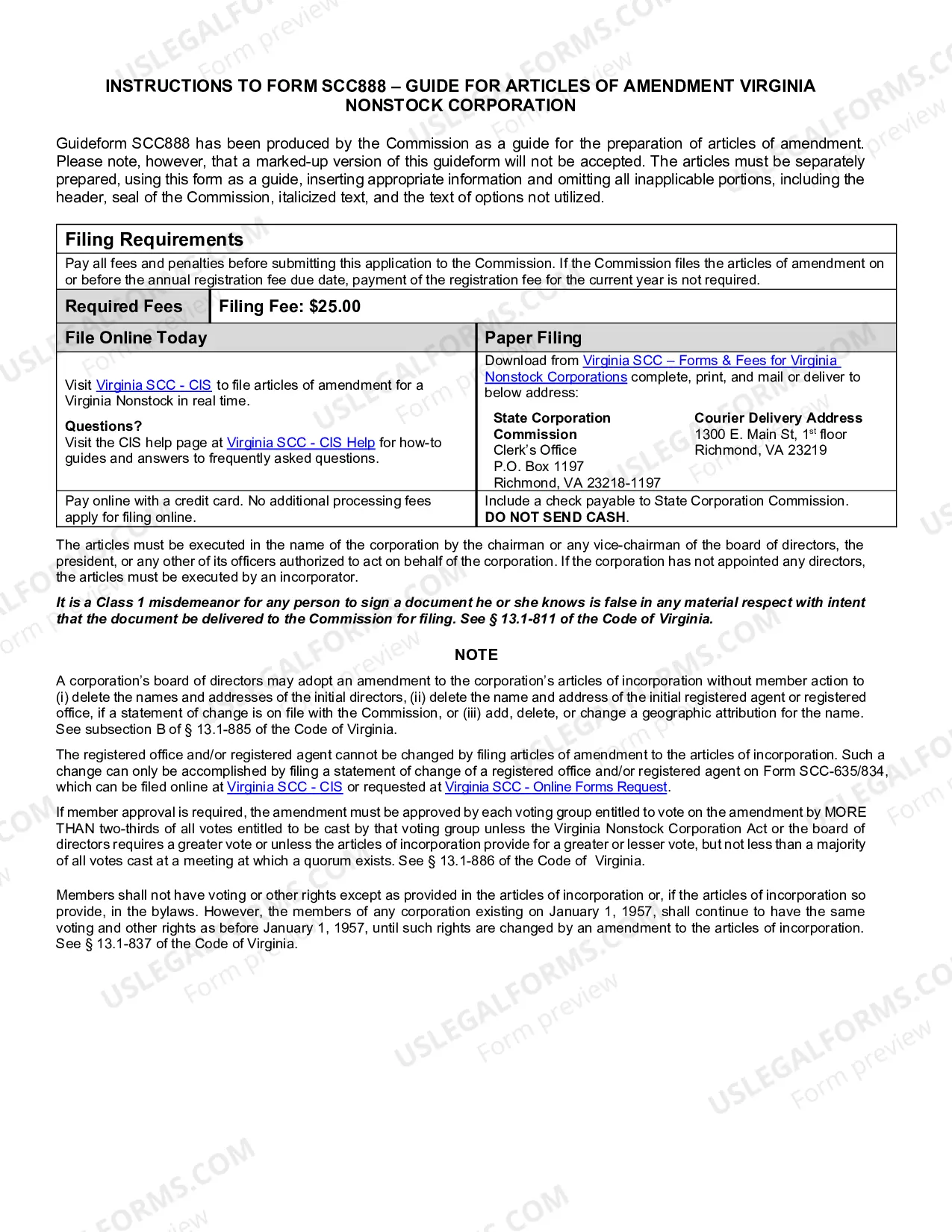





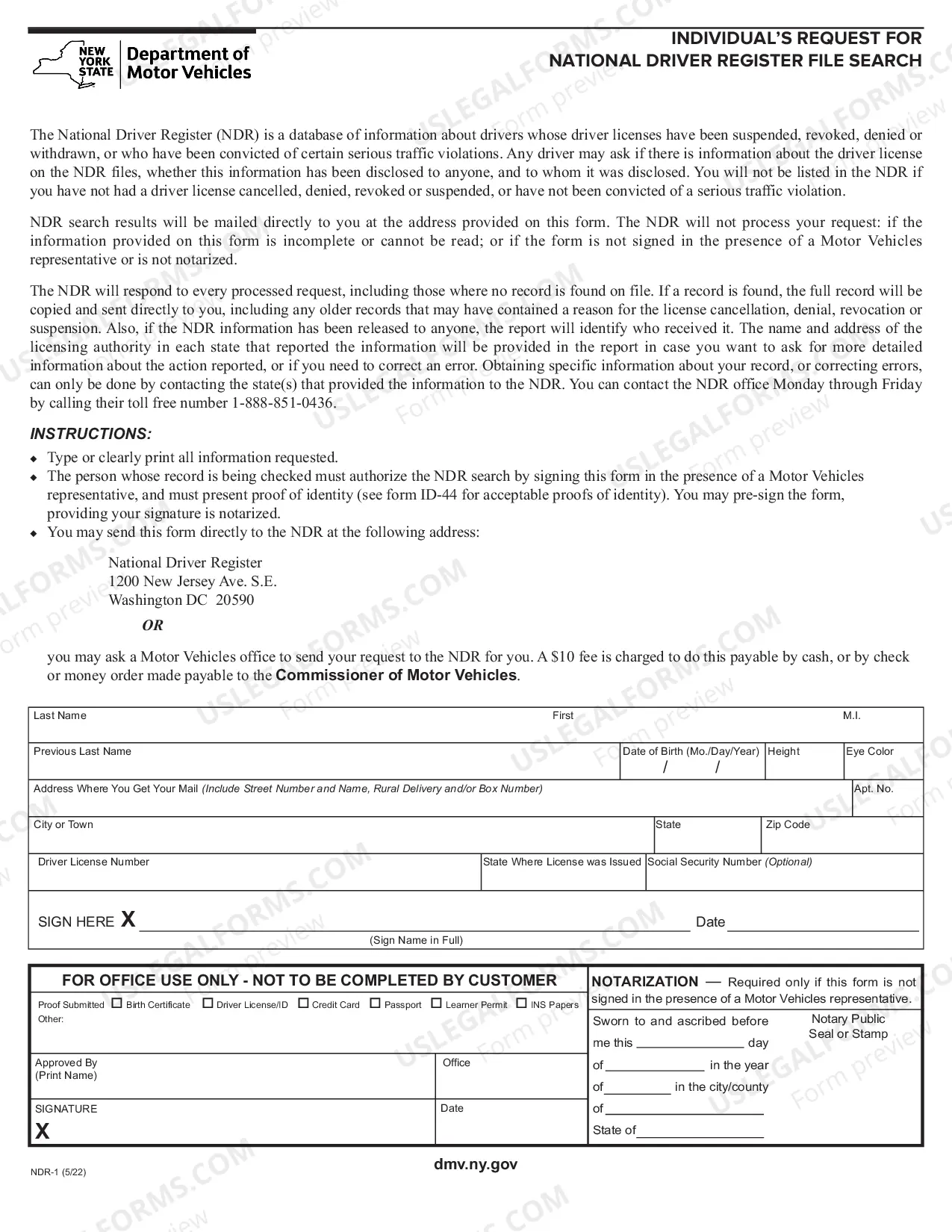
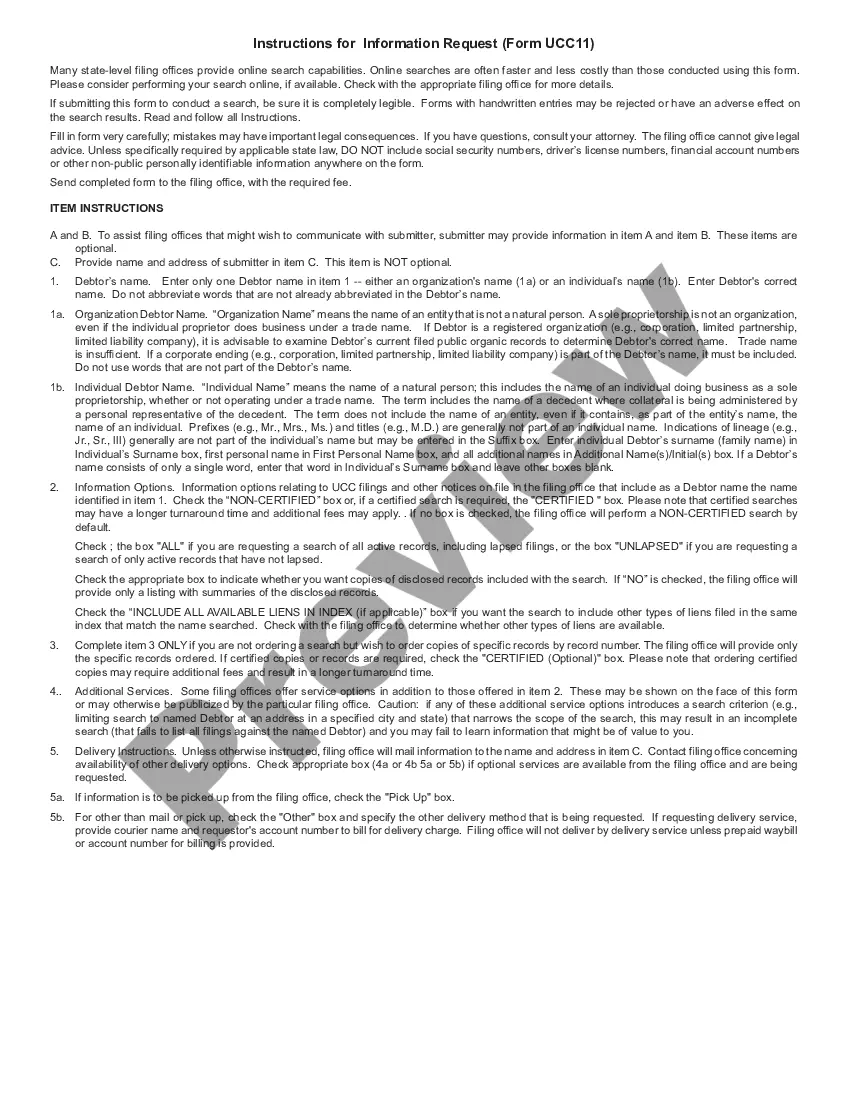
Form popularity
FAQ
A person in the business of breeding and selling dogs may deduct all their business-related expenses, just like any other business. This category would include things like dog food and veterinary care, as well as rent, advertising, and other business expenses.
The Breeder represents, warrants, and agrees as follows: The dog is healthy, well-tempered, and ready for breeding. The Breeder will provide a (Enter number) generation pedigree of the dog, a negative Brucellosis test within (Enter number) breeding days, health records, vaccination details, and health clearances.
As a business owner or self-employed dog breeder, you usually report income and expenses on Form 1099 Schedule C. You can also use Schedule C to claim all business tax deductions or expenses.
Your first step after deciding on a dog breeding business should be to write a business plan. If you need financing, you'll need to show this to most banks. If you're fully self-financed, a business plan will lay out your goals and requirements, as well as lay the groundwork for a successful business.
As a business owner or self-employed dog breeder, you usually report income and expenses on Form 1099 Schedule C. You can also use Schedule C to claim all business tax deductions or expenses.
Breeder contracts usually cover several essential elements: Health guarantees against genetic conditions, return policies for various situations, spay/neuter agreements, breeding rights and restrictions, and may include stipulations for the future care and welfare of the puppy, including diet, living conditions, and ...
Obtaining breeding rights for an AKC registered dog typically involves meeting certain criteria set by the breeder or kennel. This may include proving your commitment to responsible breeding, demonstrating knowledge of the breed, and adhering to ethical breeding practices.
Common Tax Deductions for Dog Breeders Office or Kennel Space. When you keep dogs or operate a dog breeding business, it can be considered office space, as long as it's not used for other purposes. Dog Food. Medical Expenses. Training. Conferences. Legal and Professional Fees. Insurance. Travel Expenses.
A pet agreement should include the landlord's and tenant's information, the place where the tenant will live with their pet, the inclusive dates of the contract (start date and end date), as well as how many pets are allowed within the property, and specify the amenities where the pet(s) are allowed.
