Letter To Court Template For Eviction In Wayne
Description



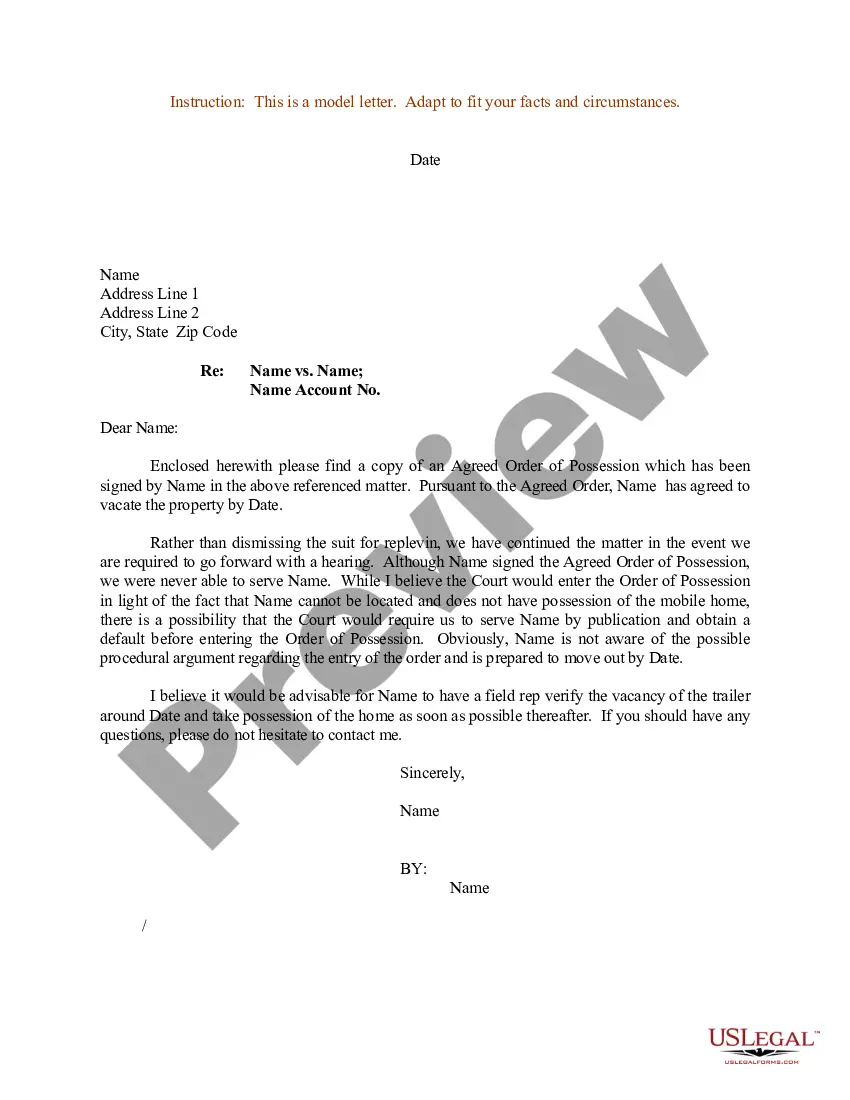
Get your form ready online
Our built-in tools help you complete, sign, share, and store your documents in one place.
Make edits, fill in missing information, and update formatting in US Legal Forms—just like you would in MS Word.
Download a copy, print it, send it by email, or mail it via USPS—whatever works best for your next step.
Sign and collect signatures with our SignNow integration. Send to multiple recipients, set reminders, and more. Go Premium to unlock E-Sign.
If this form requires notarization, complete it online through a secure video call—no need to meet a notary in person or wait for an appointment.
We protect your documents and personal data by following strict security and privacy standards.

Make edits, fill in missing information, and update formatting in US Legal Forms—just like you would in MS Word.

Download a copy, print it, send it by email, or mail it via USPS—whatever works best for your next step.

Sign and collect signatures with our SignNow integration. Send to multiple recipients, set reminders, and more. Go Premium to unlock E-Sign.

If this form requires notarization, complete it online through a secure video call—no need to meet a notary in person or wait for an appointment.

We protect your documents and personal data by following strict security and privacy standards.
Looking for another form?





Form popularity
FAQ
Issuing a legal notice is the first official step in the eviction process, tailored to specific circumstances. If the tenant does not comply, file a complaint with the District Court. Attend a court hearing where a judge will decide on the eviction case.
Can an eviction notice be handwritten? Certainly not. No judge would ever issue a handwritten notice. And an eviction notice MUST be signed by a Judge. Anything other than that is NOT an ``eviction notice'' and is not legal in any way, shape, or form.
Application and Order of Eviction (DC 107) – If a tenant has not moved out within 10 days of a judgment against them, the landlord must use this form to apply for their eviction and ask the sheriff's department to physically remove them.
How to Write an Eviction Notice Rental Addresses. Addresses of the rental property and landlord or property management company. Tenant names. Status and date of lease. The reason that the notice is being served. Notice period. Proof of service.
The notice to quit or demand for possession must: Be in writing. Be addressed to the tenant. Describe the rental property, usually by giving the address. Give the reason for the eviction. State how much time the tenant has to fix the problem, if there is one. Include the landlord's address and the date of the notice.
Step-by-step guide to writing an eviction notice without a lease Start with a clear and concise header. State the reason for eviction. Specify the time frame for vacating. Include a section on unpaid rent or damages. Provide information on the consequences of non-compliance. Sign and date the notice.
Dear {TENANT NAME}, You are hereby notified to vacate the premises at {RENTAL PROPERTY ADDRESS} by {DATE} and {TIME}. The reason for this eviction notice letter is: {STATE THE REASON} which is in direct violation of your rental agreement, as noted below: {INSERT THE LEASE AGREEMENT}.
The letter must be clear in stating the exact reason for the eviction. It must also state what further action(s) the landlord intends to take if the allotted time elapses on the notice. Keep the letter as brief as possible. Refrain from bubbly language that may confuse the intent of the notice, and stay to the point.
Gather Necessary Information. Collect all pertinent information related to your eviction. This includes your lease agreement, documentation of rent payments, communication with the landlord, and any other relevant records. The more evidence you have to support your case, the stronger your letter will be.

