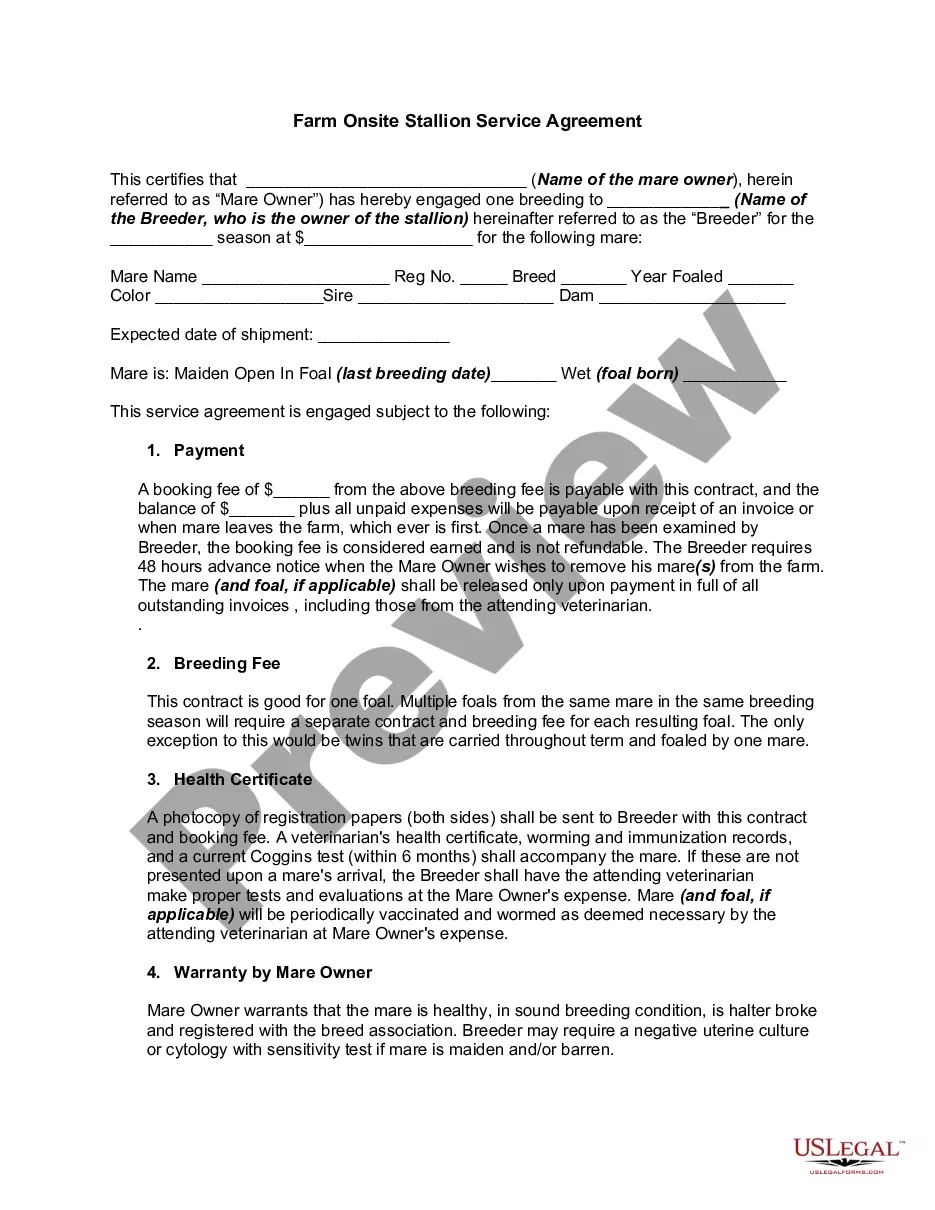
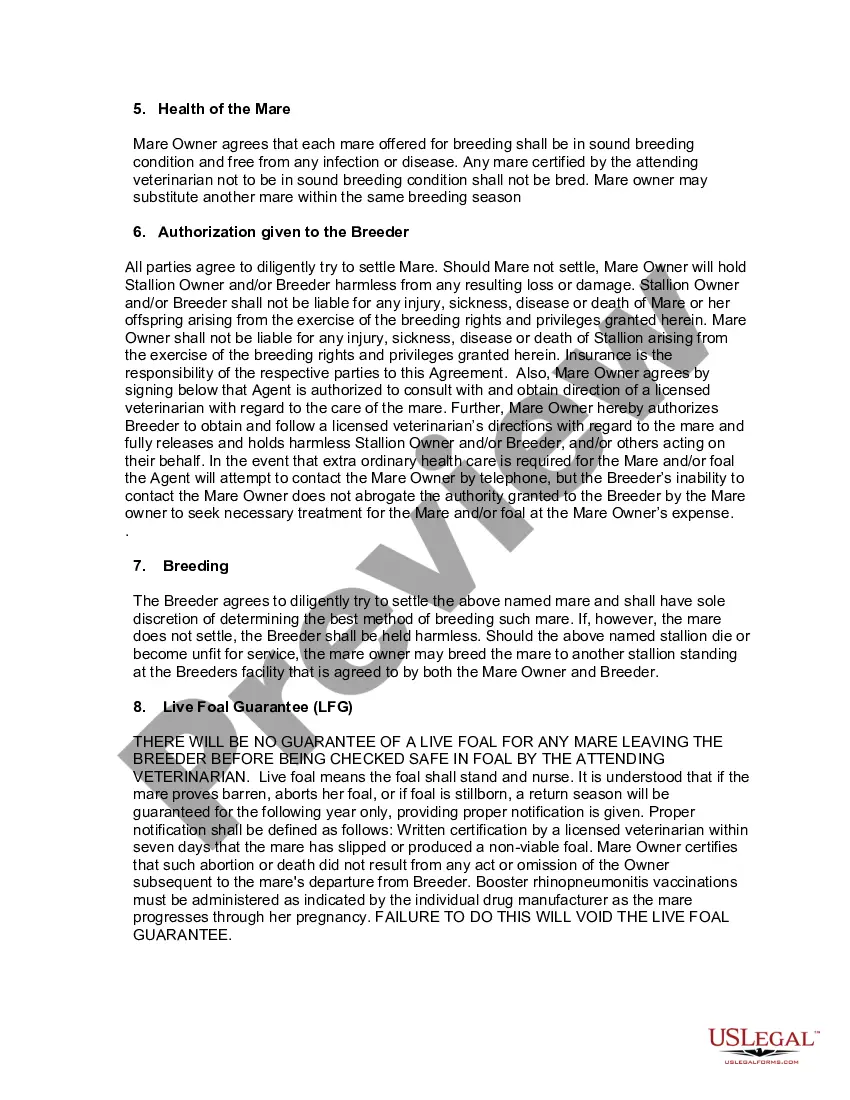
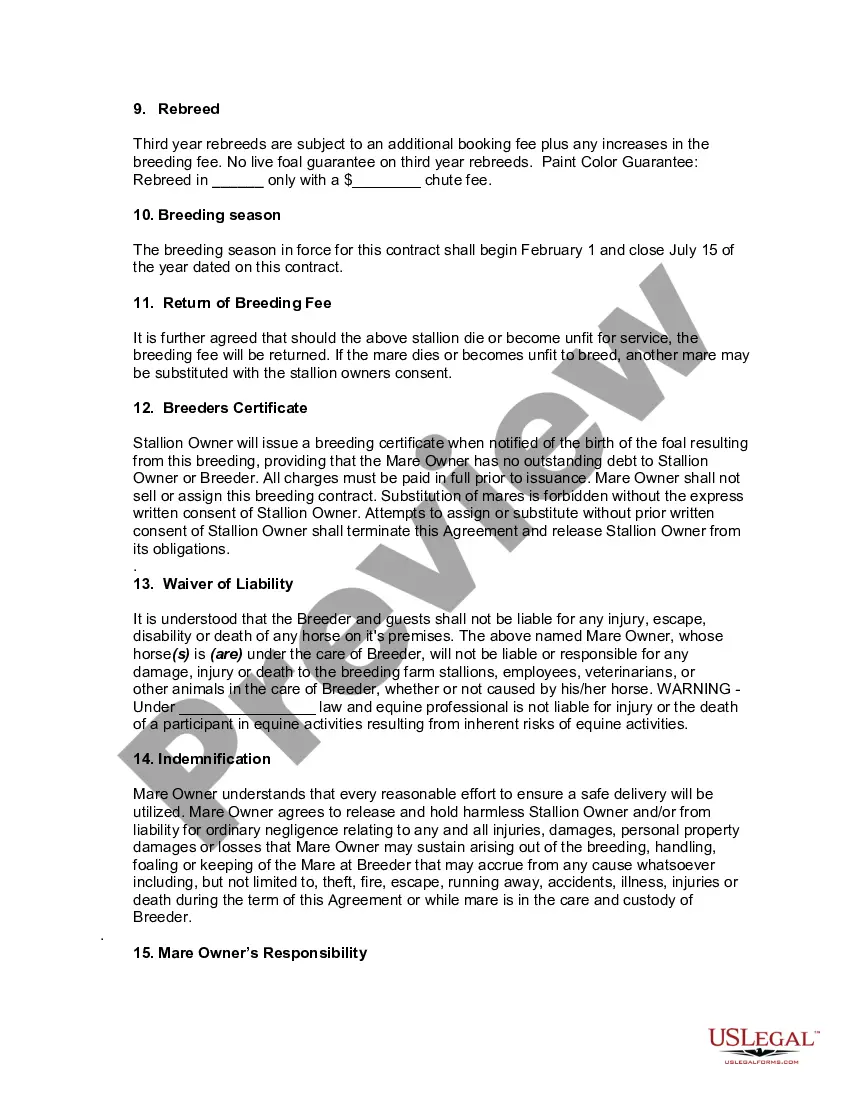
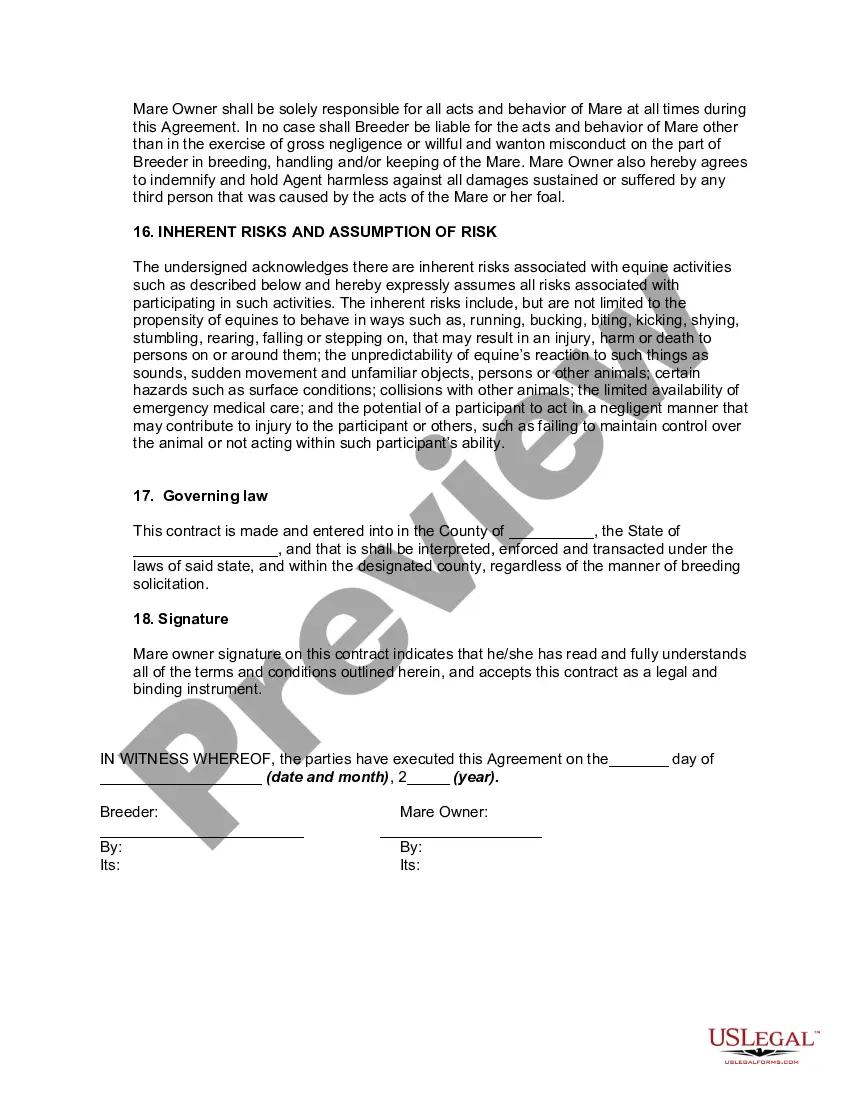
Breeding Contract For Horses In Kings
Description
Get your form ready online
Our built-in tools help you complete, sign, share, and store your documents in one place.
Make edits, fill in missing information, and update formatting in US Legal Forms—just like you would in MS Word.
Download a copy, print it, send it by email, or mail it via USPS—whatever works best for your next step.
Sign and collect signatures with our SignNow integration. Send to multiple recipients, set reminders, and more. Go Premium to unlock E-Sign.
If this form requires notarization, complete it online through a secure video call—no need to meet a notary in person or wait for an appointment.
We protect your documents and personal data by following strict security and privacy standards.

Make edits, fill in missing information, and update formatting in US Legal Forms—just like you would in MS Word.

Download a copy, print it, send it by email, or mail it via USPS—whatever works best for your next step.

Sign and collect signatures with our SignNow integration. Send to multiple recipients, set reminders, and more. Go Premium to unlock E-Sign.

If this form requires notarization, complete it online through a secure video call—no need to meet a notary in person or wait for an appointment.

We protect your documents and personal data by following strict security and privacy standards.
Looking for another form?








Form popularity
FAQ
Transferring Ownership Once a sale is completed, the seller must complete a horse bill of sale that transfers ownership from the owner to the buyer. This document should include all relevant details about the horse and the transaction, providing proof of ownership.
Ingly, sales of horses at retail are taxable notwithstanding the fact that less than three sales occurred during a twelve month period.
10-15 percent commission on a horse being sold to be in training under a trainer is the going rate.
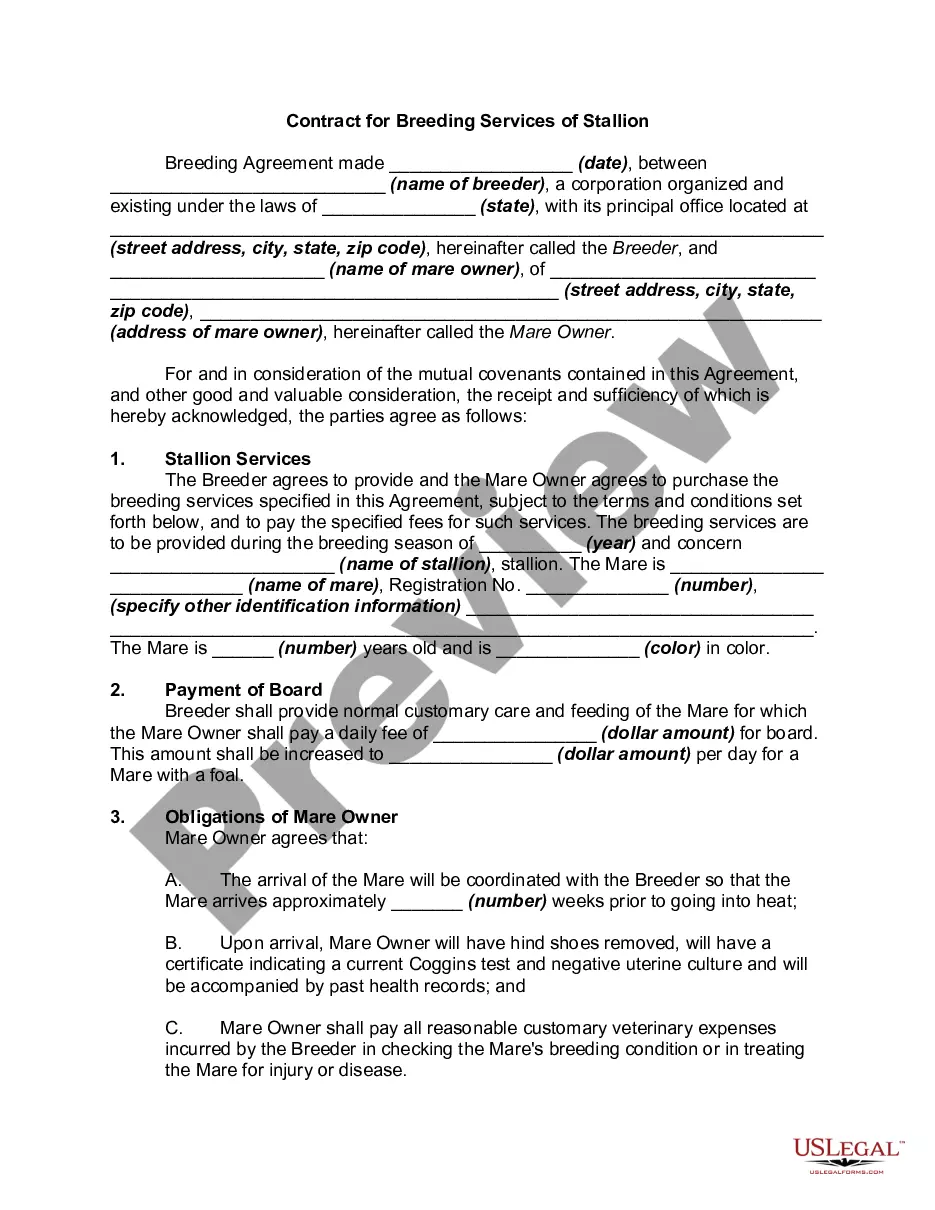
Key elements of an equine breeding contract typically include: Identifying all parties involved, including names, phone numbers, and addresses. Stallion name and registration number. Breeding fees, including amounts and payment methods.
The incidence of twins in equines is rare. If they are conceived, they rarely make it through the birth process. The primary reasons for this are the lack of nutrients to sustain two fetuses and the way the uterus contracts during the birth process.
Yes, horses can have twins, but it is quite rare. The incidence of twin pregnancies in horses is low, estimated at about 1% of all pregnancies. When twins occur, it can be dangerous for both the mare and the foals. Here are some reasons why twin pregnancies in horses can be problematic:
Gestation is approximately 11 months and change. Some horses go up to a year long, this is not ideal however.
You cannot breed a mare unless she's in heat, and a mare doesn't go into heat unless she's ready to become pregnant.
Answer: Horses can have twins, but it is rare and typically one or both are lost during pregnancy.
Horses are seasonal breeders, usually cycling from late spring to early fall each year. During the colder months of the year, when the days are shorter, mares will be in the anestrus, or non-cycling phase and the ovaries will be small; mares will not be fertile or capable of breeding during this period.
