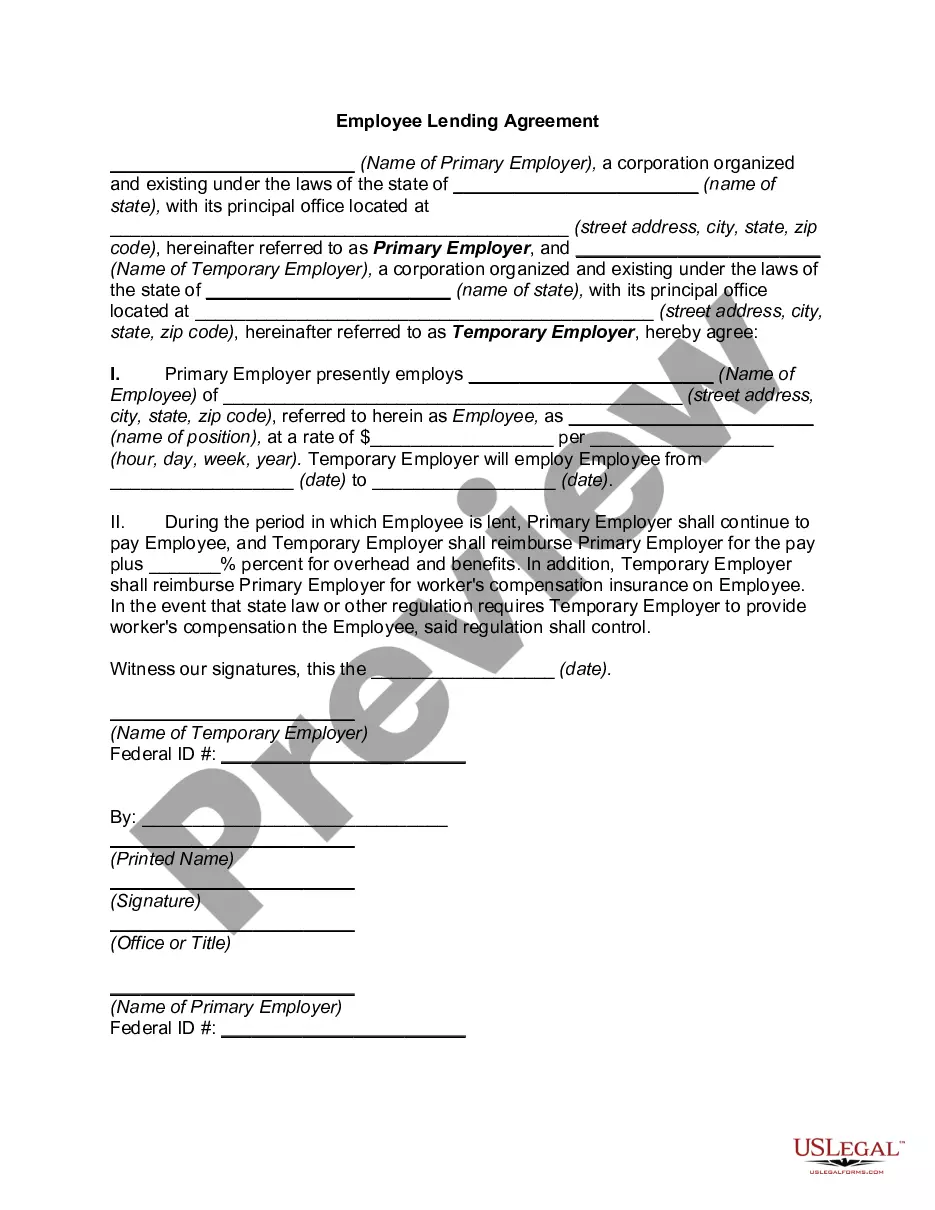
Employee Form Document With Parameters In Phoenix
Description

Get your form ready online
Our built-in tools help you complete, sign, share, and store your documents in one place.
Make edits, fill in missing information, and update formatting in US Legal Forms—just like you would in MS Word.
Download a copy, print it, send it by email, or mail it via USPS—whatever works best for your next step.
Sign and collect signatures with our SignNow integration. Send to multiple recipients, set reminders, and more. Go Premium to unlock E-Sign.
If this form requires notarization, complete it online through a secure video call—no need to meet a notary in person or wait for an appointment.
We protect your documents and personal data by following strict security and privacy standards.

Make edits, fill in missing information, and update formatting in US Legal Forms—just like you would in MS Word.

Download a copy, print it, send it by email, or mail it via USPS—whatever works best for your next step.

Sign and collect signatures with our SignNow integration. Send to multiple recipients, set reminders, and more. Go Premium to unlock E-Sign.

If this form requires notarization, complete it online through a secure video call—no need to meet a notary in person or wait for an appointment.

We protect your documents and personal data by following strict security and privacy standards.
Looking for another form?








Form popularity
FAQ
New employee forms are documents an onboarding employee completes for a company. Some forms are required by law, such as tax forms, while others may be for a particular company or position. They help verify the new employee understands company policies, compensation payments and benefits.
Use a Consistent Format Date of the incident. Description of the performance issue. Impact on the team or business. Employee's response or explanation. Steps taken to address the issue (e.g., verbal warning, training) Follow-up actions and timelines.
Write documentation that is factual, fair, legal, objective, complete, and consistent. Avoid opinions, name-calling, editorializing and labeling. When discussing performance, be sure to provide the employee with a clear set of facts regarding the behavior that is being discussed.
Include job skills and personal attributes Remember to record your observations about your employee's job performance as objectively as possible, and tie your conclusions to hard data. By supporting your assessment with specific examples the employee can see exactly where they can improve.
It should be simple and typically only needs a few things: The date the conversation took place or feedback was provided. A summary of the facts that were discussed regarding the employee's performance. Signatures or acknowledgements from everyone that was involved (in the case of formal reviews)
All five component processes (i.e., planning, monitoring, developing, rating, rewarding) work together and support each other, resulting in natural, effective performance management. Effective employee performance management encompasses the five key components presented above.
Neighborhood Specialists serve as city liaisons to residents, answering questions about city programs and services, organizing community meetings and cleanups, and working with other city departments and agencies to provide services.
Assistance is available to City of Phoenix residents in crisis situations including; Eviction prevention. Move-In or rental assistance. Utility bill assistance. Basic household resources. Transportation resources.
It should include: Personal Information: Full name, address, contact details, marital status, and spouse's details. Job Information: Title, department, supervisor, work location, start date, and salary. Emergency Contact Information: Name, address, and contact details of the emergency contact.
