Employee Form Document With Parameters In Pennsylvania
Description

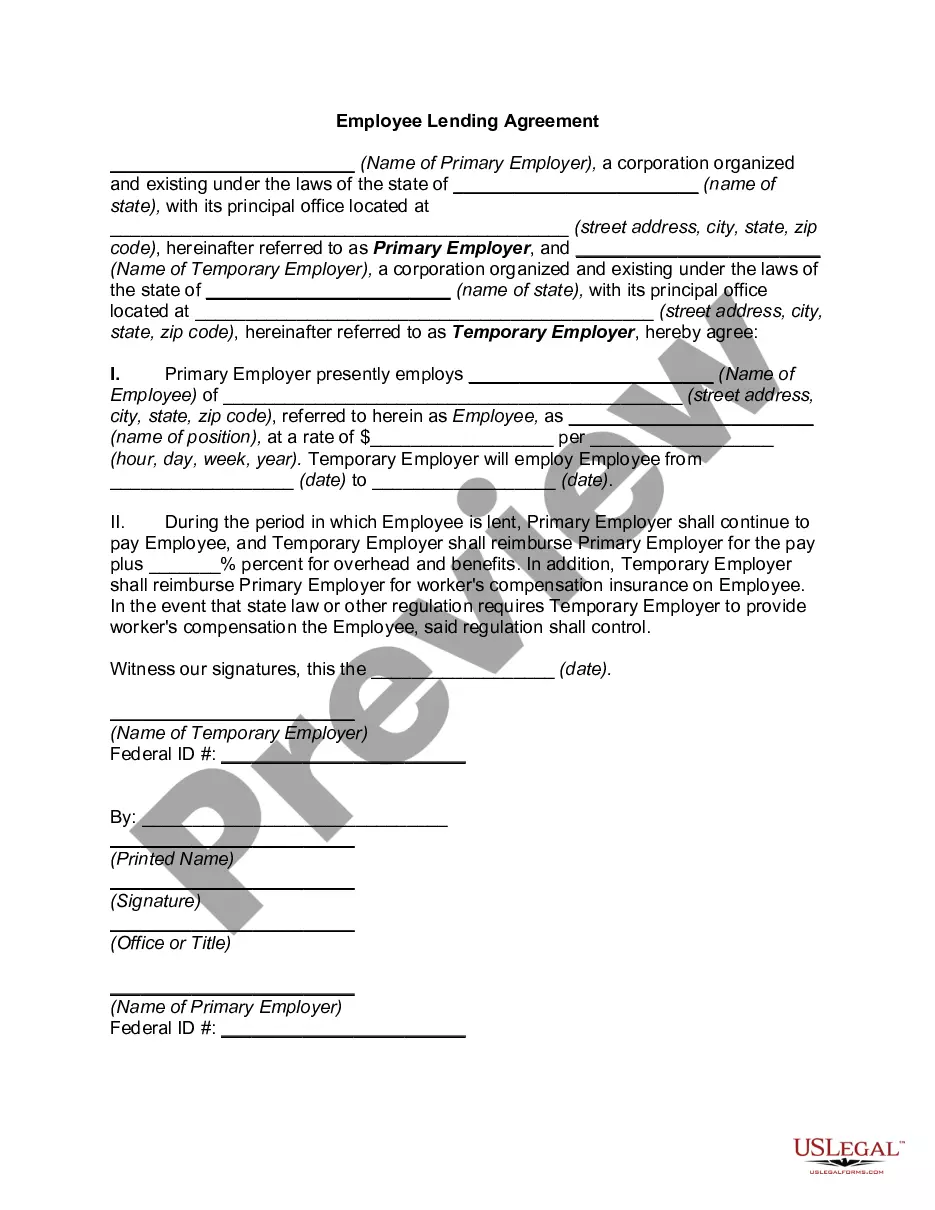
Get your form ready online
Our built-in tools help you complete, sign, share, and store your documents in one place.
Make edits, fill in missing information, and update formatting in US Legal Forms—just like you would in MS Word.
Download a copy, print it, send it by email, or mail it via USPS—whatever works best for your next step.
Sign and collect signatures with our SignNow integration. Send to multiple recipients, set reminders, and more. Go Premium to unlock E-Sign.
If this form requires notarization, complete it online through a secure video call—no need to meet a notary in person or wait for an appointment.
We protect your documents and personal data by following strict security and privacy standards.

Make edits, fill in missing information, and update formatting in US Legal Forms—just like you would in MS Word.

Download a copy, print it, send it by email, or mail it via USPS—whatever works best for your next step.

Sign and collect signatures with our SignNow integration. Send to multiple recipients, set reminders, and more. Go Premium to unlock E-Sign.

If this form requires notarization, complete it online through a secure video call—no need to meet a notary in person or wait for an appointment.

We protect your documents and personal data by following strict security and privacy standards.
Looking for another form?








Form popularity
FAQ
Here's what's required in your Pennsylvania new hire paperwork packet: I-9 form for employee eligibility requirements. W-4 form for federal tax reporting. Pennsylvania New Hire Reporting form. Disability Self-Identification (required for companies doing business with the government) PA New Hire Reporting Form.
UC-15 Application for PA UC Experience Record and Reserve Account Balance of Predecessor This section is completed if the employer is continuing essentially the same business activity as the predecessor and wants to apply for the predecessor's UC experience record and reserve account balance.
PA Form UC-2, Employer's Report for Unemployment Compensation. This form is machine-readable. Information MUST be typewritten or printed in BLACK ink. Do not use dashes or slashes in place of zeros or blanks.
You are not eligible to receive benefits if you have fewer than 18 credit weeks in the base year. Individuals who do not meet wage and credit week requirements due to a work-related injury, may request a redetermination using an alternate base year.
Standard Rate YearStandard Contribution Rate for Zero or Positive Reserve Account BalanceStandard Contribution Rate for Negative Reserve Account Balance 2018 - 2019 7.2916% 11.2968% 2020 - 2022 6.1916% 10.1968% 2023 and thereafter 6.4968% 10.6464%
Employers must report all employees who reside or work in Pennsylvania to the Pennsylvania Department of Labor and Industry.
Point to Note: No Pass-Through Entity Tax (PTET) Election Pennsylvania is one of only a handful of states which have a Personal Income Tax but no PTET election. The 2017 Tax Cuts and Jobs Act caps individual taxpayer deductions for state and local taxes (SALT) at $10,000 for tax years 2018 through 2025.
Net operating losses generated in tax periods beginning after Dec. 31, 1997, may be carried forward 20 periods. Short years are considered to be one tax period for purposes of calculating the carryforward. Lines 1 thru 20 are used for the allowable, 20 carry-forward periods.
Distributions of your contributions to a traditional or Roth IRA are not taxed by Pennsylvania.
If you are a PA resident, nonresident or a part-year PA resident, you must file a 2024 PA tax return if: You received total PA gross taxable income in excess of $33 during 2024, even if no tax is due with your PA return; and/or.
