Factoring Agreement Meaning Forfaiting In Cuyahoga
Description



Get your form ready online
Our built-in tools help you complete, sign, share, and store your documents in one place.
Make edits, fill in missing information, and update formatting in US Legal Forms—just like you would in MS Word.
Download a copy, print it, send it by email, or mail it via USPS—whatever works best for your next step.
Sign and collect signatures with our SignNow integration. Send to multiple recipients, set reminders, and more. Go Premium to unlock E-Sign.
If this form requires notarization, complete it online through a secure video call—no need to meet a notary in person or wait for an appointment.
We protect your documents and personal data by following strict security and privacy standards.

Make edits, fill in missing information, and update formatting in US Legal Forms—just like you would in MS Word.

Download a copy, print it, send it by email, or mail it via USPS—whatever works best for your next step.

Sign and collect signatures with our SignNow integration. Send to multiple recipients, set reminders, and more. Go Premium to unlock E-Sign.

If this form requires notarization, complete it online through a secure video call—no need to meet a notary in person or wait for an appointment.

We protect your documents and personal data by following strict security and privacy standards.
Looking for another form?







Form popularity
FAQ
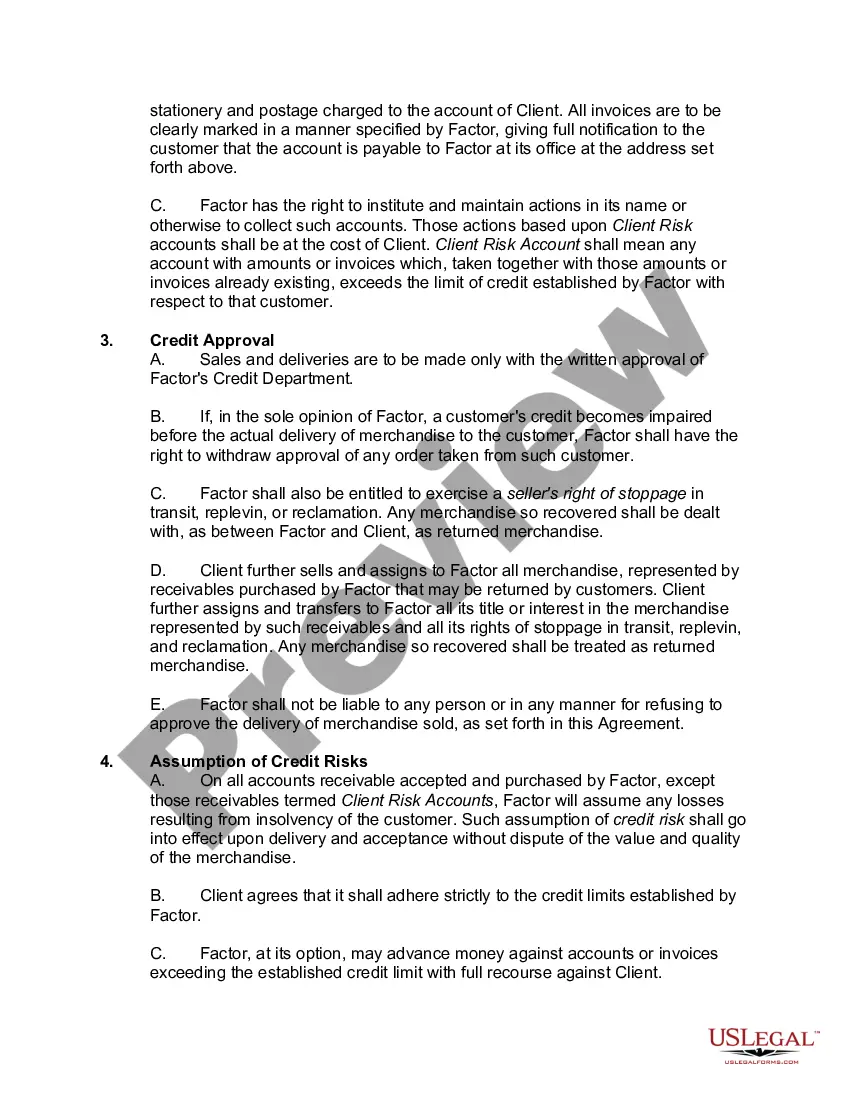
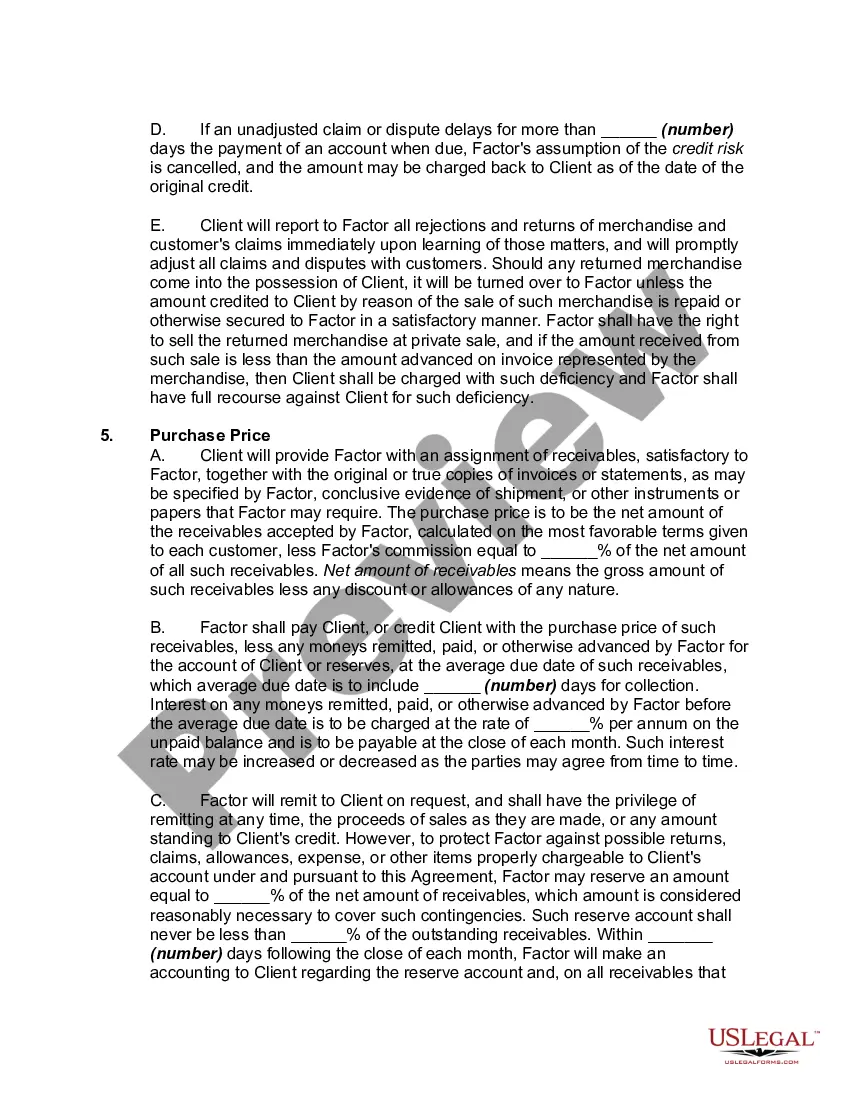
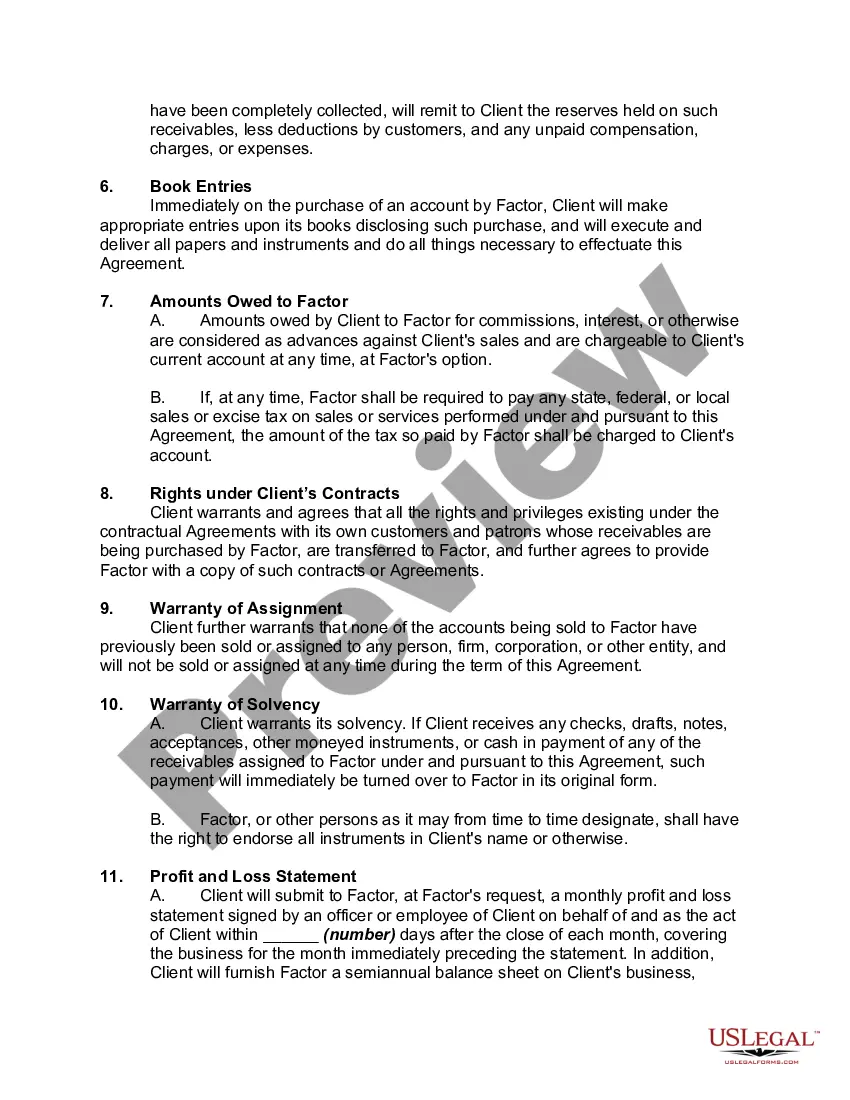
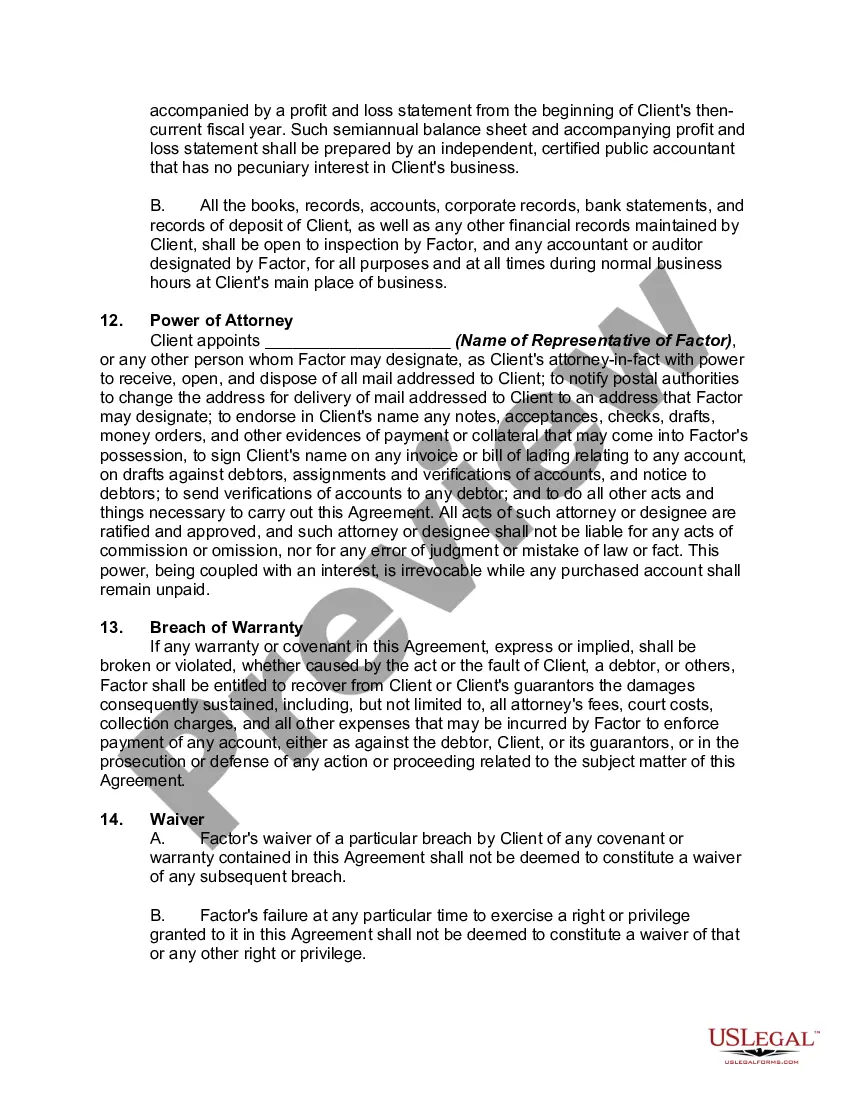
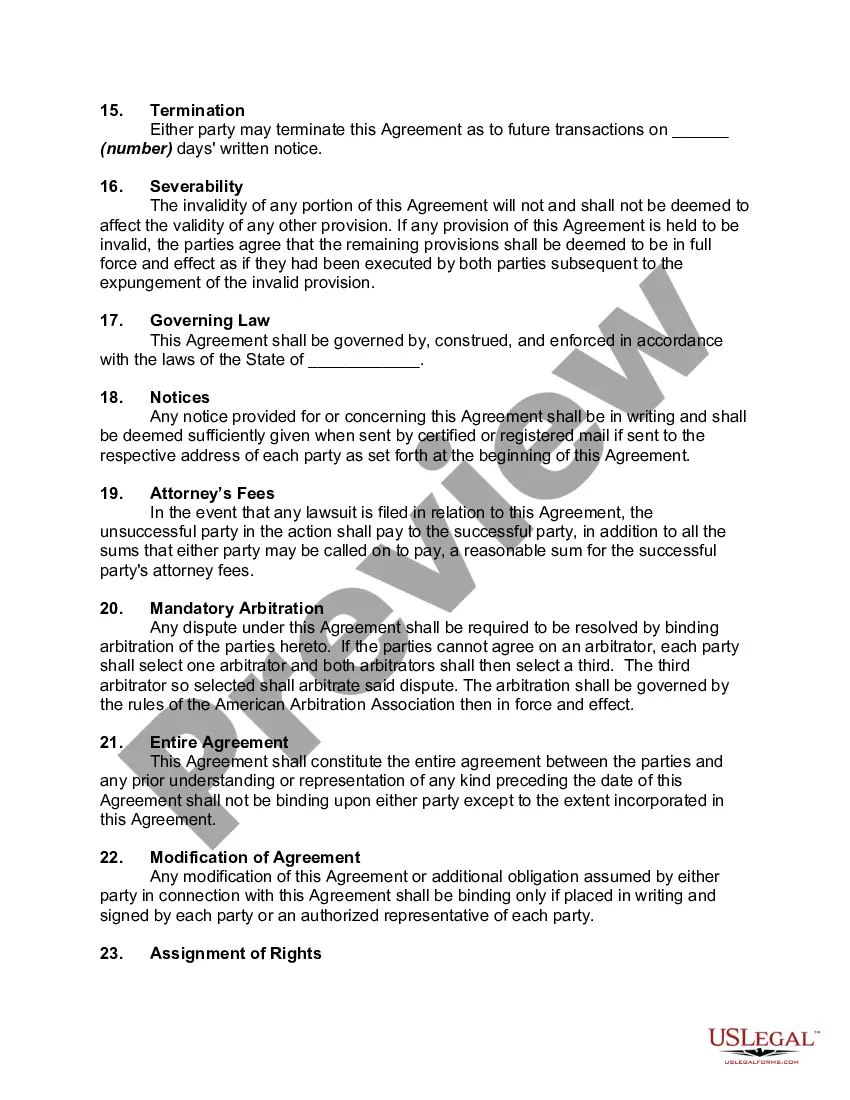
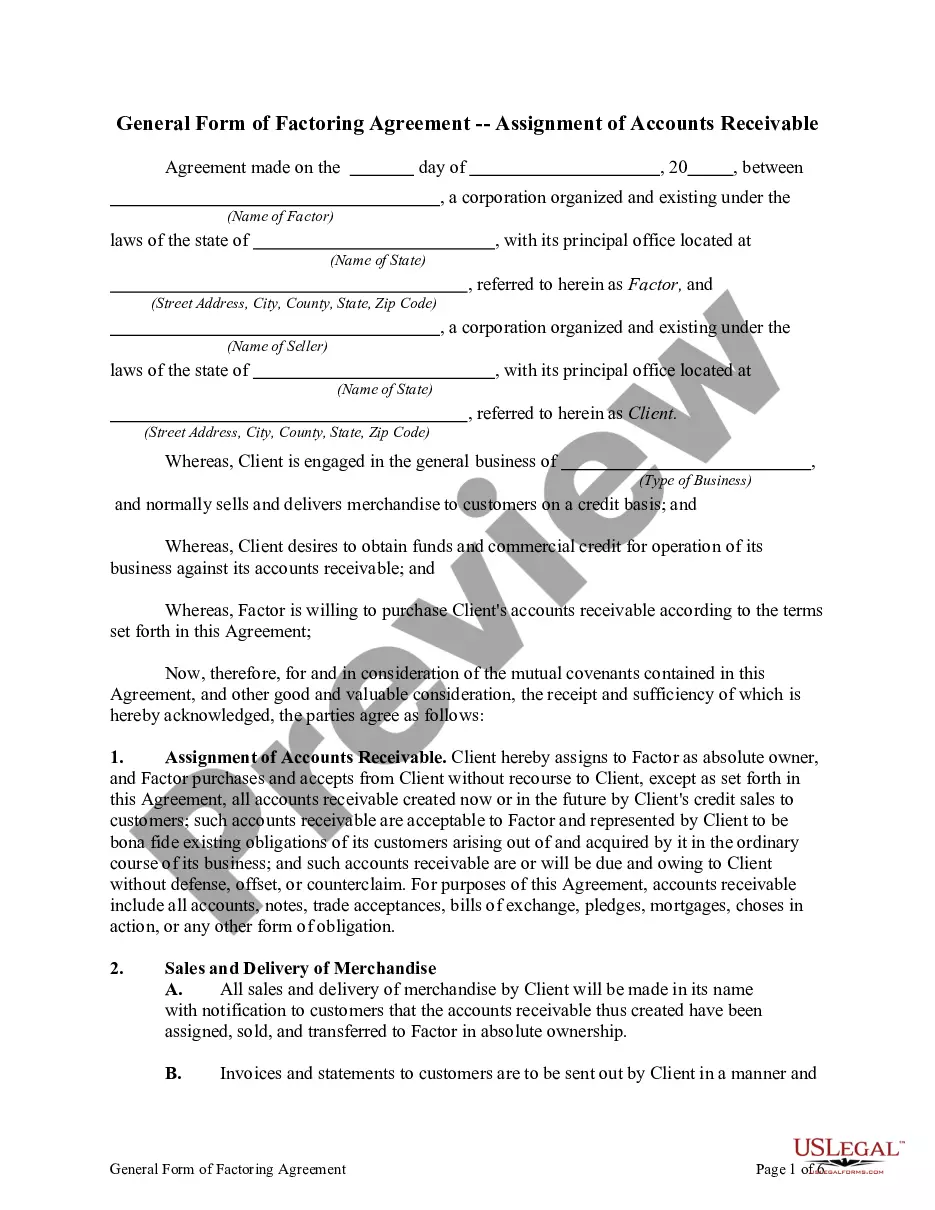
FACTORING IN A CONTINUING AGREEMENT - It is an arrangement where a financing entity purchases all of the accounts receivable of a certain entity.
4 times 3 equals. 12 4 and 3 are the factors of 12.. We can also find the factors of expressions.More4 times 3 equals. 12 4 and 3 are the factors of 12.. We can also find the factors of expressions. Like 6 y the factors would be 6 and y since when we multiply them together we get 6y.
Types of Factoring polynomials Greatest Common Factor (GCF) Grouping Method. Sum or difference in two cubes. Difference in two squares method.
What is Factorisation in Mathematics? Factorisation of an algebraic expression means writing the given expression as a product of its factors. These factors can be numbers, variables, or an algebraic expression. To the factor, a number means to break it up into numbers that can be multiplied to get the original number.
The Solve by Factoring process will require four major steps: Move all terms to one side of the equation, usually the left, using addition or subtraction. Factor the equation completely. Set each factor equal to zero, and solve. List each solution from Step 3 as a solution to the original equation.
The factoring company assesses the creditworthiness of the customers and the overall financial stability of the business. Typically, the factoring rates range from 1% to 5% of the invoice value, but they can be higher or lower depending on the specific circumstances.
