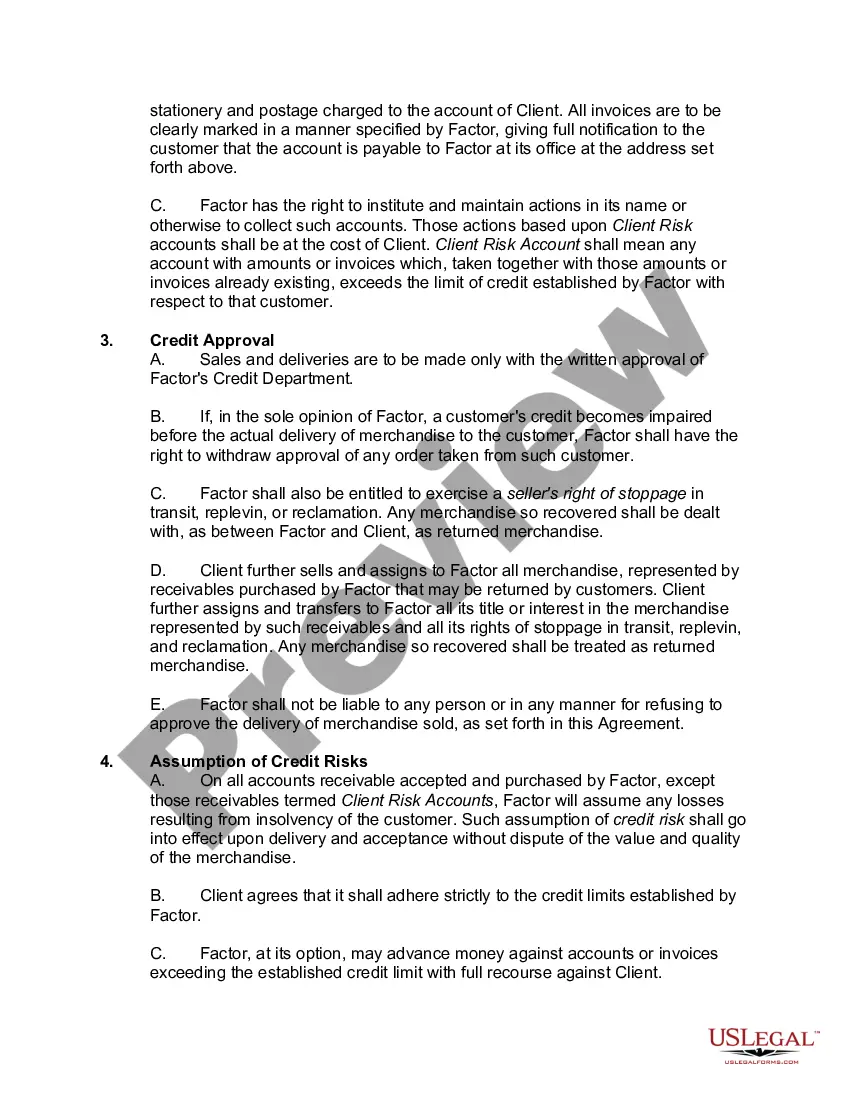
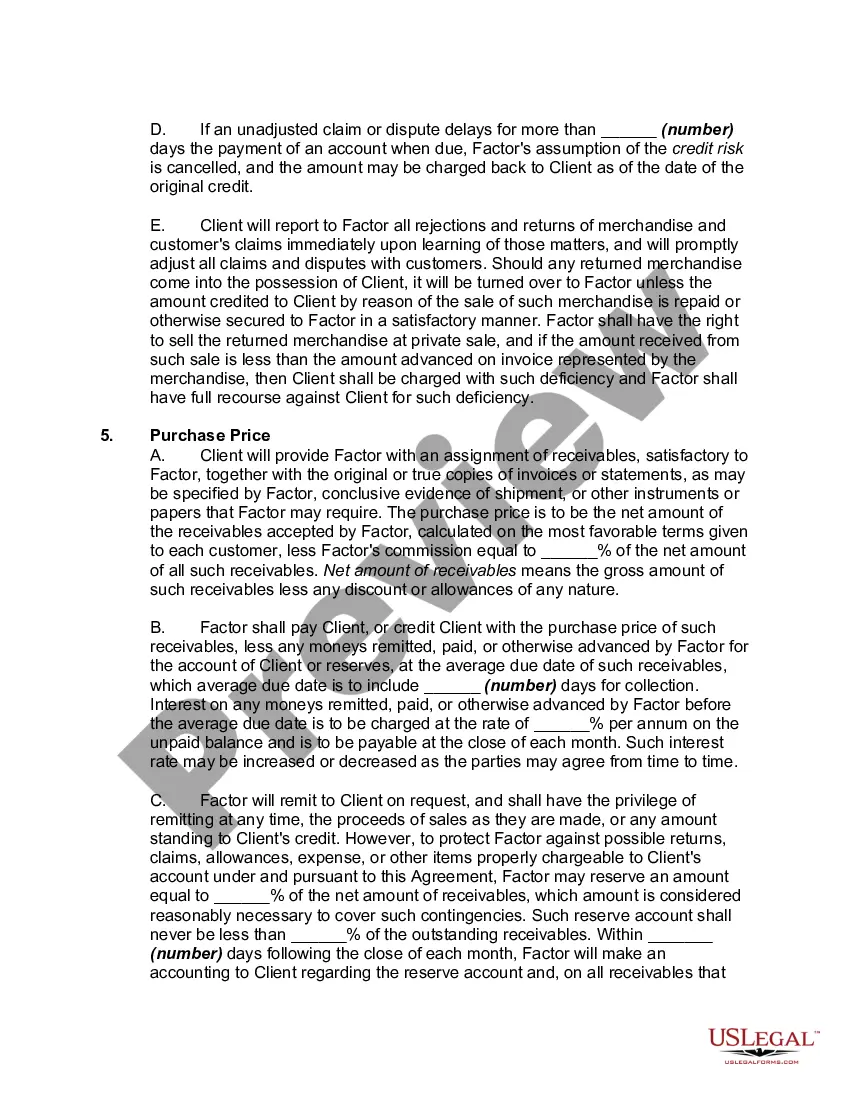
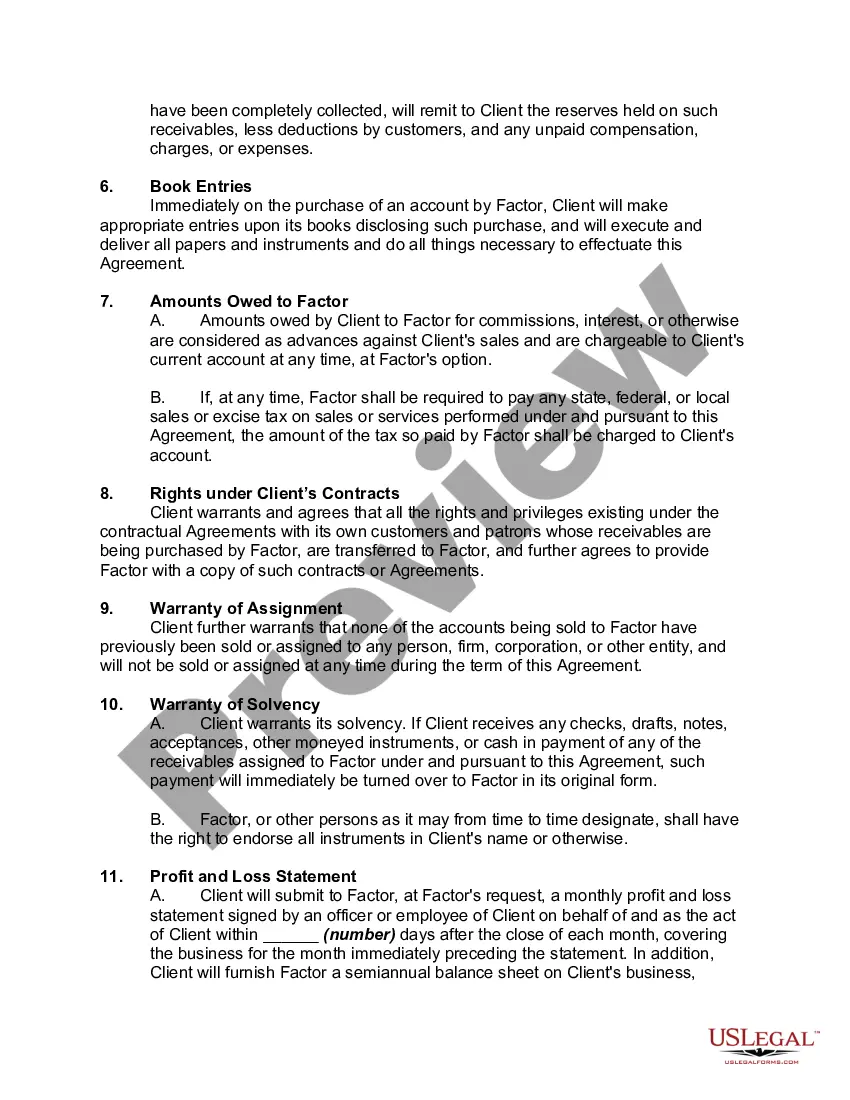
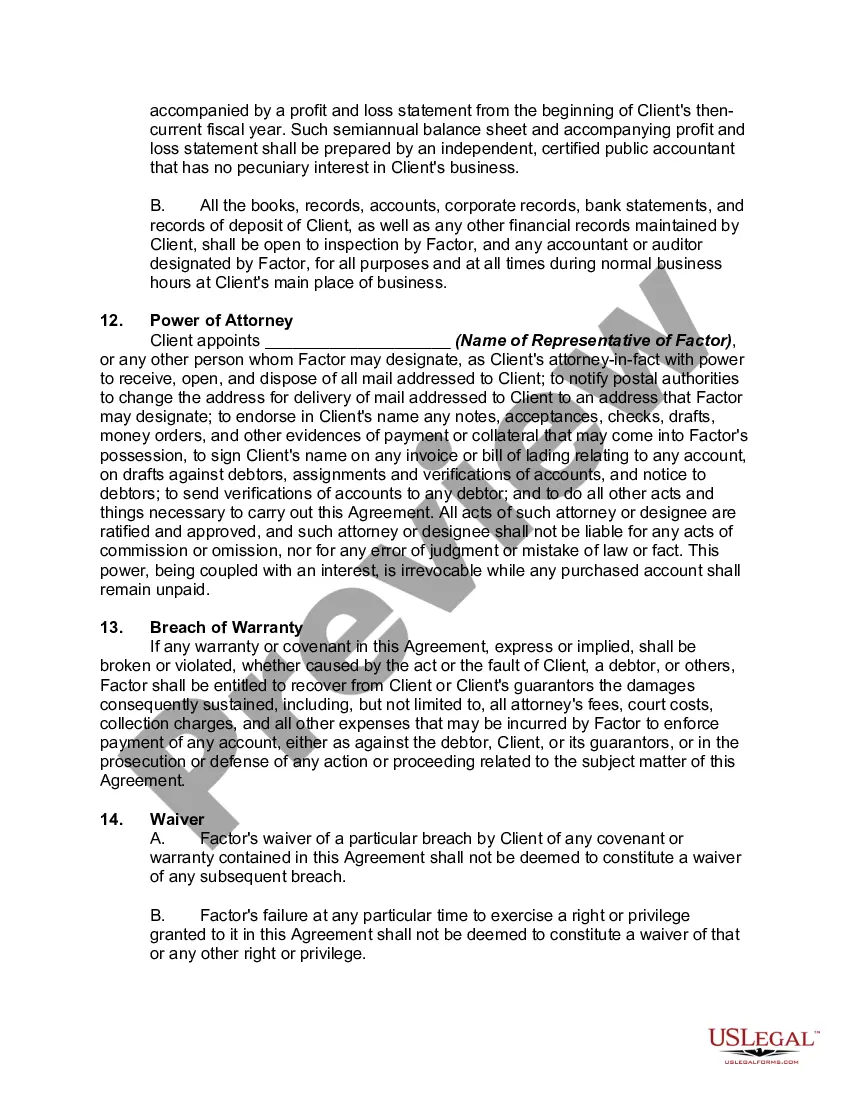
Factoring Agreement File With Recourse In Bronx
Description

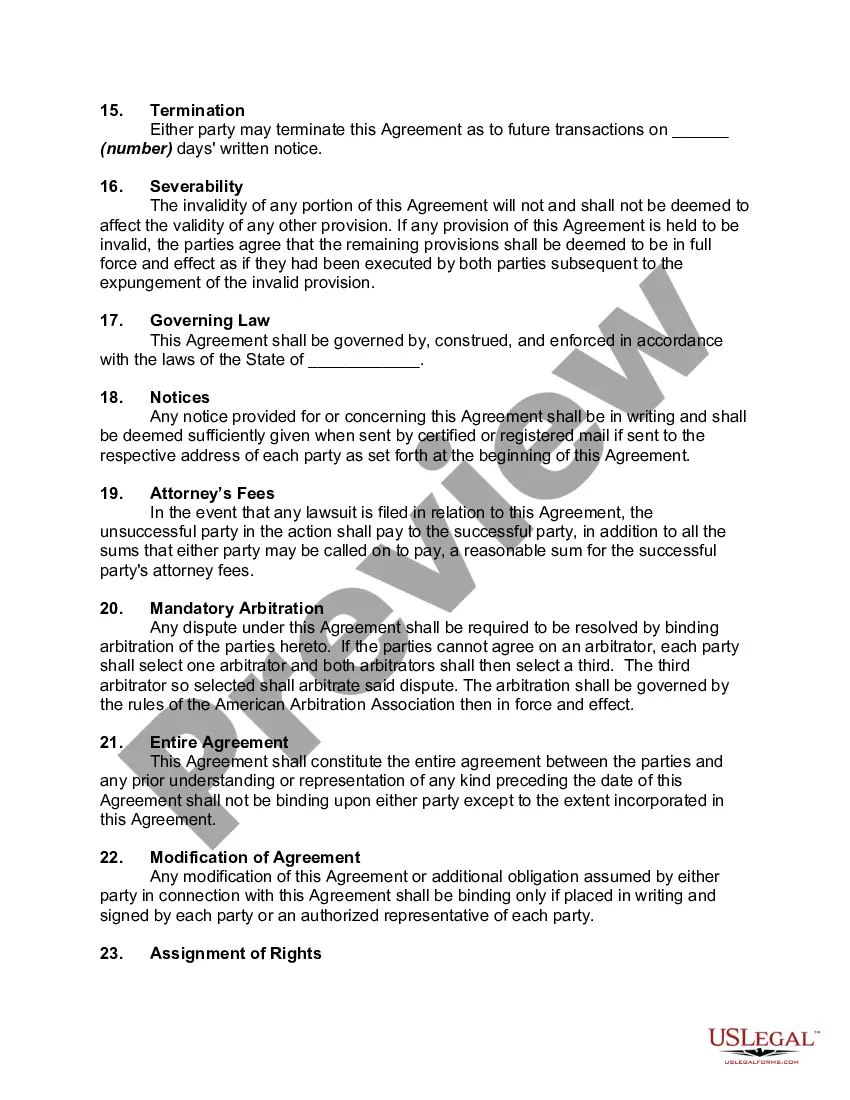


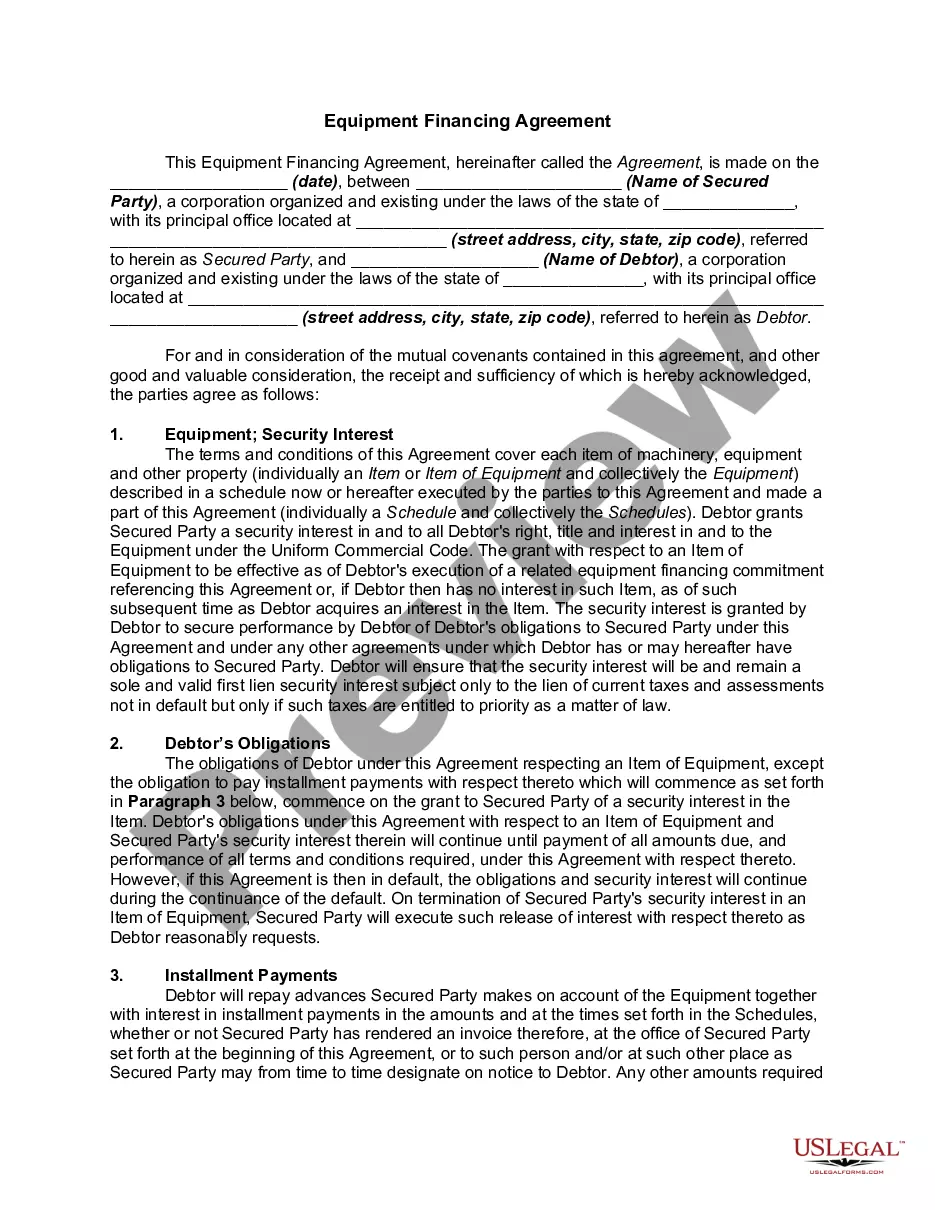
Get your form ready online
Our built-in tools help you complete, sign, share, and store your documents in one place.
Make edits, fill in missing information, and update formatting in US Legal Forms—just like you would in MS Word.
Download a copy, print it, send it by email, or mail it via USPS—whatever works best for your next step.
Sign and collect signatures with our SignNow integration. Send to multiple recipients, set reminders, and more. Go Premium to unlock E-Sign.
If this form requires notarization, complete it online through a secure video call—no need to meet a notary in person or wait for an appointment.
We protect your documents and personal data by following strict security and privacy standards.

Make edits, fill in missing information, and update formatting in US Legal Forms—just like you would in MS Word.

Download a copy, print it, send it by email, or mail it via USPS—whatever works best for your next step.

Sign and collect signatures with our SignNow integration. Send to multiple recipients, set reminders, and more. Go Premium to unlock E-Sign.

If this form requires notarization, complete it online through a secure video call—no need to meet a notary in person or wait for an appointment.

We protect your documents and personal data by following strict security and privacy standards.
Looking for another form?






Form popularity
FAQ
Factoring Application. Filling out a factoring application is very easy, yet one of the most important requirements for invoice factoring. Accounts Receivable Aging Report. Copy of Articles of Incorporation. Invoices to Factor. Credit-worthy Clients. Business Bank Account. Tax ID Number. Personal Identification.
Recourse is more common than non-recourse factoring. Many factoring companies are weary of non-recourse as it means they are liable for debtor non-payment. Still, there are many advantages to working on a recourse agreement for business owners. For one, advance rates are usually higher.
Two Types of Factoring There are two main types of factoring - recourse and non-recourse. Recourse factoring is the most common and means that your company must buy back any invoices that the factoring company is unable to collect payment on.
Factoring without recourse means that the risk of accounts receivable being uncollectible transfers from the buyer to the seller. Basically, if an accounts receivable cannot be collected, the seller does not have to reimburse the buyer like they would if the factoring was “with recourse”.
There are two types of debts: recourse and nonrecourse. A recourse debt holds the borrower personally liable. All other debt is considered nonrecourse. In general, recourse debt (loans) allows lenders to collect what is owed for the debt even after they've taken collateral (home, credit cards).
Recourse factoring is the most common and means that your company must buy back any invoices that the factoring company is unable to collect payment on. You are ultimately responsible for any non-payment. Non-recourse factoring means the factoring company assumes most of the risk of non-payment by your customers.
