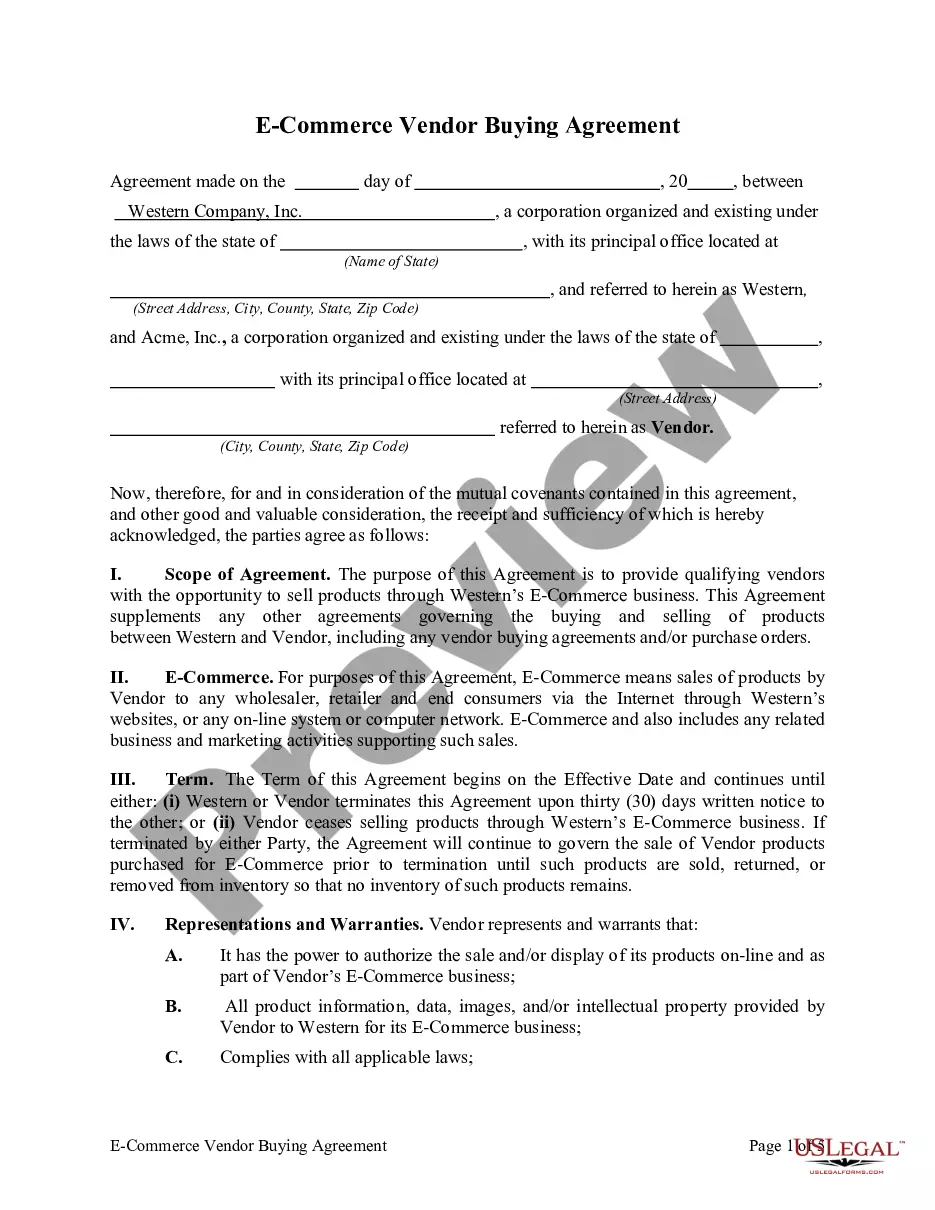
Share Agreement Contract With Vendor In Riverside
Description






Get your form ready online
Our built-in tools help you complete, sign, share, and store your documents in one place.
Make edits, fill in missing information, and update formatting in US Legal Forms—just like you would in MS Word.
Download a copy, print it, send it by email, or mail it via USPS—whatever works best for your next step.
Sign and collect signatures with our SignNow integration. Send to multiple recipients, set reminders, and more. Go Premium to unlock E-Sign.
If this form requires notarization, complete it online through a secure video call—no need to meet a notary in person or wait for an appointment.
We protect your documents and personal data by following strict security and privacy standards.

Make edits, fill in missing information, and update formatting in US Legal Forms—just like you would in MS Word.

Download a copy, print it, send it by email, or mail it via USPS—whatever works best for your next step.

Sign and collect signatures with our SignNow integration. Send to multiple recipients, set reminders, and more. Go Premium to unlock E-Sign.

If this form requires notarization, complete it online through a secure video call—no need to meet a notary in person or wait for an appointment.

We protect your documents and personal data by following strict security and privacy standards.
Looking for another form?








Form popularity
FAQ
A contract is a binding agreement between parties, such as businesses, individuals, or multiple people. It defines the obligations of each party to the other, including: Delivery of products and/or services.
Nature of Relationship: Contractor relationships are project-specific and time-limited, whereas vendor relationships tend to be ongoing, providing a consistent supply of goods or services. Independence vs. Partnership: Contractors operate independently, managing their own resources and working towards project goals.
A vendor contract (otherwise known as a vendor agreement) is a business contract between two parties covering the exchange of goods or services in return for compensation.
A supplier agreement, sometimes referred to as a vendor agreement or procurement contract, is a legally enforceable contract between a business and a provider or supplier.
A signed contract is a formal agreement between two parties that is legally binding once both parties have signed the contract document(s). It is a more complex and comprehensive legal document that outlines the specific terms and conditions of a business agreement between two parties.
A vendor contract (otherwise known as a vendor agreement) is a business contract between two parties covering the exchange of goods or services in return for compensation. Vendor contracts establish the business relationship conditions and include details on each party's obligations under the contract.
Write the contract in six steps Start with a contract template. Open with the basic information. Describe in detail what you have agreed to. Include a description of how the contract will be ended. Write into the contract which laws apply and how disputes will be resolved. Include space for signatures.
How to draft a contract between two parties: A step-by-step checklist Know your parties. Agree on the terms. Set clear boundaries. Spell out the consequences. Specify how you will resolve disputes. Cover confidentiality. Check the legality of the contract. Open it up to negotiation.
Creating a vendor contract Step 1: Specify business terms. The first part of each vendor contract usually outlines the business terms including. Step 2: Outline legal concepts. This section usually begins with the representations and warranties section. Step 3: Address consequences.
Vendor compliance policies should be developed by a committee of merchants and personnel from inventory control, fulfillment, and accounting. The problems and solutions are all their responsibilities, so get their input from the start.
