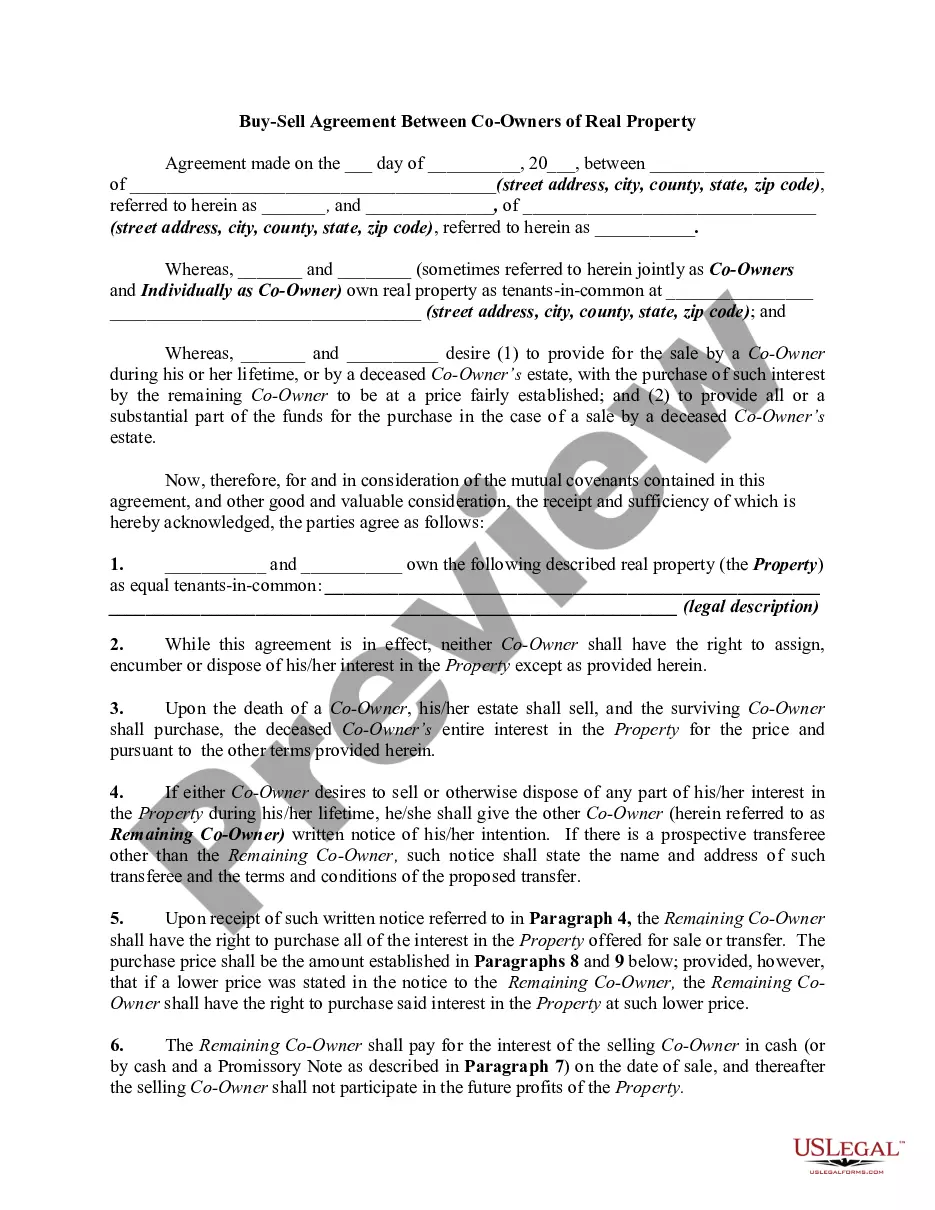
Business Equity Agreement Formula In New York
Description






Get your form ready online
Our built-in tools help you complete, sign, share, and store your documents in one place.
Make edits, fill in missing information, and update formatting in US Legal Forms—just like you would in MS Word.
Download a copy, print it, send it by email, or mail it via USPS—whatever works best for your next step.
Sign and collect signatures with our SignNow integration. Send to multiple recipients, set reminders, and more. Go Premium to unlock E-Sign.
If this form requires notarization, complete it online through a secure video call—no need to meet a notary in person or wait for an appointment.
We protect your documents and personal data by following strict security and privacy standards.

Make edits, fill in missing information, and update formatting in US Legal Forms—just like you would in MS Word.

Download a copy, print it, send it by email, or mail it via USPS—whatever works best for your next step.

Sign and collect signatures with our SignNow integration. Send to multiple recipients, set reminders, and more. Go Premium to unlock E-Sign.

If this form requires notarization, complete it online through a secure video call—no need to meet a notary in person or wait for an appointment.

We protect your documents and personal data by following strict security and privacy standards.
Looking for another form?








Form popularity
FAQ
Different ways to split equity among cofounders Equal splits. Weighted contributions. Dynamic or adjustable equity. Performance-based vesting. Role-based splits. Hybrid models. Points-based system. Prenegotiated buy/sell agreements.
You'll need to establish a total number of shares and then divide those up among the partners. Keep in mind the shares represent not only the ownership, but also the profits and losses of the company (unless your agreement specifies otherwise).
The balance sheet provides the values needed in the equity equation: Total Equity = Total Assets - Total Liabilities.
Splitting equity amongst co-founders fairly Rule 1: Aim to split as equally and fairly as possible; Rule 2: Don't take on more than 2 co-founders; Rule 3: Your co-founders should complement your competencies, not copy them; Rule 4: Use vesting. Rule 5: Keep 10% of the company for the most important employees;
ROE = Net Income / Shareholders' Equity ROE provides a simple metric for evaluating investment returns. By comparing a company's ROE to the industry's average, something may be pinpointed about the company's competitive advantage.
Owner's Equity is defined as the proportion of the total value of a company's assets that can be claimed by its owners (sole proprietorship or partnership) and by its shareholders (if it is a corporation). It is calculated by deducting all liabilities from the total value of an asset (Equity = Assets – Liabilities).
To enter information about the PTET in the individual return, complete the 653 screen located on the States tab > NY > IT Credits 500-600 Series tab and answer question E on the NY MISC screen. Per the IT-653 Instructions, amounts flow to: IT-201 ATT, line 12 and then to IT 201 page 4 line 71.
The apportionment factor is a fraction, determined by including only those receipts, net income, net gains, and other items described in this section that are included in the computation of the taxpayer's business income (determined without regard to the modification provided in subparagraph nineteen of paragraph (a) ...
To submit your completed form, you may send it via mail to the New York State Department of Taxation and Finance at the following address: New York State Department of Taxation and Finance, P.O. Box 4127, Binghamton, NY 13902-4127. You can also file online through the New York State Department's official website.
The NY State PTET tax rates are as follows: $2,000,000 of taxable income: 6.85% Over $2,000,000 up to $5,000,000: 9.65% Over $5,000,000 up to $25,000,000: 10.3%
