Startup Equity Agreement With 100 In Bexar
Description






Get your form ready online
Our built-in tools help you complete, sign, share, and store your documents in one place.
Make edits, fill in missing information, and update formatting in US Legal Forms—just like you would in MS Word.
Download a copy, print it, send it by email, or mail it via USPS—whatever works best for your next step.
Sign and collect signatures with our SignNow integration. Send to multiple recipients, set reminders, and more. Go Premium to unlock E-Sign.
If this form requires notarization, complete it online through a secure video call—no need to meet a notary in person or wait for an appointment.
We protect your documents and personal data by following strict security and privacy standards.
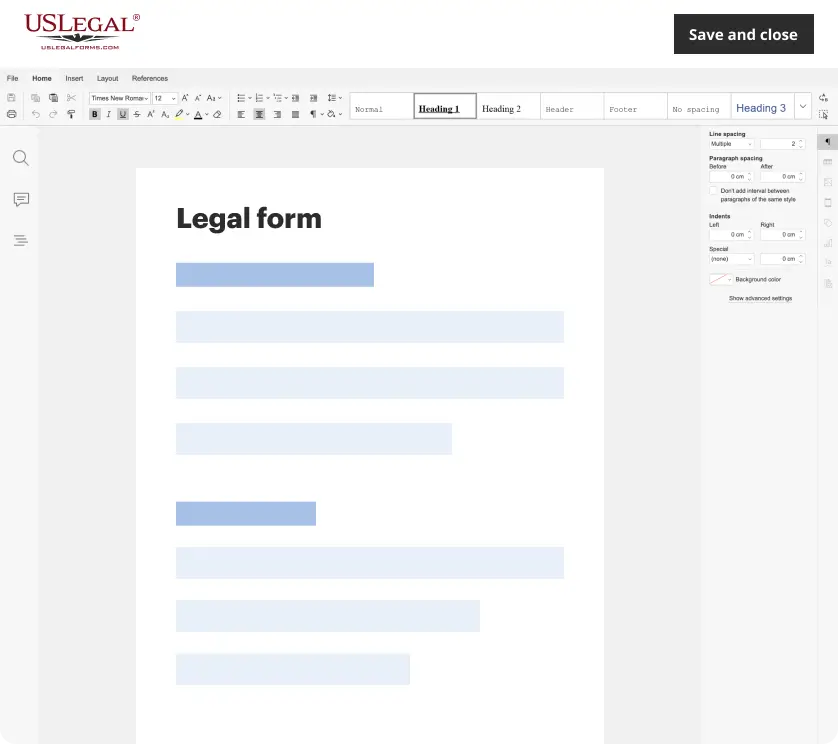
Make edits, fill in missing information, and update formatting in US Legal Forms—just like you would in MS Word.
Download a copy, print it, send it by email, or mail it via USPS—whatever works best for your next step.
Sign and collect signatures with our SignNow integration. Send to multiple recipients, set reminders, and more. Go Premium to unlock E-Sign.

If this form requires notarization, complete it online through a secure video call—no need to meet a notary in person or wait for an appointment.
We protect your documents and personal data by following strict security and privacy standards.
Looking for another form?







Form popularity
FAQ
Founders typically give up 20-40% of their company's equity in a seed or series A financing. But this number could be much higher (or lower) depending on a number of factors that we will discuss shortly. “How much equity should we sell to investors for our seed or series A round?”
What does the Co-Founder Agreement cover? Co-founder details; Project description; Equity breakdown and initial capital contributions; Roles and responsibilities of each co-founder; Management and approval rights; Non-compete, confidentiality and intellectual property; and.
In summary, 1% equity can be a good offer if the startup has strong potential, your role is significant, and the overall compensation package is competitive. However, it could also be seen as low depending on the context. It's essential to assess all these factors before making a decision.
Startups typically allocate 10-20% of equity during the seed round in exchange for investments ranging from $250,000 to $1 million. The percentage and amount can be dependent on the company's stage, market potential, and the extent of capital needed to achieve initial milestones.
The amount of equity you give depends on your startup's valuation, funding stage, and long-term goal. Typical equity ranges for seed investors are 10% to 20%, while Series A investors may ask for between 20% and 25%. Plan for future funding rounds to avoid excessive dilution and losing control of your startup.
An investor will generally require stock in your firm to stay with you until you sell it. However, you may not want to give up a portion of your business. Many advisors suggest that those just starting out should consider giving somewhere between 10 and 20% of ownership.
As a rule of thumb, a non-founder CEO joining an early-stage startup (that has been running less than a year) would receive 7-10% equity. Other C-level execs would receive 1-5% equity that vests over time (usually 4 years).
How do you structure equity in a startup? There's no correct answer for deciding the equity split among founders. Often, they default to a 50/50 split or another equal distribution to avoid an uncomfortable conversation. It's an issue that can lead to big problems in a company's future if not properly aired.
