Film Agreement Sample With Contractor In New York
Description

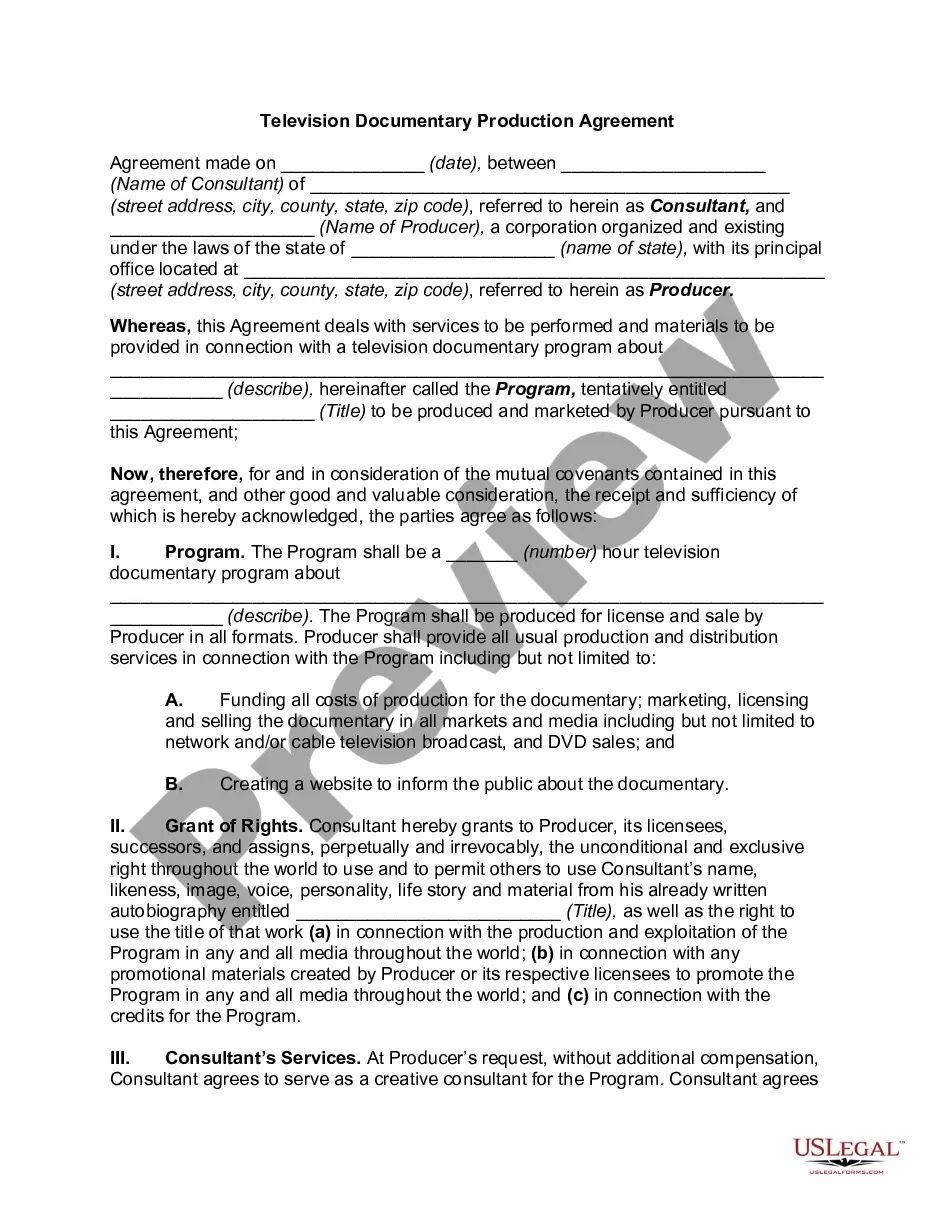
Get your form ready online
Our built-in tools help you complete, sign, share, and store your documents in one place.
Make edits, fill in missing information, and update formatting in US Legal Forms—just like you would in MS Word.
Download a copy, print it, send it by email, or mail it via USPS—whatever works best for your next step.
Sign and collect signatures with our SignNow integration. Send to multiple recipients, set reminders, and more. Go Premium to unlock E-Sign.
If this form requires notarization, complete it online through a secure video call—no need to meet a notary in person or wait for an appointment.
We protect your documents and personal data by following strict security and privacy standards.

Make edits, fill in missing information, and update formatting in US Legal Forms—just like you would in MS Word.

Download a copy, print it, send it by email, or mail it via USPS—whatever works best for your next step.

Sign and collect signatures with our SignNow integration. Send to multiple recipients, set reminders, and more. Go Premium to unlock E-Sign.

If this form requires notarization, complete it online through a secure video call—no need to meet a notary in person or wait for an appointment.

We protect your documents and personal data by following strict security and privacy standards.
Looking for another form?
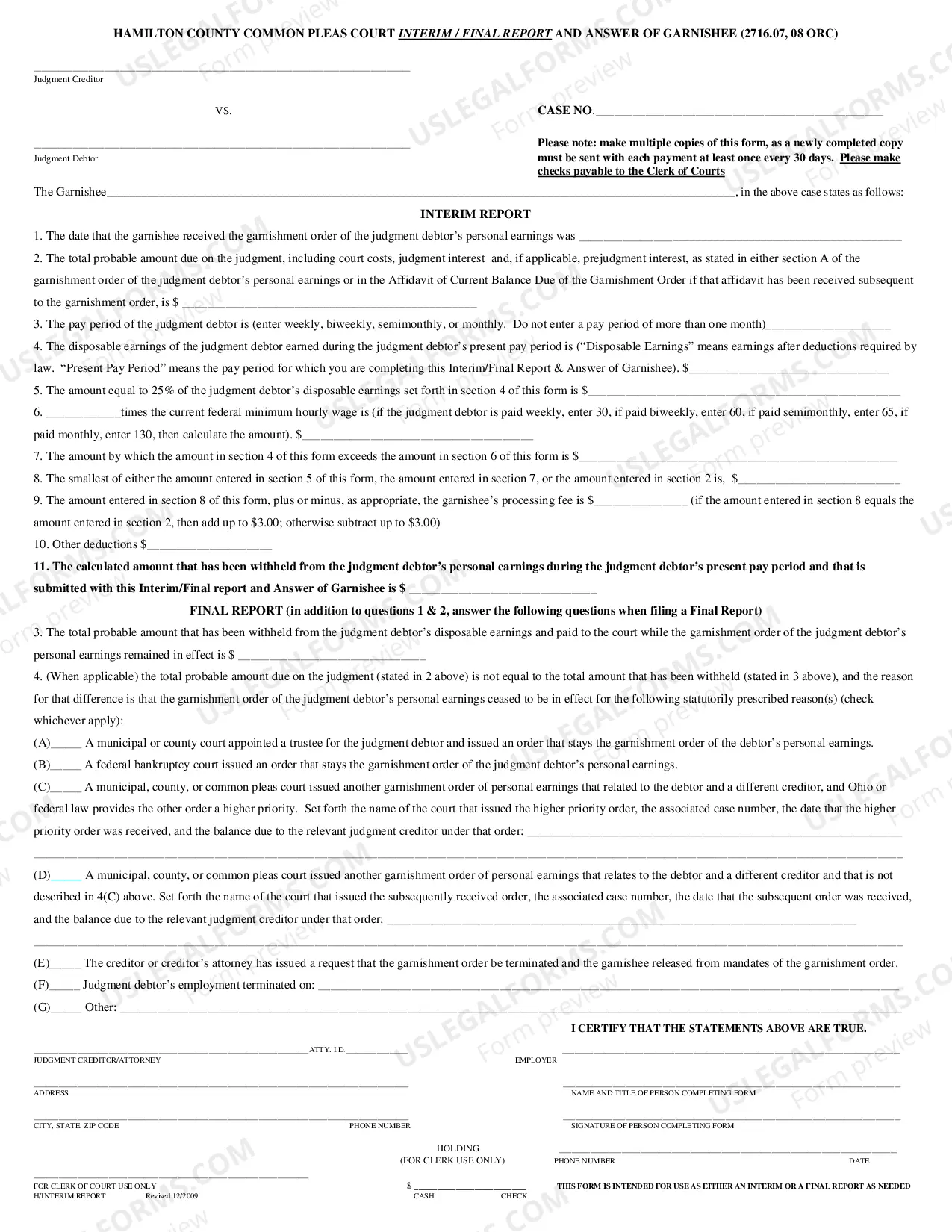

Form popularity
FAQ
So, here's the rule, as recently summarized by a New York County trial court: "The requirements for formation of an enforceable contract are: (1) at least two parties with legal capacity to contract; (2) mutual assent to the terms of an agreement with reasonably certain terms; and, (3) consideration (i.e., payment).
Court Criteria Communication records such as emails, texts, or written summaries of discussions can support the existence and terms of a verbal contract and prove a contract existed. The actions of each party can also be evidence; for example, if one party performs as agreed it can imply a contract was in place.
While New York law sometimes recognizes contracts “implied in fact,” the Statute of Frauds (New York General Obligations Law § 5-701) mandates that certain agreements must be in writing to be enforceable. If an agreement falls under the Statute of Frauds and is not written, New York courts may refuse to enforce it.
An agreement granting a third party a license to use trademarks, copyrights, or other intellectual property (IP) or personal rights in a character, film, television program, or other artistic property for the creation, distribution, marketing, and sale of interactive entertainment products for console, handheld, or PC ...
Movie licenses are typically granted on a territory-by-territory basis. This means that you will need to obtain a separate license for each country or region where you want to use the film. Movie licenses can also be granted for specific periods of time, such as a week, a month, or a year.
An end-user license agreement (EULA) is a contract between software owners and users (rather than between software vendors and clients), granting permission to use the software under specified conditions. It outlines rights and protections, establishing usage limits and safeguarding both parties.
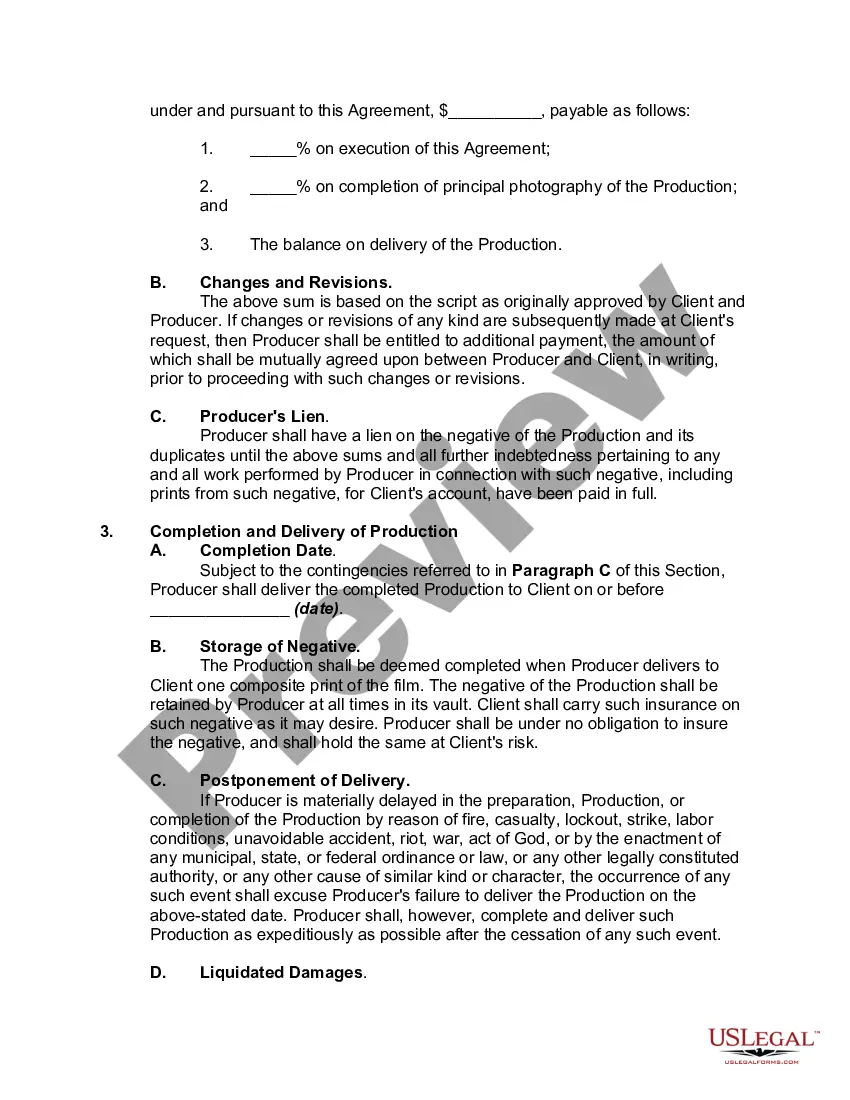
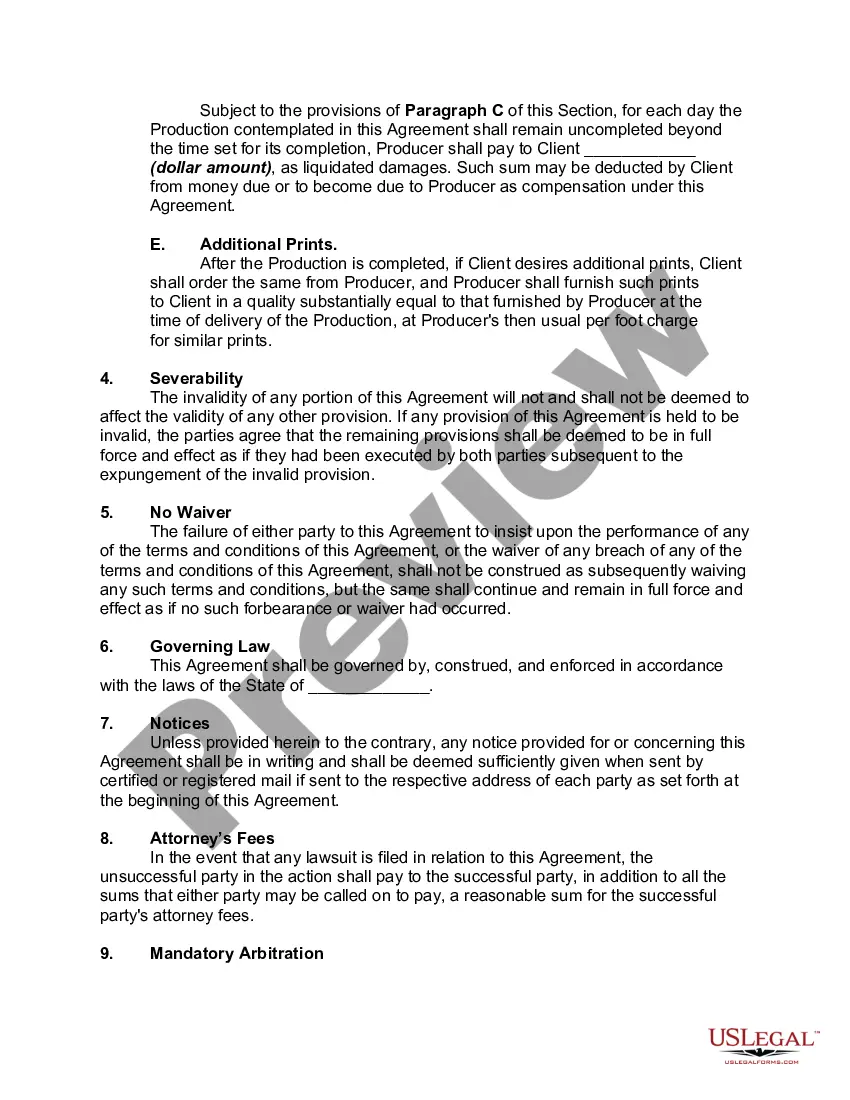
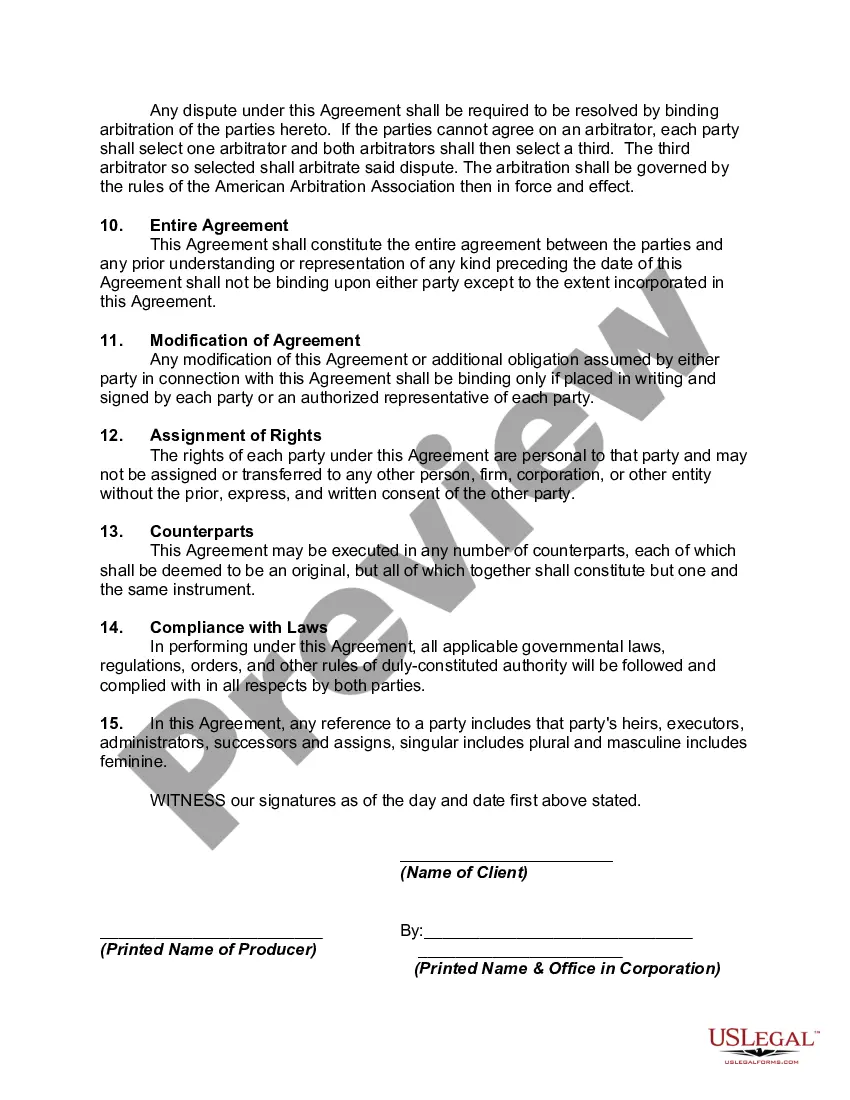
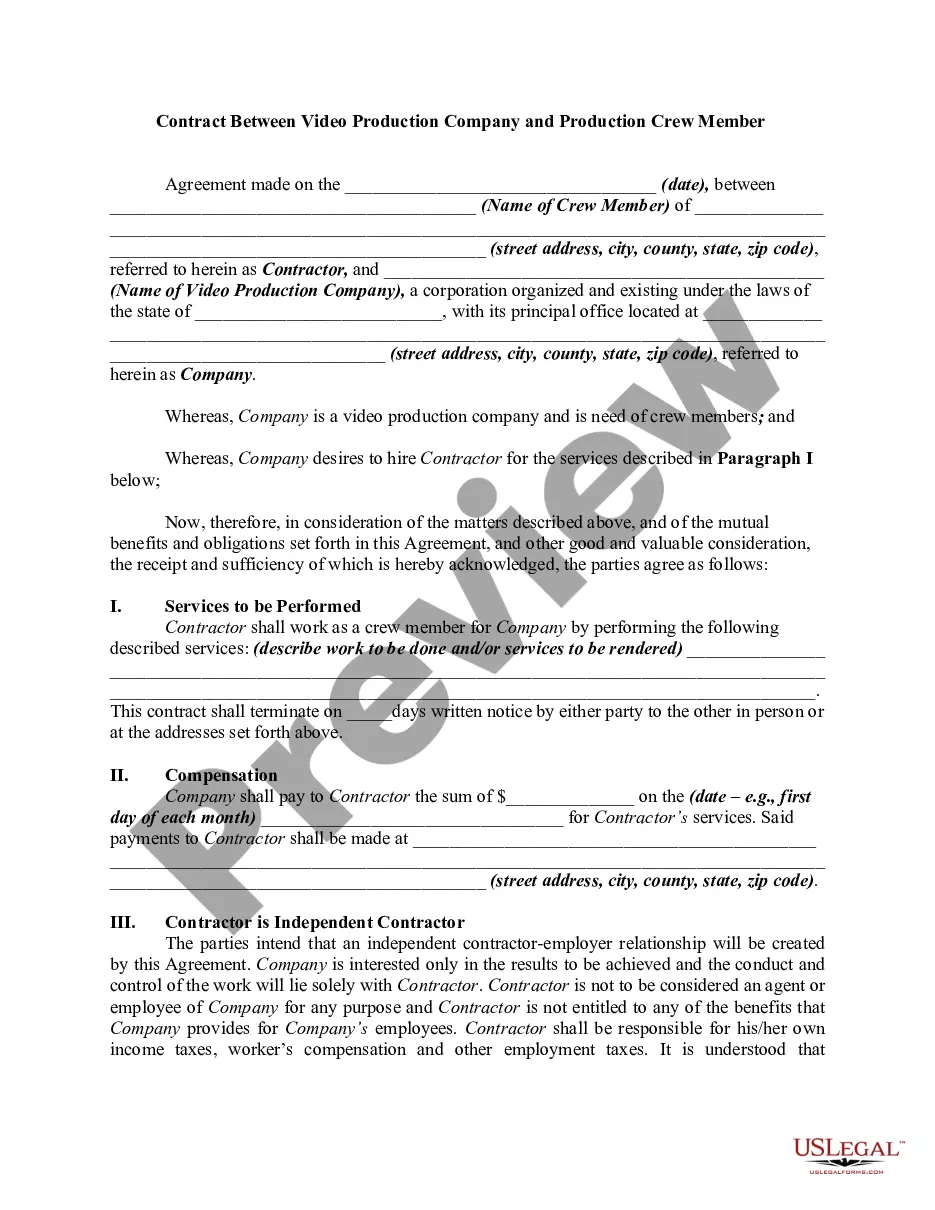
Film contracts and agreements protect the rights of your film and are necessary to avoid miscommunication and risk at every stage from pre-production to distribution. Agreements need to be set in place with your production team, cast and crew even from before principal photography begins.
Here are the most examples of licensing agreements: Trademark licensing. Trademark licensing agreements allow a licensee to use a licensor's trademark, logo, or brand identity for specific purposes. Trade secret licensing. Copyright licensing. Patent licensing. Software licensing. End-user licensing. Franchise licensing.
