Sample Letter Exemption Withdrawal In Sacramento
Description
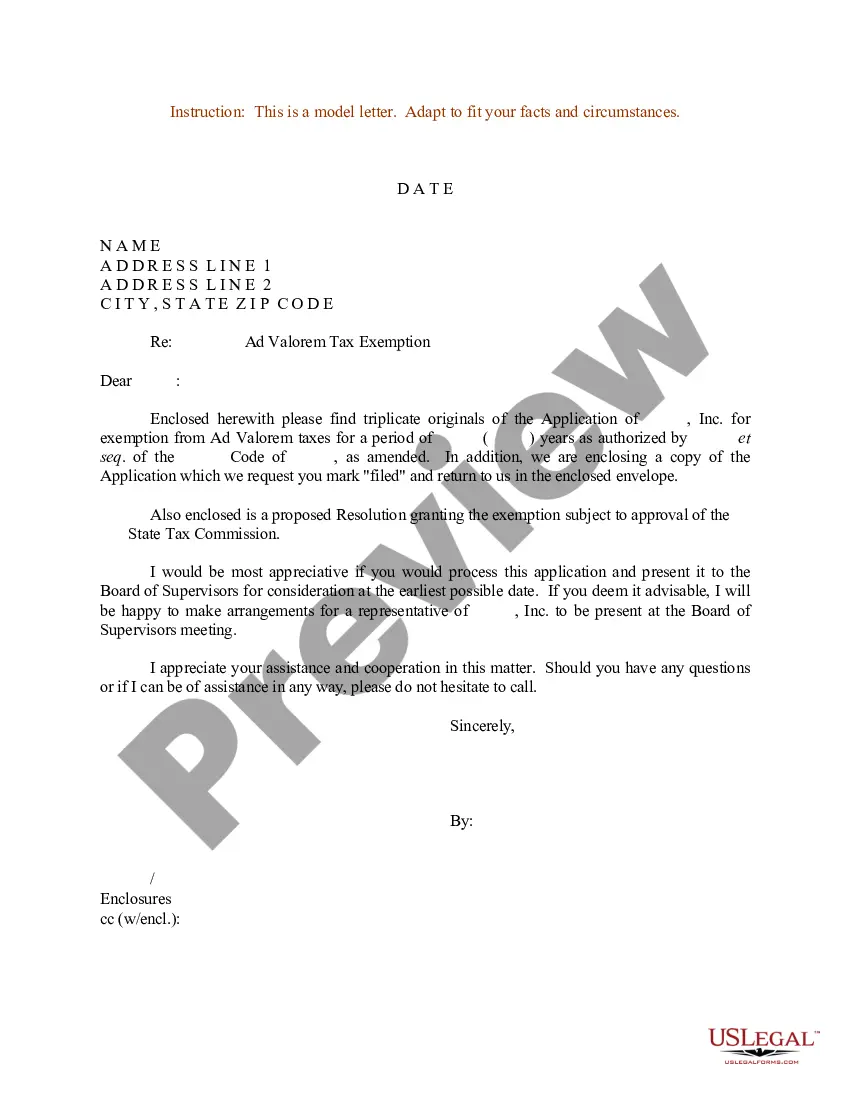
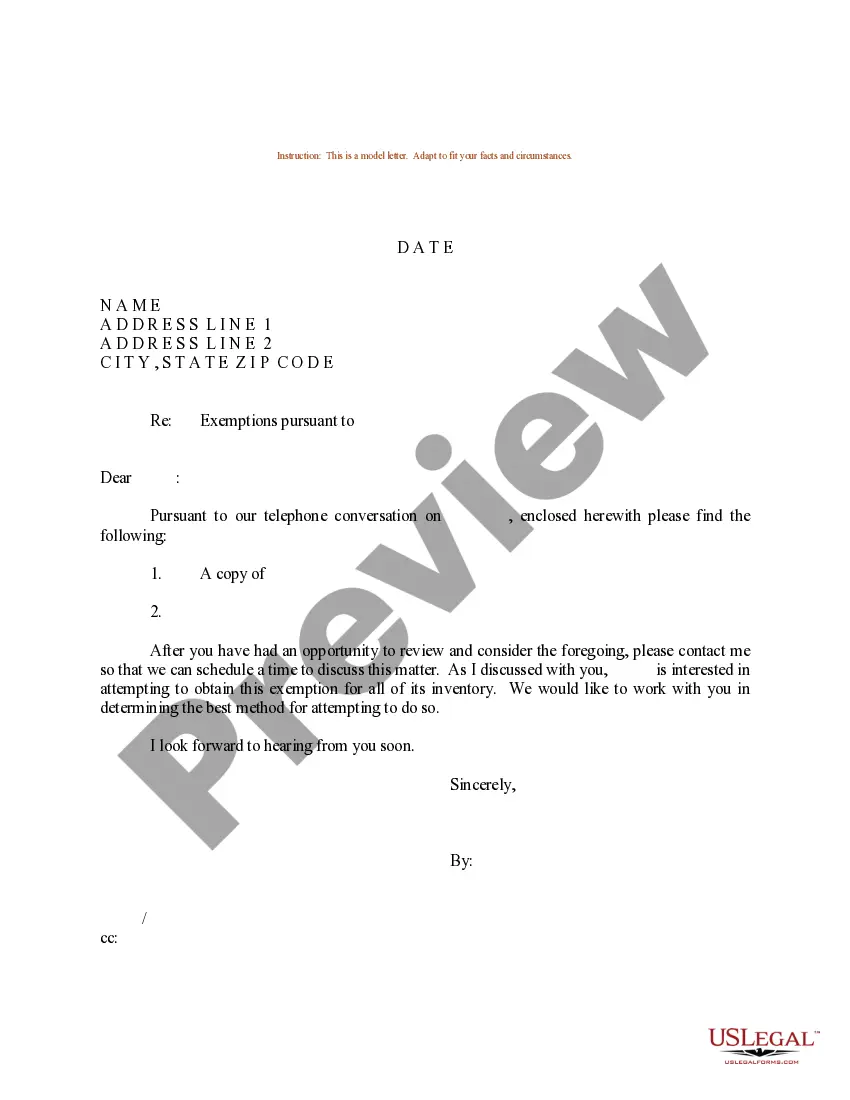
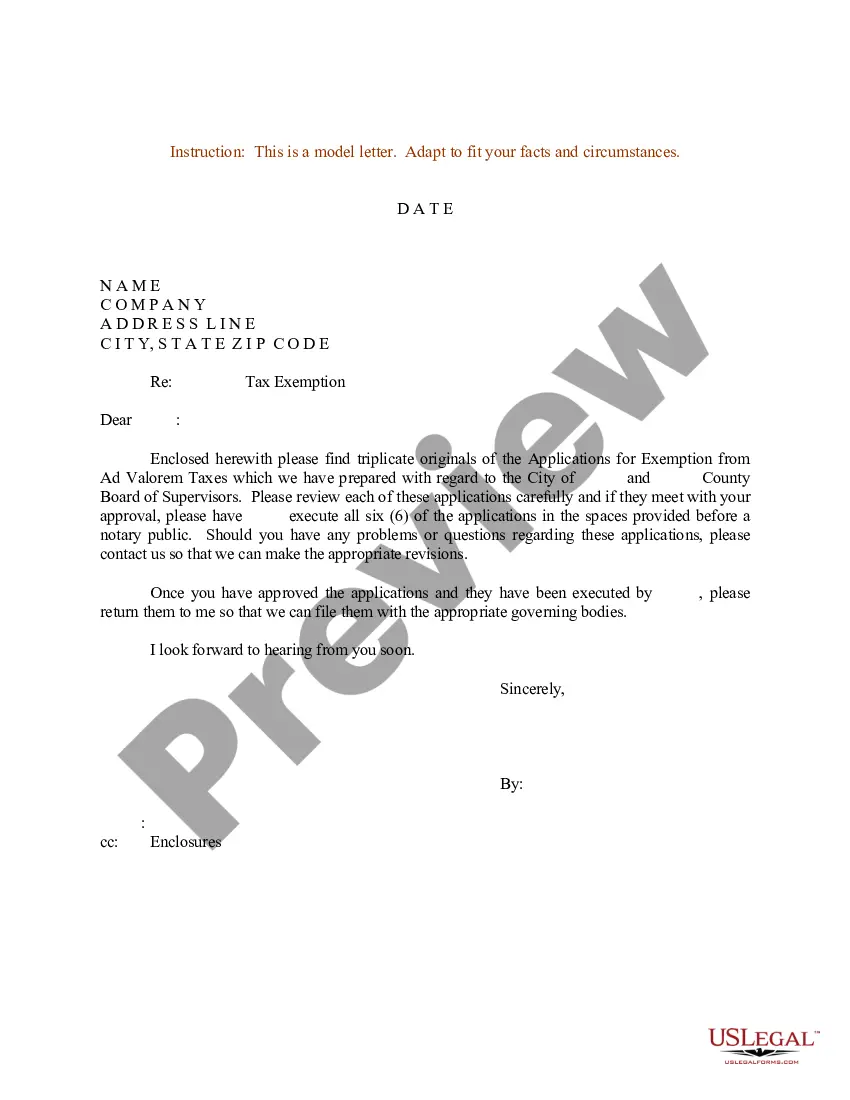
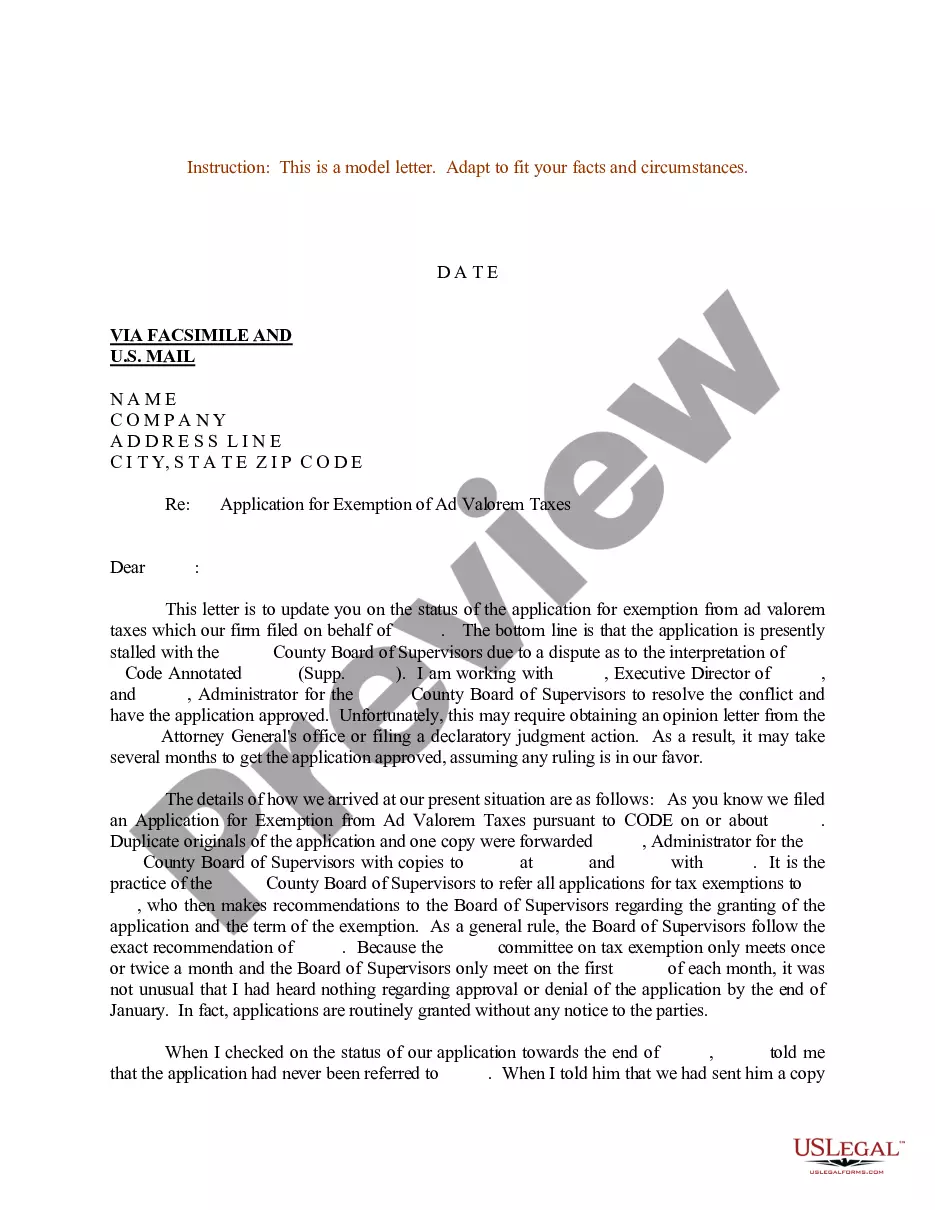
Get your form ready online
Our built-in tools help you complete, sign, share, and store your documents in one place.
Make edits, fill in missing information, and update formatting in US Legal Forms—just like you would in MS Word.
Download a copy, print it, send it by email, or mail it via USPS—whatever works best for your next step.
Sign and collect signatures with our SignNow integration. Send to multiple recipients, set reminders, and more. Go Premium to unlock E-Sign.
If this form requires notarization, complete it online through a secure video call—no need to meet a notary in person or wait for an appointment.
We protect your documents and personal data by following strict security and privacy standards.

Make edits, fill in missing information, and update formatting in US Legal Forms—just like you would in MS Word.

Download a copy, print it, send it by email, or mail it via USPS—whatever works best for your next step.

Sign and collect signatures with our SignNow integration. Send to multiple recipients, set reminders, and more. Go Premium to unlock E-Sign.

If this form requires notarization, complete it online through a secure video call—no need to meet a notary in person or wait for an appointment.

We protect your documents and personal data by following strict security and privacy standards.
Looking for another form?










Form popularity
FAQ
How to make a Claim of Exemption Fill out forms. Fill out two court forms. File the Claim of Exemption with the levying officer. Wait to see if the claim is opposed. Reply to the opposition (if any) ... Check if your court uses tentative rulings. Go to the hearing.
There are certain businesses which are ineligible for exemption from CTR reports under Phase 2; these include any business which is engaged in certain activities including, but not limited to, practicing law, accounting, and medicine, engaging in gaming or trade union activities, or operating a pawn brokerage or real ...
Claims that some or all of your property being levied is exempt from collection of a judgment. This form is not filed with the court, but instead is filed with the sheriff or other levying officer.
A Claim of Exemption is a legal process through which a debtor asserts that certain property or income is exempt from being taken or withheld by a creditor to satisfy a debt. This process is typically initiated when a debtor receives notice of a property levy or wage garnishment as a result of a court judgment.
If you received a Notice of Opposition to Claim of Exemption (form WG-009) or a Notice of Opposition to Claim of Exemption (form EJ-170), it means the other side disagreed with your request for an exemption. You will have a court date (a hearing) where a judge will decide if you can get the exemption.
How to make a Claim of Exemption Fill out forms. Fill out two court forms. File the Claim of Exemption with the levying officer. Wait to see if the claim is opposed. Reply to the opposition (if any) ... Check if your court uses tentative rulings. Go to the hearing.

