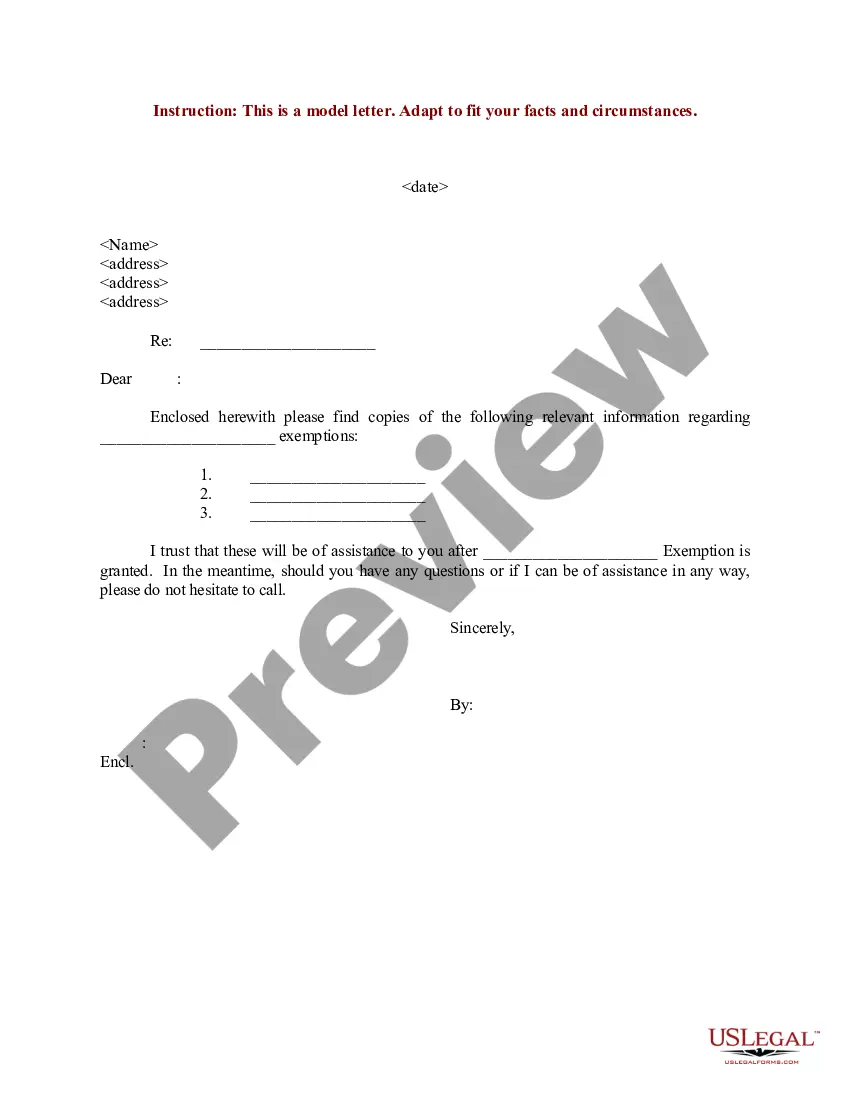
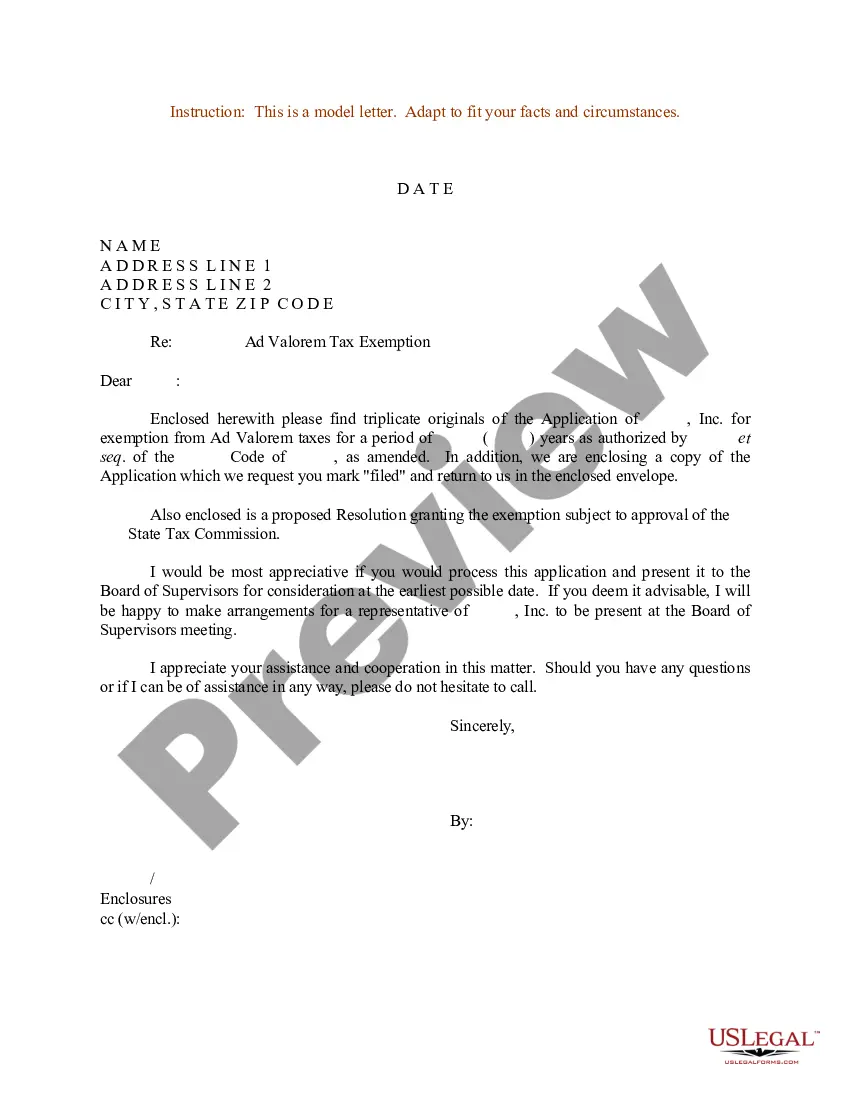
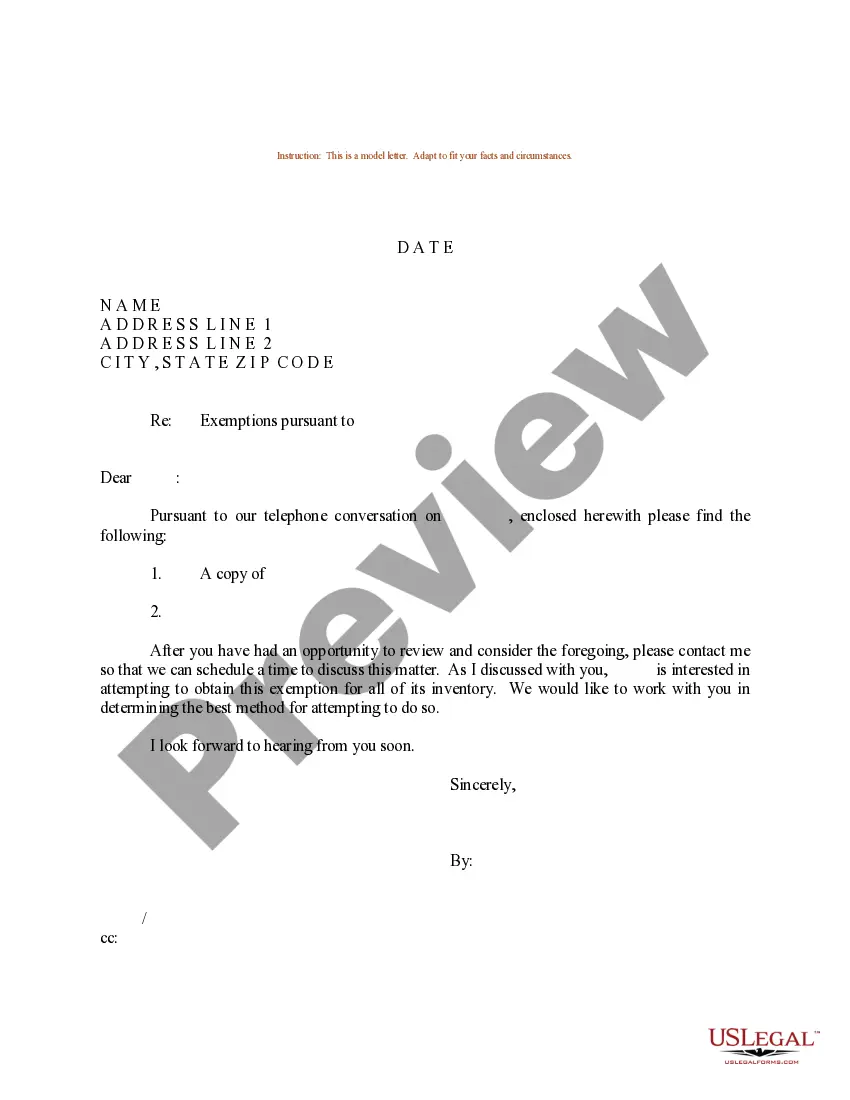
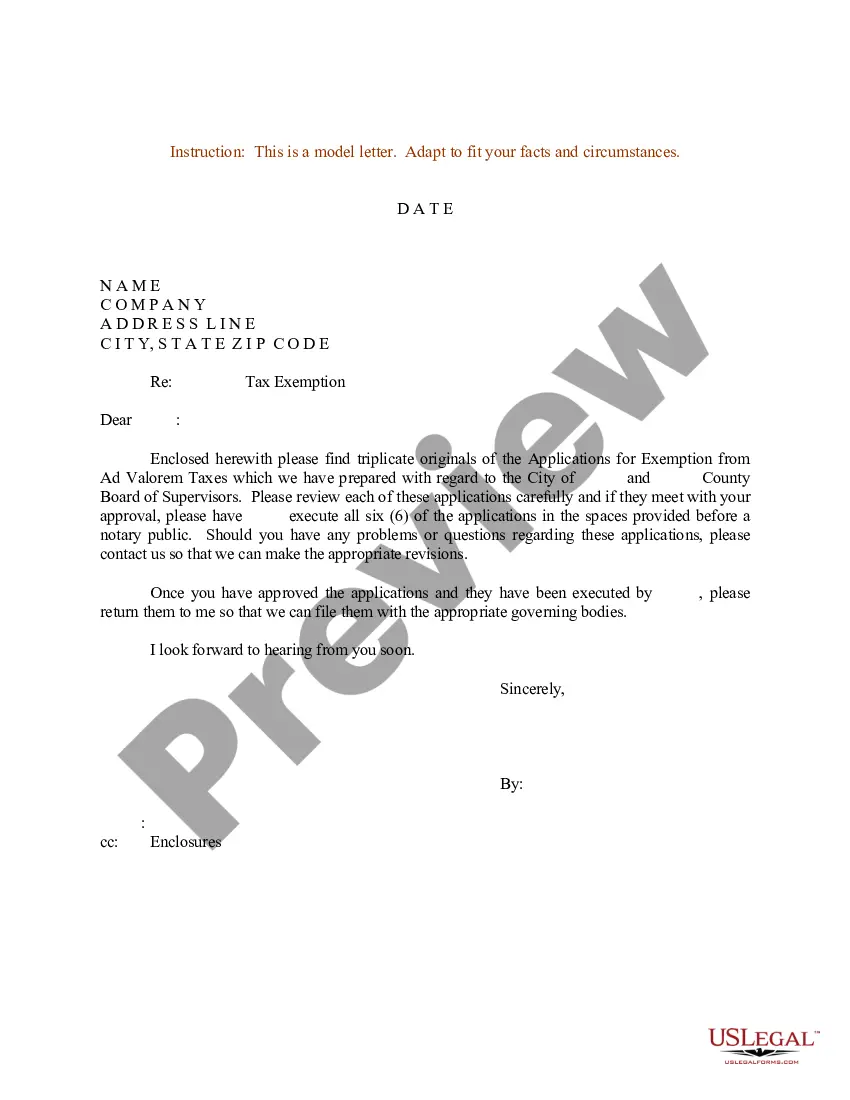
Sample Letter For Exemption In Maryland
Description
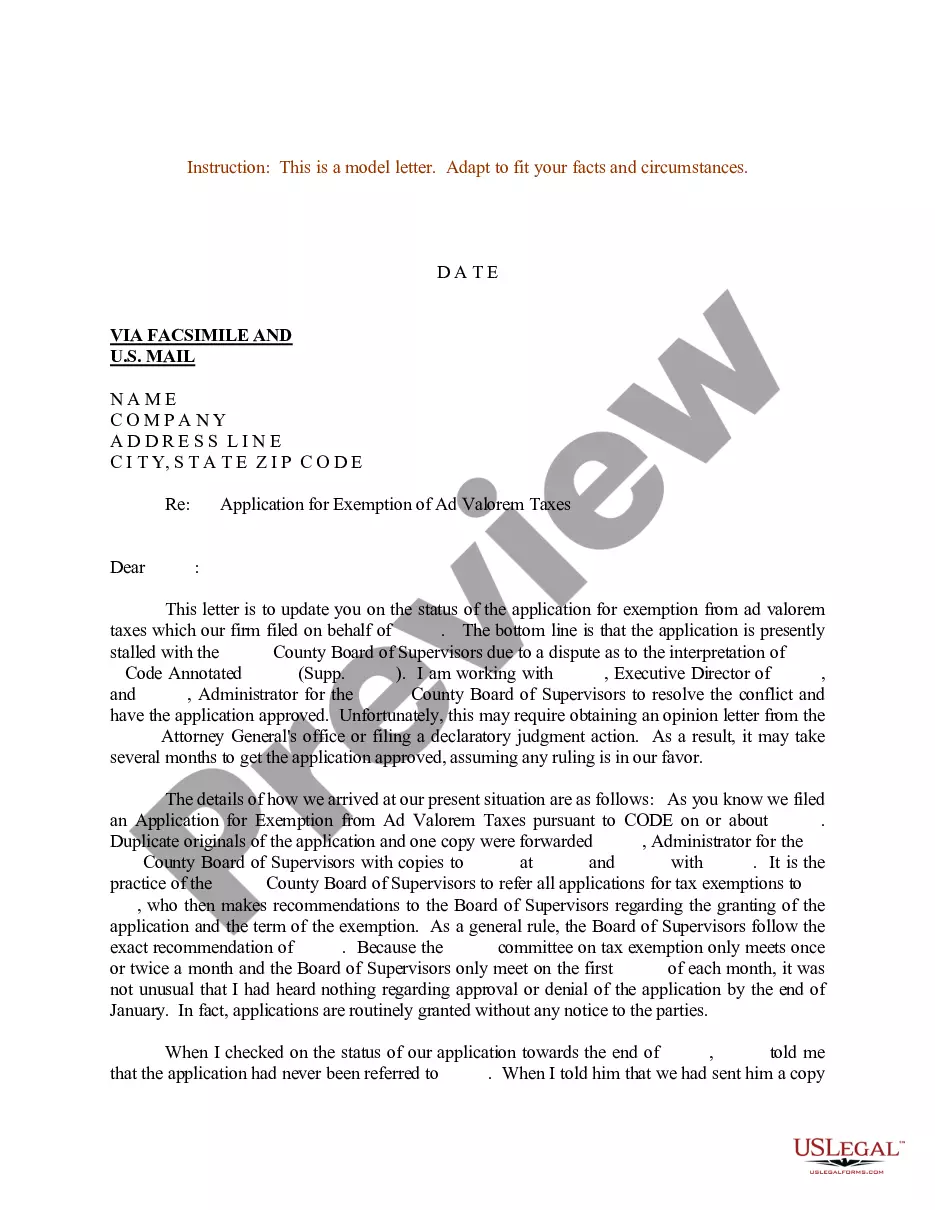
Get your form ready online
Our built-in tools help you complete, sign, share, and store your documents in one place.
Make edits, fill in missing information, and update formatting in US Legal Forms—just like you would in MS Word.
Download a copy, print it, send it by email, or mail it via USPS—whatever works best for your next step.
Sign and collect signatures with our SignNow integration. Send to multiple recipients, set reminders, and more. Go Premium to unlock E-Sign.
If this form requires notarization, complete it online through a secure video call—no need to meet a notary in person or wait for an appointment.
We protect your documents and personal data by following strict security and privacy standards.

Make edits, fill in missing information, and update formatting in US Legal Forms—just like you would in MS Word.

Download a copy, print it, send it by email, or mail it via USPS—whatever works best for your next step.

Sign and collect signatures with our SignNow integration. Send to multiple recipients, set reminders, and more. Go Premium to unlock E-Sign.

If this form requires notarization, complete it online through a secure video call—no need to meet a notary in person or wait for an appointment.

We protect your documents and personal data by following strict security and privacy standards.
Looking for another form?







Form popularity
FAQ
EXEMPTION AMOUNT CHART The personal exemption is $3,200. This exemption is reduced once the taxpayer's federal adjusted gross income exceeds $100,000 ($150,000 if filing Joint, Head of Household, or Qualifying Widow(er) with Dependent Child).
An exemption is a CDSS-authorized written document that "exempts" the individual from the requirement of having a criminal record clearance. The CDSS is prohibited by law from granting exemptions to individuals convicted of certain crimes (non-exemptible crimes).
Personal exemptions The exemption reduces your taxable income just like a deduction does, but typically has fewer restrictions to claiming it. If you are married and file a joint tax return, both you and your spouse each get to claim an exemption.
The IRS determination letter notifies a nonprofit organization that its application for federal tax exemption under Section 501(c)(3) has been approved.
LETTER OF EXEMPTION. This Letter of Exemption certifies that federal credit unions are exempt from all taxes imposed by the United States or by any state, territorial, or local taxing authority, except for local real or personal property tax.
What Is a Determination Letter? A determination letter is a formal document issued by the Internal Revenue Service (IRS) that indicates whether or not a company's employee benefit plan has been found to meet the minimum legal requirements for special tax treatment.