Sample Bonus Template For Retention In Washington
Description
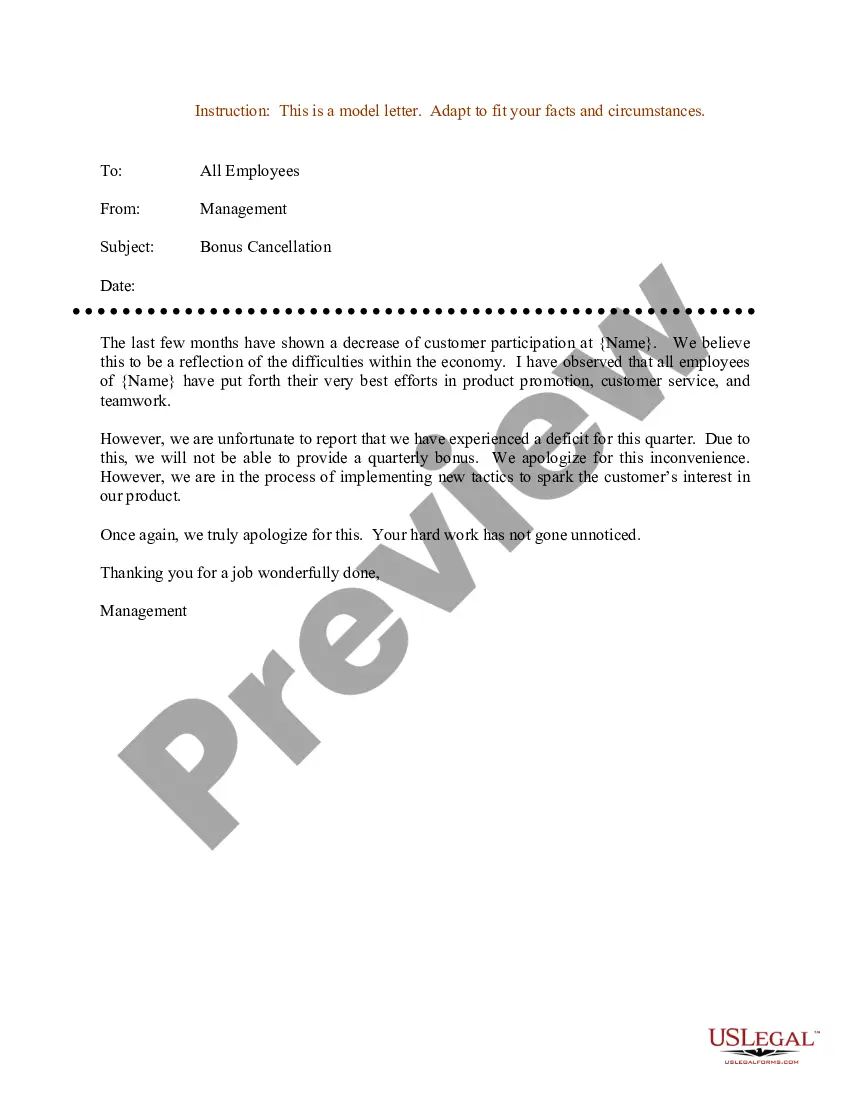
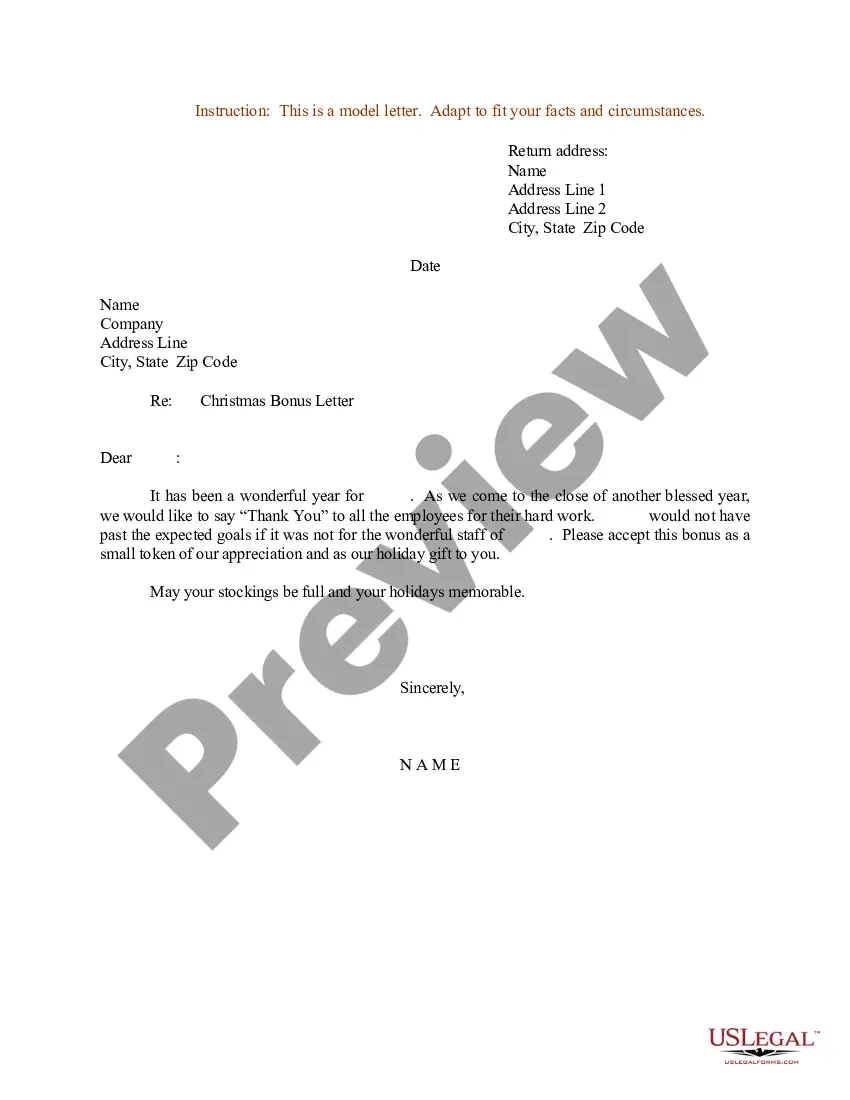
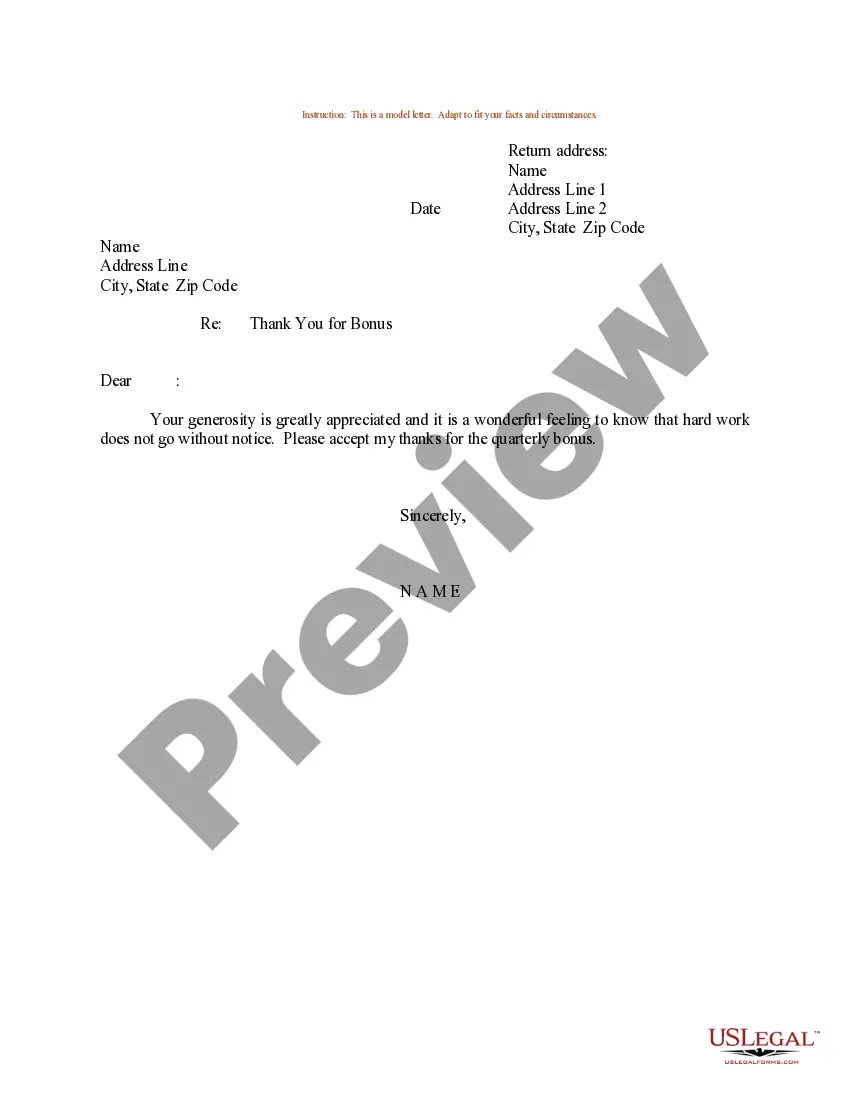
Get your form ready online
Our built-in tools help you complete, sign, share, and store your documents in one place.
Make edits, fill in missing information, and update formatting in US Legal Forms—just like you would in MS Word.
Download a copy, print it, send it by email, or mail it via USPS—whatever works best for your next step.
Sign and collect signatures with our SignNow integration. Send to multiple recipients, set reminders, and more. Go Premium to unlock E-Sign.
If this form requires notarization, complete it online through a secure video call—no need to meet a notary in person or wait for an appointment.
We protect your documents and personal data by following strict security and privacy standards.

Make edits, fill in missing information, and update formatting in US Legal Forms—just like you would in MS Word.

Download a copy, print it, send it by email, or mail it via USPS—whatever works best for your next step.

Sign and collect signatures with our SignNow integration. Send to multiple recipients, set reminders, and more. Go Premium to unlock E-Sign.

If this form requires notarization, complete it online through a secure video call—no need to meet a notary in person or wait for an appointment.

We protect your documents and personal data by following strict security and privacy standards.
Looking for another form?



Form popularity
FAQ
A retention incentive can range from 10% to 30% of an employee's annual salary. The size depends on a number of factors, including the employee's role, the length of the retention period, and the company's budget. For example: A senior executive earning $200,000 could be offered a bonus of $20,000 to $50,000.
How are retention bonuses calculated? Aggregate method: Your retention bonus is added to your annual salary. Percentage method: This method uses a tax rate of 25% as standard, however, for any amount over $1 million, a tax rate of 39.6% would be applied.
To remain qualified, the employee needs to maintain a certain level of productivity and performance. They must be have full-time employment status, working at least 30 hours per week. The employer and employee must sign a non-compete and/or non-disclosure agreement to receive the retention bonus.
The lesson is this: In proposing a retention bonus or agreement to your employer, you should first emphasize (a) why it would be in the interests of the employer, and, then (b) what benefit will come about to the employer if it offers the retention bonus.
How to Craft an Effective Employee Retention Letter Step 1: Start with a Professional Introduction. Step 2: Establish the Employee's Value. Step 3: Detail the Retention Bonus Terms. Step 4: Address Resignation and Termination Scenarios. Step 5: Include Legal and Administrative Clauses.
Another common “red flag” in a retention agreement is the stipulation that the employee's receipt of the bonus will be determined in the employer's “sole discretion.” You do not want to put this type of power in your employer's hands.

