Sample Bonus Template With 100 In Texas
Description
Get your form ready online
Our built-in tools help you complete, sign, share, and store your documents in one place.
Make edits, fill in missing information, and update formatting in US Legal Forms—just like you would in MS Word.
Download a copy, print it, send it by email, or mail it via USPS—whatever works best for your next step.
Sign and collect signatures with our SignNow integration. Send to multiple recipients, set reminders, and more. Go Premium to unlock E-Sign.
If this form requires notarization, complete it online through a secure video call—no need to meet a notary in person or wait for an appointment.
We protect your documents and personal data by following strict security and privacy standards.

Make edits, fill in missing information, and update formatting in US Legal Forms—just like you would in MS Word.

Download a copy, print it, send it by email, or mail it via USPS—whatever works best for your next step.

Sign and collect signatures with our SignNow integration. Send to multiple recipients, set reminders, and more. Go Premium to unlock E-Sign.

If this form requires notarization, complete it online through a secure video call—no need to meet a notary in person or wait for an appointment.

We protect your documents and personal data by following strict security and privacy standards.
Looking for another form?








Form popularity
FAQ
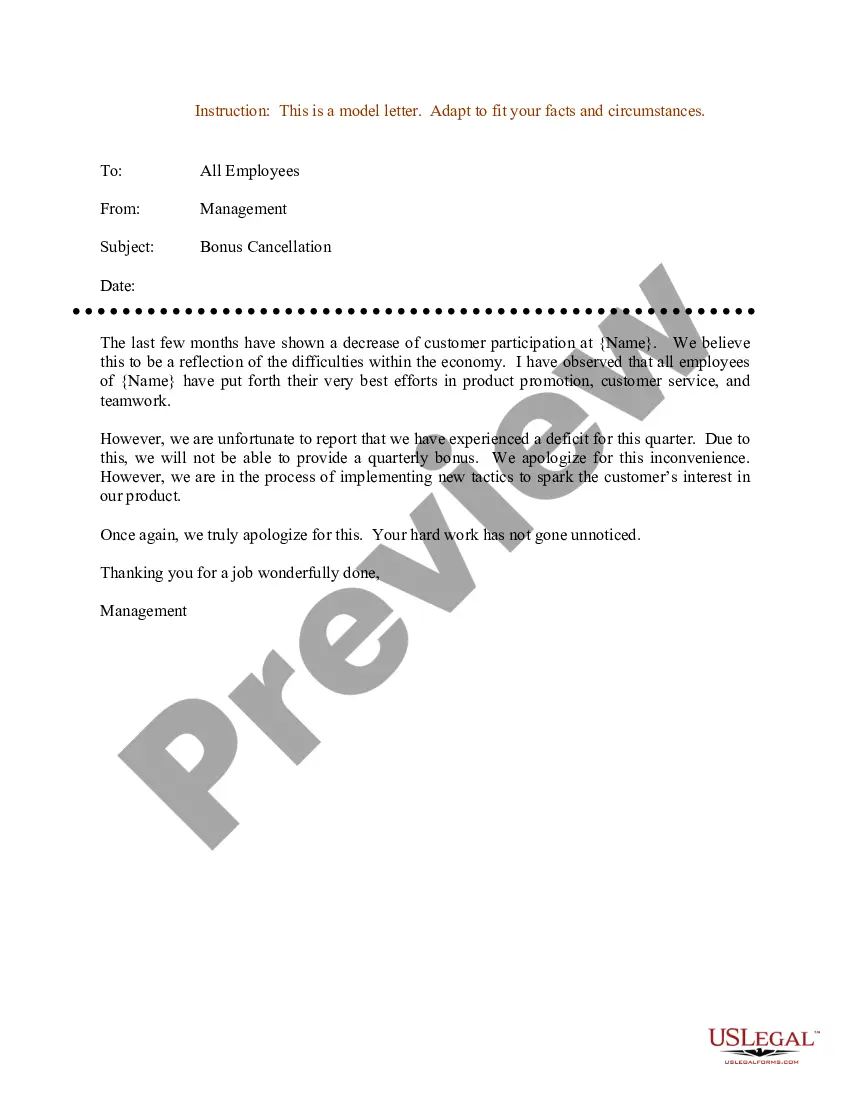
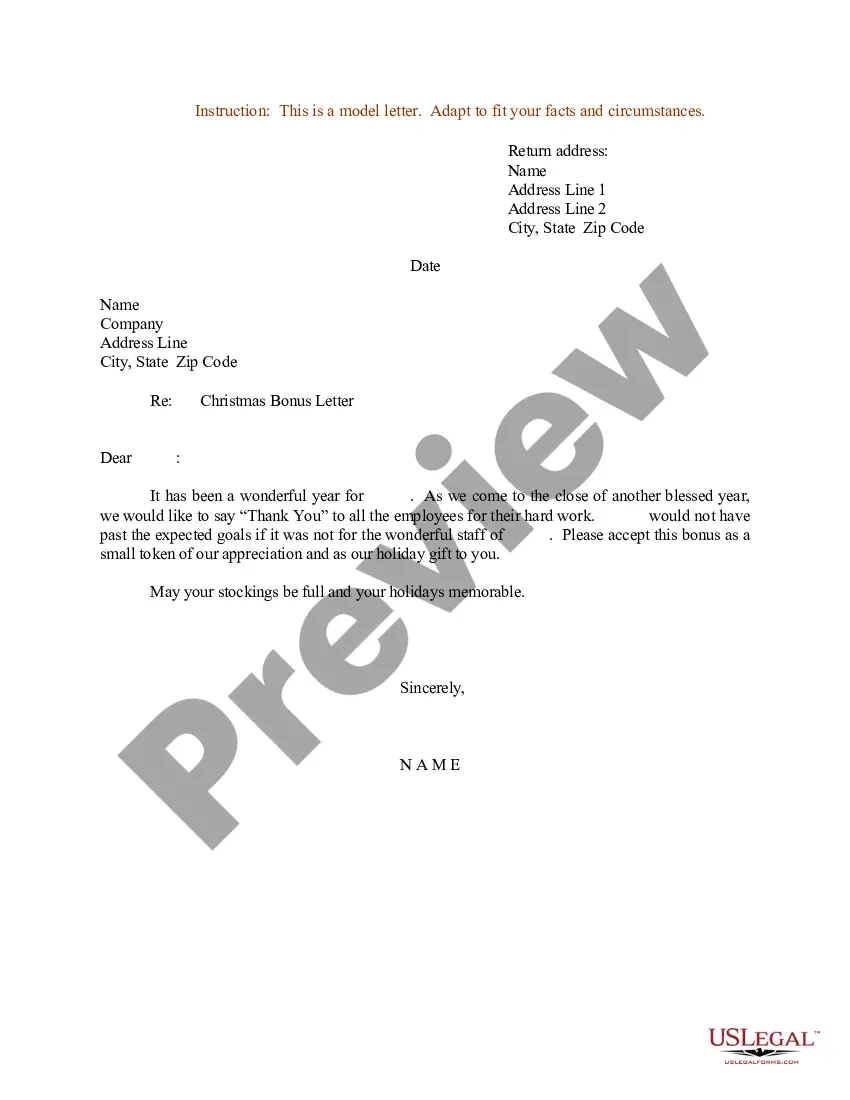
Details to Include: Bonus Amount: Clearly state the amount of the bonus being awarded. Performance Period: Define the time frame for which the bonus is applicable. Performance Metrics or Criteria: Include any performance benchmarks or company-wide metrics that influenced the bonus calculation.
A stock bonus plan is a defined-contribution profit sharing plan, to which employers contribute company stock. These are considered to be qualified retirement plans, and as such, they're governed by the Employee Retirement Income Security Act (ERISA).
A bonus plan is a compensation strategy used by organizations to reward employees for their performance, contributions, or achievement of specific goals. Bonus plans are designed to motivate employees, enhance performance, and align individual goals with organizational objectives.
State Supplemental Tax Rates: 2024 StateSupplemental Tax Rate (2024) Texas No state income tax Utah None Vermont 30% of federal withholding or 6% for nonqualified deferred compensation Virginia 5.75%47 more rows
You may get a bonus one year but nothing the next, so be sure you understand how your employer selects people to receive a year-end bonus. Executives receive higher bonuses that can multiply based on performance, while most employees earn bonuses equal to 1% to 5% of their overall salary.
Create a written document outlining the employee bonus plan's details. Give all employees this information so they understand how and why bonuses are given. Provide details on the bonus types in your plan, why they exist and how employees can earn these bonuses, especially if a bonus is tied to a specific outcome.
Organizations may grant goal-based bonuses on a regular basis, such as bi-annually or annually, and use them to incentivize employees to perform well and hit their goals. Example: Employees may receive a goal-based bonus after completing a project or reaching their quota within a set timeline, such as a quarter.
Bonus Amount: State the exact amount of the bonus being awarded. For instance, “You will receive a performance bonus of $5,000.” Rationale for Award: Provide a brief explanation of why the bonus is being awarded. This could include a summary of the employee's achievements and their impact on the organization.
It is compensation that is provided outside of his or her typical salary or hourly wage. For example, you might offer an employee an annual salary of $60,000 per year with a $3,000 signing bonus. Your employees will receive the $3,000 after accepting the job.

