Template For Bonus Payout In Salt Lake
Description
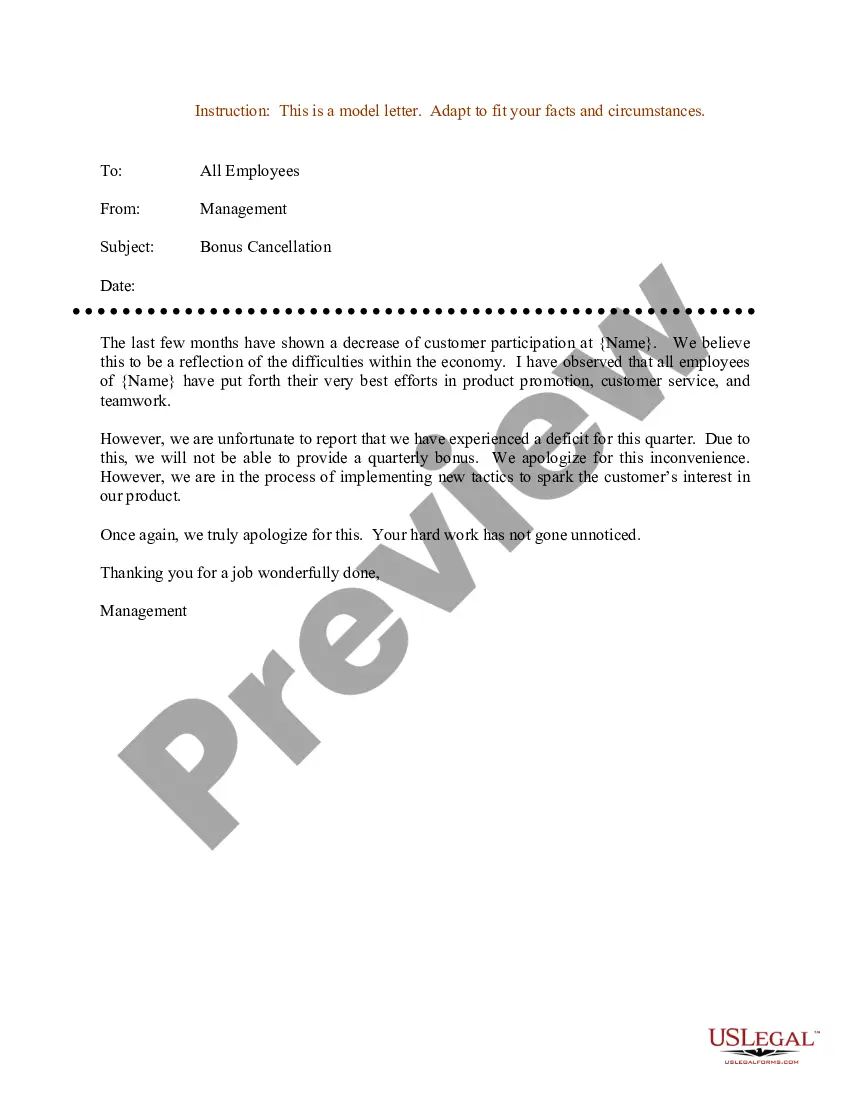
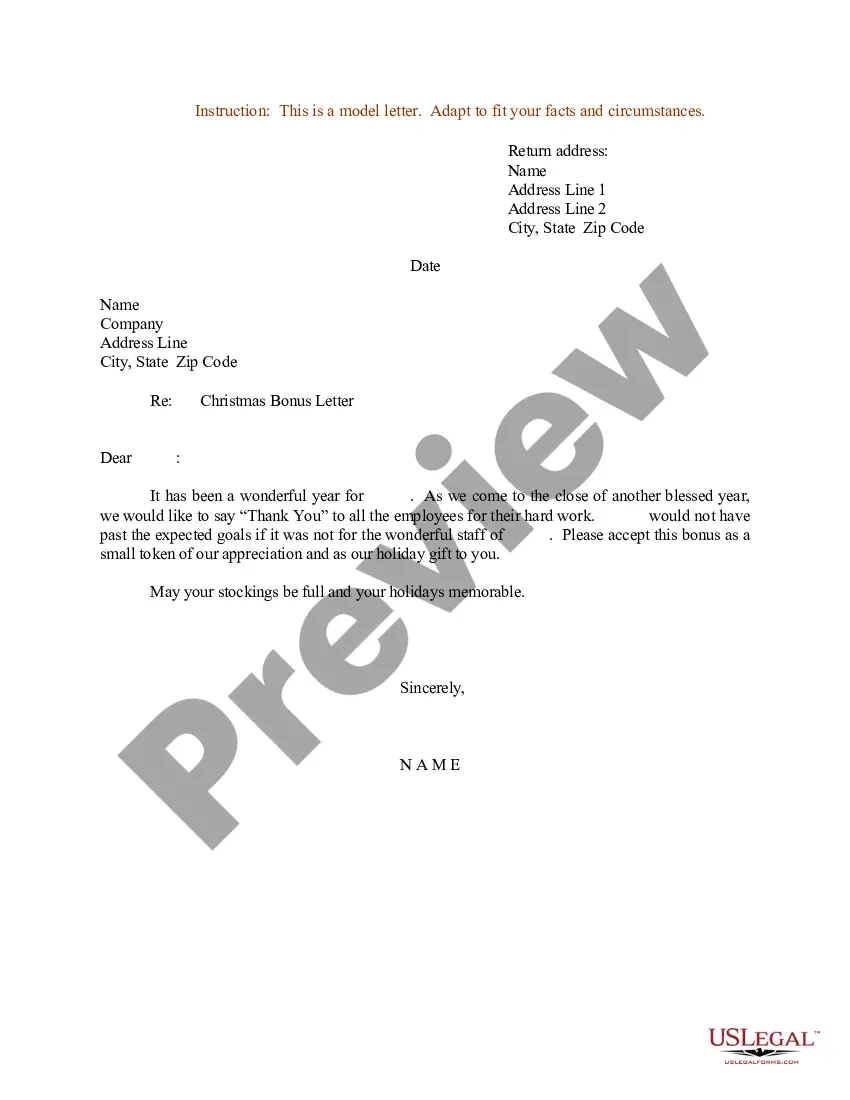
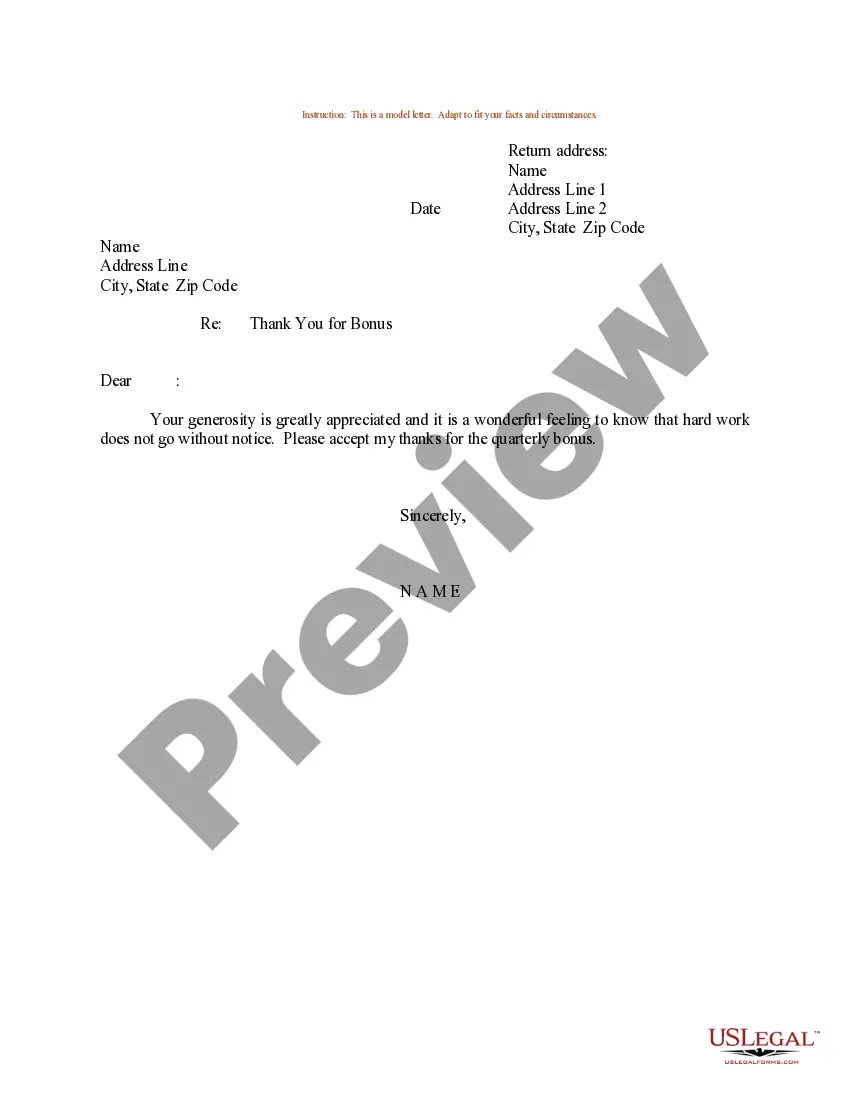
Get your form ready online
Our built-in tools help you complete, sign, share, and store your documents in one place.
Make edits, fill in missing information, and update formatting in US Legal Forms—just like you would in MS Word.
Download a copy, print it, send it by email, or mail it via USPS—whatever works best for your next step.
Sign and collect signatures with our SignNow integration. Send to multiple recipients, set reminders, and more. Go Premium to unlock E-Sign.
If this form requires notarization, complete it online through a secure video call—no need to meet a notary in person or wait for an appointment.
We protect your documents and personal data by following strict security and privacy standards.

Make edits, fill in missing information, and update formatting in US Legal Forms—just like you would in MS Word.

Download a copy, print it, send it by email, or mail it via USPS—whatever works best for your next step.

Sign and collect signatures with our SignNow integration. Send to multiple recipients, set reminders, and more. Go Premium to unlock E-Sign.

If this form requires notarization, complete it online through a secure video call—no need to meet a notary in person or wait for an appointment.

We protect your documents and personal data by following strict security and privacy standards.
Looking for another form?










Form popularity
FAQ
Some don't use bonuses at all. Some hand out equal bonuses to every employee, or at least ensure that every employee gets some. Some use bonuses as a reward for good work, and may only give them to top-ranked employees, people who meet certain performance criteria, etc.
Key takeaways. The federal bonus tax withholding rate is typically 22%. However, employers could instead combine a bonus with your regular wages as though it's one of your usual paychecks—with your usual tax amount withheld.
Year-end bonuses are usually calculated as a percentage of an employee's salary. For example, if an employee makes $100,000 a year, they can be offered a 20% bonus, which would equate to $20,000. Each company will determine how their bonuses are calculated.
A management bonus clause outlines the conditions under which a company's managers are eligible to receive additional compensation beyond their regular salary. It typically specifies performance metrics, financial targets, or other criteria that must be met for the bonus to be awarded.
An annual bonus of 5-10% of your yearly salary is standard in a lot of industries, just as a 5-10% annual raise is considered standard. However, if you work on commission, you may see a significantly higher percentage. Your industry, company revenue, location, and level also heavily inform what's expected.
42% of companies give each employee holiday bonuses less than $100. 22% give over $1,000 for Christmas bonuses. 19% give holiday bonuses between $251 and $1,000. 17% give Christmas bonuses between $100 and $250.
The Incentive Bonus Policy compensates for performance above the acceptable standard. It is not intended to make up for or add to an employee's regular hourly wage or compensation for meeting the minimum standards of your job position.
Request a Non-Financial Bonus You may be able to reduce taxes on your bonus to zero by asking your employer to make it a non-financial bonus. Examples of non-financial bonuses could include the ability to work from home or work flexible hours.
Once you have both performance percentage and salary percentage for each individual, you can multiply them together by an individual. Add up all individuals to get a total ratio. Divide each individual's share by the full rate, and that's the portion of the bonus pool that an individual receives.
Subject: Bonus Award Notification Dear Employee's Name, We are pleased to inform you that you have been awarded a bonus in recognition of your exceptional performance over the past period. This bonus is a testament to your dedication, hard work, and significant contributions to our team.

