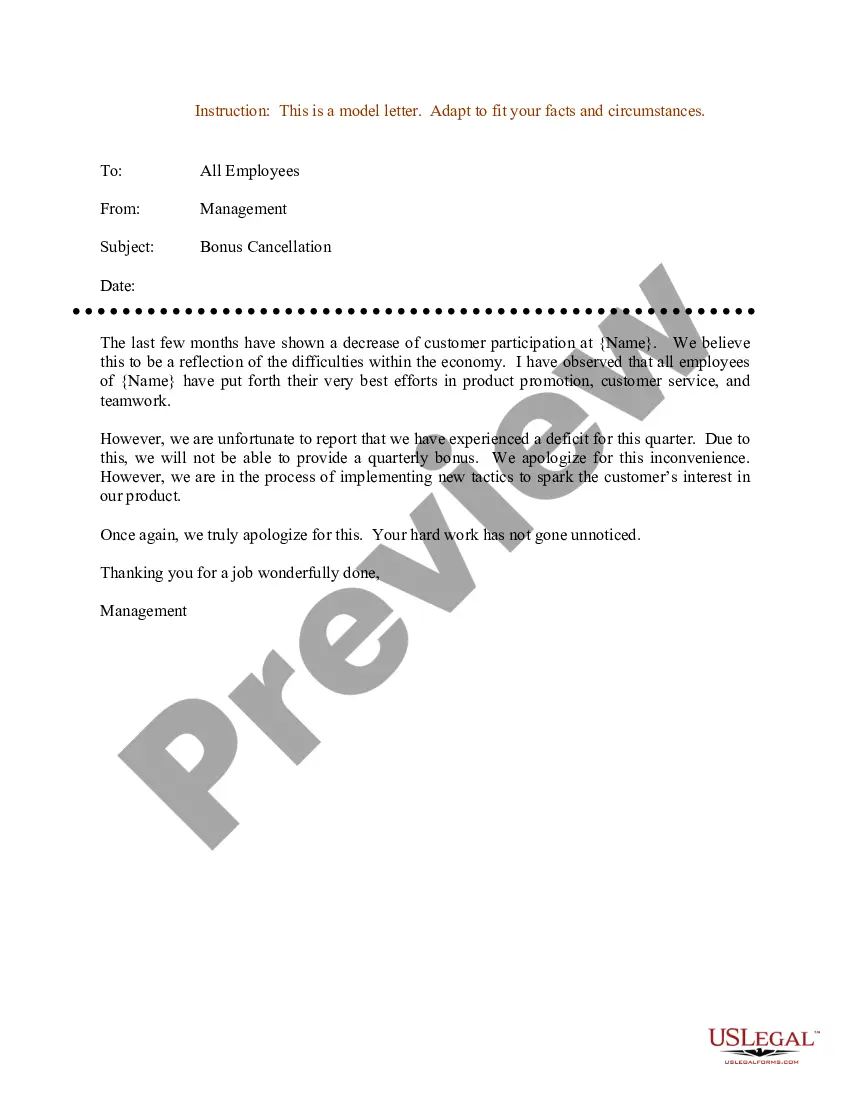
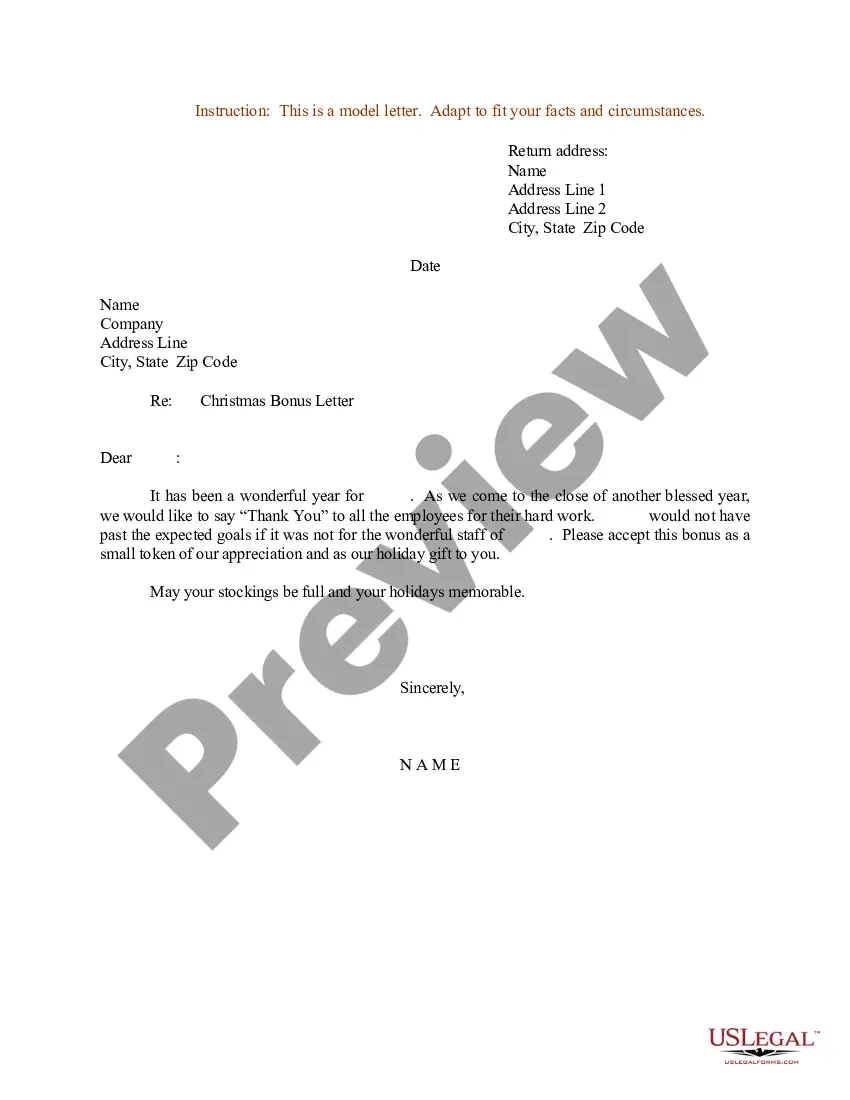
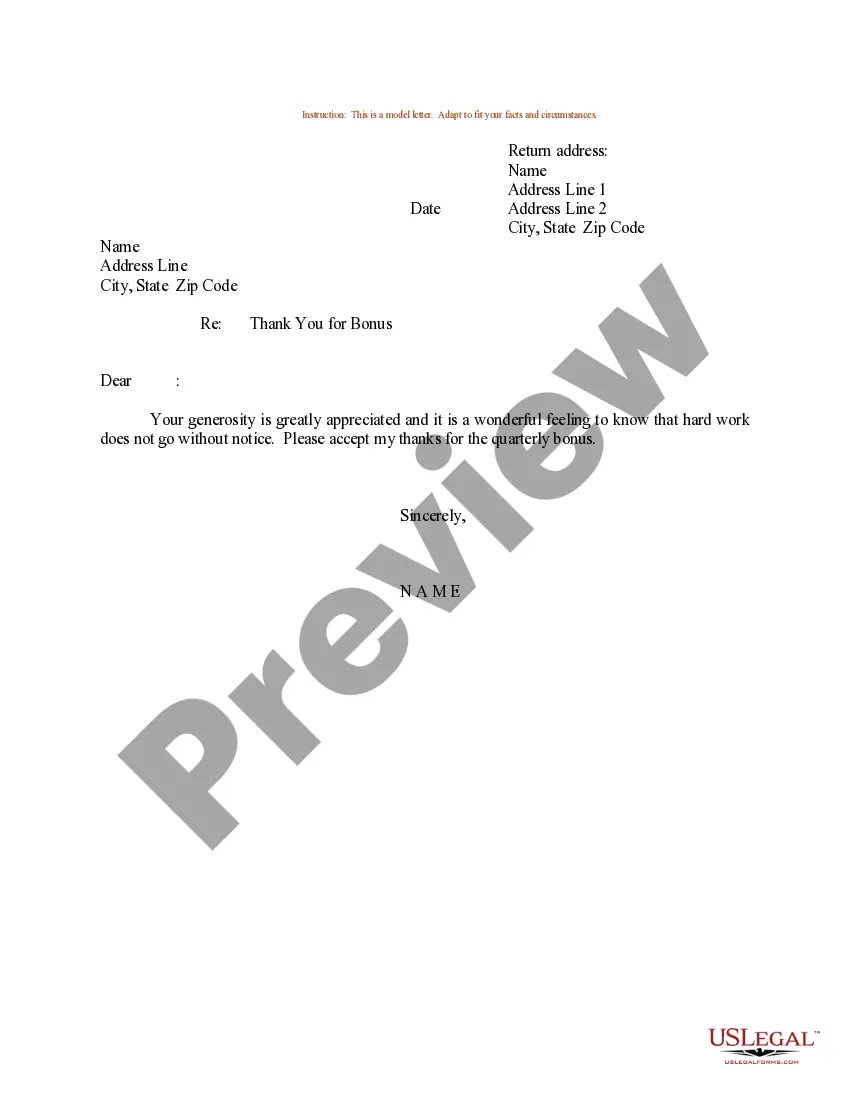
Template For Bonus Structure In Riverside
Description
Get your form ready online
Our built-in tools help you complete, sign, share, and store your documents in one place.
Make edits, fill in missing information, and update formatting in US Legal Forms—just like you would in MS Word.
Download a copy, print it, send it by email, or mail it via USPS—whatever works best for your next step.
Sign and collect signatures with our SignNow integration. Send to multiple recipients, set reminders, and more. Go Premium to unlock E-Sign.
If this form requires notarization, complete it online through a secure video call—no need to meet a notary in person or wait for an appointment.
We protect your documents and personal data by following strict security and privacy standards.

Make edits, fill in missing information, and update formatting in US Legal Forms—just like you would in MS Word.

Download a copy, print it, send it by email, or mail it via USPS—whatever works best for your next step.

Sign and collect signatures with our SignNow integration. Send to multiple recipients, set reminders, and more. Go Premium to unlock E-Sign.

If this form requires notarization, complete it online through a secure video call—no need to meet a notary in person or wait for an appointment.

We protect your documents and personal data by following strict security and privacy standards.
Looking for another form?





Form popularity
FAQ
A webinar outline helps you organize your webinar content better and ensure a consistent webinar flow. If you do not have an outline, you can lose track of time, and the webinar itself may exceed the agreed time, which is not an excellent experience for webinar attendees.
How to create a personal webinar template Sign in to the Zoom web portal. In the navigation menu, click Webinars. Click Schedule a Webinar. Choose any webinar settings that you would like to apply to the template. Click Schedule.
Create a webinar agenda and split it by minutes: webinar introduction, speakers introduction, main content of the webinar, closing, and Q&A section. The Q&A section at the end of the webinar is very important.
Here's a guide to putting together a watertight webinar outline with a step-by-step walkthrough: Step 1: Choose a topic. Step 2: Identify Key Topics. Step 3: Do Your Research. Step 4: Introduction. Step 5: Mention the 'why' ... Step 6: Subtopics. Step 7: Audience involvement. Step 8: Summary & recap.
Webinar structure: Create a webinar agenda and split it by minutes: webinar introduction, speakers introduction, main content of the webinar, closing, and Q&A section. The Q&A section at the end of the webinar is very important.
How to Write a Webinar Script: A Step-by-Step Guide Step 1: Define Your Objectives and Create a Detailed Outline. Step 2: Craft a Compelling Introduction. Step 3: Outline the Agenda. Step 4: Incorporate Online Webinar Etiquette. Step 5: Develop Engaging Content. Step 6: Incorporate Interactive Elements.
Here's a guide to putting together a watertight webinar outline with a step-by-step walkthrough: Step 1: Choose a topic. Step 2: Identify Key Topics. Step 3: Do Your Research. Step 4: Introduction. Step 5: Mention the 'why' ... Step 6: Subtopics. Step 7: Audience involvement. Step 8: Summary & recap.
Some of the best webinar formats, or at least the most popular & engaging ones, are the interview, panel, and AMA webinar formats. The Game Changers webinar series is a good example of an interview format. Because the structure is fairly simple, the webinars can be hosted on a weekly basis and for only 30 minutes.
Here's a guide to putting together a watertight webinar outline with a step-by-step walkthrough: Step 1: Choose a topic. Step 2: Identify Key Topics. Step 3: Do Your Research. Step 4: Introduction. Step 5: Mention the 'why' ... Step 6: Subtopics. Step 7: Audience involvement. Step 8: Summary & recap.
Typically, a webinar consists of one or more experts educating their audience about a topic. The presentation is supported by multimedia material. This is usually followed by a Q&A session. It's the live interaction that sets it apart from online videos.

