Sample Bonus Template With 100 In Riverside
Description
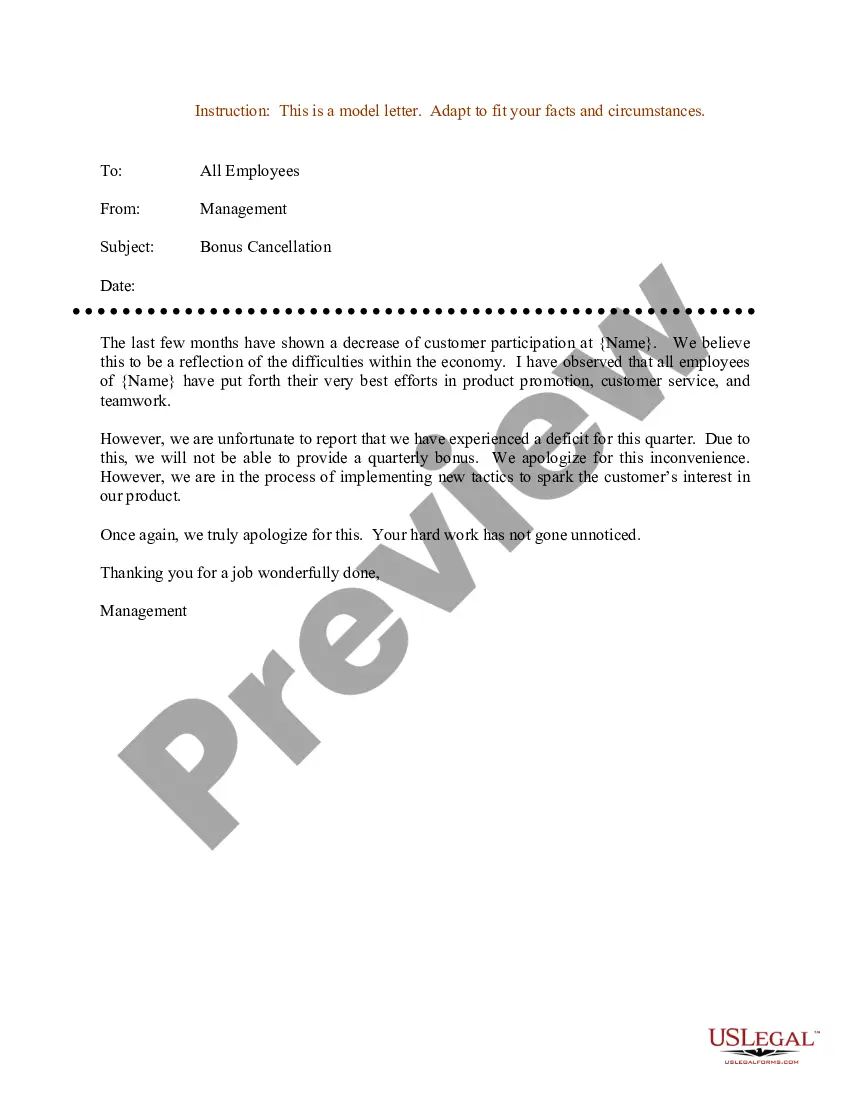
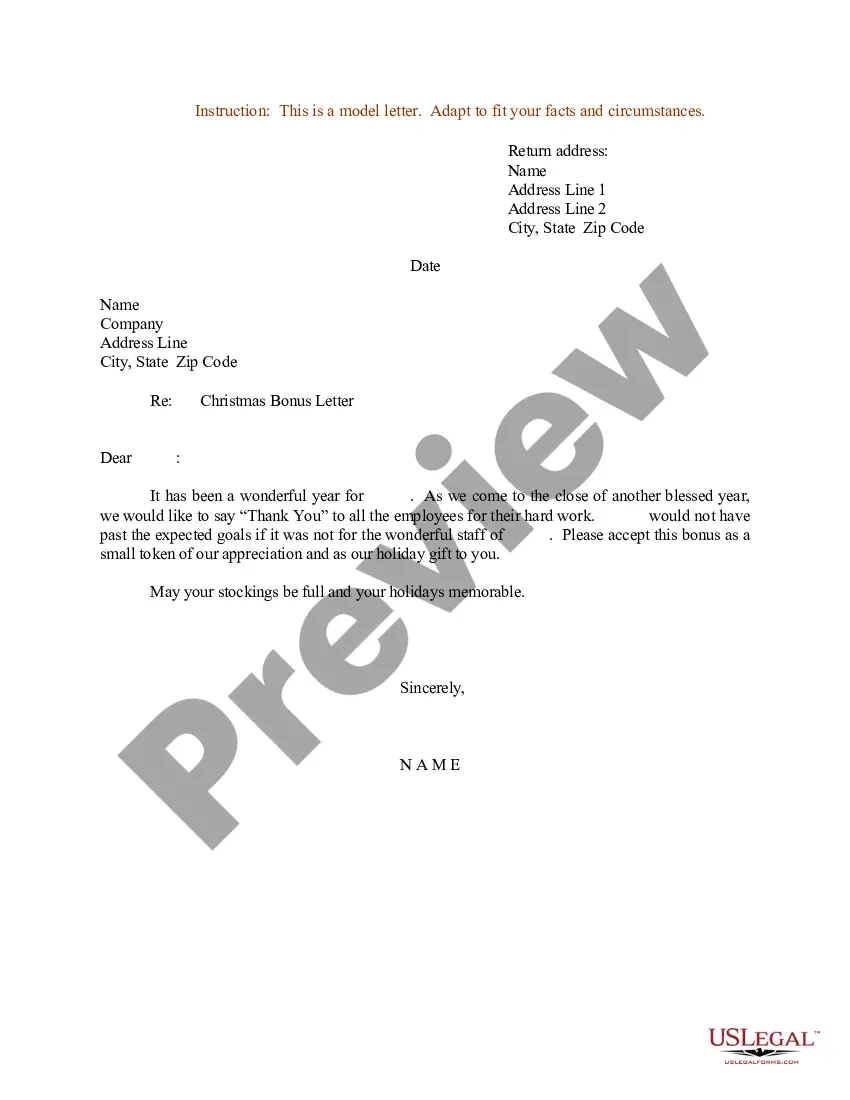
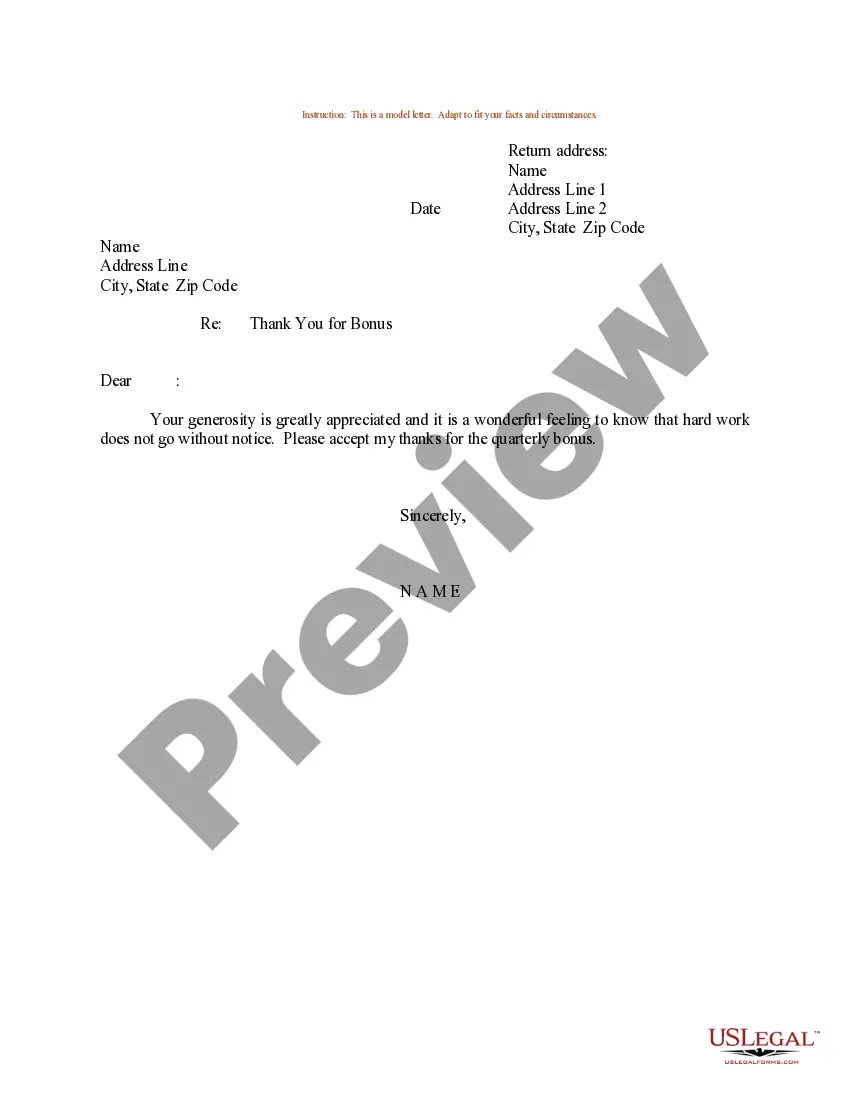
Get your form ready online
Our built-in tools help you complete, sign, share, and store your documents in one place.
Make edits, fill in missing information, and update formatting in US Legal Forms—just like you would in MS Word.
Download a copy, print it, send it by email, or mail it via USPS—whatever works best for your next step.
Sign and collect signatures with our SignNow integration. Send to multiple recipients, set reminders, and more. Go Premium to unlock E-Sign.
If this form requires notarization, complete it online through a secure video call—no need to meet a notary in person or wait for an appointment.
We protect your documents and personal data by following strict security and privacy standards.

Make edits, fill in missing information, and update formatting in US Legal Forms—just like you would in MS Word.

Download a copy, print it, send it by email, or mail it via USPS—whatever works best for your next step.

Sign and collect signatures with our SignNow integration. Send to multiple recipients, set reminders, and more. Go Premium to unlock E-Sign.

If this form requires notarization, complete it online through a secure video call—no need to meet a notary in person or wait for an appointment.

We protect your documents and personal data by following strict security and privacy standards.
Looking for another form?





Form popularity
FAQ
Here are some tips on what to cover. Highlight the main topic and guests. If you are interviewing a guest (or multiple guests), you should mention it in your podcast summary. Include teasers. Do your keyword research. Give them a reason. Think about your audience. Include a compelling CTA. Don't waste space. Use AI tools.
How to write a podcast summary step by step Listen to the podcast episode critically. Assuming you weren't in the podcast yourself, start by listening to the episode. Identify your most important point. Add the rest of the summary in 1 - 3 sentences. Mention guests. Edit for clarity and brevity.
You should keep your podcast description between 600 and 900 characters, or 120-170 words. Some hosting services allow 4,000 character-long show descriptions, but that's much too long for an effective podcast description. Your podcast description should act as a quick pitch -- an elevator speech.
What is the best structure for a podcast? Intro: Something interesting to hook your audience. First segment. Segue (music or ads) Second segment. Segue (music or ads) Episode summary. Call to action: Encourage your audience to rate, review, and subscribe. Cliffhanger: Motivate your audience to listen to the next episode.
A podcast summary is a short description (usually 1-2 paragraphs) that defines the topics discussed throughout the episode. It's a concise version of the entire podcast written in an engaging and compelling tone without revealing the whole thing.
Here's a guide to putting together a watertight webinar outline with a step-by-step walkthrough: Step 1: Choose a topic. Step 2: Identify Key Topics. Step 3: Do Your Research. Step 4: Introduction. Step 5: Mention the 'why' ... Step 6: Subtopics. Step 7: Audience involvement. Step 8: Summary & recap.
5 tips when writing your podcast summary Use bullet points. Readers should be able to see exactly what your podcast will be including at a glance, so bullet point the different topics you discuss in your episode. Be engaging. Mention your guests. Optimize for keywords. Include a clear Call To Action.
“The idea is that you're going to tell one story over the course of a season… and it's going to have a beginning, middle, and end.” Similarly, your bio should tell a clear, concise story of who you are, what you do, and what listeners can expect from your podcast.
