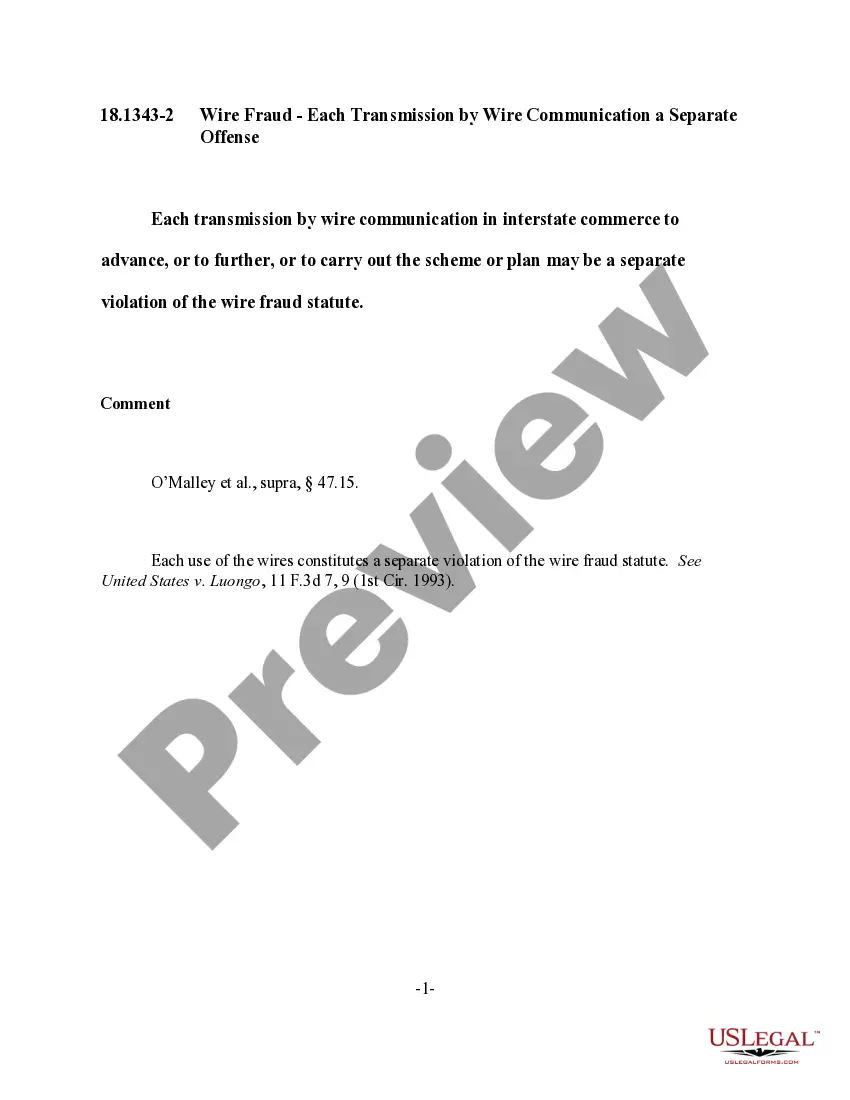
Wire Fraud - Each Transmission by Wire Communication a Separate Offense
Overview of this form
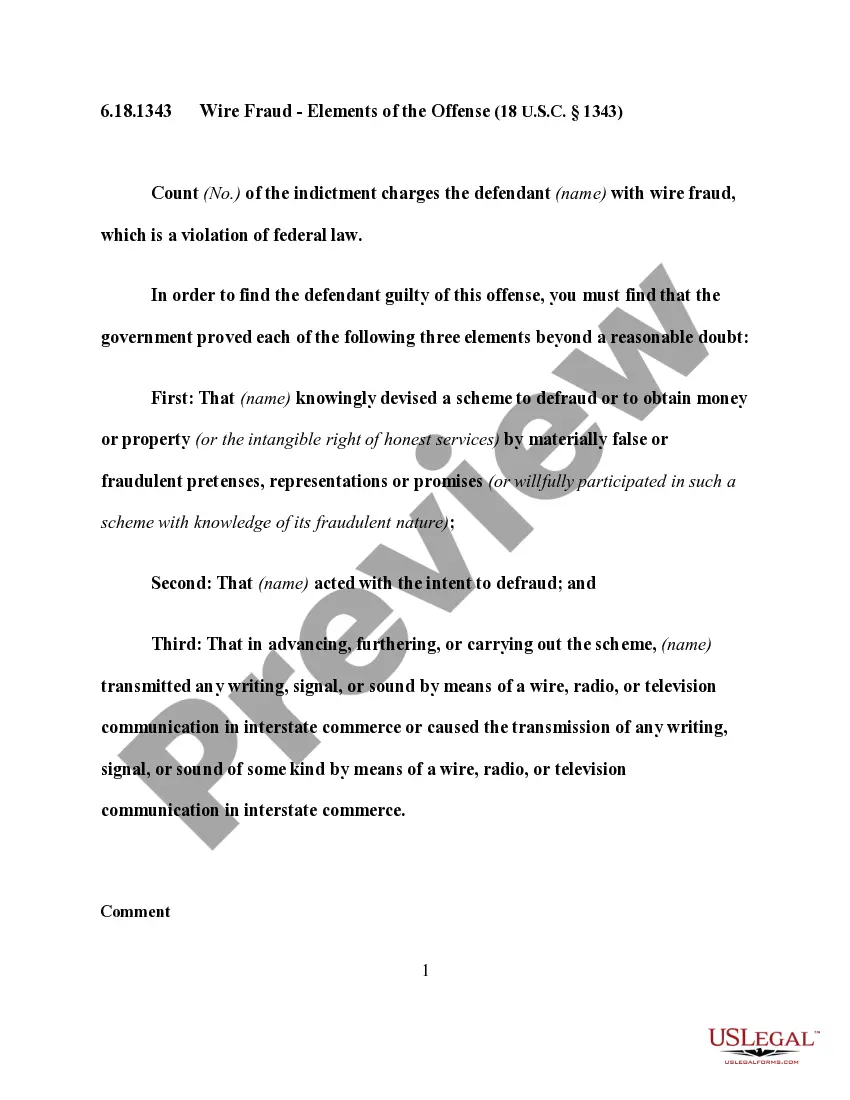
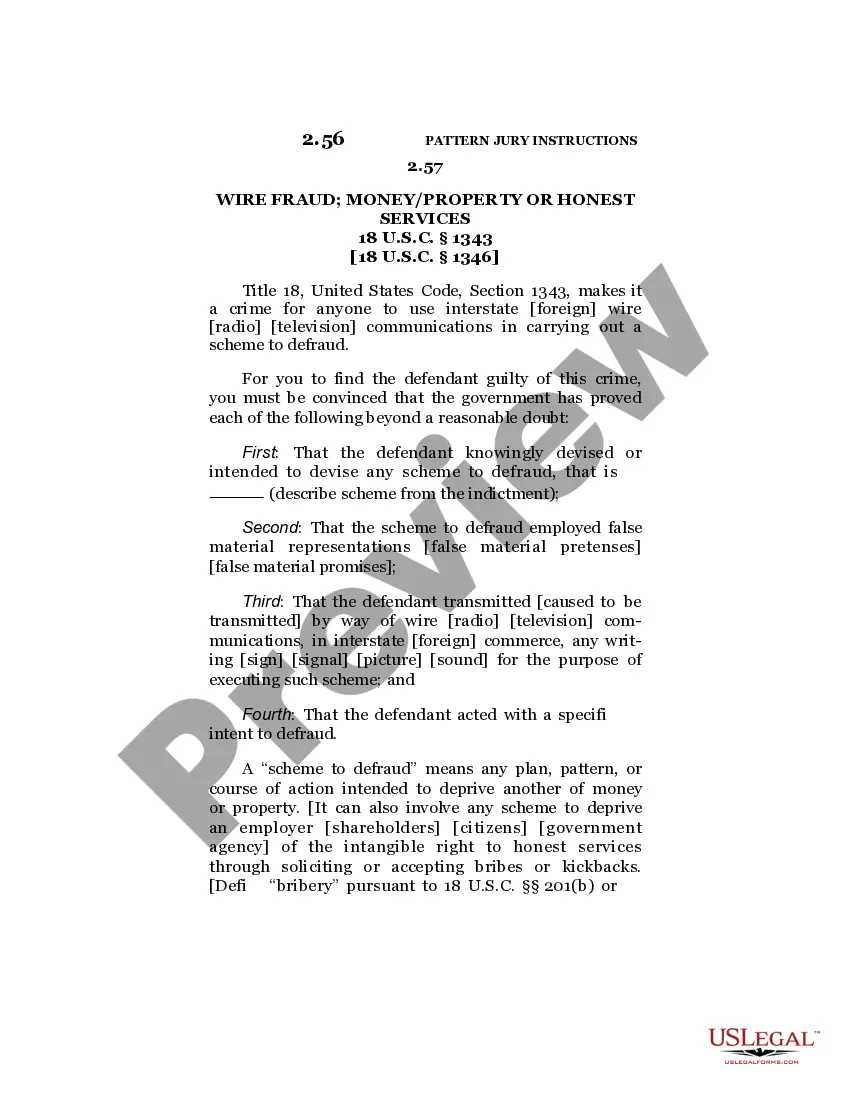
The Wire Fraud - Each Transmission by Wire Communication a Separate Offense form is a legal document used to outline the specifics of wire fraud offenses. This form serves to clarify how each transmission made over wire communication in interstate commerce can be regarded as a separate violation of wire fraud laws. Unlike other fraud forms, it emphasizes the repeated nature of the offense, making it essential for cases involving multiple wire transmissions.
Key parts of this document
- Definition of wire fraud: A clear explanation of what constitutes wire fraud under the law.
- Separate offenses: Each wire transmission is treated as an independent violation, crucial for understanding the implications of multiple actions.
- Legal citations: References to case law that supports the interpretation of each transmission as a separate crime.
Common use cases
This form should be used in any legal case involving allegations of wire fraud where multiple wire communications have been made. It is particularly useful when establishing the frequency of offenses, such as in financial scams conducted over email or phone communication, or when different transmissions are invoked in prosecuting a fraud scheme.
Who can use this document
Eligibility for using this form includes:
- Attorneys representing clients involved in wire fraud cases.
- Individuals facing allegations of wire fraud who need to understand the legal ramifications of their case.
- Law enforcement officials working to build cases around wire fraud activities.
How to complete this form
- Identify the parties involved: Clearly list the individuals or entities alleged to have participated in the wire fraud.
- Describe the wire communications: Provide detailed descriptions of each transmission made as part of the alleged fraud.
- Specify dates and times: Include when each transmission occurred to establish a timeline for the offenses.
- Reference applicable laws: Cite relevant statutes and case law that support the allegations of wire fraud.
Does this document require notarization?
Notarization is generally not required for this form. However, certain states or situations might demand it. You can complete notarization online through US Legal Forms, powered by Notarize, using a verified video call available anytime.
Get your form ready online
Our built-in tools help you complete, sign, share, and store your documents in one place.
Make edits, fill in missing information, and update formatting in US Legal Forms—just like you would in MS Word.
Download a copy, print it, send it by email, or mail it via USPS—whatever works best for your next step.
Sign and collect signatures with our SignNow integration. Send to multiple recipients, set reminders, and more. Go Premium to unlock E-Sign.
If this form requires notarization, complete it online through a secure video call—no need to meet a notary in person or wait for an appointment.
We protect your documents and personal data by following strict security and privacy standards.

Make edits, fill in missing information, and update formatting in US Legal Forms—just like you would in MS Word.

Download a copy, print it, send it by email, or mail it via USPS—whatever works best for your next step.

Sign and collect signatures with our SignNow integration. Send to multiple recipients, set reminders, and more. Go Premium to unlock E-Sign.

If this form requires notarization, complete it online through a secure video call—no need to meet a notary in person or wait for an appointment.

We protect your documents and personal data by following strict security and privacy standards.
Avoid these common issues
- Failing to identify all relevant wire communications, which can weaken the case.
- Not providing enough detail about each communication, leading to ambiguity in the charges.
- Overlooking legal precedents that strengthen the argument for separate offenses.
Benefits of using this form online
- Convenience: Easily download the form for immediate use without lengthy consultations.
- Editability: Customize the form as needed to meet specific case requirements.
- Reliability: Access forms that have been drafted by licensed attorneys, ensuring legal accuracy.
Legal use & context
- The form adheres to federal wire fraud statutes, making it valid for use in legal proceedings.
- It is essential for establishing the nature of the offenses in wire fraud cases.
- Parties using this form should be aware of both federal and state implications of wire fraud laws.
What to keep in mind
- Each wire transmission can be a separate offense under the federal wire fraud statute.
- Accurate completion of the form is critical for legal proceedings involving multiple actions.
- The form is applicable in various jurisdictions, although local laws should be reviewed.
Looking for another form?
Form popularity
FAQ
Under federal law, the crime of Wire Fraud is a Class C felony, punishable by up to twenty years in prison, three years of supervised release, and $250,000 in fines.
Common forms of wire fraud include telemarketing schemes and online phishing scams. Phishing refers to the fraudulent use of emails with the intent to obtain the email recipient's personal information, such as their bank account numbers or identity information like their Social Security number.
Wire fraud is a criminal offense under federal law. It involves any scheme to defraud another person that uses electronic communications, either across state lines or internationally.
For that reason, federal rather than state authorities bring charges for wire fraud in most cases. A sentence may be as low as a few months probation. Aggravating factors, on the other hand, can push that sentence to more than 30 years.
Individuals who commit wire fraud face a maximum of twenty years in prison and a $250,000 fine. The maximum penalties in cases involving financial institutions are 30 years in prison and a $1 million fine.
Under the United States Sentencing Commission, Guidelines Manual, §2B1, a person convicted of Wire Fraud would be assigned a base offense level between 6-36, which carries a guideline range of probation up to 33 months in prison before taking into account any mitigating or aggravating circumstances.
3d 1006 (1st Cir. 1993) (to prove wire fraud government must show (1) scheme to defraud by means of false pretenses, (2) defendant's knowing and willful participation in scheme with intent to defraud, and (3) use of interstate wire communications in furtherance of scheme); United States v.