Sample Bonus Template For Giving In Philadelphia
Description
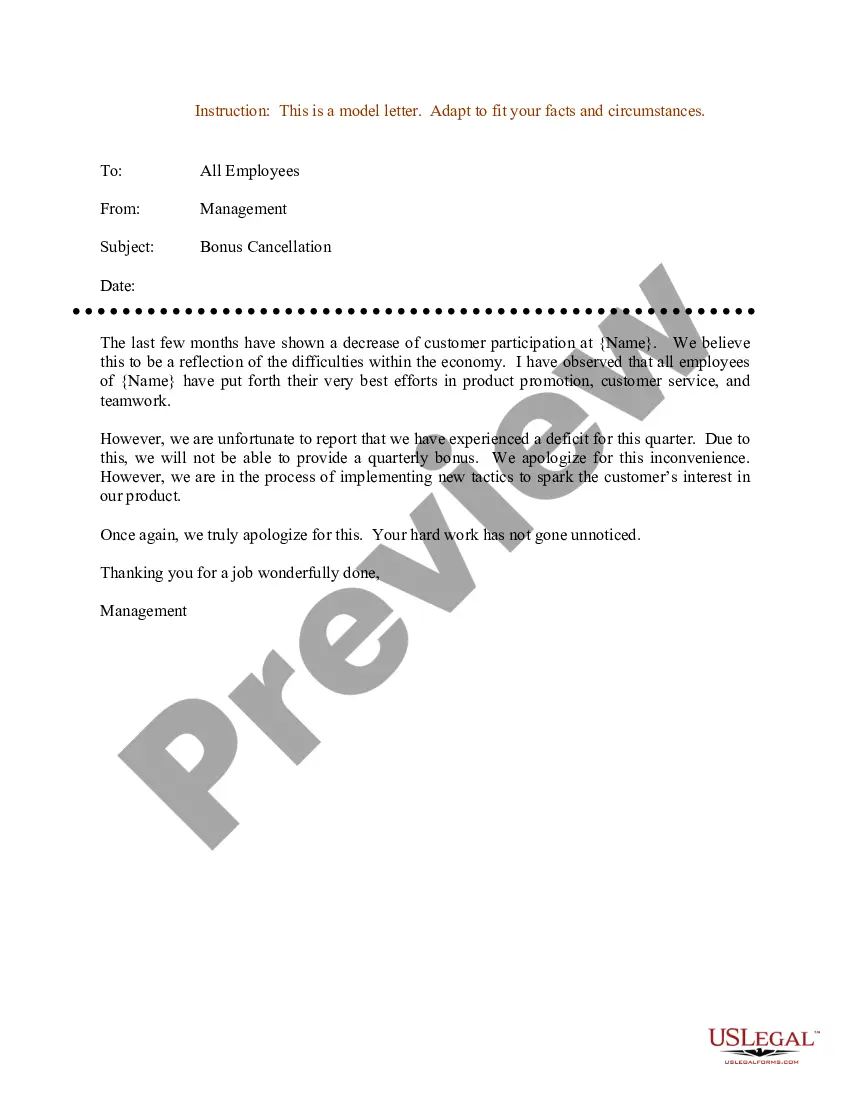
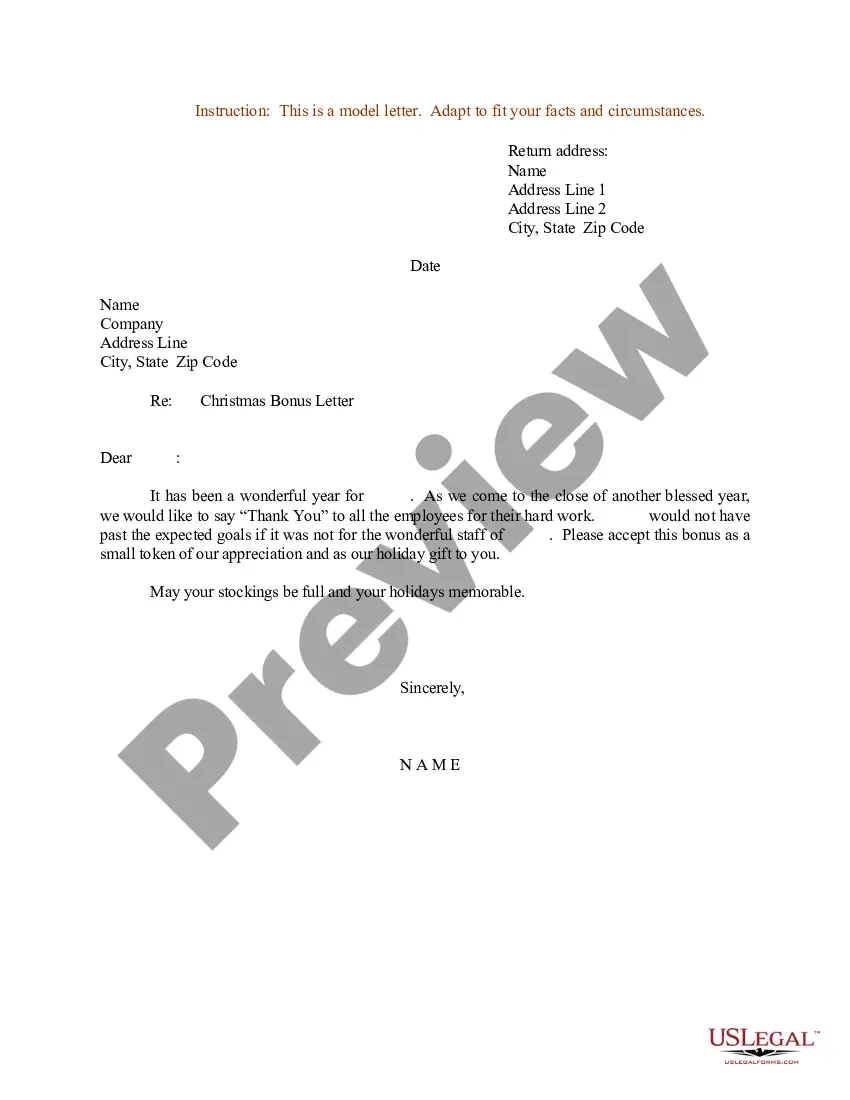
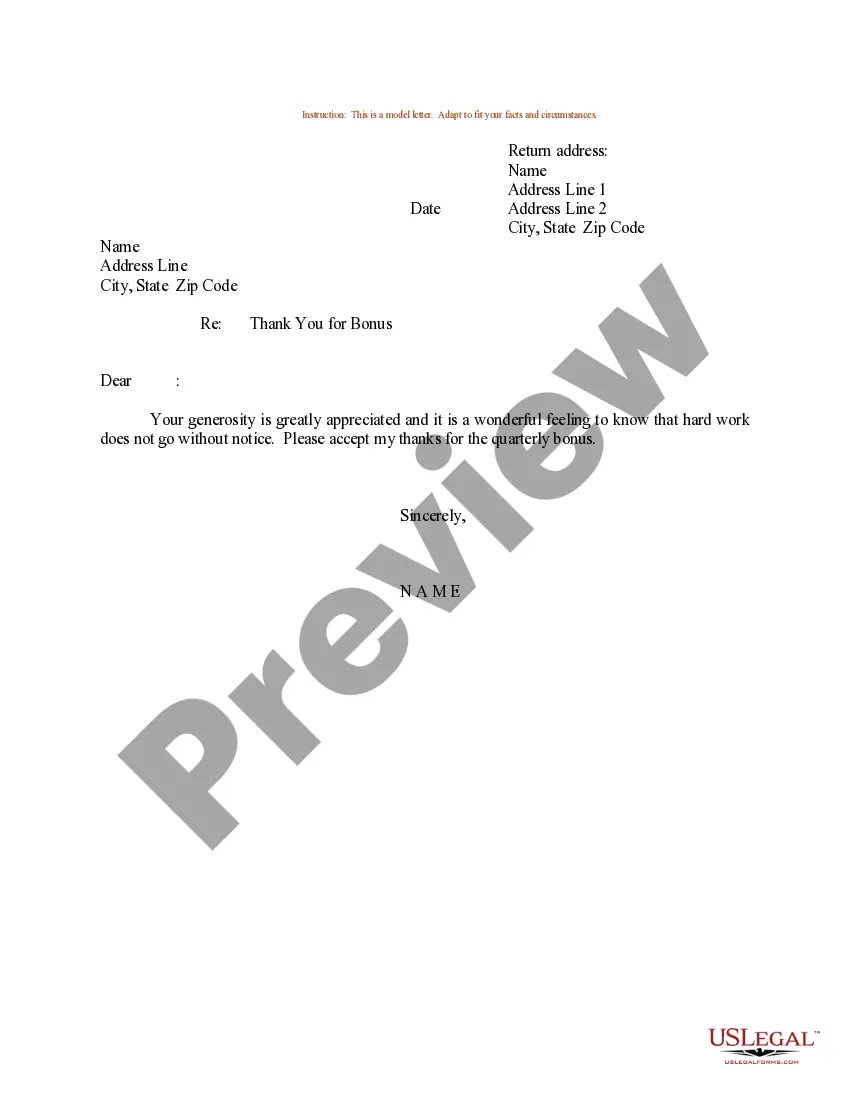
Get your form ready online
Our built-in tools help you complete, sign, share, and store your documents in one place.
Make edits, fill in missing information, and update formatting in US Legal Forms—just like you would in MS Word.
Download a copy, print it, send it by email, or mail it via USPS—whatever works best for your next step.
Sign and collect signatures with our SignNow integration. Send to multiple recipients, set reminders, and more. Go Premium to unlock E-Sign.
If this form requires notarization, complete it online through a secure video call—no need to meet a notary in person or wait for an appointment.
We protect your documents and personal data by following strict security and privacy standards.

Make edits, fill in missing information, and update formatting in US Legal Forms—just like you would in MS Word.

Download a copy, print it, send it by email, or mail it via USPS—whatever works best for your next step.

Sign and collect signatures with our SignNow integration. Send to multiple recipients, set reminders, and more. Go Premium to unlock E-Sign.

If this form requires notarization, complete it online through a secure video call—no need to meet a notary in person or wait for an appointment.

We protect your documents and personal data by following strict security and privacy standards.
Looking for another form?





Form popularity
FAQ
A typical bonus percentage ranges from 1% to 15% of a team member's salary. Nearly half of American workers had access to a nonproduction bonus (i.e., a bonus that isn't scaled via a productivity formula) in 2024.
Dear employee name, Thank you for all the hard work you've put in during this year. As always, your dedication and work ethic has not gone unnoticed. We would like to reward you with a bonus of amount to show our gratitude and appreciation during this festive period.
What Should a Bonus Letter Include? Personalized Greeting. Use the employee's name and a friendly introduction. Recognition of Contributions. Highlight the employee's achievements over the past year. Bonus Formula and Attainment. Clearly explain how the bonus was calculated. Bonus Amount. Thank You and Encouragement.
I usually say something like "I wanted to take a moment to express my sincere gratitude for the bonus. I truly appreciate the recognition of my contributions and the support you've provided.
An employee bonus structure is a vital element in the ecosystem of a thriving workplace. Essentially, it serves as a strategic framework that employers can use to reward their workforce for meeting specific goals, excelling in their roles, or contributing towards overall organizational success.
Consider saying ``Thank you for the bonus. I am so appreciative of it. I will continue giving my best every day''. Adding that second and third line makes all the difference.
What's considered “typical” or “good” for a bonus amount really depends on the type of bonus you're receiving. An annual bonus of 5-10% of your yearly salary is standard in a lot of industries, just as a 5-10% annual raise is considered standard.
A great bonus would be about 10-15% of your annual salary. But most people receive offers closer to 5% of their annual salary.
A typical bonus payout structure is 3% to 5% of annual salary for clerical and support staff. Managers might receive payments in the low double-digit percentage range, and executives in the mid-double-digit range. Senior executives at the highest levels may receive the bulk of their compensation via bonus payments.
Key Components of a Bonus Letter Header and Date. Company Letterhead: Includes the company's name, logo, and contact information. Employee Information. Recipient's Name: The name of the employee receiving the bonus. Bonus Details. Payment Details. Terms and Conditions. Acknowledgment. Closing.

