Sample Bonus Plans For Managers In New York
Description
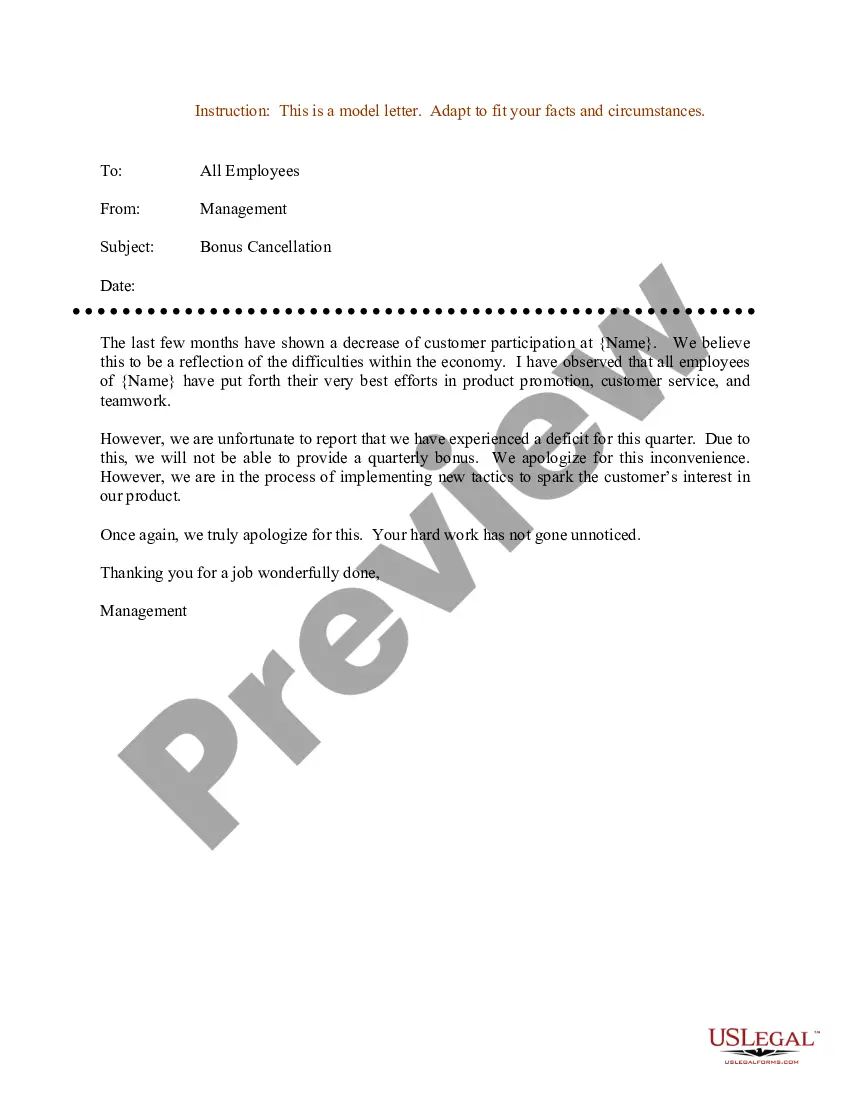
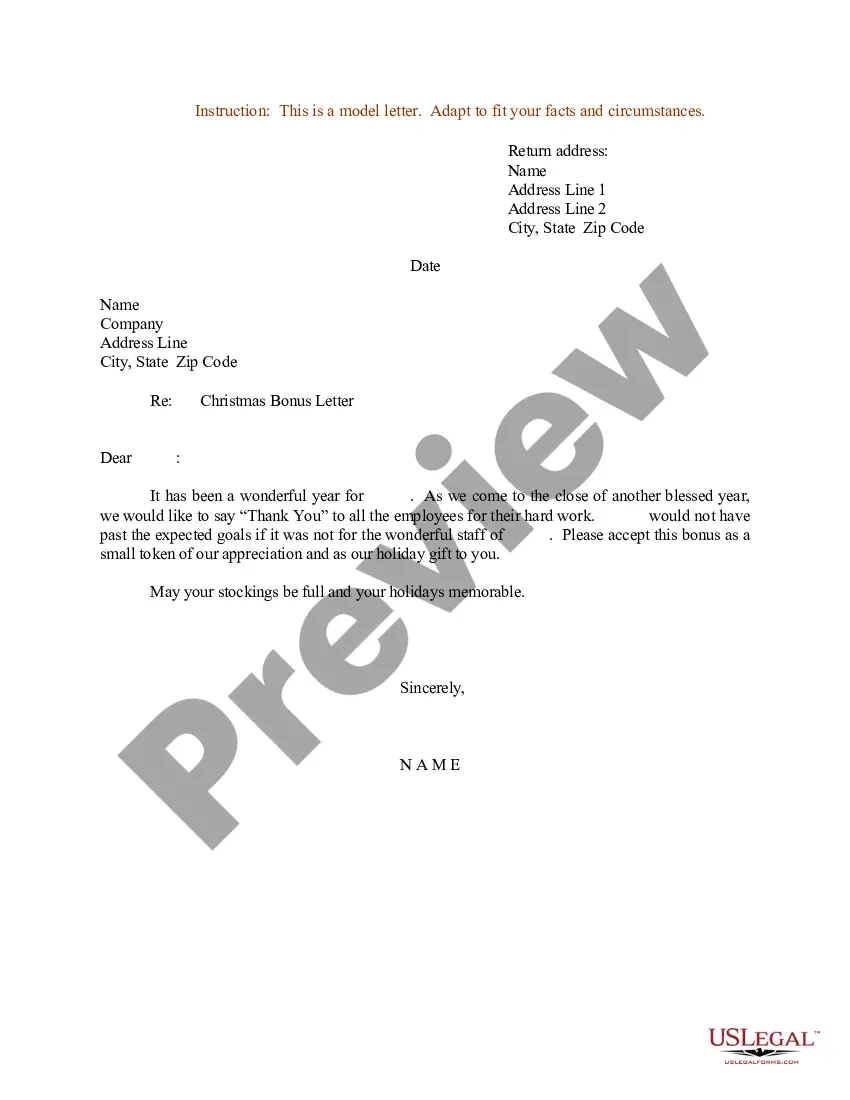
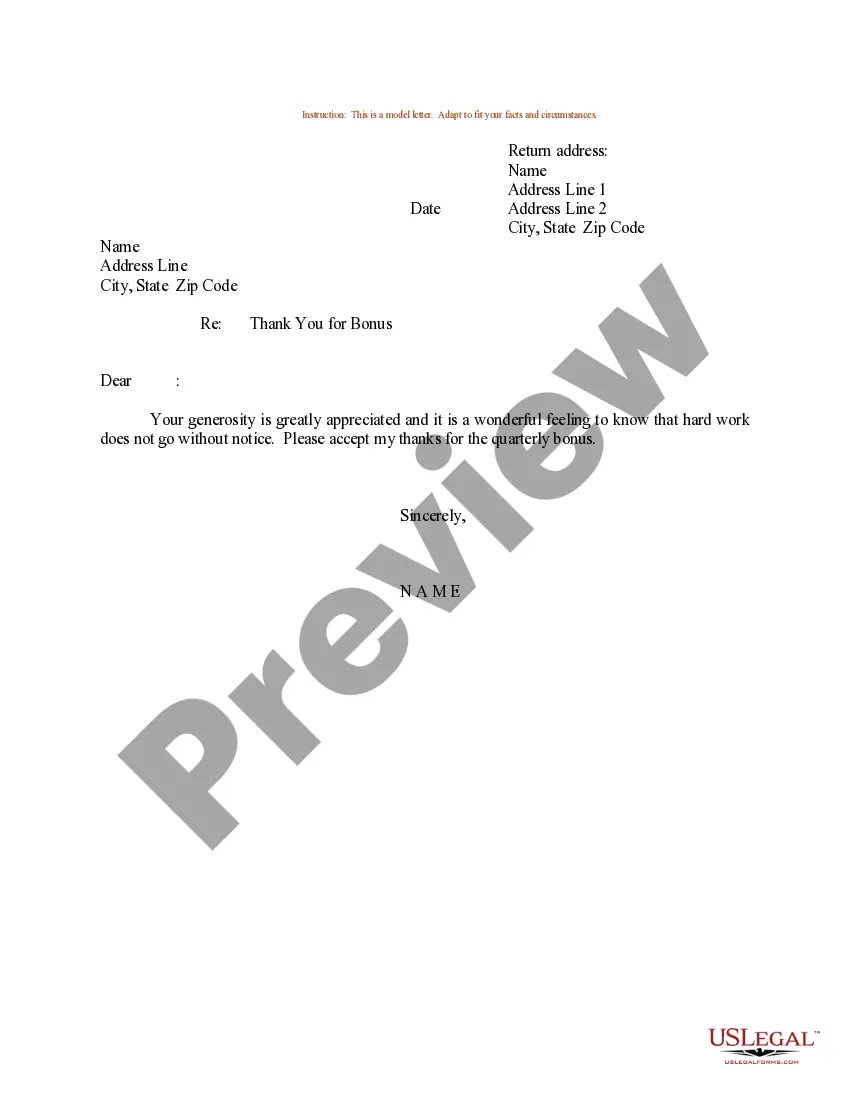
Get your form ready online
Our built-in tools help you complete, sign, share, and store your documents in one place.
Make edits, fill in missing information, and update formatting in US Legal Forms—just like you would in MS Word.
Download a copy, print it, send it by email, or mail it via USPS—whatever works best for your next step.
Sign and collect signatures with our SignNow integration. Send to multiple recipients, set reminders, and more. Go Premium to unlock E-Sign.
If this form requires notarization, complete it online through a secure video call—no need to meet a notary in person or wait for an appointment.
We protect your documents and personal data by following strict security and privacy standards.

Make edits, fill in missing information, and update formatting in US Legal Forms—just like you would in MS Word.

Download a copy, print it, send it by email, or mail it via USPS—whatever works best for your next step.

Sign and collect signatures with our SignNow integration. Send to multiple recipients, set reminders, and more. Go Premium to unlock E-Sign.

If this form requires notarization, complete it online through a secure video call—no need to meet a notary in person or wait for an appointment.

We protect your documents and personal data by following strict security and privacy standards.
Looking for another form?








Form popularity
FAQ
Some businesses might base their bonus structure on the overall performance of the company, giving managers a percentage of the profit. Others may take a more individual approach, looking at each manager's performance and contribution to the business, perhaps in cutting costs or in increasing business.
An employee bonus policy provides guidelines on how a company rewards its employees with additional financial incentives. It details eligibility, types of bonuses, and the procedures for granting them, ensuring fairness and transparency.
The typical bonus amount can range from 1% to 15% of an employee's salary, usually depending on a number of factors such as industry, company performance, and individual or team accomplishments. The average bonus for employees continues to rise over time. In 2020, the average employee bonus was only 8.1%.
A management bonus clause outlines the conditions under which a company's managers are eligible to receive additional compensation beyond their regular salary. It typically specifies performance metrics, financial targets, or other criteria that must be met for the bonus to be awarded.
Industry: More traditional sectors like banking or finance may offer higher percentages, ranging from 10% to 30% of your base salary. In tech and startups, it can be lower, around 5% to 15%. Position: Executive-level roles usually have higher percentages, while mid-level managers may receive 10% to 20%.
Once you have both performance percentage and salary percentage for each individual, you can multiply them together by an individual. Add up all individuals to get a total ratio. Divide each individual's share by the full rate, and that's the portion of the bonus pool that an individual receives.
One of the most common types of bonus is an annual bonus, which employers give out once a year. Annual bonuses are usually based on your overall performance, although companies who use profit-sharing rewards may distribute bonuses based on company success and profits.
Role, level, and seniority Executives typically receive higher bonuses in line with their performance (10–30% of their salary for an annual bonus). This higher compensation is designed to reflect their strategic decision-making and leadership roles.

