Sample Bonus Template For Executives In Los Angeles
Description
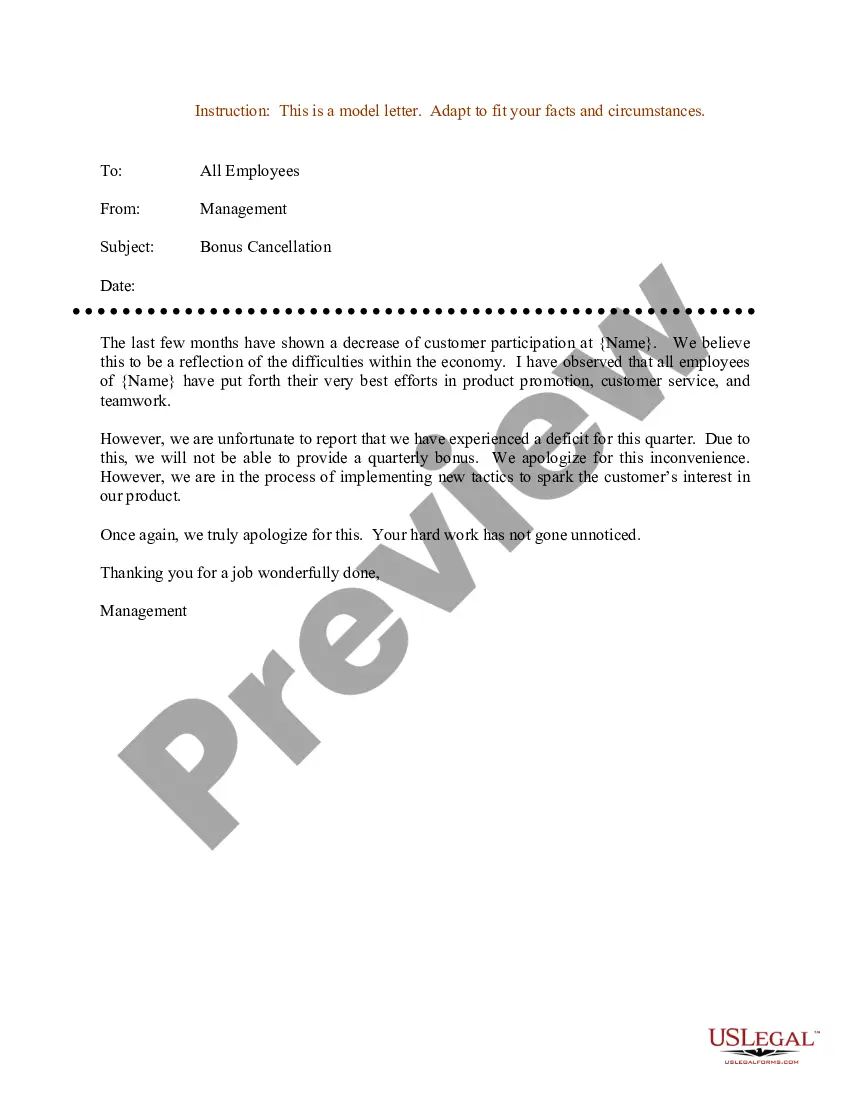
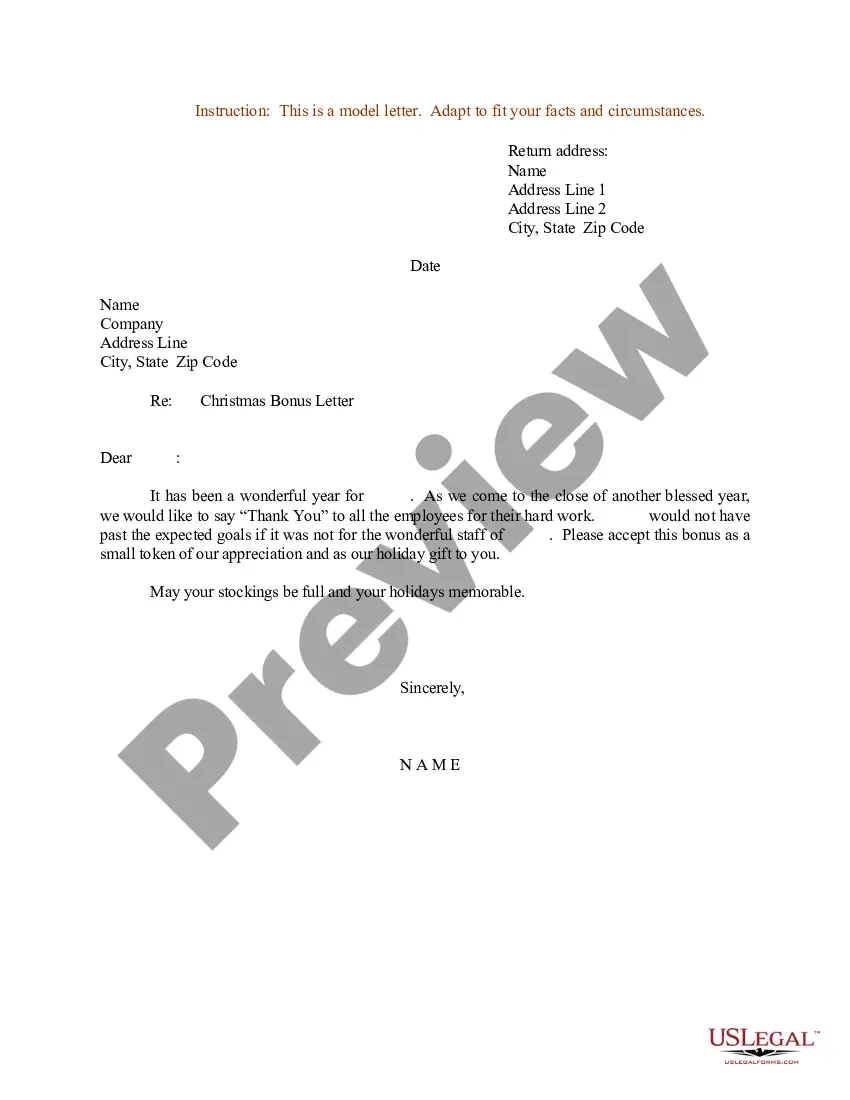
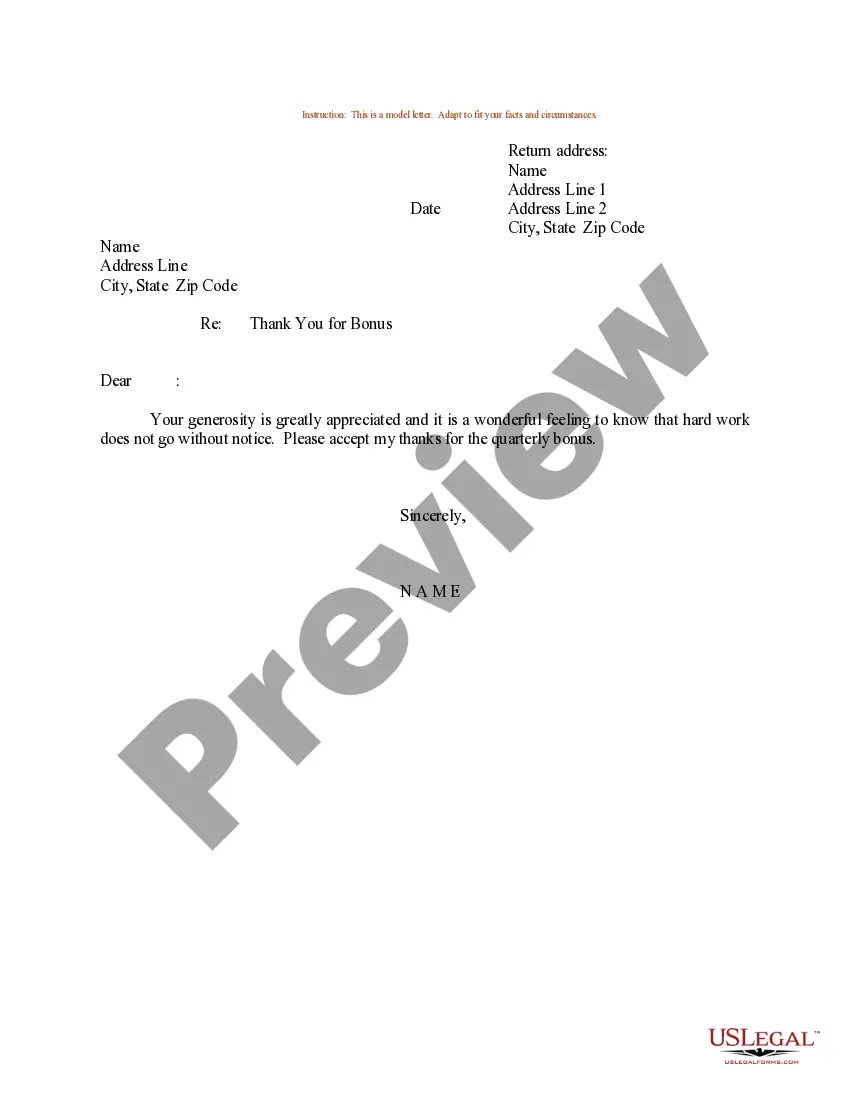
Get your form ready online
Our built-in tools help you complete, sign, share, and store your documents in one place.
Make edits, fill in missing information, and update formatting in US Legal Forms—just like you would in MS Word.
Download a copy, print it, send it by email, or mail it via USPS—whatever works best for your next step.
Sign and collect signatures with our SignNow integration. Send to multiple recipients, set reminders, and more. Go Premium to unlock E-Sign.
If this form requires notarization, complete it online through a secure video call—no need to meet a notary in person or wait for an appointment.
We protect your documents and personal data by following strict security and privacy standards.

Make edits, fill in missing information, and update formatting in US Legal Forms—just like you would in MS Word.

Download a copy, print it, send it by email, or mail it via USPS—whatever works best for your next step.

Sign and collect signatures with our SignNow integration. Send to multiple recipients, set reminders, and more. Go Premium to unlock E-Sign.

If this form requires notarization, complete it online through a secure video call—no need to meet a notary in person or wait for an appointment.

We protect your documents and personal data by following strict security and privacy standards.
Looking for another form?









Form popularity
FAQ
Organizations may grant goal-based bonuses on a regular basis, such as bi-annually or annually, and use them to incentivize employees to perform well and hit their goals. Example: Employees may receive a goal-based bonus after completing a project or reaching their quota within a set timeline, such as a quarter.
It is compensation that is provided outside of his or her typical salary or hourly wage. For example, you might offer an employee an annual salary of $60,000 per year with a $3,000 signing bonus. Your employees will receive the $3,000 after accepting the job.
Common types of bonuses include profit-sharing, spot bonuses, sign-on bonuses, milestone bonuses, annual bonuses, retention bonuses, referral bonuses, holiday bonuses and stock options.
Bonus Amount: State the exact amount of the bonus being awarded. For instance, “You will receive a performance bonus of $5,000.” Rationale for Award: Provide a brief explanation of why the bonus is being awarded. This could include a summary of the employee's achievements and their impact on the organization.
I would like to request you to kindly consider my application for a joining bonus. I am flexible and open to negotiate the terms and conditions, and I am willing to discuss this further with you during our next meeting. Thank you for your time and consideration.
Subject: Bonus Award Notification Dear Employee's Name, We are pleased to inform you that you have been awarded a bonus in recognition of your exceptional performance over the past period. This bonus is a testament to your dedication, hard work, and significant contributions to our team.
You may get a bonus one year but nothing the next, so be sure you understand how your employer selects people to receive a year-end bonus. Executives receive higher bonuses that can multiply based on performance, while most employees earn bonuses equal to 1% to 5% of their overall salary.
Start with “We are pleased to announce,” setting a positive tone. Detail the specifics of the bonus, ensuring clarity. Express gratitude for the hard work and dedication of the employees. At the end of the letter, encourage them to celebrate their achievements.
How to set up an employee benefits package Set goals. Determine your budget. Know your legal obligations. Choose a provider. Develop internal policy. Use benefits technology. Communicate with employees. Seek feedback.
If you're asking for a bonus for a specific project, provide facts and figures about the outcome of the project and how it exceeded the stakeholders' requirements. If you're asking for a bonus for more general reasons, offer details about why you deserve it.

