Example With Bonus In Illinois
Description
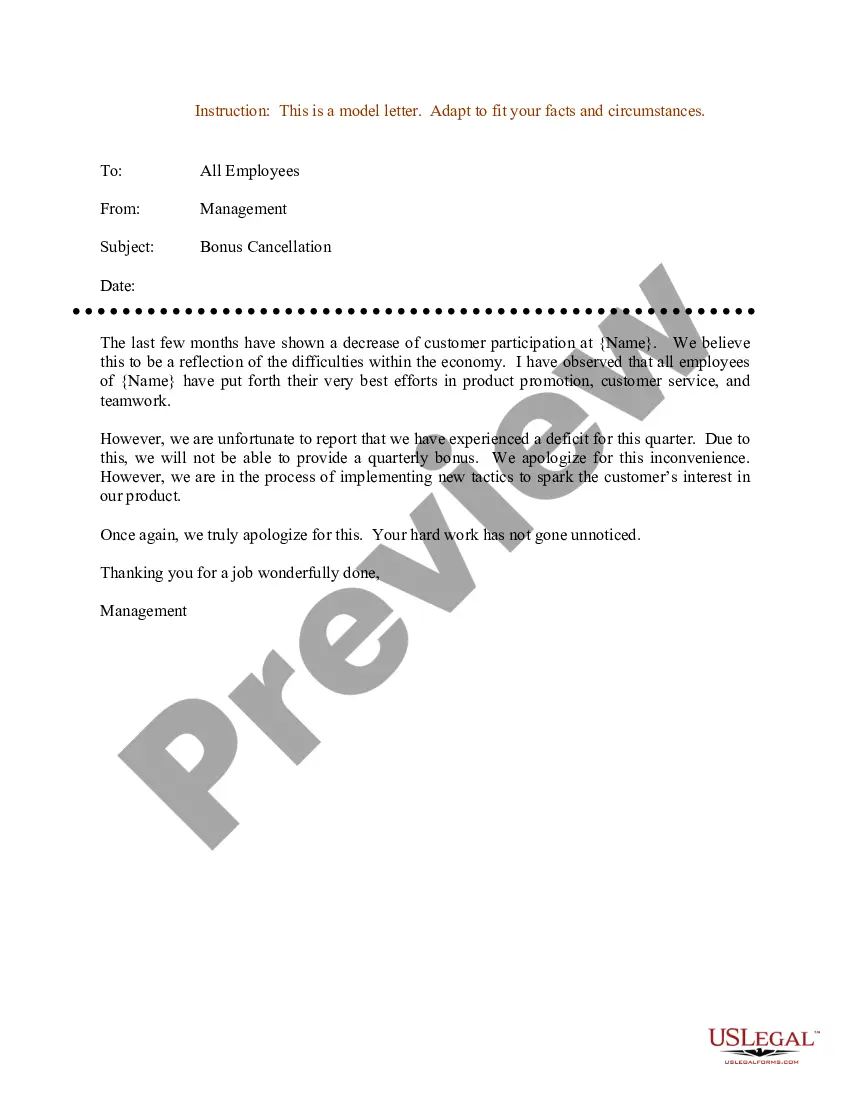
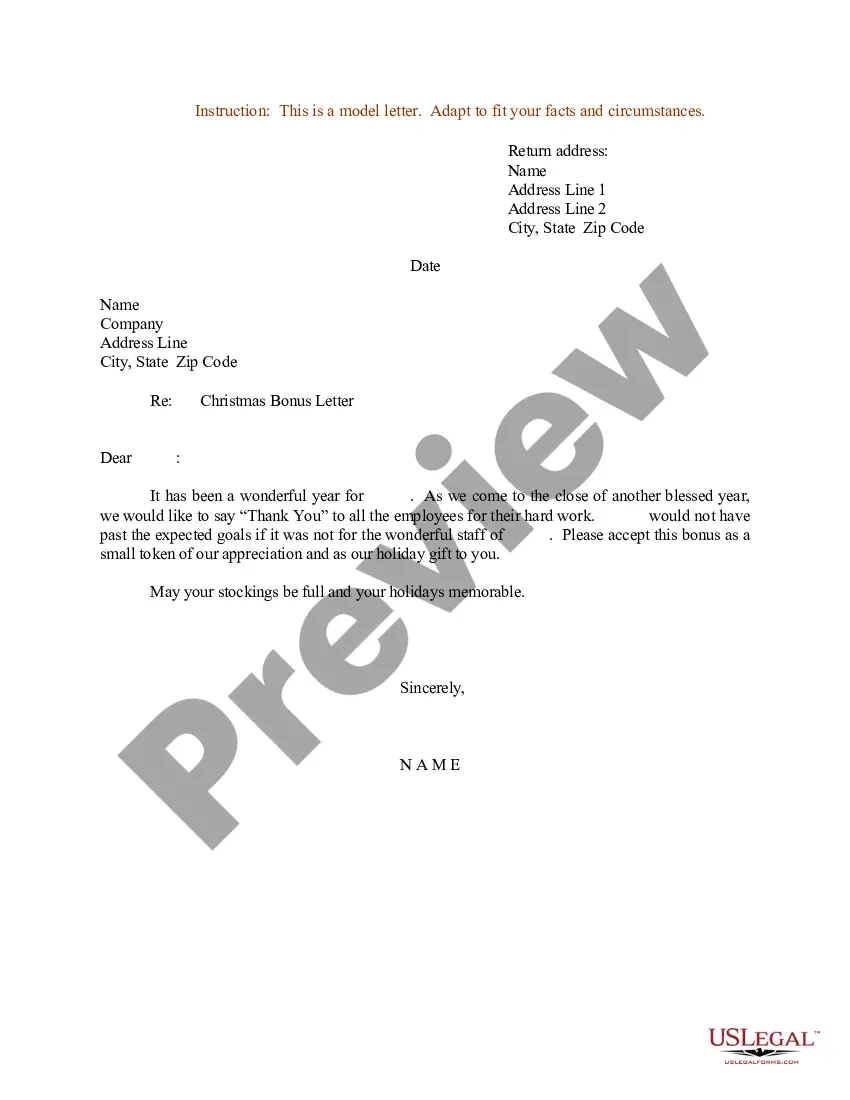
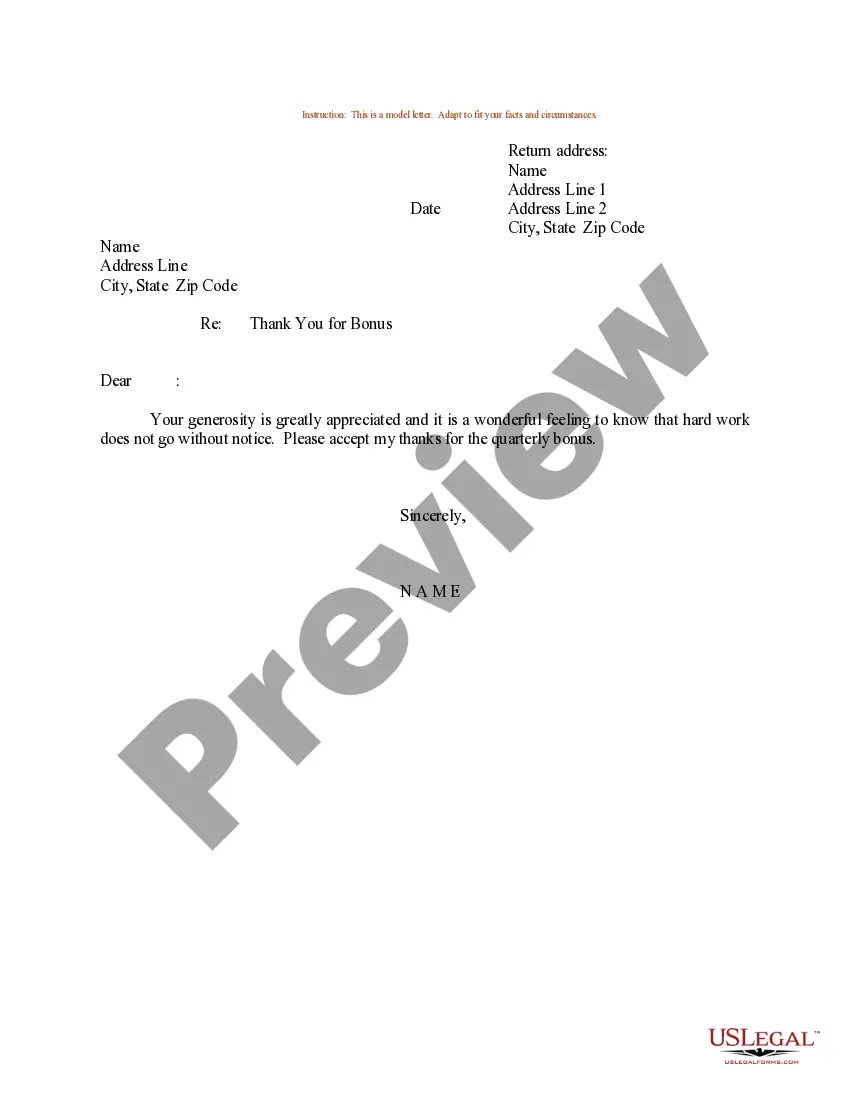
Get your form ready online
Our built-in tools help you complete, sign, share, and store your documents in one place.
Make edits, fill in missing information, and update formatting in US Legal Forms—just like you would in MS Word.
Download a copy, print it, send it by email, or mail it via USPS—whatever works best for your next step.
Sign and collect signatures with our SignNow integration. Send to multiple recipients, set reminders, and more. Go Premium to unlock E-Sign.
If this form requires notarization, complete it online through a secure video call—no need to meet a notary in person or wait for an appointment.
We protect your documents and personal data by following strict security and privacy standards.

Make edits, fill in missing information, and update formatting in US Legal Forms—just like you would in MS Word.

Download a copy, print it, send it by email, or mail it via USPS—whatever works best for your next step.

Sign and collect signatures with our SignNow integration. Send to multiple recipients, set reminders, and more. Go Premium to unlock E-Sign.

If this form requires notarization, complete it online through a secure video call—no need to meet a notary in person or wait for an appointment.

We protect your documents and personal data by following strict security and privacy standards.
Looking for another form?





Form popularity
FAQ
How to Calculate Bonuses for Employees. To calculate a bonus based on your employee's salary, just multiply the employee's salary by your bonus percentage. For example, a monthly salary of $3,000 with a 10% bonus would be $300.
Request a Non-Financial Bonus You may be able to reduce taxes on your bonus to zero by asking your employer to make it a non-financial bonus. Examples of non-financial bonuses could include the ability to work from home or work flexible hours.
The percentage method The withholding rate for supplemental wages is 22 percent. That rate will be applied to any supplemental wages like bonuses up to $1 million during the tax year. If your bonus totals more than $1 million, the withholding rate for any amount above $1 million increases to 37 percent.
Christmas Bonus or Gift? Christmas Bonus or Gift? Gifts that you receive are not taxable and you do not enter anything about a gift on a tax return. If the employer treats it as wages, they will include it in box 1 of your W-2 and you will simply enter the amount from box 1.
Your bonus will be taxed, but you can lower the amount of your taxable income by depositing some or all of it in a tax-deferred retirement account such as a 401(k) or IRA. However, this does not mean you will avoid paying taxes completely.
The federal bonus tax withholding rate is typically 22%. However, employers could instead combine a bonus with your regular wages as though it's one of your usual paychecks—with your usual tax amount withheld. There are ways to reduce the tax impact of your bonus.
Reporting your bonus on your tax return Your Form W-2, which you receive at the beginning of the tax year, will include your bonus as part of your wages. Box 1 of your Form W-2 will reflect your taxable income, including both regular wages and any supplemental wages like bonuses.
In 2024, federal tax on bonuses is 22% for up to $1 million in bonuses, with any amount above that taxed at 37%. Bonuses are reported as income on your tax return, either through Form W-2 or 1099-NEC, depending on your employment status.

