Sample Performance Bonus Policy In Dallas
Description
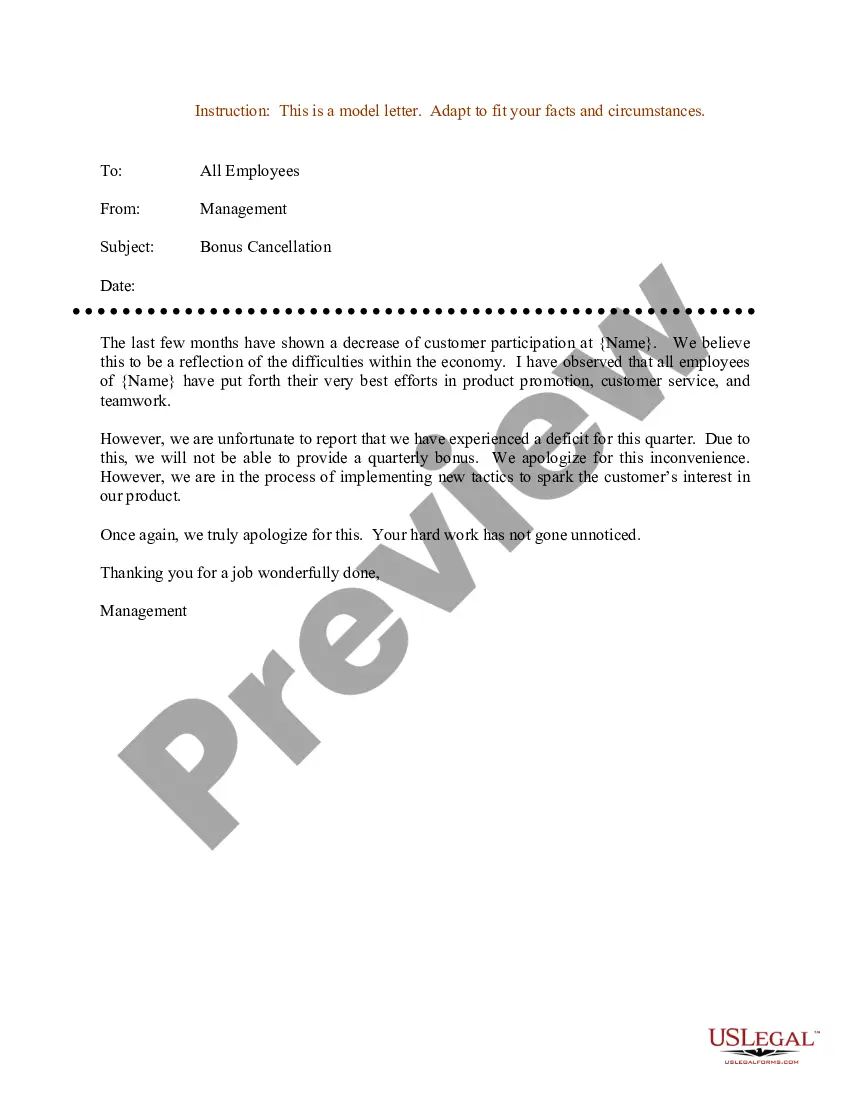
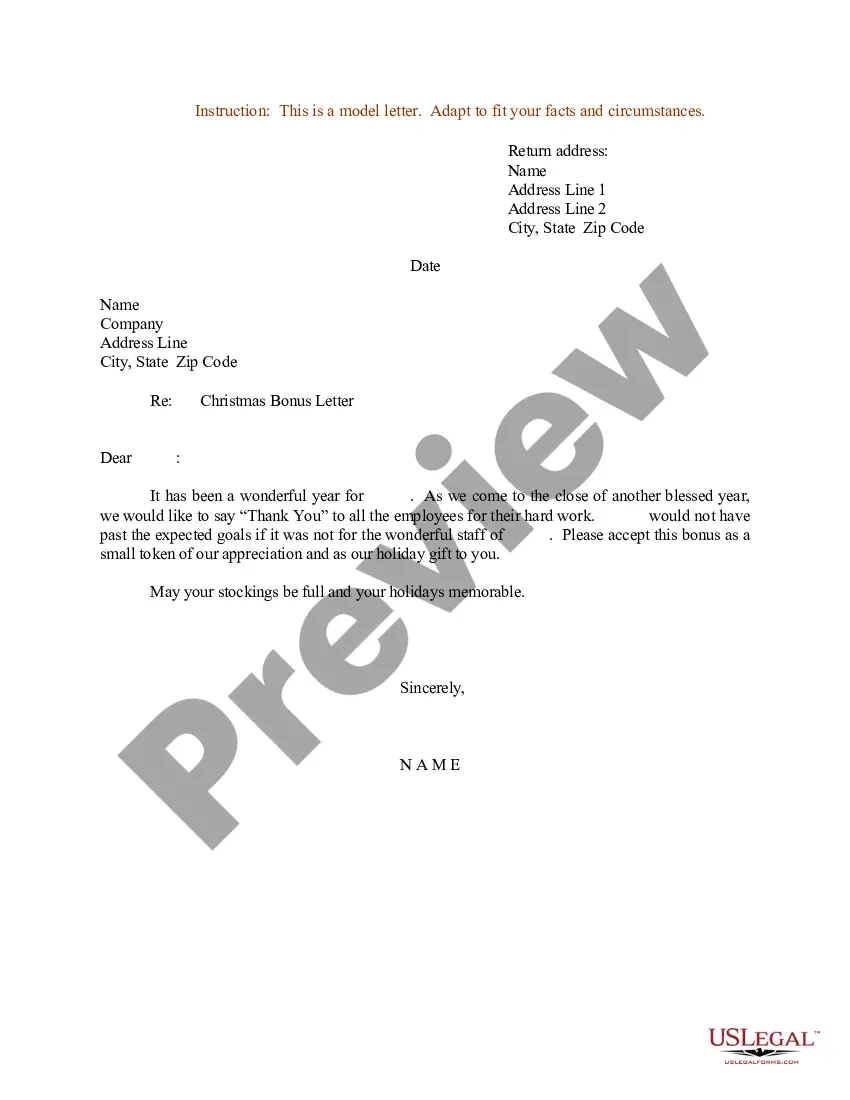
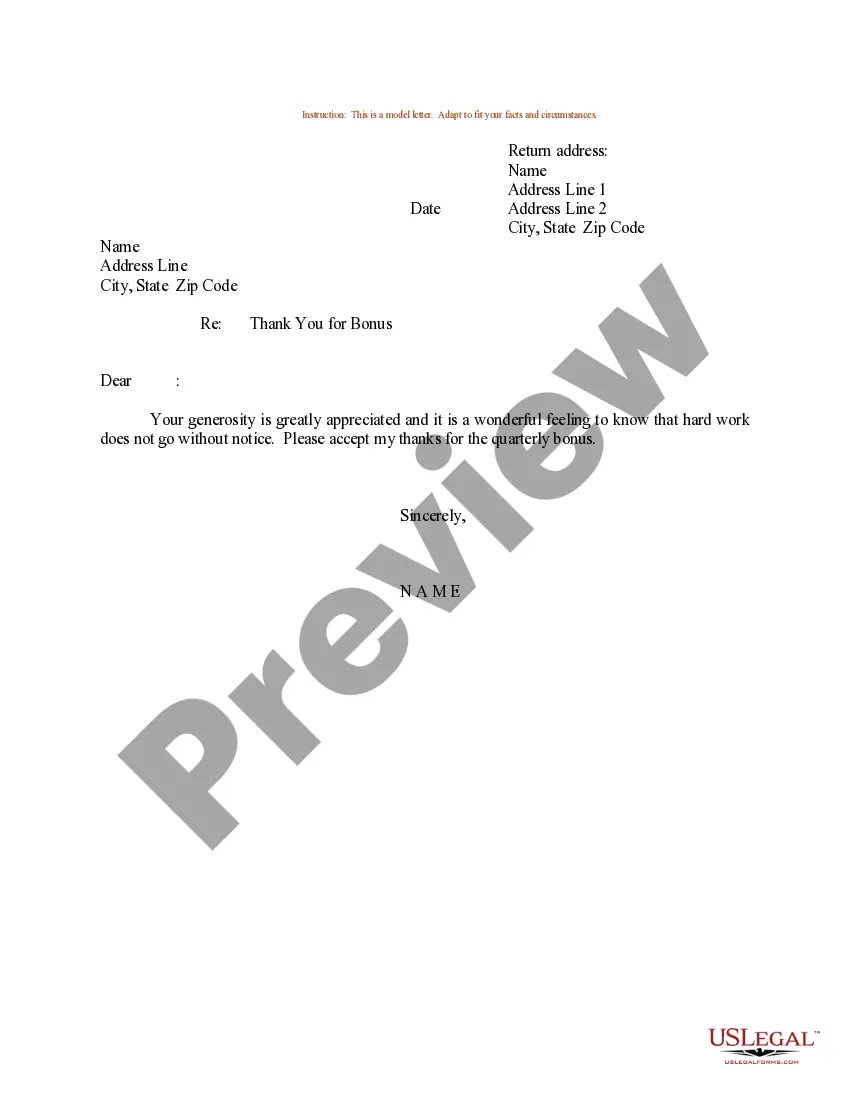
Get your form ready online
Our built-in tools help you complete, sign, share, and store your documents in one place.
Make edits, fill in missing information, and update formatting in US Legal Forms—just like you would in MS Word.
Download a copy, print it, send it by email, or mail it via USPS—whatever works best for your next step.
Sign and collect signatures with our SignNow integration. Send to multiple recipients, set reminders, and more. Go Premium to unlock E-Sign.
If this form requires notarization, complete it online through a secure video call—no need to meet a notary in person or wait for an appointment.
We protect your documents and personal data by following strict security and privacy standards.

Make edits, fill in missing information, and update formatting in US Legal Forms—just like you would in MS Word.

Download a copy, print it, send it by email, or mail it via USPS—whatever works best for your next step.

Sign and collect signatures with our SignNow integration. Send to multiple recipients, set reminders, and more. Go Premium to unlock E-Sign.

If this form requires notarization, complete it online through a secure video call—no need to meet a notary in person or wait for an appointment.

We protect your documents and personal data by following strict security and privacy standards.
Looking for another form?






Form popularity
FAQ
A common structure is tiered bonuses. Here, employees can achieve different "levels" of bonuses based on their performance metrics. For instance, reaching 80% of a target might secure a smaller bonus, while achieving 120% may earn a significantly larger one.
Examples of performance bonus metrics typically include project milestones, sales targets, service quality, skill development, and customer satisfaction ratings. Straightforward metrics allow employees to adjust their performance and approaches ingly and track their progress for attaining bonuses.
The bonus amount is often tied to measurable outcomes, such as sales targets, project completion, or overall company profitability, and aims to incentivize and reward high performance and productivity.
For a bonus system to be effective, the performance metrics should be Specific, Measurable, Achievable, Relevant, and Time-bound (SMART). Clearly defined criteria ensure that bonuses are awarded based on merit rather than favoritism.
A performance bonus is a financial reward given to employees based on their work performance. Unlike a regular salary, which is fixed, a performance bonus is variable and is contingent upon achieving specific targets or demonstrating exceptional performance.
What is a typical performance bonus? Performance bonuses vary widely depending on the industry, company, and individual performance metrics. Generally, a typical reward might range from 5% to 20% of an employee's base salary, but it can also be a fixed amount.
Role, level, and seniority Executives typically receive higher bonuses in line with their performance (10–30% of their salary for an annual bonus). This higher compensation is designed to reflect their strategic decision-making and leadership roles.
How much is the average performance bonus? On average, performance bonuses amount to around 2.5 percent-7.5 percent of an annual salary.
A common structure is tiered bonuses. Here, employees can achieve different "levels" of bonuses based on their performance metrics. For instance, reaching 80% of a target might secure a smaller bonus, while achieving 120% may earn a significantly larger one.

