Example With Bonus In Cook
Description
Get your form ready online
Our built-in tools help you complete, sign, share, and store your documents in one place.
Make edits, fill in missing information, and update formatting in US Legal Forms—just like you would in MS Word.
Download a copy, print it, send it by email, or mail it via USPS—whatever works best for your next step.
Sign and collect signatures with our SignNow integration. Send to multiple recipients, set reminders, and more. Go Premium to unlock E-Sign.
If this form requires notarization, complete it online through a secure video call—no need to meet a notary in person or wait for an appointment.
We protect your documents and personal data by following strict security and privacy standards.

Make edits, fill in missing information, and update formatting in US Legal Forms—just like you would in MS Word.

Download a copy, print it, send it by email, or mail it via USPS—whatever works best for your next step.

Sign and collect signatures with our SignNow integration. Send to multiple recipients, set reminders, and more. Go Premium to unlock E-Sign.

If this form requires notarization, complete it online through a secure video call—no need to meet a notary in person or wait for an appointment.

We protect your documents and personal data by following strict security and privacy standards.
Looking for another form?





Form popularity
FAQ
Create a written document outlining the employee bonus plan's details. Give all employees this information so they understand how and why bonuses are given. Provide details on the bonus types in your plan, why they exist and how employees can earn these bonuses, especially if a bonus is tied to a specific outcome.
How to Calculate Bonuses for Employees. To calculate a bonus based on your employee's salary, just multiply the employee's salary by your bonus percentage. For example, a monthly salary of $3,000 with a 10% bonus would be $300.
An annual bonus is usually based on overall company performance. This means you may get a large or small bonus (or no bonus at all) depending on how successful your organization or specific department was that year, as well as how big a part of that success you were. This can also be considered “profit sharing.”
Bonus Amount: State the exact amount of the bonus being awarded. For instance, “You will receive a performance bonus of $5,000.” Rationale for Award: Provide a brief explanation of why the bonus is being awarded. This could include a summary of the employee's achievements and their impact on the organization.
Suppose that your target bonus is 20 percent of a base salary of $100,000 and you performed at the maximum performance level. That means you would earn 200 percent of that 20 percent bonus, or 40 percent. This would result in a $40,000 check ($100,000 x 20%(your target bonus) X 200% (payout level)).
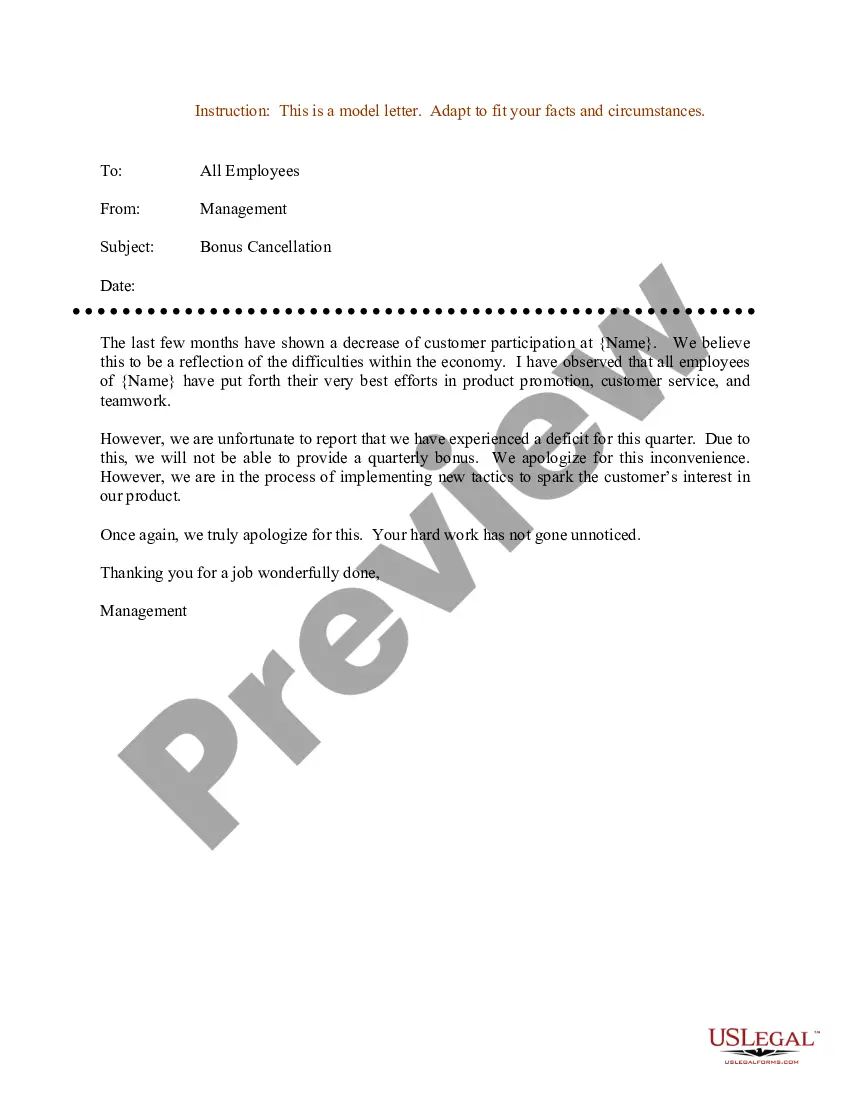
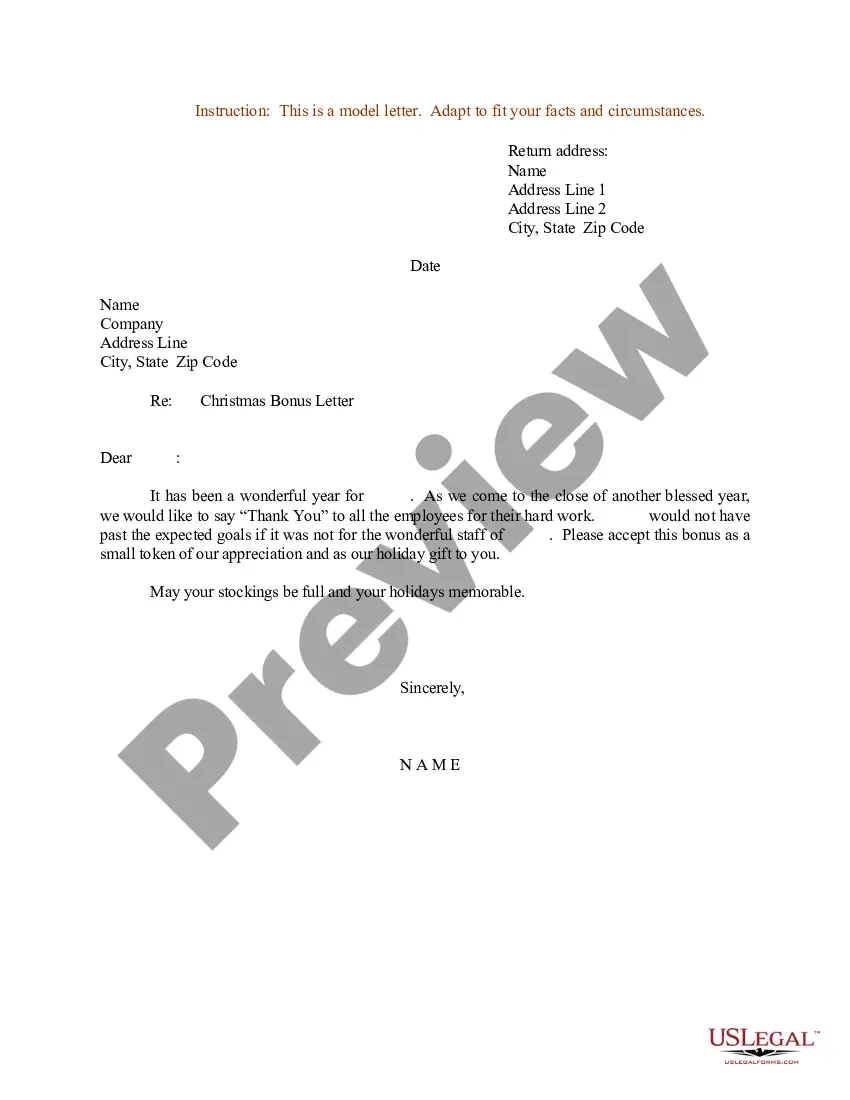
Dear Employee Name, We are pleased to present you with your year award in the amount of $__. This bonus award reflects your excellent performance, the contributions you made and the goals achieved on behalf of Company Name during the past year.
How to write a bonus letter Address the letter. In the beginning of the letter, label and address it like you start any correspondence with your team. Announce the bonus. Give details. Congratulate them. End the letter. Use a simple tone. Keep it brief. Consider a template.
Reporting your bonus on your tax return Your Form W-2, which you receive at the beginning of the tax year, will include your bonus as part of your wages. Box 1 of your Form W-2 will reflect your taxable income, including both regular wages and any supplemental wages like bonuses.
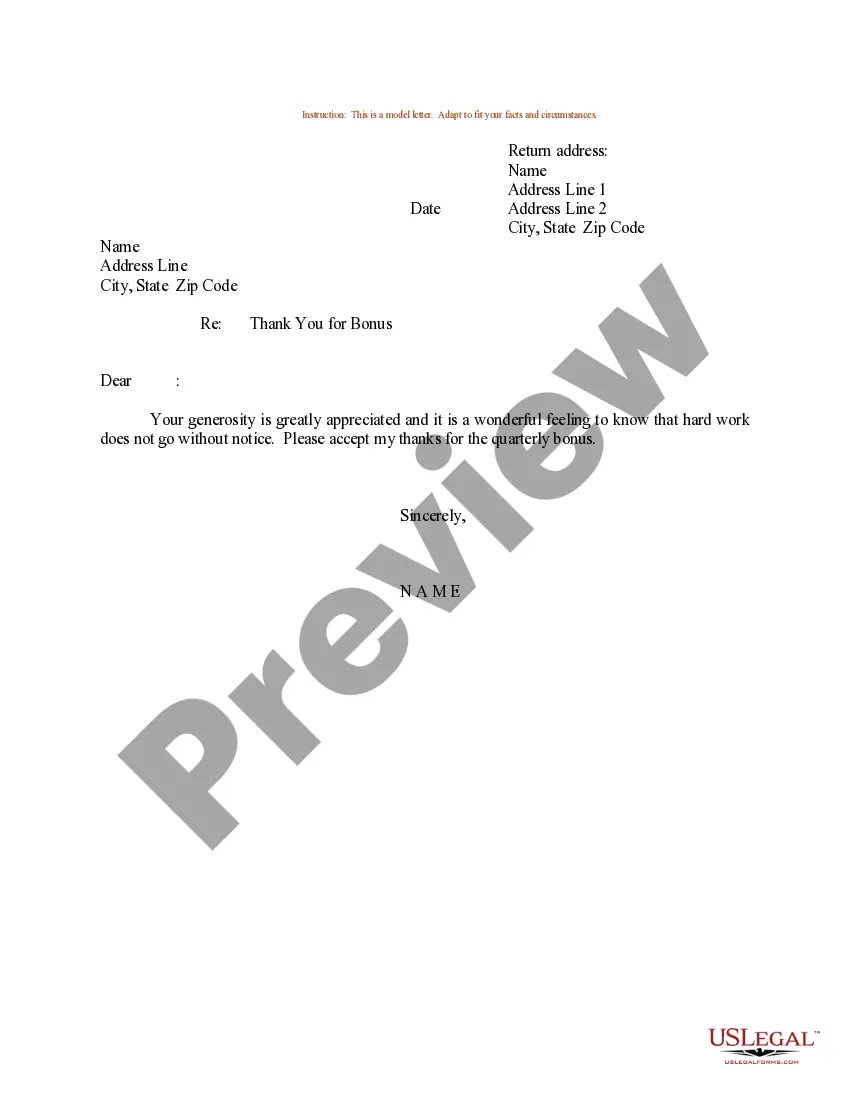
Consider saying ``Thank you for the bonus. I am so appreciative of it. I will continue giving my best every day''. Adding that second and third line makes all the difference.
When your employer provides you with a bonus, they will report it on your W-2 in box 1—but it's combined with your normal wages or salary. In the eyes of the Internal Revenue Service, your bonus is no different than the salary you receive.

